


Ultimate change management guide with process and frameworks powerpoint presentation slides
Change Management is a systematic approach that organizations follow to transform their goals, processes internal and external, or technologies as per the changing business environment to ensure relevancy and market growth. Here is an efficiently designed template on Ultimate Change Management Guide with Process and Frameworks that consists of structured mechanisms with detailed procedures to ensure that transition is smooth without any potential risk or loss to the business. In this proposal, we have covered the multiple processes and frameworks associated with change management such as Prosci 3-Phase Process, Lean Change Canvas, Change Communication Plan so that the user can successfully implement desired changes across the business avenues. This template also covers change management models exhaustively, such as the ADKAR model, Lewins Change Implementation Model, McKinsey 7 S Model, and Kotler Change Implementation Theory, providing the user with an option to select an appropriate model out of the basket per their business transitions. Organizations can present communication plans and tools in detail for better team development and productivity results. Through this template, one can even showcase details related to their company, target audience, financials, SWOT, etc. Get access to 100 percent editable proposal and customize it based on needs. With our change management ppt, understand the need for change and plan to go through it without any hassles.























You must be logged in to download this presentation.


Do you want to remove this product from your favourites?
PowerPoint presentation slides
Deliver this complete deck to your team members and other collaborators. Encompassed with stylized slides presenting various concepts, this Ultimate Change Management Guide With Process And Frameworks Powerpoint Presentation Slides is the best tool you can utilize. Personalize its content and graphics to make it unique and thought-provoking. All the seventy slides are editable and modifiable, so feel free to adjust them to your business setting. The font, color, and other components also come in an editable format making this PPT design the best choice for your next presentation. So, download now.

People who downloaded this PowerPoint presentation also viewed the following :
Content of this Powerpoint Presentation
Slide 1: This slide displays title i.e. 'Ultimate Change Management Guide with Process and Frameworks' and your Company Name.
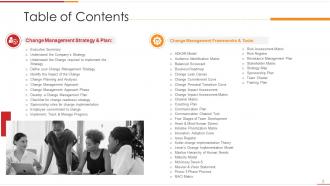
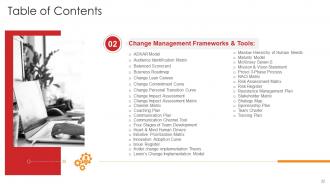
Slide 2: This slide presents table of contents.
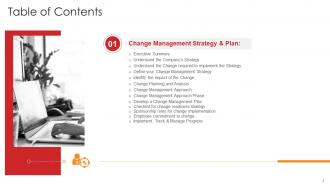
Slide 3: This slide exhibits title for 'Change management strategy & plan'.
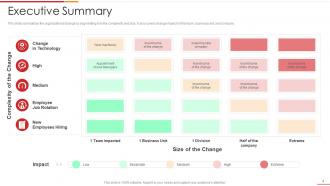
Slide 4: This slide summarizes the organizational change by segmenting it on the complexity and size.
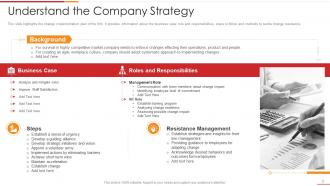
Slide 5: This slide shows the company strategy.
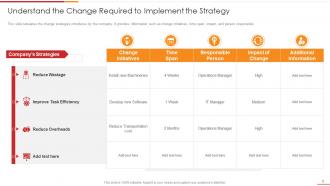
Slide 6: This slide tabulates the change strategies introduces by the company.
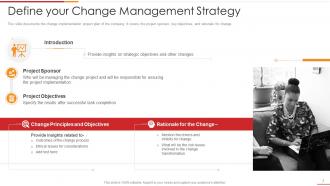
Slide 7: This slide documents the change implementation project plan of the company.
Slide 8: This slide illustrates the blueprint of the change project of the company.
Slide 9: This slide indicates the change effect on various job roles in the company.
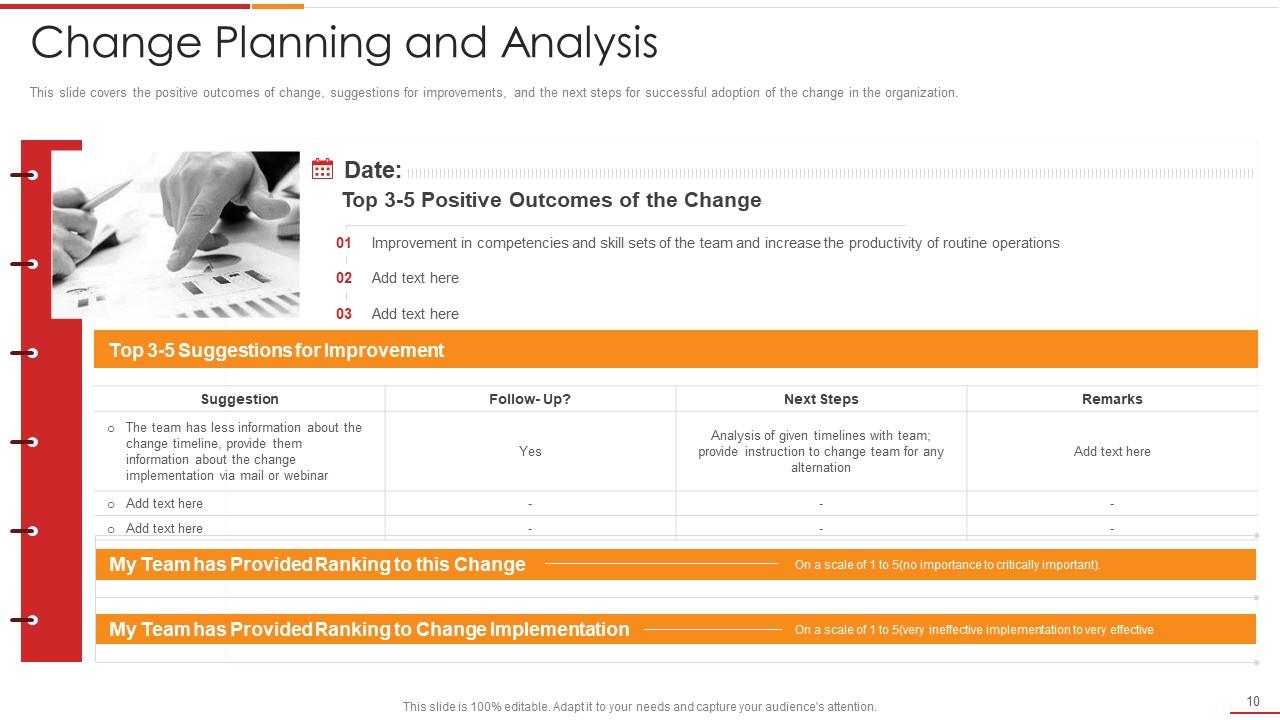
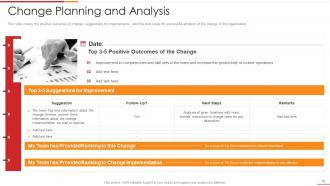
Slide 10: This slide covers the positive outcomes of change, suggestions for improvements, etc.
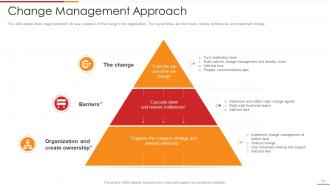
Slide 11: This slide depicts three stage framework for easy adoption of the change in the organization.
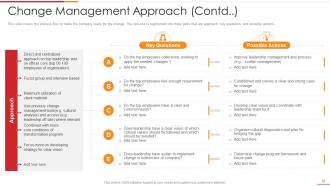
Slide 12: This slide covers the process flow to make the company ready for the change.
Slide 13: This slide documents the key issues related to change and strategies to deploy.
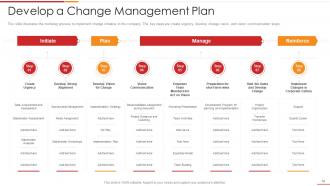
Slide 14: This slide illustrates the multistep process to implement change initiative in the company.
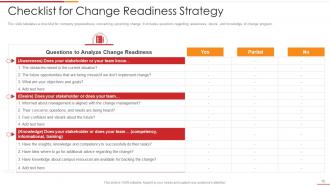
Slide 15: This slide tabulates a checklist for company preparedness concerning upcoming change.
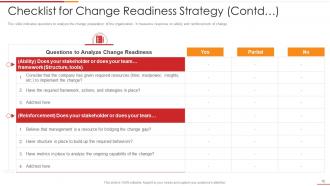
Slide 16: This slide indicates questions to analyze the change preparation of the organization.
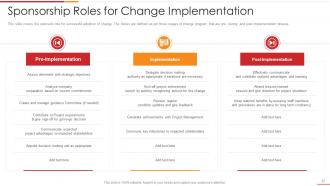
Slide 17: This slide covers the sponsors role for successful adoption of change.
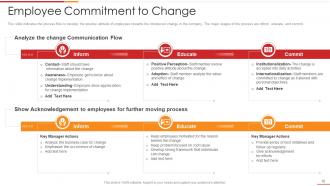
Slide 18: This slide indicates the process flow to develop the positive attitude of employees.
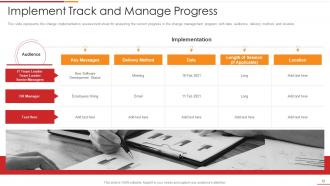
Slide 19: This slide represents the change implementation assessment sheet for analyzing the current progress.
Slide 20: This slide indicates the change training chart for employees which includes session modules, learning objectives, etc.
Slide 21: This slide illustrates the risk management sheet for the change program.
Slide 22: This slide depicts title for 'Change management frameworks & tools'.
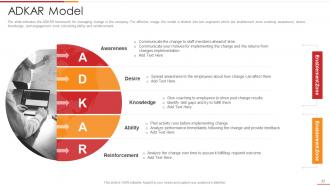
Slide 23: The slide indicates the ADKAR framework for managing change in the company.
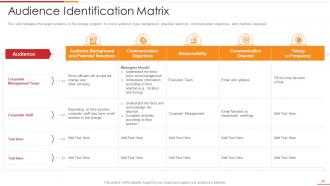
Slide 24: This slide tabulates the target audience of the change program.
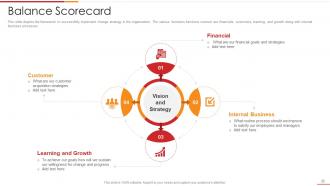
Slide 25: This slide depicts the framework to successfully implement change strategy in the organization.
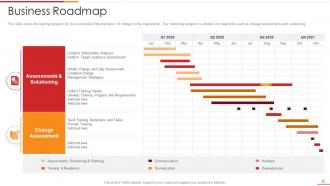
Slide 26: This slide shows the training program for the successful implementation of change in the organization.
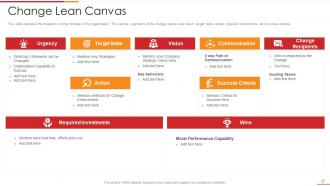
Slide 27: This slide indicates the blueprint to bring change in the organization.
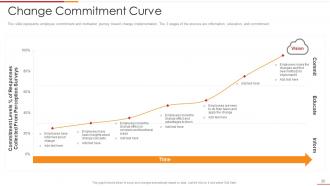
Slide 28: This slide represents employee commitment and motivation journey toward change implementation.
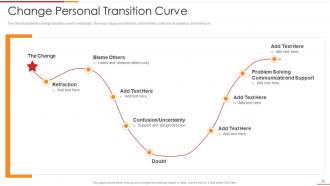
Slide 29: The slide illustrates the change adoption curve for individuals.
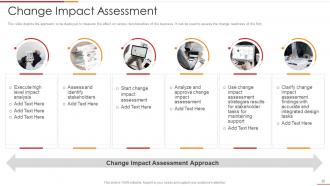
Slide 30: This slide depicts the approach to be deployed to measure the effect on various functionalities of the business.
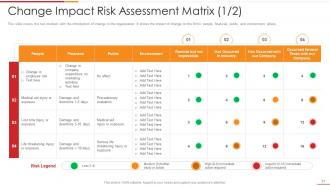
Slide 31: This slide covers the risk involved with the introduction of change in the organization.
Slide 32: This slide indicates the effect of the change on multiple segments of business.
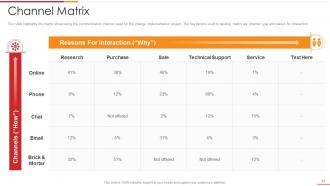
Slide 33: This slide highlights the matrix showcasing the communication channel used for the change implementation project.
Slide 34: This slide showcase the blueprint of the mentoring plan for successful change implementation in the company.
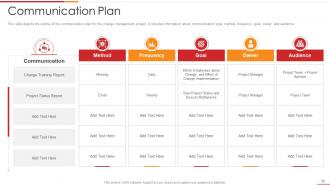
Slide 35: This slide depicts the outline of the communication plan for the change management project.
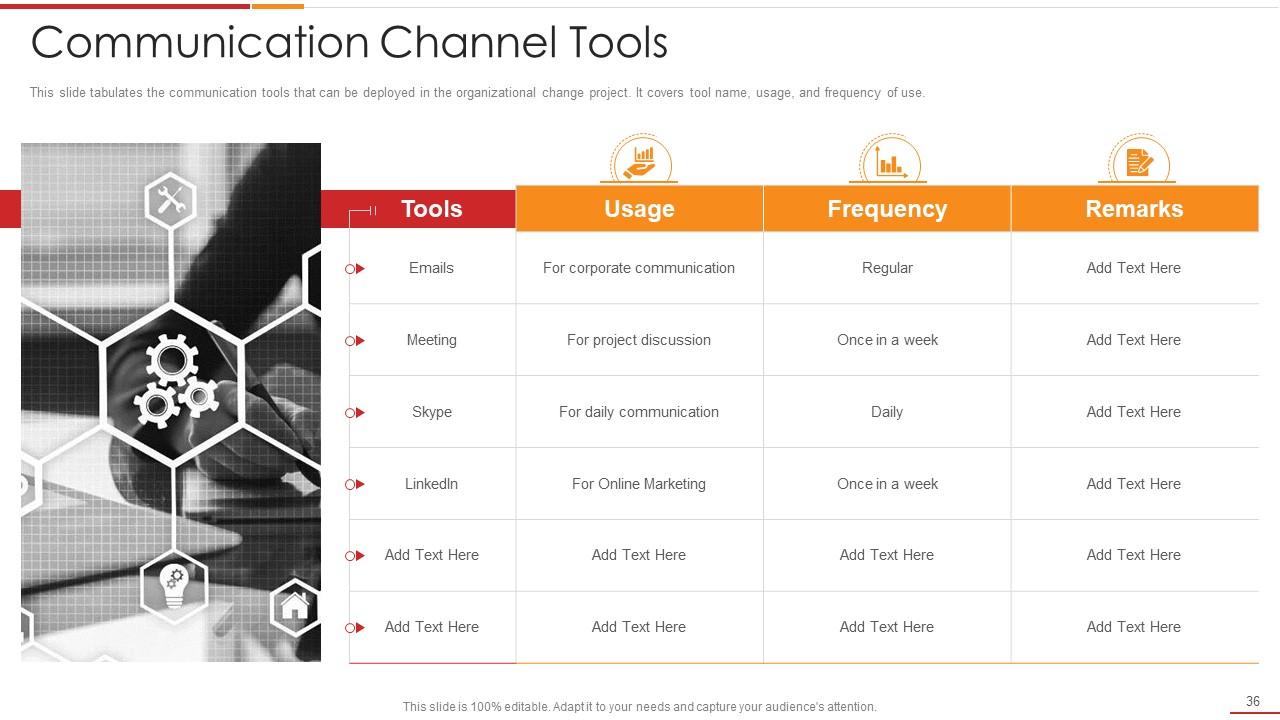
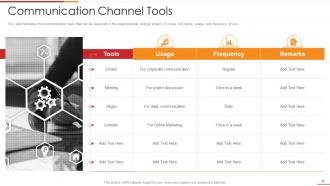
Slide 36: This slide tabulates the communication tools that can be deployed in the organizational change project.
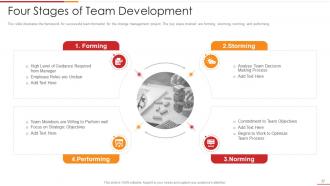
Slide 37: This slide illustrates the framework for successful team formation for the change management project.
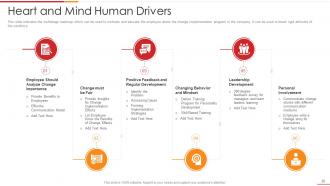
Slide 38: This slide indicates the multistage roadmap which can be used to motivate and educate the employee.
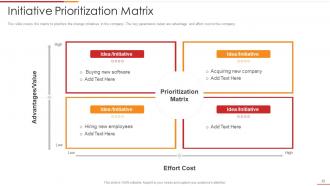
Slide 39: This slide covers the matrix to prioritize the change initiatives in the company.
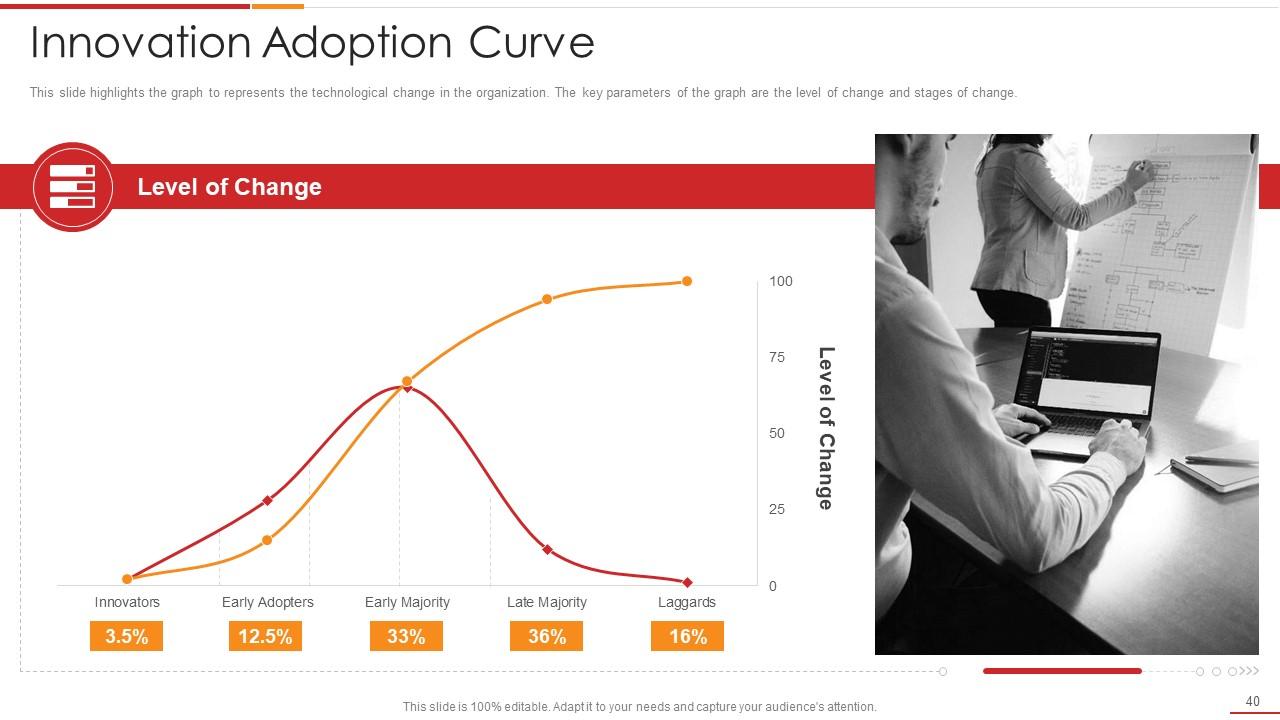
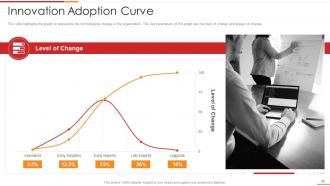
Slide 40: This slide highlights the graph to represents the technological change in the organization.
Slide 41: This slide documents the multiple bottlenecks that can happen at the time of the change implementation program.
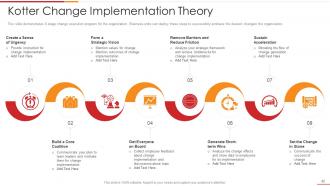
Slide 42: This slide demonstrates 8 stage change execution program for the organization.
Slide 43: This slide depicts the Lewin’s 3 Stage Model of Change.
Slide 44: This slide indicates the pyramid for the Maslow hierarchy of needs for individuals.
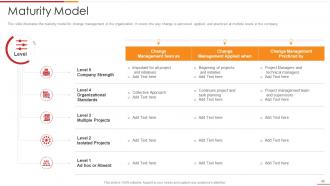
Slide 45: This slide illustrates the maturity model for change management in the organization.
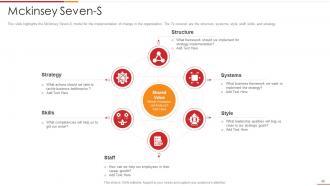
Slide 46: This slide highlights the Mckinsey Seven-S model for the implementation of change in the organization.
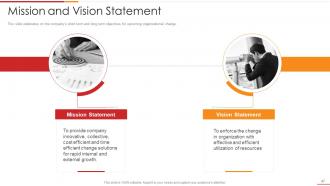
Slide 47: This slide elaborates on the company’s short term and long term objectives for upcoming organizational change.
Slide 48: This slide shows framework of the Prosci 3-Phase Process for effectively managing change in the organization.
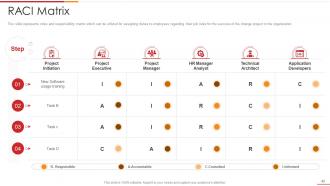
Slide 49: This slide represents roles and responsibility matrix which can be utilized for assigning duties to employees.
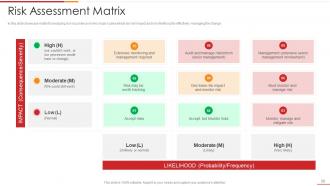
Slide 50: This slide showcase matrix for analyzing risk occurrence on two major scales.
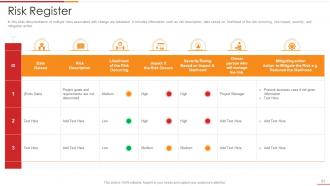
Slide 51: This slide documentation of multiple risks associated with change are tabulated.
Slide 52: This slide indicates the blueprint to overcome change resistance in the organization.
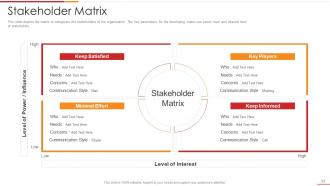
Slide 53: This slide depicts the matrix to categorize the stakeholders of the organization.
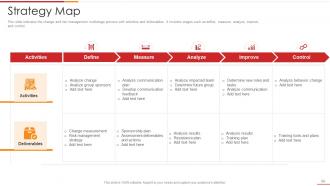
Slide 54: This slide indicates the change and risk management multistage process with activities and deliverables.
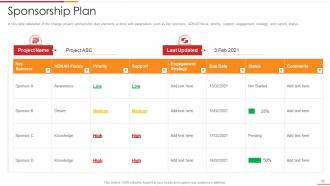
Slide 55: This slide tabulates change project sponsorship plan elements.
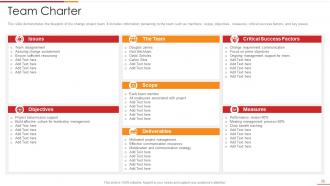
Slide 56: This slide demonstrates the blueprint of the change project team.
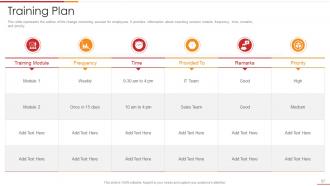
Slide 57: This slide represents the outline of the change mentoring session for employees.
Slide 58: This is the icons slide.
Slide 59: This slide presents title for additional slides.
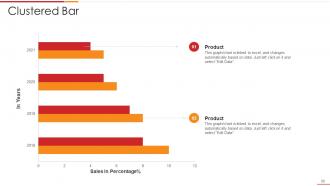
Slide 60: This slide exhibits yearly sales clustered bar charts for different products. The charts are linked to Excel.
Slide 61: This slide shows about your company, target audience and its client's values.
Slide 62: This slide presents your company's vision, mission and goals.
Slide 63: This slide depicts location of company through wolrd map.
Slide 64: This slide depicts posts for important notes.
Slide 65: This slide displays targets.
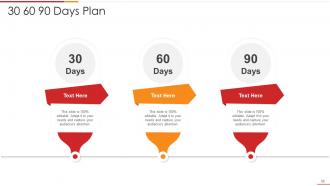
Slide 66: This slide depicts 30-60-90 days plan for projects.
Slide 67: This slide shows mission.
Slide 68: This slide exhibits yearly timeline.
Slide 69: This slide shows roadmap.
Slide 70: This is thank you slide & contains contact details of company like office address, phone no., etc.
Ultimate change management guide with process and frameworks powerpoint presentation slides with all 70 slides:
Use our Ultimate Change Management Guide With Process And Frameworks Powerpoint Presentation Slides to effectively help you save your valuable time. They are readymade to fit into any presentation structure.
-
Best Representation of topics, really appreciable.
