


Change Management Techniques Models And Strategies Powerpoint Presentation Slides





Try Before you Buy Download Free Sample Product
 Impress Your
 Audience
 100%
100% Editable
 Save Hours
 of Time


Take a look at our easy to use content-ready change management techniques models and strategies PowerPoint presentation slides. This professionally built Adkar model PPT templates help you build desired transitions resulting in adoption and realization of change. A complete set of 62 slides comprise of all the necessary templates such as continuous improvement, barrier to transformation, success rate, shift management strategy, influence key stakeholders, bridge transition model, force field analysis, and adoption curve. With the help of this business change control process PPT illustration, you can also give a presentation on the same subject matter such as business process re-engineering, performance management, strategic change, organizational structure, transtheoretical model, engineering change order, business transition control process, prosci’s transition management methodology, and transformation strategy. Further, this change implementation model PowerPoint visual will help you achieve the desired future state. Download our change management techniques models and strategies PPT template today!. Acquire the correct get up with our Change Management Techniques Models And Strategies Powerpoint Presentation Slides. Your thoughts will be considered fashionable.
People who downloaded this PowerPoint presentation also viewed the following :
Content of this Powerpoint Presentation
Slide 1: This slide introduces Change Management Techniques, Models And Strategies with a beautiful fish imagery. State Your Company Name and get started.
Slide 2: This is an Agenda slide. State your agendas here.
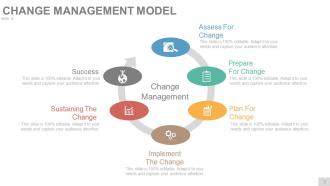
Slide 3: This slide shows a Change Management Model with the following points- Assess For Change, Prepare For Change, Plan For Change, Implement The Change, Sustaining The Change, Success.
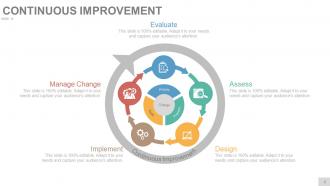
Slide 4: This slide presents Continuous Improvement with- People-Tools-Process segregated into- Change, Evaluate, Design, Implement, Assess, Manage Change.
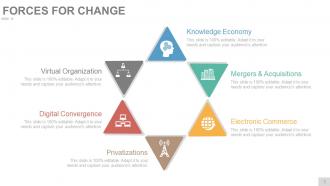
Slide 5: This slide presents Forces For Change- Mergers & Acquisitions, Electronic Commerce, Digital Convergence, Virtual Organization, Privatizations, Knowledge Economy.
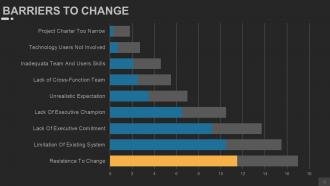
Slide 6: This slide presents the Barriers To Change in graph form.
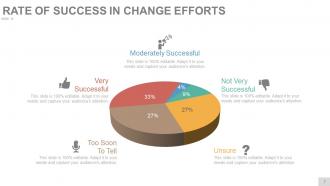
Slide 7: This slide shows Rate Of Success In Change Efforts with the following parameters- Too Soon To Tell, Very Successful, Moderately Successful, Unsure, Not Very Successful.
Slide 8: This slide presents Principles of Change listed as- Resistance And Comfort, Incremental Vs. Radical Change, Value Systems, Authority For Change, The Right Answer Is Not Enough, Change Is a Process, Sender And Receivers.
Slide 9: This slide shows Change Management Strategy Visible Change Leadership, Smart Engagement & Communication, Strong Individual Performance, Supportive Organization & Culture, Meaningful Change Measurement in terms of- Diagnose, Develop, Design, Deliver, Sustain, Shared Change Purpose.
Slide 10: This slide presents Activities Contributing To Change Management such as- Developing Political Support, Creating Vision Of Change, Managing The Transition Of Change, Motivating Change, Sustaining Momentum.
Slide 11: This slide also presents Activities Contributing To Change Management such as- Engage, Sustain, Provide Vision, Involve, Oversight, Short - Term Goals, Motivate, Secure Gains.
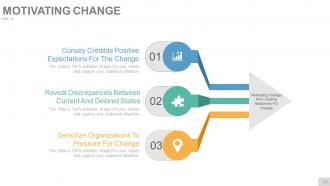
Slide 12: This slide showcases Motivating Change with the following points- Convey Credible Positive Expectations For The Change, Reveal Discrepancies Between Current And Desired States, Sensitize Organizations To Pressure For Change.
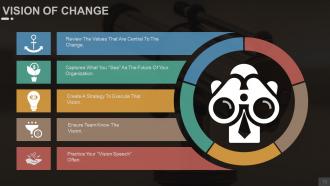
Slide 13: This slide showcases Vision of Change- Review The Values That Are Central To The Change, Captures What You “See” As The Future Of Your Organization, Create A Strategy To Execute That Vision, Ensure Team Know The Vision, Practice Your “Vision Speech” Often.
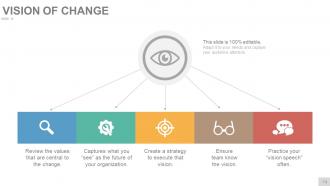
Slide 14: This slide too presents Vision of Change in different variation image- Practice your “vision speech” often, Captures what you “see” as the future of your organization, Create a strategy to execute that vision, Ensure team know the vision, Review the values that are central to the change.
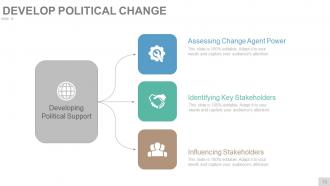
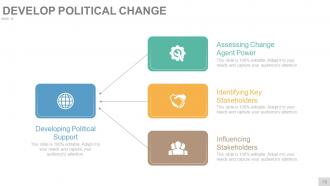
Slide 15: This slide shows Develop Political Change. The points included are- Assessing Change Agent Power, Influencing Stakeholders, Identifying Key Stakeholders, Developing Political Support.
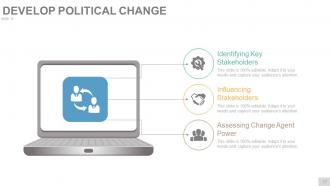
Slide 16: This slide too presents Develop Political Change. The points included are- Assessing Change Agent Power, Influencing Stakeholders, Identifying Key Stakeholders, Developing Political Support.
Slide 17: This slide also showcases Develop Political Change. The points included are- Assessing Change Agent Power, Influencing Stakeholders, Identifying Key Stakeholders, Developing Political Support
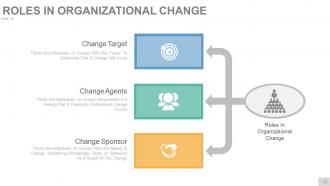
Slide 18: This slide shows Roles In Organizational Change. Points included are- Change Target, Change Agents, Change Sponsor.
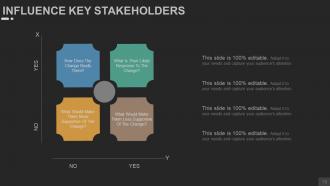
Slide 19: This slide showcases Influence Key Stakeholders matrix with the following quadrants- How Does The Change Really Them? What Is Their Likely Response To The Change? What Would Make Them Less Supportive Of The Change? What Would Make Them More Supportive Of The Change?
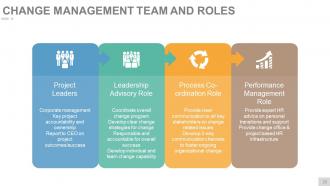
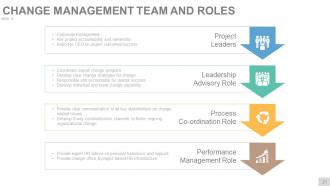
Slide 20: This slide presents Change Management Team And Roles- Performance Management Role: Provide expert HR advice on personal transitions and support, Provide change office & project based HR infrastructure. Process Co-ordination Role: Provide clear communication to all key stakeholders on change related issues, Develop 2-way communication channels to foster ongoing organizational change. Leadership Advisory Role: Coordinate overall change program, Develop clear change strategies for change, Responsible and accountable for overall success, Develop individual and team change capability. Project Leaders: Corporate management, Key project accountability and ownership, Report to CEO on project outcomes/success.
Slide 21: This slide also presents Change Management Teams and Roles.
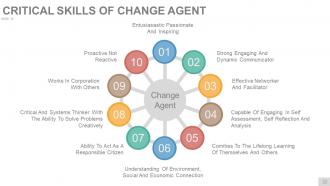
Slide 22: This slide presents Critical Skills Of Change Agent- Entusiasastic Passionate And Inspiring, Comities To The Lifelong Learning Of Themselves And Others, Understanding Of Environment, Social And Economic Connection, Ability To Act As A Responsible Citizen, Capable Of Engaging In Self Assessment, Self Reflection And Analysis, Critical And Systems Thinker With The Ability To Solve Problems Creatively, Effective Networker And Facilitator, Works In Corporation With Others, Strong Engaging And Dynamic Communicator, Proactive Not Reactive.
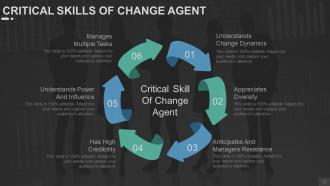
Slide 23: This slide showcases another set of Critical Skills Of Change Agent- Manages Multiple Tasks, Understands Change Dynamics, Has High Credibility, Anticipates And Managers Resistance, Understands Power And Influence, Appreciates Diversity.
Slide 24: This slide shows Sustatining Momentum with the following points- Providing Resource For Change, Reinforcing New Behaviors, Staying The Course, Building A Support System For Change Agents, Developing New Competencies And Skills.
Slide 25: This slide alsoshows Sustatining Momentum with the following points- Providing Resource For Change, Reinforcing New Behaviors, Staying The Course, Building A Support System For Change Agents, Developing New Competencies And Skills.
Slide 26: This slide shows A Bridge Transition Model with- Ending, Transition, Beginning.
Slide 27: This slide shows A Bridge Transition Model with- Ending, Transition, Beginning, Skepticism and Exploration.
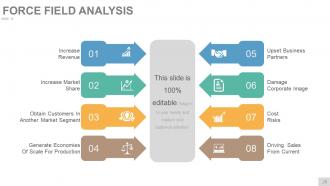
Slide 28: This slide shows a Force Field Analaysis with the following points- Obtain Customers In Another Market Segment, Generate Economies, Of Scale For Production, Increase Revenue, Increase Market Share, Damage Corporate Image, Driving Sales From Current, Upset Business Partners, Cost Risks.
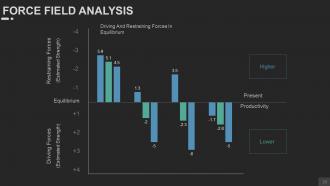
Slide 29: This slide shows a Force Field Analaysis with the following points- Present Productivity, Restraining Forces (Estimated Strength), Equilibrium, Driving Forces (Estimated Strength).
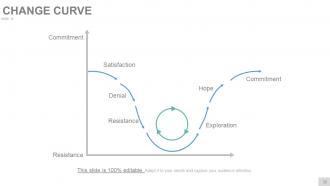
Slide 30: This slide presents a Change Curve starting from- Commitment, Resistance, Satisfaction, Denial, Resistance, Exploration, Hope, to Commitment
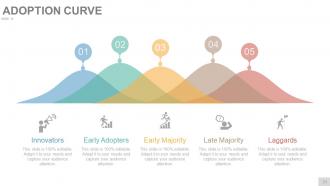
Slide 31: This slide presents a Change Curve starting from- Innovators, Early Majority, Early Adopters, Late Majority, Laggards.
Slide 32: This slide too presents a Change Curve showing- Laggards, Innovators, Early Adopters, Early Majority, Late Majority.
Slide 33: This slide showcases an ADKAR MODEL stating- Knowledge, Reinforcement, Awareness, Desire, Ability.
Slide 34: This slide also shows an ADKAR MODEL in a different variation image.
Slide 35: This slide too presents an ADKAR MODEL with additional subheadings- Recognize, Realize, Leadership/ Sponsorship.
Slide 36: This slide is titled Additional Slides to move forward.
Slide 37: This is Our Mission slide with imagery. State your mission aspects here.
Slide 38: This slide presents Our team with name, designation and image boxes.
Slide 39: This is an About Us slide. State team/company specifications here.
Slide 40: This is Our Goal slide. State goals, etc. here.
Slide 41: This is a Comparison slide to compare product/enitities etc.
Slide 42: This is a Financial Scores slide. State financial aspects, etc. here.
Slide 43: This is a Quotes slide to convey company's message, beliefs etc.
Slide 44: This is an About Us slide. State company/team specifications here in metric image form.
Slide 45: This is Location image slide of world map image to show global growth, presence etc.
Slide 46: This is a Timeline image slide to show growth factors, milestones etc.
Slide 47: This is a Post It slide to mark events, reminders or important information etc.
Slide 48: This is a NewsPaper slide to show events, reminders or important information etc. You can chage slide content as per need.
Slide 49: This is a Puzzle image slide to show information, specifications etc.
Slide 50: This is a Target image slide to state targets, etc.
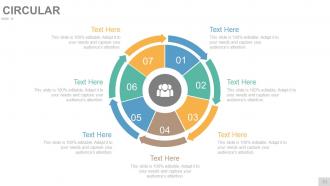
Slide 51: This is a Circular image slide to show information, specifications etc.
Slide 52: This is a Venn Diagram image slide to show information, specifications etc.
Slide 53: This is a Mind Map image slide to show information, specifications etc.
Slide 54: This is a Matrix slide to show information, specifications etc.
Slide 55: This is a Lego image slide to show information, specifications etc.
Slide 56: This is a Silhouettes image slide to show people related information, specifications etc.
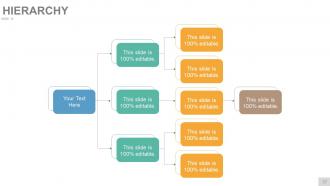
Slide 57: This is a Hierarchy slide to show information, specifications etc.
Slide 58: This is a Bulb/Idea image slide to show information, innovation specifications etc.
Slide 59: This is a Magnifying image slide to show information, specifications etc.
Slide 60: This is a Bar graph slide to show information, specifications etc.
Slide 61: This is a Funnel image slide to show information, specifications etc. in funnel form.
Slide 62: This is a Thank You slide with Address# street number, city, state, Contact Numbers, Email Address.
Change Management Techniques Models And Strategies Powerpoint Presentation Slides with all 62 slides:
Call a halt to disappointments with our Change Management Techniques Models And Strategies Powerpoint Presentation Slides. Ensure your graph begins to grow.
-
Change Management Techniques Models And Strategies
-
Agenda Slide
-
Change Management Model
-
Continuous Improvement
-
Forces for Change
-
Barriers to Change
-
Rate of Success in Change Efforts
-
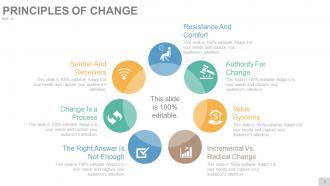
Principles of Change
-
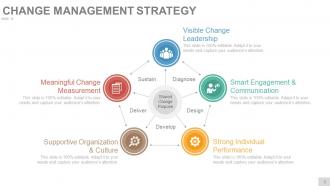
Change Management Strategy
-
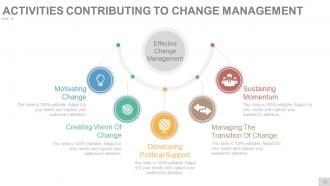
Activities Contributing to Change Management
-
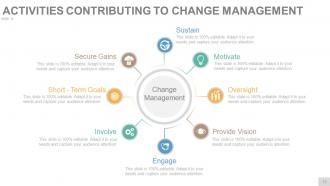
Activities Contributing to Change Management
-
Motivating Change
-
Vision of Change
-
Vision of Change
-
Develop Political Change
-
Develop Political Change
-
Develop Political Change
-
Roles in Organizational Change
-
Influence Key Stakeholders
-
Change Management Team and Roles
-
Change Management Team and Roles
-
Critical Skills of Change Agent
-
Critical Skills of Change Agent
-
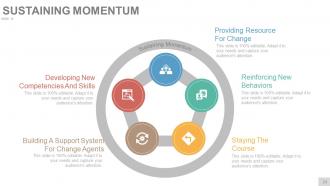
Sustaining Momentum
-
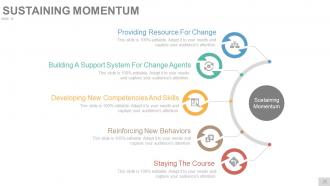
Sustaining Momentum
-
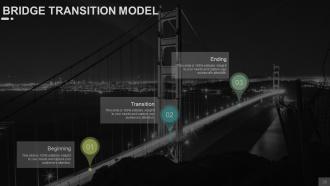
Bridge Transition Model
-
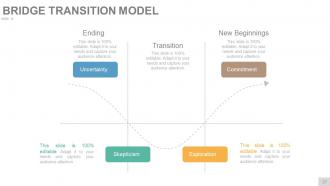
Bridge Transition Model
-
Force Field Analysis
-
Force Field Analysis
-
Change Curve
-
Adoption Curve
-
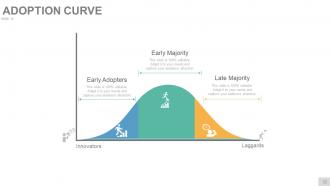
Adoption Curve
-
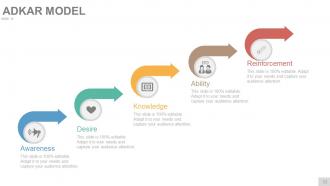
ADKAR Model
-

ADKAR Model
-

ADKAR Model
-

Additional Slides
-

Our Mission
-

Our Team
-

About Us
-

OUR GOAL
-

Comparison
-
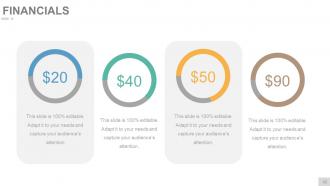
Financials
-

Quotes
-
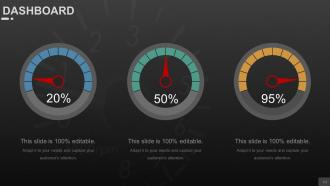
Dashboard
-
Location
-
Timeline
-
Post It Notes
-

Newspaper
-
Puzzle
-
Target
-
Circular
-
Venn Diagram
-
Mind Map
-
Matrix
-

LEGO
-
Silhouettes
-
Hierarchy
-
BULB OR IDEA
-
Magnifying Glass
-
Bar Graph
-
Funnel
-
Thank You Slide
FAQs for Change Management Techniques Models And Strategies
Okay so there's basically four phases you'll go through. First is prep work - build your case, get the bosses on board. Then comes communication (and honestly, don't rush this part because people need time to wrap their heads around what's happening). Implementation is where things get messy - rolling out processes, training everyone, dealing with pushback. The last phase is reinforcement, which people skip way too often. You've got to celebrate wins and keep checking that changes actually stick instead of everyone sliding back to old habits. Oh, and expect some resistance during rollout - it's just part of the deal.
Honestly, you've got to lead with the "why" - people need the real business reason, not just marching orders. Don't sugarcoat the tough stuff (they'll see right through that anyway), but show them what's in it for them personally. Mix up how you communicate too - some face-to-face meetings, one-on-ones, emails, whatever clicks with your team. Here's the thing though: make it a real conversation. Ask what they're worried about and actually listen. Then do something about their concerns. People hate changes they don't get or weren't part of creating, so bring them into the process early.
Look, engaged employees will literally make or break your change project. When people feel involved, they'll spot issues early and actually help fix them instead of just complaining. But if they're checked out? Good luck - they'll drag everyone down without even realizing it. Start getting them involved from day one. Ask what they think, listen to their concerns (even the annoying ones), and be super clear about how this change benefits them personally. Trust me, people need to see what's in it for them or they'll just go through the motions.
Track the obvious stuff first - adoption rates, productivity, turnover numbers, how long projects actually take. But surveys about how people *feel* about the changes? That's where the real insights are, honestly. Baseline everything before you start (learned this the hard way). Check in regularly to see if your communication is even landing - sometimes you think you're being clear but nobody gets it. Oh, and resistance patterns tell you so much about what's not working. Mix the hard data with the soft feedback and you'll actually know if you're making progress or just spinning your wheels.
Honestly, it's gonna be employee pushback, terrible communication, and leadership that just vanishes after announcing changes. People hate change - can't blame them really. Get ahead of this by explaining WHY things need to shift, and do it constantly. Bring your key players into the planning early so they feel ownership. Leadership has to actually show up and champion this stuff, not just send an email and ghost everyone. Training matters way more than people think. Oh, and here's something that works - find your biggest skeptics first and win them over. They'll become your best advocates once they're on board.
Honestly, you've gotta bake change management into everything, not just bust it out for major projects. When hiring, look for people who actually adapt well - sounds obvious but so many places ignore this. Get your managers trained up as change champions. They need to model flexibility and explain the "why" behind changes clearly. Set up feedback systems where people can actually speak up about concerns. Oh, and this is huge - celebrate the folks who embrace change instead of just putting up with it. My old boss was terrible at this part. Make adaptability a real company value, then back it up by rewarding that behavior consistently. Otherwise it's just empty words.
Get people involved from day one - seriously, this makes or breaks everything. Tell them WHY you're making changes, not just what's happening. I swear, half the pushback I've seen could've been avoided if leadership just explained the reasoning upfront. Listen when people have concerns too, don't just nod and ignore them. Oh, and training is huge since most folks resist because they're scared they won't know how to do their job anymore. Basically treat everyone like they're part of the solution instead of something you need to work around.
Honestly, both are solid but they're for different stuff. ADKAR's your go-to when you need to figure out exactly where people are stuck - like why aren't they actually changing? Kotter's 8-Step is more for big organizational overhauls where you need everyone on board (though wow, eight steps feels like a lot sometimes). Really comes down to your situation. Dealing with resistance? ADKAR all the way. Major strategic shift that needs buy-in across the board? That's Kotter territory. You could always mix and match elements from both too.
Honestly, you've gotta train people way before you flip the switch on any big change. Nobody learns well when they're stressed about deadlines looming over them. Skip the boring slideshow dumps - I swear those things are torture. Instead, do hands-on stuff that actually relates to what they'll be doing day-to-day. Mix it up with workshops, quick reference guides, maybe pair people up for mentoring since everyone picks things up differently. Oh, and let them mess up during practice without judgment! That's huge. Plan for way more follow-up than you think you'll need too.
Honestly, tech tools can totally transform how you handle change management. Project management software lets you track who's actually adopting new processes (spoiler: it's usually fewer people than you think). Set up automated updates so people stay in the loop without you having to send a million emails. Digital training modules are clutch - people can learn at their own pace instead of sitting through boring meetings. Real-time feedback through communication platforms beats waiting months for survey results. Just don't go overboard picking tools that'll confuse everyone. Start simple, add more later.
Look, feedback is like your GPS during change - you'll crash without it. People need to feel heard, otherwise they'll just resist everything you're trying to do. Set up regular check-ins, maybe some anonymous surveys or skip-level chats. Honestly, the anonymous route works better than you'd think because people actually tell the truth. Don't just collect complaints though - close the loop by showing what you're actually doing about their input. Short pulse surveys work great for this stuff. Without that two-way flow, you're basically guessing your way through change and hoping for the best.
Honestly, people won't budge unless staying put feels scarier than changing. Show them real numbers - what revenue you'll lose, how competitors are gaining ground, where the market's heading without you. Don't just talk about vague "opportunities" because that's honestly pretty meaningless to most people. Paint a clear picture of actual threats coming at you from outside, plus the internal mess that needs fixing now. Maybe put up visual reminders around the office? Connect it to stuff your team genuinely cares about - their projects, customers they like, whether the company survives. Quick wins help too.
Honestly, your org structure makes or breaks change management. Flat companies? Changes happen fast since you don't need approval from like 10 different people. But good luck getting everyone on the same page. With traditional hierarchies, you'll have clear ownership and control - just prepare for everything to move at a snail's pace through all those layers. Matrix setups are the worst though, nobody knows who's actually in charge when people have multiple bosses. My advice? Figure out your decision chain first. Who signs off at each step? Trust me, you don't want to discover this halfway through rolling something out.
Don't just treat this like a one-time project - you've gotta weave the changes into your daily stuff. Build new habits right into workflows, training, and how you measure performance. Otherwise people will just go back to the old way (seen it happen so many times). Your managers need to keep pushing this for months, not weeks. I'd set up check-ins at 30, 60, 90 days to catch anyone slipping back. Oh, and actually celebrate the small wins - people forget how important that part is. Measure what matters and make sure the new behaviors become "just how we do things."
Honestly, good change management is a game changer because people actually buy into what you're doing instead of fighting it. When employees get the "why" behind changes, you don't see those brutal productivity crashes during transitions. I've seen teams completely derail projects just because leadership didn't bother explaining anything upfront. The trick is getting people involved early - map out who's impacted and ask for their input before you announce anything. Your team gets better at handling change over time too. Oh, and it helps you catch problems before they blow up, which is probably the best part.
-
Thanks for all your great templates they have saved me lots of time and accelerate my presentations. Great product, keep them up!
-
Top Quality presentations that are easily editable.