


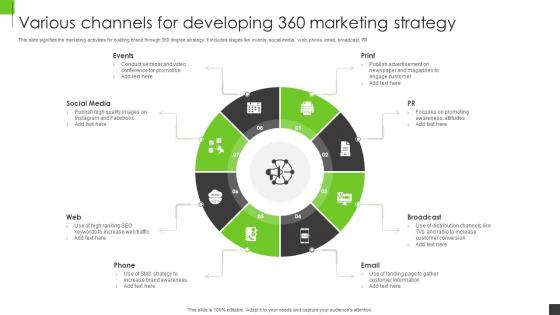
Various Channels For Developing 360 Marketing Strategy




Try Before you Buy Download Free Sample Product
 Impress Your
 Audience
 100%
100% Editable
 Save Hours
 of Time


This slide signifies the marketing activities for building brand through 360 degree strategy. It includes stages like events, social media, web, phone, email, broadcast, PR.
People who downloaded this PowerPoint presentation also viewed the following :
Various Channels For Developing 360 Marketing Strategy with all 6 slides:
Use our Various Channels For Developing 360 Marketing Strategy to effectively help you save your valuable time. They are readymade to fit into any presentation structure.





FAQs for Various Channels For Developing
So basically you want everything talking to each other - your social posts, emails, ads, all that stuff should tell the same story. Most brands totally blow this because they treat Instagram like it's completely separate from their email campaigns or whatever. The tricky part is getting your data synced up so you can actually see how people move between channels. Like, did they see your Facebook ad first or find you through Google? I'd start by just looking at what you're doing now. You'll probably cringe at how disconnected it all is - I always do when I audit my own stuff. But once you spot those gaps, you can fix the mixed messages that are probably confusing people.
Basically you want everything to feel connected - like when someone sees your Instagram ad, then visits your store, it's the same vibe and messaging. QR codes work great for bridging that gap, plus app-only deals get people engaging online after they've been in-store. Most companies are terrible at this honestly - their digital team and store managers never even talk to each other. Track how customers move between online and offline (there are good analytics tools for this now). Oh and make sure your branding looks identical everywhere. I'd start small - pick one campaign and map out how it flows from social to store and back.
Look, customer feedback is basically your north star for 360 marketing. Without it, you're flying blind across all those different channels. The data shows you where your messaging actually connects versus where you think it does - and trust me, there's usually a gap. Set up feedback loops everywhere: surveys, social media monitoring, support conversations, reviews. Then here's the thing most people mess up - actually USE that intel to tweak your approach in real time. Short bursts of insight beat lengthy reports that sit in folders. Your customers are telling you exactly what works; you just gotta listen and adapt fast.
Honestly, analytics is what saves you from just guessing with your 360 campaigns. You'll actually see which touchpoints convert instead of wondering if that Instagram ad did anything. Budget allocation becomes way smarter too - no more throwing equal money at channels that suck. The coolest part? Connecting online stuff to offline visits, like tracking how social ads bring people into stores. A/B test literally everything - email lines, creative, whatever. I sound like a broken record but attribution modeling is where you need to start. Otherwise you're flying blind across all those channels and that's just painful to watch.
Ugh, the coordination part is brutal - you're juggling digital, social, traditional media, all at once. Teams struggle with this because most places just aren't built for that level of collaboration. Plus splitting your budget gets tricky real quick when you're trying to maintain quality across everything. Oh and don't get me started on data - pulling insights from 10+ platforms that barely talk to each other is such a pain. Honestly? I'd say pick 3-4 channels first. Get good at coordinating those, then add more once you've got the workflow down. Way less stressful.
Track everything and connect it back to actual revenue - the hard part is customers jump around between channels constantly. UTM parameters are your best friend here. Google Analytics 4's cross-device tracking is honestly a lifesaver for this stuff. Don't just look at sales and leads either, track the softer metrics like brand awareness since 360 campaigns take time to build up. Set clear KPIs for each channel first. Then - and this is crucial - measure how they're working together, not separately. Attribution modeling will show you which channels actually convert (sometimes it's surprising).
Honestly, AI and machine learning have gotten scary good at predicting what customers actually want - like, it actually works now instead of just being hype. You've got AR/VR creating these wild immersive experiences, plus voice tech opening up totally new ways people can interact with brands. But here's what's really nuts: these marketing automation platforms can run campaigns across 15+ different channels at once while adjusting everything in real-time based on how people respond. Most companies are barely scratching the surface though - they're maybe using 30% of what's out there for creating those full 360-degree experiences. I'd start by just looking at what gaps you have in your current tech stack.
Oh man, segmentation is everything for 360 marketing. Like, it's literally what makes or breaks the whole thing. You can't just blast the same message everywhere and hope it sticks - that's a recipe for burning cash. Each audience segment needs different messaging at different touchpoints. Your emails should feel personal, social ads need to grab attention fast, and retargeting... well, that's where you get kinda creepy but effective lol. I'd say pick your top 3-4 segments first and figure out how they actually move through your channels. Makes the whole process way less overwhelming.
So social media basically connects all your other marketing stuff while creating its own little engagement bubbles. You can push people to your website, hype up events, share customer posts - honestly, customer service too if you're into that. But here's the thing: don't just throw content out randomly. Your social posts should actually match what people see in your emails and ads. Otherwise it's just confusing. First step? Figure out where your audience actually hangs out online, then create content that moves them through your whole funnel. That's where you'll see real results.
Honestly, just tell the same core story everywhere but tweak it for each platform. Your Instagram posts, emails, even your physical store - they should all feel connected emotionally. People don't give a damn about features until they actually like your brand, you know? Real customer stories work way better than corporate fluff. Behind-the-scenes stuff is gold too. Figure out what your brand's really about first, then adapt that story for different channels. Oh, and your origin story - don't sleep on that. When customers feel like they're part of something bigger, they'll actually stick around instead of bouncing to competitors.
Okay so Nike's "Just Do It" is like the gold standard here - they're literally everywhere with TV spots, social media, events, influencer collabs, their whole app thing. Coca-Cola kills it during holidays too. You can't escape their messaging, which is kinda the point I guess. Apple's product launches are insane though - they sync up PR, retail displays, online content, all that social buzz perfectly. It's honestly exhausting how coordinated they get! But yeah, that's exactly why it works so well. For you? Pick one campaign and figure out how to show up consistently across like 4-5 different channels. Same core message everywhere.
Okay so first thing - get all your customer data in one place. I'm talking purchase history, what they click on, demographics, all of it. Once you've got that sorted, you can actually personalize stuff that matters. Email subject lines, website content, those annoying social ads we all see. Most marketing platforms will do the real-time adjustments for you, which is pretty cool honestly. Don't try to tackle everything at once though - that's how you burn out. Pick maybe email and your website first? The behavioral stuff gets easier once you see what's actually working.
Honestly, just be upfront about what data you're collecting and why. Nobody likes feeling tricked. Since you're pulling info from everywhere with 360 campaigns, spell it out clearly for people. Those creepy retargeting ads that haunt you for weeks? Yeah, don't be that brand. Give people real opt-out options that actually work across all your channels. Keep your messaging straight too - saying different stuff on each platform just makes you look sketchy. Here's my rule: would I be annoyed if someone did this to me? If yes, don't do it.
Content marketing is what ties all your other channels together - it feeds your social, email, SEO, everything. Without good content, you're basically running empty campaigns that don't connect. Your blog posts become social content, email newsletters, even ad copy if you're smart about it. The trick is keeping your voice consistent across all those touchpoints so customers get the same vibe everywhere. Honestly, most people overthink this part. Just start by figuring out where you've got content gaps between channels, then fill those holes with stuff that actually helps your audience.
Honestly, visual branding is everything in 360 marketing. You need that same look across every touchpoint - social, email, presentations, whatever. I can't tell you how many times I've seen solid strategies totally bomb because their presentation deck looked like it came from a different planet. Your colors, fonts, the whole design vibe should match everywhere else. Builds way more trust that way. Oh, and people actually remember your message better too. Create one template that follows your brand guidelines and you'll thank yourself later. Saves so much time when you're not starting from scratch every single time.
-
Graphics are very appealing to eyes.
-
The information is visually stunning and easy to understand, making it perfect for any business person. So I would highly recommend you purchase this PPT design now!