

Introduction to multi channel marketing communications strategy powerpoint presentation slides




Try Before you Buy Download Free Sample Product
 Impress Your
 Audience
 100%
100% Editable
 Save Hours
 of Time


Our introduction to multi-channel marketing communications strategy PowerPoint template helps you mix different promotional and distribution channels into a single, unified strategy to attract more customers. This effective multi-channel marketing plan PPT slideshow introduces you to the concept of the digital marketing funnel. This PPT walks you through the entire process through individual stages while explaining the essence and importance of each in your marketing success. SlideTeam has designed this integrated multi-channel marketing strategy PPT theme and intelligently organized the process into 5 steps. It helps you structure an effective marketing plan on a defined budget while delivering the results that you seek. This multi-level communication structure PPT layout checks all the boxes on your to-do list of attracting more customers and taking your company to the next level. Grab this complete deck presentation and make it your own. Download our multi-level communication strategy PPT set today.
People who downloaded this PowerPoint presentation also viewed the following :
Content of this Powerpoint Presentation
Slide 1: This is the opening slide of: Introduction To Multi-channel Marketing Communications Strategy. Add your company name here.
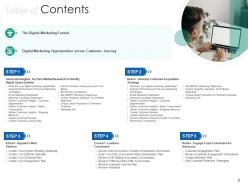
Slide 2: This is the table of contents slide. Introduce the digital marketing funnel concept and focus on its opportunities across customer journeys. Then using the detailed 5 step strategy, define an organized method to put this to practice.
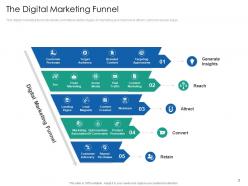
Slide 3: Use this slide to introduce the concept of the digital marketing funnel. This template helps you summarize all the stages of marketing and channels to attract customers at each stage.
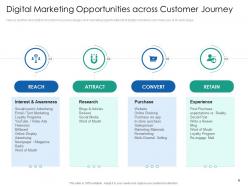
Slide 4: Here is another slide to describe the various stages of a customer’s journey and collate marketing opportunities that digital marketers can use at each stage.
Slide 5: Use this slide to generate insights and perform market research that will, in turn, help you identify digital opportunities.
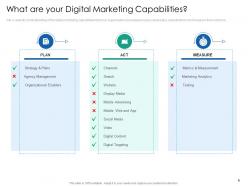
Slide 6: Use this slide to get a realistic understanding of your organization's digital marketing capabilities to plan campaigns, execute them, and measure their outcome.
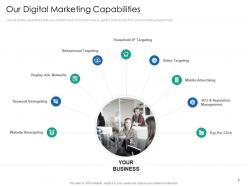
Slide 7: List out all the capabilities you currently have or need to have to get the best results from your marketing department using this template.
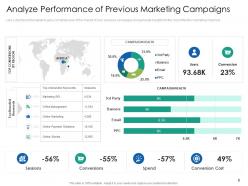
Slide 8: Use a dashboard template to get a complete view of the impact of your previous campaigns and generate insights for the most effective marketing channels.
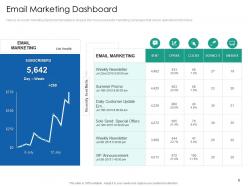
Slide 9: Here is an email marketing dashboard template to analyze the most successful marketing campaigns that can be replicated in the future.
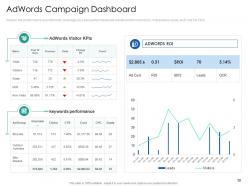
Slide 10: Use this AdWord dashboard slide to analyze the performance of your AdWords campaigns by seeing which keywords resulted in the most clicks, impressions, leads, and cost per click.
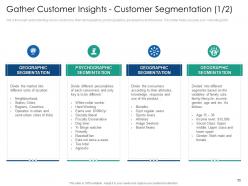
Slide 11: Use this slide to get a thorough understanding of your customers- their demographics, psychographics, geographics, and behavior. In this way, plan your marketing pitch by dividing the market into different units of location like neighborhoods, states, cities, etc.
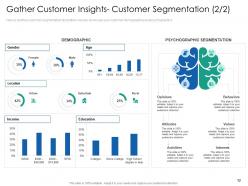
Slide 12: Here is another customer segmentation template to visually showcase your demographics and psychographics.
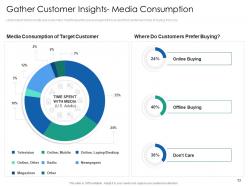
Slide 13: Understand which media your customers most frequently use and spend time on and their preferred mode of buying from you with this “Media Consumption of Target Customer” slide.
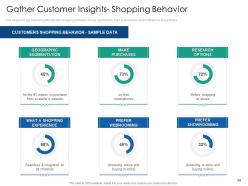
Slide 14: With this slide, dig deeper to get more insights into your customers' shopping behavior, preferences, and motivations to purchase.
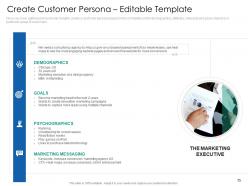
Slide 15: Use this slide to create a customer persona once you have gathered all customer insights. Classify your customers based on the similarities in the demographics, attitudes, interests, and goals of a particular group of customers.
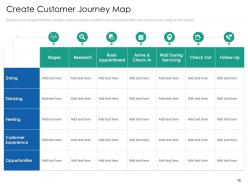
Slide 16: This PPT slide creates a customer journey map that maps out how they think, feel, and act at each stage of their journey. Churn out these stats based on your research findings.
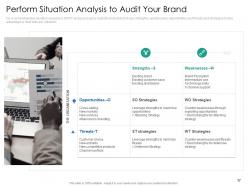
Slide 17: Use this slide to get a comprehensive situation analysis to get a realistic understanding of your strengths, weaknesses, opportunities, threats, and strategies to take advantage of or deal with any situation.
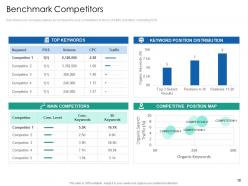
Slide 18: Use this “Benchmark competitors” slide to see where your company stands compared to your competitors in terms of traffic and other marketing KPIs.
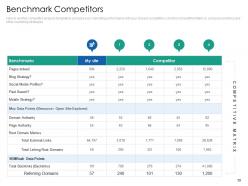
Slide 19: Here is another competitor analysis template to compare your marketing performance with your closest competitors. Use this Competitive Matrix to compare backlinks and other marketing strategies.
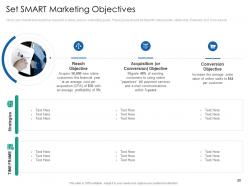
Slide 20: Once your market and customer research is done, set your SMART (Specific, Measurable, Attainable, Relevant, and Time-based) marketing objectives with this slide.
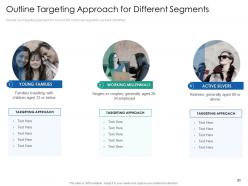
Slide 21: In this PPT slide, make judgments on your targeting approach for each customer segment you have identified.
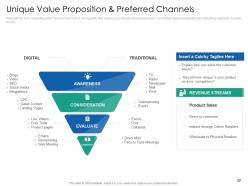
Slide 22: This slide lists out the digital and traditional marketing channels you plan to use to render a strong pitch that covers your unique value proposition.
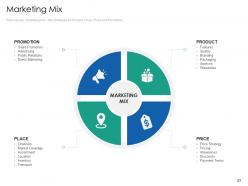
Slide 23: Plan out your marketing mix – the product, price, place, and promotion strategies with this exclusive slide.
Slide 24: Use this slide to introduce the second stage of your digital marketing strategy. i.e., reaching and developing a customer acquisition strategy.
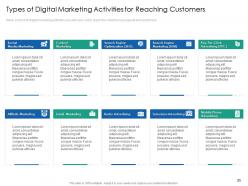
Slide 25: In this slide, make a list of all those digital marketing activities you will carry out to reach the top prospects and customers.
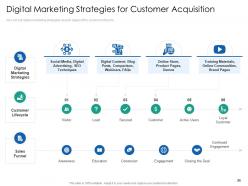
Slide 26: This PPT slide lists the digital marketing strategies at each stage of the customer’s lifecycle.
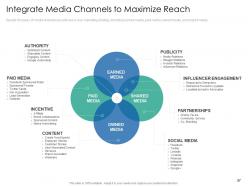
Slide 27: Employ this slide to specify the different types of media channels like Twitter, Facebook, etc., that you will use in your marketing strategy, including earned media, paid media, owned media, and shared media.
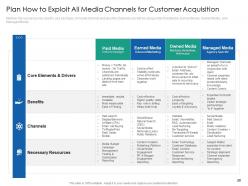
Slide 28: Use this slide to mention the resources you need to use, the type of media channel, and the channels you will be using under Paid Media, Earned Media, Owned Media, and Managed media.
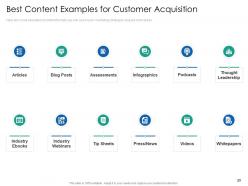
Slide 29: Introduce some examples of content formats you can use in your marketing strategy to acquire more leads in this slide.
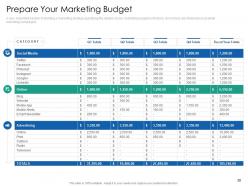
Slide 30: Build a marketing strategy specifying the details of your marketing budget so that you do not face any financial issues while executing campaigns using this slide.
Slide 31: Use this slide to highlight the third stage of your strategy, i.e., work on generating appeal for your web visitors.
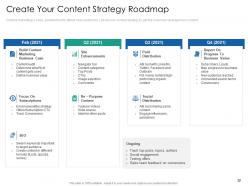
Slide 32: List your content strategy in this slide to get the maximum leverage from content.
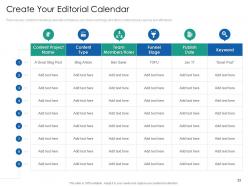
Slide 33: In the slide, plan out your content marketing calendar so that you can churn out blogs and other content pieces quickly and effectively.
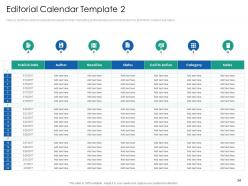
Slide 34: Here is another content calendar template to help marketing professionals and content teams to plan their content execution.
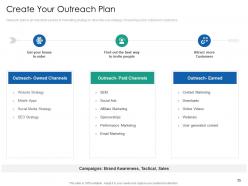
Slide 35: Create Your Outreach Plan with this slide to describe your strategy of reaching out to maximum customers.
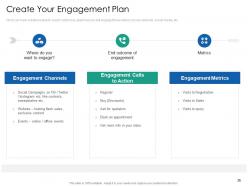
Slide 36: Use this slide to devise an engagement plan for visitors on your website, social media, etc.
Slide 37: This slide highlights the stage four of your strategy, i.e., converting leads to customers.
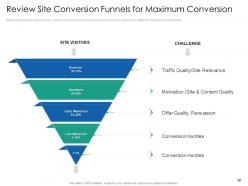
Slide 38: Measure the performance of your sales funnel or conversion funnel with this slide. Plan how to optimize it better for increased conversions.
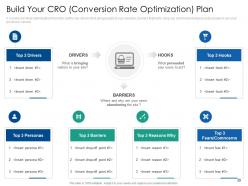
Slide 39: Build Your CRO (Conversion Rate Optimization) Plan with this PPT slide. List out the key drivers that bring people to your website, barriers that led to dropout, and hooks that persuade people to use your product or service.
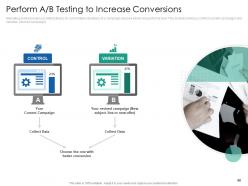
Slide 40: Perform A/B testing to increase conversions with this template using the control (current campaign) and variation (revised campaign). Try out multiple variations of these campaigns and see which one performs best.
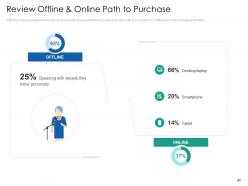
Slide 41: Review offline & online paths to purchase with this slide. Stay up to date with your customers’ offline and online shopping behavior.
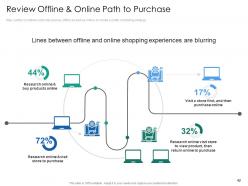
Slide 42: Map out the complete customer journey, offline and online, to create a better marketing strategy with this slide.
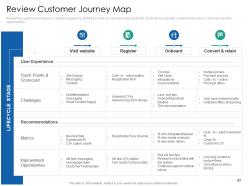
Slide 43: Review the customer journey you created in the beginning with this slide. Refine it to be clear with customer touchpoints, customer experience, and improvement opportunities.
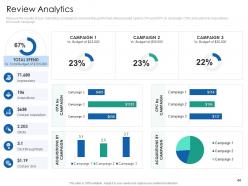
Slide 44: Measure the results of your marketing campaigns to see how they performed in this slide. Measure total spending, CPA, and CPC by campaign, CTR, and customer acquisitions from each campaign.
Slide 45: This slide marks stage five of your digital marketing strategy. I.e., how to retain and engage loyal customers for advocacy.
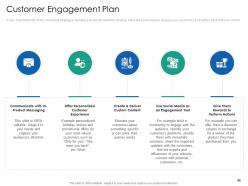
Slide 46: Devise a customer engagement plan with this slide. Use the suggested ways in this slide, like the personalized birthday wishes and promotional offers for your most valued customers, to engage your customers so that they stick with your brand.
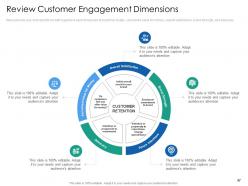
Slide 47: Measure how your brand performs regarding each dimension of customer loyalty – perceived value for money, overall satisfaction, brand strength, and advocacy with this review customer engagement dimensions slide.
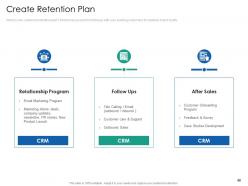
Slide 48: Focus on creating a retention plan in this slide. Show how you plan to follow up with your existing customers to maintain brand loyalty.
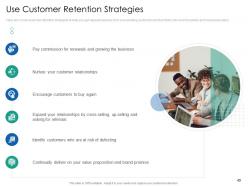
Slide 49: This slide presents some customer retention strategies to help you get repeat business from your existing customers and turn them into brand loyalists and brand advocates.
Slide 50: This is the “Introduction To Multi-channel Marketing Communications Strategy” icon slide.
Slide 51: This slide marks the beginning of additional slides to follow.
Slide 52: Here in this slide, introduce the agenda of your company.
Slide 53: Here is a slide to share your company introduction specifying your valuable clients, target audiences, and why many prefer you.
Slide 54: Use this slide to share your company mission, goals and vision.
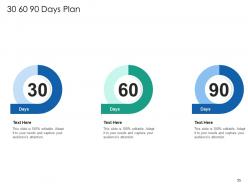
Slide 55: Share your monthly, two-monthly or three-monthly plan with this slide.
Slide 56: Use this slide to share your key goals.
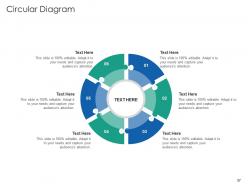
Slide 57: Here is a circular diagram to represent the constituents of various processor company elements.
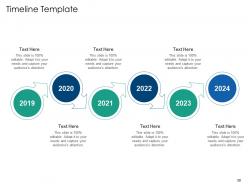
Slide 58: This is a timeline slide to share your growth and milestones creatively.
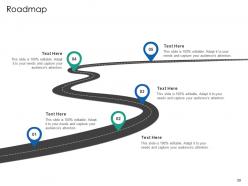
Slide 59: Use this slide to boast about your achievements and plans using a roadmap.
Slide 60: This is a Thank You slide where details such as the address, contact number, email address are added.
Introduction to multi channel marketing communications strategy powerpoint presentation slides with all 60 slides:
Use our Introduction To Multi Channel Marketing Communications Strategy Powerpoint Presentation Slides to effectively help you save your valuable time. They are readymade to fit into any presentation structure.

FAQs for Introduction to multi channel marketing communications strategy
Honestly, most people try to be on every platform and end up sucking at all of them. Pick like 3-4 channels max where your people actually are. Each platform's different - what works on Instagram won't work on LinkedIn, you know? Keep your messaging consistent but adapt the format. And definitely set up tracking so you can see the whole customer journey, not just random pieces. Oh, and map out where customers currently find you first - might surprise you. Way better to crush it on fewer channels than be mediocre everywhere.
Start with your existing customer data - see where they actually hang out online. Survey them directly, check your current analytics. Don't assume people act the same across platforms though! Your LinkedIn crowd probably wants detailed stuff while Instagram followers just want quick visual tips. I'd honestly focus on mapping one customer type across maybe 2-3 channels first before going crazy with expansion. Each platform has its own analytics tools that'll show you demographics and what's actually getting engagement. Way easier to nail a few channels than spread yourself too thin everywhere.
You really can't do multi-channel marketing without solid customer data - it's what shows you where people actually spend their time and how they want to talk to you. Look at which channels are converting, what messages work where, peak engagement times. Without it you're basically guessing at everything. Data helps you spend money smarter and create personalized experiences across different touchpoints. Oh, and definitely audit what you're already collecting first - there might be obvious gaps in your tracking you haven't noticed.
You'll want to track specific metrics for each channel and compare them against your goals. The tricky bit is attribution - customers usually hit multiple touchpoints before converting, which makes everything messy. Start with UTM parameters and Google Analytics to follow the customer journey. Focus on cost per acquisition, lifetime value, and conversion rates for each channel. Some channels look pricey upfront but actually bring better customers (learned this the hard way). Set up proper attribution tracking so you can see what's actually driving conversions, not just clicks.
Ugh, data silos are the worst - you'll have your email team saying one thing while social pushes something completely different. Attribution is a total mess too since customers hop between channels and you can't figure out what's actually working. Budget decisions become impossible when ROI per channel is murky. Different teams love their own tools that obviously don't talk to each other (why would they, right?). Plus tracking conversions across touchpoints? Good luck with that. I'd start by getting everyone on the same page with messaging first. Then grab a solid attribution tool to connect everything.
Start with a brand style guide - tone, visuals, messaging, all that stuff. But here's the thing: actually make people use it! So many companies build these things then wonder why their content's all over the place. Have someone review stuff before it goes live across channels. Do audits regularly to catch when things drift off-brand. Templates help too - saves time and keeps teams on track. Oh, and train people on WHY consistency matters. Nobody follows rules they don't understand the point of.
Honestly, it's all about knowing where your audience hangs out and how they scroll. Instagram and TikTok people want visuals - infographics, videos, that kind of stuff. LinkedIn's totally different though, they eat up those thoughtful industry posts and articles. Email still works surprisingly well if you nail the subject line (I'm weirdly obsessed with good email subject lines). Twitter's for quick hits and jumping into conversations as they happen. Facebook users actually read longer posts, especially if it gets people talking in the comments. My advice? Take one solid message and tweak it for each platform instead of starting from scratch every time.
Honestly, social media works way better when you're not just shouting into the void. Drive people to your website instead. Capture emails. Make each platform do something different - Instagram for pretty brand stuff, LinkedIn for the professional thoughts, Facebook for building your little community. I know keeping messaging consistent across everything is a total pain, but it matters. Map out how your social connects to everything else you're doing marketing-wise first. Then actually track what's converting customers - you might be surprised which combos work. Oh and don't treat it like a billboard. It's more about discovery and getting people engaged.
Honestly, start with HubSpot or Marketo for automation - they'll handle your email, social, and ad campaigns in one place. Salesforce is solid for tracking customer stuff across channels. For social posting, Hootsuite keeps everything consistent (though I find their interface kinda clunky). Google Analytics 360 will give you that cross-channel view you need because flying blind totally sucks. Customer data platforms are having a moment right now too. But seriously, don't go crazy trying to set up everything at once - pick one good automation tool first, then add more later. You'll thank me when you're not drowning in different dashboards.
Look, it all comes down to where your people actually are. Gen Z might be all over TikTok discovering new brands, but your older customers? They're still checking Facebook and reading emails like it's 2015. Don't waste money on fancy TV spots if your audience is glued to their phones. First figure out their whole journey - how they research stuff, what makes them buy, where they spend time online. Then put your budget there instead of chasing whatever platform's hot right now. It's honestly that simple.
Your customers want stuff that actually matters to them, not the same boring message blasted everywhere. Think about it - when you get generic emails, you delete them instantly, right? Personalization lets you hit people with relevant content whether they're browsing your site, checking email, or scrolling social media. The trick is segmenting your audience first. Look at how they behave and what they like. Then switch up your messaging for each channel. It's honestly night and day for engagement rates. Generic messaging is basically marketing suicide at this point.
Start by figuring out which channels actually convert - not just bring traffic. Attribution modeling shows the whole customer path since people find you on Instagram but buy through email, you know? Honestly, most teams just stare at last-click numbers which is pretty useless. Move budget slowly though - like 10-15% at a time from weak channels to your best ones. Oh and get your tracking set up properly first or you're basically throwing darts blindfolded. Spend where your audience actually lives and engages.
Okay so Disney's probably the best example - you literally can't escape their world once you're in it. Movies connect to parks, parks connect to their streaming stuff, and don't even get me started on the merchandise everywhere. Starbucks kills it too with how their app rewards work with what you actually do in stores. Nike's doing something similar - their fitness apps talk to their stores and your online profile. I swear these companies make it look so easy when really it's super complex behind the scenes. But that's the point, right? Your different channels should feel like they're actually talking to each other instead of being totally separate things.
Think of SEO as the backbone for everything else you're doing marketing-wise. Your keyword research? That stuff is gold for understanding what people actually want to hear about. I'd start by matching your SEO keywords with whatever campaigns you're running, then use those optimized pages as landing spots for social, email, paid ads - all of it. Plus when your organic rankings look solid, it makes your paid campaigns way more trustworthy. Honestly, most people sleep on this but you can repurpose so much of your SEO content across other channels. It's like doing the work once but getting multiple wins from it.
Email is honestly still one of the best investments you can make - the ROI is crazy good compared to most channels. Think of it as your home base where you actually own the audience, unlike social where you're at the mercy of algorithms. I always tell people to connect it with everything else they're doing. Follow up on social interactions, hit up website visitors who didn't convert. The magic happens when your emails feel consistent with what people see everywhere else. It's like... if someone follows you on Instagram then gets your email, it should feel like the same person talking to them, you know?
-
Nice and innovative design.
-
Awesome use of colors and designs in product templates.
-
Colors used are bright and distinctive.