


Vending Machine Business Plan Powerpoint Presentation Slides




Try Before you Buy Download Free Sample Product
 Impress Your
 Audience
 100%
100% Editable
 Save Hours
 of Time


Have you ever thought about the business behind your office snacks A vending machine business may be the ideal fit if you are looking for a new business opportunity that can be done part-time and requires no special skills or training. Our business plan team has professionally crafted a presentation that covers all the crucial elements required for writing a b-plan. Our readily available and fully editable vending machine business plan word document provides you with detailed information on vending machine statistics growth drivers market trends lucrative opportunities and key restraints. In addition it also includes a section for entity details target market company summary products and services offered mission and vision milestones etc. Furthermore the business plan also caters to porters framework go-to marketing strategy and competitive landscape. The business plan presentation also covers a financial summary section including a revenue model economic impact profit and loss statement break-even analysis etc. Download our 100 percentage editable vending machine business plan PPT now.
People who downloaded this PowerPoint presentation also viewed the following :
Content of this Powerpoint Presentation
Slide 1: This slide introduces Vending Machine Business Plan. Commence by stating Your Company Name.
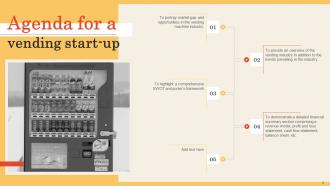
Slide 2: This slide depicts the Agenda of the presentation.
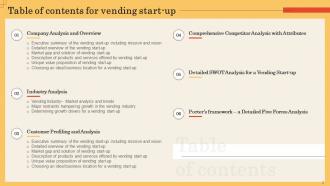
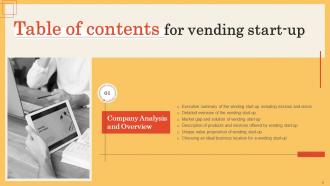
Slide 3: This slide includes the Table of contents.
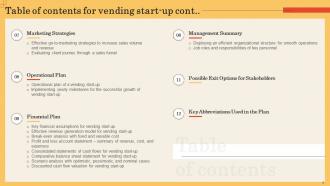
Slide 4: This is yet another slide continuing the Table of contents.
Slide 5: This slide highlights the Title for the Topics to be covered further.
Slide 6: The purpose of this slide is to provide a broader overview of the vending industry.
Slide 7: This slide presents a Detailed overview of the vending start-up.
Slide 8: This slide highlights the market gap and focus on devising solution to overcome those challenges.
Slide 9: The purpose of this slide is to express the benefits the firm provides to its customers or clients.
Slide 10: This slide portrays the Unique value proposition of vending start-up.
Slide 11: This slide portrays an ideal business location for vending start-up that minimize the risk of failure.
Slide 12: This slide includes the Heading for the Contents to be discussed next.
Slide 13: The purpose of this slide is to conduct a thorough assessment of the vending industry in addition to its market trends.
Slide 14: This slide continues a thorough assessment of the vending industry in addition to its market trends.
Slide 15: The purpose of this slide is to conduct a thorough assessment of the vending industry in addition to its market trends.
Slide 16: This slide aims to conduct a thorough assessment of the vending industry in addition to its market trends.
Slide 17: The purpose of this slide is to guide stakeholders about the problems prevailing in the industry.
Slide 18: This slide caters to details about various growth drivers resulting in the firm’s progress.
Slide 19: This slide includes the Title for the Ideas to be covered further.
Slide 20: This slide shows the Target segment analysis with buyer’s persona.
Slide 21: This slide continues the Target segment analysis with buyer’s persona.
Slide 22: This slide reveals the TAM SAM SOM of the target segment.
Slide 23: This slide contains the Heading for the Ideas to be discussed next.
Slide 24: This slide reveals the Comprehensive competitor analysis with attributes.
Slide 25: This slide continues the Comprehensive competitor analysis with attributes.
Slide 26: This slide mentions the Title for the Contents to be covered in the upcoming template.
Slide 27: The slide includes the strengths, weaknesses, opportunities, and threats analysis of the vending start-up.
Slide 28: This slide portrays the Heading for the Topics to be discussed further.
Slide 29: The slide highlights porter’s framework and its implications in the vending industry.
Slide 30: This slide exhibits the Title for the Ideas to be covered next.
Slide 31: This slide shows the Effective go-to-marketing strategies to increase sales volume and revenue.
Slide 32: This slide reveals Effective go-to-marketing strategies to increase sales volume and revenue.
Slide 33: The purpose of this slide is to implement an effective go-to-market strategy .
Slide 34: This slide deals with Evaluating client journey through a sales funnel.
Slide 35: This slide contains the Heading for the Ideas to be discussed further.
Slide 36: The purpose of this slide is to highlight the operational flow of the firm.
Slide 37: This slide focuses on Implementing yearly milestones for successful growth of start-up.
Slide 38: This slide displays the Title for the Contents to be covered in teh upcoming template.
Slide 39: This slide provides a glimpse of important financial assumptions that are to be made while setting up the firm.
Slide 40: The slide shows the Effective revenue generation model of the vending start-up.
Slide 41: The slides highlights the Break-even analysis with fixed and variable cost.
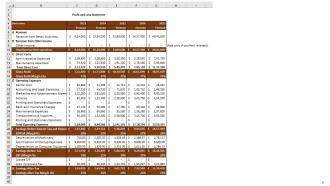
Slide 42: This slide provide a glimpse of the projected profit and loss statement.
Slide 43: This slide continues the projected profit and loss statement.
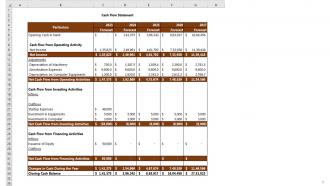
Slide 44: This slide reveals the Consolidated statements of cash flow of the vending start-up.
Slide 45: This slide continues the Consolidated statements of cash flow of the vending start-up.
Slide 46: The slides cover the snapshot of the company's financial position at a specific time.
Slide 47: This slide continues the company's financial position at a specific time.
Slide 48: This slide showcases the Scenario analysis with optimistic, pessimistic, and nominal cases.
Slide 49: This slide continues the Scenario analysis with optimistic, pessimistic, and nominal cases.
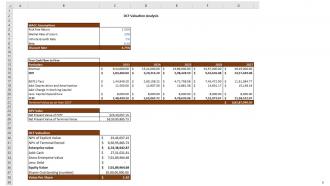
Slide 50: This slide reveals the Discounted cash flow valuation of the vending start-up.
Slide 51: This slide contains the Heading for the Topics to be coveerd next.
Slide 52: The purpose of this slide is to craft a successful hierarchical framework for the firm to ensure smooth operations.
Slide 53: This slide exhibits the Job roles and responsibilities of key personnel.
Slide 54: This slide mentions about the Title for the Ideas to be further discussed.
Slide 55: This slide represents exit strategy for stakeholders.
Slide 56: This slide highlights the Heading for the Ideas to be coveerd in the upcoming template.
Slide 57: This slide reveals the Key abbreviations used in the plan.
Slide 58: This is the Icons slide containing all the Icons used in the plan.
Slide 59: This slide is used for displaying some Additional information.
Slide 60: This is the Quotes slide for motivation.
Slide 61: This slide incorporates the firm's mission, Vision and Goal.
Slide 62: This is the Idea generation slide for encouraging fresh ideas.
Slide 63: This is the Venn diagram slide.
Slide 64: This slide presents the Bar graph.
Slide 65: This slide portrays the organization's Timeline.
Slide 66: This is the Idea generation slide for encouraging fresh ideas.
Slide 67: This slide is used for the purpose of Comparison.
Slide 68: This slide elucidates the SWOT analysis.
Slide 69: This is the Thank You slide for acknowledgement.
Vending Machine Business Plan Powerpoint Presentation Slides with all 74 slides:
Use our Vending Machine Business Plan Powerpoint Presentation Slides to effectively help you save your valuable time. They are readymade to fit into any presentation structure.





FAQs for Vending Machine Business Plan
Definitely start with location research - that's honestly make-or-break territory. Go sit at potential spots and watch foot traffic for hours (boring but worth it). Your business plan needs market analysis, startup costs, revenue projections, the usual stuff. Don't skip permits and insurance even though they're tedious as hell. Figure out your product mix and restocking strategy too. I'd probably spend more time on location scouting than writing honestly. Oh, and make your financial projections realistic - nobody needs another overly optimistic disaster story. Visit spots first, then write everything else around what you actually observe.
Honestly, just go walk around spots you're thinking about and count people at different times - I know it sounds boring but you'll learn tons. See what competition looks like (if any exists). Ask random people what snacks they'd actually buy and what they'd pay. I always think online research helps too, but watching real behavior beats everything else. City planning offices have demographic data that's pretty useful for understanding who lives nearby. Oh and definitely test one machine first before going crazy - way better to mess up with one than like five machines, you know?
Honestly, just stock what people actually grab when they're rushing around - chips, candy, crackers, nuts. Drinks are huge too: sodas, water, energy stuff, coffee. Don't bother with those random protein bars no one's heard of, stick to brands people recognize. Your location totally changes everything though. Office workers want different snacks than gym people or students. I'd track what flies off the shelves vs what just sits there collecting dust in your first couple weeks. Then ditch the stuff that doesn't move and double down on whatever's selling out constantly.
Honestly, you want spots where people are stuck waiting around with no good food nearby. Office buildings are solid - also hospitals, schools, gyms. Manufacturing places too. I made the mistake early on of picking locations where everyone just walks by super fast. Doesn't work. Go scope out your potential spots at different times to see the actual foot traffic patterns. Then talk to whoever manages the property about fees and splitting profits. Everyone I know who's killing it says schools and workplaces are where it's at - people get hungry on a schedule, you know? I'd start by mapping like 10-15 spots you can actually drive to for restocking without wanting to die.
Budget around $3,000-$10,000 to start, but honestly depends how ambitious you're feeling. New machines cost $1,500-$3,000 each, plus inventory runs maybe $200-$500 per machine. Used ones are way cheaper though - I've seen decent setups for $800-$1,500. Location fees might hit you too, depending where you set up. The research part is actually the biggest pain - way more work than you'd think finding good spots. Oh, and keep some cash aside for when things inevitably break. I'd start small with one or two machines first, see how it goes.
Honestly, start by checking what other machines around you are charging - that's your baseline right there. Factor in your wholesale costs, location fees, all that stuff. Most people do a 100-200% markup from what they pay. Premium spots like hospitals? People will literally pay $2 for a Snickers when they're stuck there all day. Schools and break rooms are way more price-sensitive though. I'd actually start with slightly lower prices to get people hooked on using your machine, then bump them up gradually. Track what sells at different price points - you'll be surprised what people will pay for convenience.
From what I've seen, vending machines usually pull 20-35% ROI per year. Location makes a huge difference though - hospitals and schools can hit that higher range, but crappier spots might only get you 15%. Foot traffic is everything, honestly. Snack machines beat drink-only ones most of the time. You'll pay more for prime locations but they're worth it if you can swing it. Machine costs and your margins matter too, obviously. I'd test out 2-3 different spots first before going crazy with it. See what actually works in your area.
Okay so first thing - get your business license and register with the state. Health department permits are non-negotiable since you're selling food, and trust me, they don't mess around with vending machines. Liability insurance is huge because if someone gets sick or a machine falls over, you're screwed without it. Also need sales tax registration, location contracts with property owners, and check zoning laws. Some areas are weird about vending machines in certain spots. Honestly just pay for a business lawyer consultation upfront - way cheaper than fixing mistakes later.
Honestly, just pick a regular schedule and hit your machines weekly at first. I made the mistake of constantly restocking crap nobody wanted while the good stuff stayed empty for days - super frustrating. Track everything in a basic spreadsheet or whatever app works for you. You'll spot patterns pretty quick, like within a month probably. Stock way more of the popular items and slowly ditch the slow sellers. Some locations are just weird too - what works at one spot totally bombs at another. The data will tell you everything you need to know, way better than just winging it.
Dude, definitely go location-based with your marketing. Partner up with whoever's hosting your machines - they can shout you out in newsletters or post your new snacks on social. Those flashy machine wraps actually work great, especially somewhere busy. Seasonal themes are pretty genius if you ask me. Try social media geotargeting to hit people walking by your spots. Oh, and loyalty stuff helps tons - apps like Cantaloupe or even basic punch cards. I'd test one thing for like a month first, then double down on whatever's working. Start small though.
Weekly restocking trips work best, plus monthly deep cleans and quarterly tech checks. Trust me, these machines are way more temperamental than they look - Murphy's law is real with vending equipment. Keep basic tools and spare parts in your van, especially coin mechanisms and bill validators since those always act up. Payment glitches, jams, and wonky temperature control are your main headaches. Most stuff's fixable once you learn the quirks though. Oh, and definitely start a maintenance log - sounds boring but it'll save your butt when you spot patterns before losing money.
Dude, definitely get cashless payments set up - you're probably losing like 20-30% in sales without them. Most people (myself included) just walk away from cash-only machines now. Apple Pay, Google Pay, contactless cards - all that stuff is basically essential at this point. There are apps too that let people locate your machines and check what's in stock, which is pretty neat. Some systems will even text you when something's jammed or running low. I'd say tackle the payment upgrade first since that's where you'll see the biggest difference right away.
Honestly, you're gonna deal with broken machines constantly - they always die at the worst times. Theft and vandalism suck too, plus finding good spots is harder than you'd think. Cash gets tight because you're buying inventory way before seeing any money back. Save up like 2-3 months of expenses upfront. Location owners can be sketchy and try renegotiating deals later, which is so frustrating. Get solid insurance and find a repair guy you trust. Stick to busy places like offices or schools first - don't get fancy with locations until you know what works. Oh, and track everything obsessively so you catch issues early.
Honestly, just start tracking everything from day one - trust me on this one. Most newer machines have sales reports built in, but I'd still keep a simple spreadsheet. Date, location, what sold, how much you made, restocking costs. The usual stuff. Check it weekly to see patterns, like maybe energy drinks fly off the shelves on Mondays or whatever. That's how you figure out what to stock more of and when to hit your routes. I kinda went overboard with data at first, but really you can start basic with just revenue and build from there.
Honestly, you've got tons of options for financing vending machines. Equipment loans are probably your best bet - banks love them since the machine is literally the collateral. Traditional small business loans work too, vending's been around forever so it's not risky to lenders. SBA microloans are solid if you qualify. Some people just use credit cards for their first machine, but man those rates will kill you. Equipment leasing keeps your upfront costs low and makes upgrading easier down the road. First though, figure out your total - machines, permits, that initial stock of snacks. Then shop around for rates.
-
“You have the structure in place that are easy to explore new opportunities.I will be recommending your services to other people.”
-
Incredibly beautiful designs that will help you get noticed! These eye-catching templates are perfect for corporate presentations that can be altered to fit any occasion or taste.