


Vendor assessment powerpoint presentation slides





Try Before you Buy Download Free Sample Product
 Impress Your
 Audience
 100%
100% Editable
 Save Hours
 of Time


Our team of expert designers has come up with this ready-made Vendor Assessment PowerPoint Presentation Slides. So, you can easily showcase a detailed report on your dealer performance. This seller management PPT sample deck has slides like selection process for vendors, determine company’s requirements, search appropriate vendors, vendor selection timeline, vendors classification, vendors evaluation matrix, request for proposals, vendor rating scorecard, selection of vendor operating model, negotiation strategic planning and many more. This vendor appraisal PPT presentation deck is here to help you showcase the performance and services provided by the vendors. Using this dealer quality assessment PowerPoint slideshow, you will be able to put your findings across. And most importantly the audience will be aware of the vendor management process. There are additional slides like our mission, meet our team, timeline, comparison, our target, quotes, etc. So, go ahead and download this seller evaluation PowerPoint presentation slides. An air of harmony develops due to our Vendor Assessment Powerpoint Presentation Slides. Friendly feelings begin to flow.
People who downloaded this PowerPoint presentation also viewed the following :
Content of this Powerpoint Presentation
Slide 1: This slide introduces Vendor Assessment. State Your Company Name and begin.
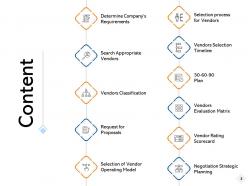
Slide 2: This slide shows Content of the presentation.
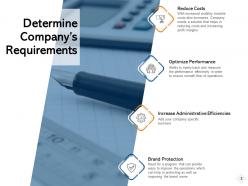
Slide 3: This slide presents Determine Company’s Requirements describing- Reduce Costs, Optimize Performance, Increase Administrative Efficiencies, Brand Protection.
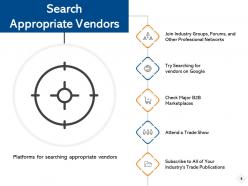
Slide 4: This slide displays Search Appropriate Vendors with related diagram.
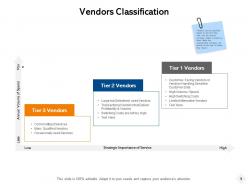
Slide 5: This slide represents Vendors Classification based on services they offer, and the amount company needs to spend on them.
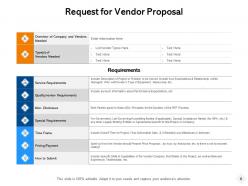
Slide 6: This slide showcases Request for Vendor Proposal with requirements. You can change the data as per requirements.
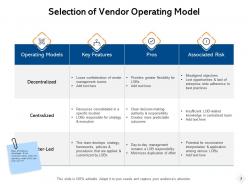
Slide 7: This slide shows Selection of Vendor Operating Model in tabular form. Select the operating model which best suits your firm.
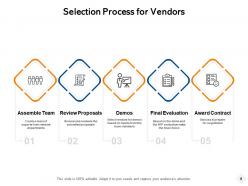
Slide 8: This slide presents Selection Process for Vendors describing- Assemble Team, Demos, Award Contract, Review Proposals, Final Evaluation.
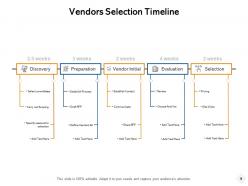
Slide 9: This slide displays Vendors Selection Timeline describing- Discovery, Preparation, Vendor Initial, Evaluation, Selection.
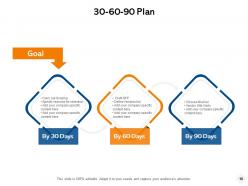
Slide 10: This slide showcases 30-60-90 Plan with related imagery.
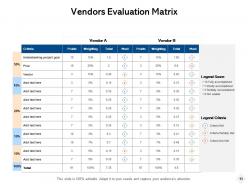
Slide 11: This slide shows Vendors Evaluation Matrix. You can add or edit data as per needs.
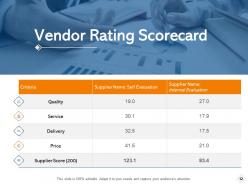
Slide 12: This slide presents Vendor Rating Scorecard with categories as Criteria, self evaluation supplier and internal evaluation supplier.
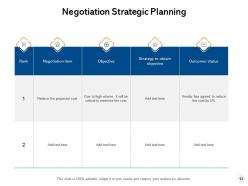
Slide 13: This slide displays Negotiation Strategic Planning in tabular form.
Slide 14: This slide showcases Vendor Assessment Icons.
Slide 15: This slide is titled as Additional Slides for moving forward.
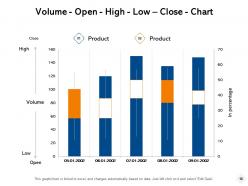
Slide 16: This slide shows Volume - Open - High - Low – Close - Chart.
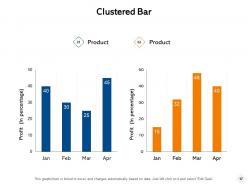
Slide 17: This slide presents Clustered Bar chart with two products comparison.
Slide 18: This is Our Mission slide with related imagery and text.
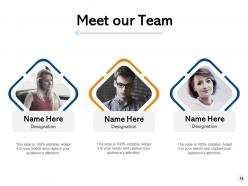
Slide 19: This is Meet our Team slide with names and designation.
Slide 20: This is a Timeline slide to show information related with time period.
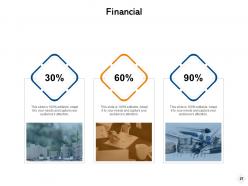
Slide 21: This is a Financial slide. Show your finance related stuff here.
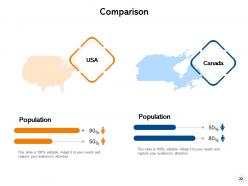
Slide 22: This is a Comparison slide to state comparison between commodities, entities etc.
Slide 23: This is a Quotes slide to convey message, beliefs etc.
Slide 24: This is Our Target slide. State your targets here.
Slide 25: This is a Bulb or Idea slide to state a new idea or highlight information, specifications etc.
Slide 26: This is a Thank you slide with address, contact numbers and email address.
Vendor assessment powerpoint presentation slides with all 26 slides:
Your advise generates genuine gratitude due to our Vendor Assessment Powerpoint Presentation Slides. Folks will come gushing to you.







FAQs for Vendor assessment
Three big things to watch: their finances, track record, and how good their support actually is. Run credit checks and call references - seriously, you don't want them folding halfway through your contract (been there, it sucks). Dig into their performance with similar companies, especially uptime stats and how fast they fix problems when stuff breaks. Response time from their support team can make or break you honestly. Oh, and if you're in a regulated industry, definitely check their security certs first. I'd make a little scoring sheet with all this weighted by what matters most to you.
Check their financials first - cash flow, debt ratios, profit margins from the past few years. D&B credit reports are solid but kinda expensive if you're doing a bunch of these. I'd also dig into their payment history with other suppliers and grab some customer references. Oh, and scan recent news for any red flags like layoffs or leadership drama in their sector. Honestly, just be direct about requesting their audited financials upfront. Don't feel weird about asking the hard questions - better to know now than get burned later.
Look, vendor reputation is your cheat code for risk assessment. Check what other people are saying - references, reviews, industry buzz. Any sketchy stuff like lawsuits or compliance drama? Red flag city. Honestly, it's like hiring anyone else; you wouldn't skip the background check, right? Google them first, then ask for three recent clients you can actually call. Sure, past performance doesn't guarantee they won't mess up later, but it's your best shot at figuring out if they're reliable and how they handle crisis mode.
Honestly, there's a bunch of decent options out there. Vendorful, Prevalent, and ServiceNow VRM are solid if you want the full package - though they'll cost you. Smaller teams might be better off with Airtable or just a really good Google Sheets setup with some automated scoring built in. I've watched so many teams waste months hunting for the "perfect" solution when a basic spreadsheet would've done the job. My take? Pick whatever your team will actually stick with rather than the shiniest tool. Half the battle is just being consistent with whatever you choose.
Dude, vendor compliance isn't optional - learned that the hard way at my last job. Any screw-ups on their end become YOUR headache, especially with stuff like GDPR or HIPAA. Don't just trust what they tell you either. Ask for actual certifications and audit reports upfront. I've watched companies get totally wrecked because they assumed vendors were compliant without checking. Build those requirements right into the contract from day one. Honestly, some vendors get weird when you ask for documentation, which is usually a red flag anyway.
Call their actual clients first - skip the fancy testimonials on their site. Get copies of their insurance, certifications, and financial docs, then verify that stuff yourself. If you can swing it, visit their location in person. You'd be amazed what you pick up just walking around their place. BBB ratings matter, plus scroll through online reviews and maybe creep their LinkedIn profiles (guilty as charged). Don't forget a credit check and make sure they're licensed properly in your state. Honestly, cross-checking everything is way better than trusting one source.
Honestly, skip those generic question templates online - they're useless. Map your questions to actual problems you're dealing with. Ask stuff like "how would you handle our peak season chaos" or "what's your backup plan if everything crashes on Black Friday." I always throw in something random to see if they can think fast. Oh, and definitely ask about their weaknesses. The vendors who are upfront about what they can't do? Those are your people. Anyone who claims they're perfect at everything is probably lying.
Honestly, run if they won't show you clear financials or give you client references. Major red flag. Also sketchy if they dodge questions about security or how they handle your data - like, why would that be a secret? High turnover is another bad sign because you'll constantly get stuck with new people who don't know your account. Oh, and if they're already being slow or confusing during the sales process... yikes. That's probably how they'll always be. Just trust your instincts - if something feels off, it probably is.
Look, testimonials and case studies are where you'll actually see if a vendor can walk the walk. Skip the generic 5-star fluff - you want detailed case studies from companies like yours, same size and industry if possible. Those tell you what problems they actually solved and the real results they got. Also pay attention to stuff about their support team and whether projects finished on time (or didn't, which happens more than vendors admit). When you're talking to potential vendors, ask for 2-3 recent case studies that match what you're trying to do. Better yet, call those reference customers directly if you can swing it.
Honestly, cultural fit is huge when picking vendors. I learned this the hard way - worked with this company once where we were super collaborative and they were all about rigid hierarchies. Absolute disaster. You'll spend more time fighting over how to get stuff done than actually doing it. Good partnerships happen when communication styles click and you're both on the same page about priorities. Oh, and definitely chat with their actual team before you sign anything, not just the sales people. You want to see how they really operate day-to-day.
At minimum, do them yearly. But honestly? It totally depends on how critical the vendor is. Mission-critical ones need quarterly check-ins - I've watched too many companies get screwed by waiting when warning signs were already there. Low-risk vendors can probably go 18-24 months between formal reviews. Don't just stick to schedules though. Set up triggers for things like security breaches or contract changes that force an immediate assessment. Start by sorting your vendors into risk categories first, then figure out timing from there. Way easier approach.
Dude, seriously don't skip the vendor homework. I've seen companies get absolutely wrecked by data breaches and service outages because they rushed into partnerships. Check their finances first - are they stable? Then dig into security practices and compliance stuff. Here's what most people miss though: actually call their current customers, not just the references they give you. Website testimonials are basically useless. Oh, and set clear SLAs upfront so you're not stuck if they can't deliver. Also plan your exit strategy before you even need it. Sounds paranoid but it'll save your butt later.
Yeah, it really depends on what industry you're in. Healthcare companies are paranoid about HIPAA and keeping patient data locked down. Manufacturing? They care more about supply chains not falling apart and quality certs. Financial services get crazy about regulatory stuff and cybersecurity - makes sense I guess. Tech companies want vendors who can actually innovate and scale with them. Each sector has its own obsessions, honestly. Figure out what would truly mess up your business if a vendor dropped the ball, then focus your evaluation on those things. Everything else is just noise.
Track the obvious stuff first - delivery times, quality scores, cost overruns. But don't forget the softer things like how fast they respond when something goes wrong. SLA tracking is honestly a lifesaver because it stops people from making excuses later. Invoice accuracy matters more than you'd think - nothing's more annoying than chasing down billing errors every month. Set up baselines early so you can actually spot trends. A simple dashboard that updates monthly works great, then just review it with your vendor regularly. Oh, and watch how they handle when you need to change requirements mid-stream.
Dude, you should definitely look into AI tools for vendor assessments. They'll handle all that boring manual stuff you're doing now. Machine learning can crunch financial data and spit out risk scores way faster than your team ever could. Plus it scans contracts for sketchy clauses automatically. These platforms pull live data instead of those quarterly reports that are basically useless by the time you finish them (honestly, who has time for that?). Best part? They catch patterns you'd totally miss. I'd start with whatever takes you the longest right now and automate that first.
No Reviews