


Performance evaluation powerpoint presentation slides





Try Before you Buy Download Free Sample Product
 Impress Your
 Audience
 100%
100% Editable
 Save Hours
 of Time


Our Performance Evaluation Powerpoint Presentation Slides go all out to gain from changes. They believe it is essential.
People who downloaded this PowerPoint presentation also viewed the following :
Content of this Powerpoint Presentation
Slide 1: This slide introduces PERFORMANCE Evaluation. State Your Company Name and begin.
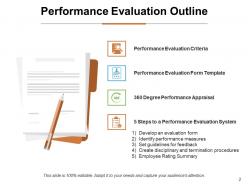
Slide 2: This slide shows Performance Evaluation Outline describing- Performance Evaluation Criteria, Performance Evaluation Form Template, 360 Degree Performance Appraisal, 5 Steps to a Performance Evaluation System, Develop an evaluation form, Identify performance measures, Set guidelines for feedback, Create disciplinary and termination procedures, Employee Rating Summary.
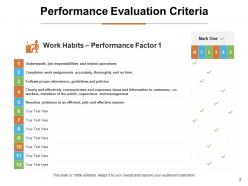
Slide 3: This slide presents Performance Evaluation Criteria in tabular form with related text.
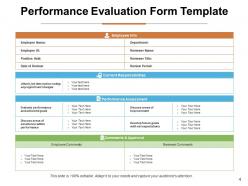
Slide 4: This slide displays Performance Evaluation Form Template describing- Employee info, Current responsibilities, performance assessment etc.
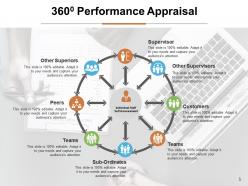
Slide 5: This slide represents 360 degree Performance Appraisal describing- Supervisor, Other Supervisors, Customers, Teams, Sub-Ordinates, Peers etc.
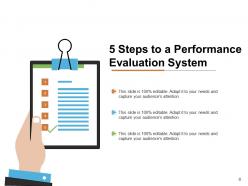
Slide 6: This slide showcases 5 Steps To A Performance Evaluation System describing- Develop an evaluation form, Identify performance measures, Set guidelines for feedback, Create disciplinary and termination procedures, Employee Rating Summary.
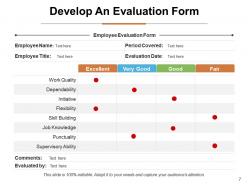
Slide 7: This slide shows Develop An Evaluation Form in tabular form with qualities as excellent, very good, good, fair etc.
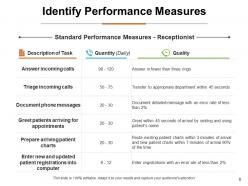
Slide 8: This slide presents Identify Performance Measures with categories as- Description of task, quantity and quality.
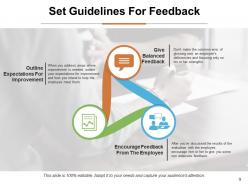
Slide 9: This slide displays Set Guidelines For Feedback as- Give Balanced Feedback, Encourage Feedback From The Employee, Outline Expectations For Improvement.
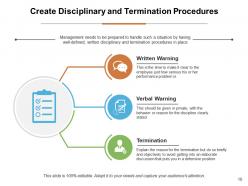
Slide 10: This slide represents Create Disciplinary And Termination Procedures with- Written Warning, Verbal Warning, Termination.
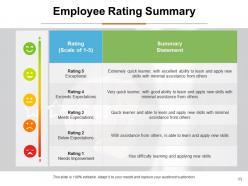
Slide 11: This slide showcases Employee Rating Summary with rating scale and summary statement.
Slide 12: This slide shows Performance Evaluation Icons.
Slide 13: This slide is titled as Additional slide for moving forward.
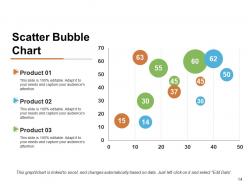
Slide 14: This slide shows Scatter bubble Chart with three products comparison.
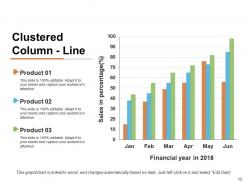
Slide 15: This slide displays Clustered column line Chart with three products comparison.
Slide 16: This is Our Mission slide with related imagery and text.
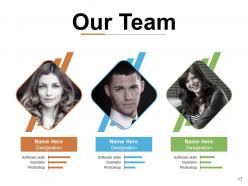
Slide 17: This is Our Team slide with names and designation.
Slide 18: This is Our Goal slide. State your important goals here.
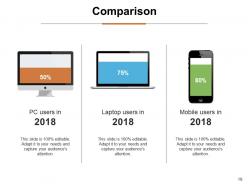
Slide 19: This is a Comparison slide with text boxes to show information.
Slide 20: This is a Quotes slide to highlight or state anything specific.
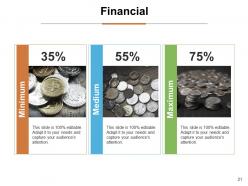
Slide 21: This is a Financial slide. Show your finance related stuff here.
Slide 22: This is a Target slide. Show your targets here.
Slide 23: This is a Puzzle slide with text boxes.
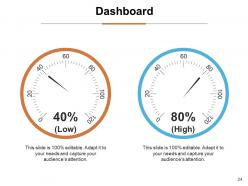
Slide 24: This slide shows Dashboard with text boxes to show information.
Slide 25: This is a Venn slide with additional text boxes.
Slide 26: This is a Bulb Or Idea slide to state a new idea or highlight specifications, information etc.
Slide 27: This slide displays Magnifying Glass with text boxes.
Slide 28: This is a Thank You slide with address, contact numbers and email address.
Performance evaluation powerpoint presentation slides with all 28 slides:
Infer how the event could have happened with our Performance Evaluation Powerpoint Presentation Slides. It helps examine the circumstances.


FAQs for Performance evaluation
Honestly, it depends on the role, but I'd go with 3-5 solid metrics max. Mix some numbers stuff with quality measures - like goal hits, work quality, how well they collaborate. Customer-facing people? Track satisfaction scores. Tech folks might need project completion rates or bug fixes. I've watched managers go overboard tracking literally everything and it becomes useless noise. Pick things your person can actually control. Short, sweet, meaningful. Oh, and make sure whatever you choose connects back to bigger team goals - otherwise you're just collecting random data that doesn't help anyone grow.
Start with trade associations and research firms like Gartner - they're goldmines for this stuff. Most industries already track standard KPIs, so don't overthink it. Just make sure you're actually comparing similar companies (size, market, all that matters way more than people realize). Industry forums are clutch too - that's where you'll find the real numbers, not the BS polished data. Oh, and here's the thing: once you've got benchmarks, don't just sit there comparing. Figure out WHY the gaps exist. What are top performers actually doing differently? That's where the magic happens.
Look, feedback is what actually makes performance reviews worth doing instead of just going through the motions. Don't save everything for that awkward annual sit-down - honestly, who remembers what happened 8 months ago anyway? Make it ongoing and specific. I always try to focus on stuff I actually witnessed, not assumptions. Ask them what they think too - sometimes their perspective totally changes how I see things. Connect it back to where they want their career to go. Oh, and keep notes throughout the year so you're not frantically trying to recall examples the night before their review.
Honestly, one-size-fits-all performance reviews are terrible. Each team needs totally different metrics - your sales people should get measured on quotas and pipeline stuff, but developers? Focus on code quality and whether they're actually shipping projects on time. Customer service is all about response times and keeping customers happy. Get your team leads involved in building these frameworks. They know way better than HR what good work actually looks like day-to-day. And don't force everyone into the same 1-5 rating system if it's weird for certain roles. Just map out what each team's supposed to do, then figure out how to measure it.
Self-assessments are pretty solid for getting people to actually think about their own performance instead of just waiting for feedback. Most employees will spot development areas you totally missed, which is honestly helpful. Plus it feels way more collaborative than the usual top-down review process. Downside though? Some people absolutely trash themselves while others think they're perfect - so the data gets weird. And yeah, it definitely creates more work upfront for everyone. I'd say use them to kick off good conversations rather than treating them like they're 100% accurate. Oh, and give people actual criteria to work with so they're not just winging it.
Honestly, AI could be a game-changer for your performance reviews. No more frantically trying to remember what Sarah did last quarter or relying on your gut feelings about promotions. These tools can track metrics automatically and catch patterns you'd never spot on your own. They're surprisingly good at analyzing feedback sentiment too. Start with something simple - maybe try one of those AI feedback dashboards first? You can reduce bias in evaluations and actually predict who might be struggling before they crash and burn. Plus it helps create development plans based on real data instead of just winging it.
Oh man, the worst ones are recency bias - like you only remember stuff from last week. Then there's the halo effect where someone nails one project and suddenly they're perfect at everything. Confirmation bias is sneaky too, you end up cherry-picking examples that support whatever you already decided about them. What helps me is jotting down notes all year instead of scrambling at review time. Also get input from other people who work with them - honestly saves you from tunnel vision. Those structured forms with clear criteria work pretty well too. Once you know these biases exist, you start catching yourself doing it.
Honestly, I'd go with quarterly check-ins plus one bigger annual review. Monthly is way too much unless someone's totally new or really struggling - like, who wants that stress constantly? Quarterly hits that sweet spot where you can actually catch problems before they blow up, but it doesn't feel like you're breathing down everyone's neck. Plus it lines up nicely with business cycles and stuff. The key thing is just being consistent about it. Set those calendar reminders now and don't let them slide, because sporadic reviews are pretty much useless.
Honestly, performance reviews work way better when you're building people up instead of just pointing out what's wrong. Give them clear expectations and actually celebrate their wins - I've watched people do complete 180s after one good conversation. Regular check-ins beat the hell out of those awkward once-a-year sit-downs. Help them see how their work connects to the bigger picture. Most importantly though? Always wrap up with actual next steps they can take action on. People want to feel heard, not judged. It's crazy how much difference that mindset shift makes.
Connect your review criteria directly to what your company actually wants to achieve. Don't just use standard metrics - figure out what each role should do to hit those bigger goals. Customer retention matters? Then grade your sales people on building relationships, not just deal volume. Honestly, so many places preach one thing then measure something completely different - drives me crazy! Break those strategic objectives down into stuff people can actually influence day-to-day. Oh, and definitely review quarterly because priorities shift fast.
Document everything and stick to job-related stuff only. Don't mention anything that could remotely tie to age, race, gender - I've watched managers crash and burn over comments they thought were innocent. Focus on actual behaviors and results, not personality stuff. Your rating system better be consistent across the board or you're asking for trouble. Keep detailed examples of what people actually did or didn't do. Honestly, performance reviews are kind of a minefield these days. Run any serious issues by HR before you put pen to paper - they'll save your butt later.
Ditch the annual review thing - it's basically useless. Monthly check-ins work way better, or quarterly if you're swamped. Make it about helping people grow instead of just judging them. I swear, some managers turn these into torture sessions which is so counterproductive. Ask stuff like "what's going well, what sucks, and how can I help?" Don't just rate their performance like they're Amazon products. Let them set their own goals too - people actually care more when it's their idea. Oh, and make feedback go both ways. Schedule some quick one-on-ones this week and see how it goes.
Set clear goals upfront so people actually know what you're measuring them on. Document stuff throughout the year - don't rely on memory because you'll totally fall into that recency bias trap where you only remember last week's drama. Mix up your data sources too. Get peer feedback, self-assessments, hard numbers, whatever. Just don't go with your gut alone because honestly, our guts are pretty unreliable. Keep your rating scales consistent across the team. Oh, and have those awkward conversations regularly instead of saving them all for review season - nobody wants five months of feedback dumped on them at once.
Definitely sit down with them in person - don't just email the evaluation and think you're done. Walk through everything together and explain your reasoning behind each rating. I can't tell you how many managers mess this up by avoiding the conversation entirely. Use specific examples when you're talking, and let them ask questions. Actually give them a day or two to think about it before jumping into the whole "here's what you need to improve" discussion. Make it feel like you're talking WITH them, not AT them. Oh, and always end with concrete next steps and when you'll check in again.
Honestly, I'd start with just 2-3 metrics so you don't go crazy tracking everything. Look at how often cross-functional projects actually get finished and maybe do some 360 reviews - those are solid for catching collaboration issues people miss. Track peer feedback scores too. For the softer stuff, pulse surveys about psychological safety work well. Oh, and measure how long it takes to resolve conflicts - that one's pretty telling. Knowledge sharing frequency is good data, plus checking if work gets distributed fairly across the team. The trick is mixing hard numbers with regular check-ins about trust levels. Don't overwhelm yourself with tons of data points right off the bat.
No Reviews