


Vendor performance measurement dashboard standardizing supplier performance management process ppt inspiration




Try Before you Buy Download Free Sample Product
 Impress Your
 Audience
 100%
100% Editable
 Save Hours
 of Time


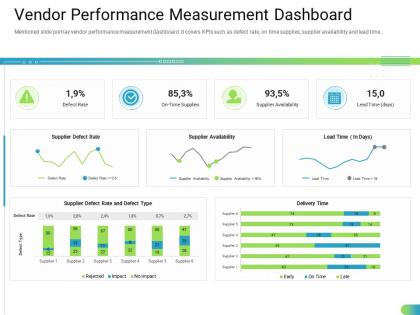
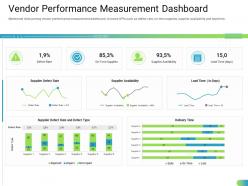
Mentioned slide portray vendor performance measurement dashboard. It covers KPIs such as defect rate, on time supplies, supplier availability and lead time.
People who downloaded this PowerPoint presentation also viewed the following :
Vendor performance measurement dashboard standardizing supplier performance management process ppt inspiration with all 2 slides:
Use our Vendor Performance Measurement Dashboard Standardizing Supplier Performance Management Process Ppt Inspiration to effectively help you save your valuable time. They are readymade to fit into any presentation structure.
FAQs for Vendor performance measurement dashboard standardizing supplier performance management
Track the stuff that actually matters: defect rates, delivery times, and whether they're hitting your price targets. Communication responsiveness is huge too - nobody wants suppliers who ghost you. Financial stability matters since you don't want them going under mid-contract. Honestly, I've watched teams get obsessed with tracking like 20 different metrics and it becomes this whole nightmare. Pick 5-7 that tie directly to what you care about most. You can always add more later once you've got the basics down. The goal isn't pretty reports - it's getting suppliers to actually change how they work.
Numbers don't tell you everything about suppliers. Like, they might nail every deadline but then ghost you when problems pop up. I've watched "perfect" suppliers completely fall apart during emergencies - not fun. You need feedback sessions with your team to track the softer stuff: how responsive are they? Do they actually help solve problems or just point fingers? Communication style matters too. Are they upfront about issues or do you find out the hard way? This relationship stuff often predicts future headaches way better than past performance data.
Honestly, your suppliers are like having free consultants who actually know your blind spots. They deal with your processes daily and see stuff you miss internally. Get feedback from them regularly - quarterly check-ins work great, or just debrief after big projects. Ask about payment issues, communication problems, whatever's bugging them. I'd start simple though. Hit up your top 3 suppliers and ask what one change would make things smoother between you. Then actually do something about it - that's where most people drop the ball. It's basically fuel for getting better at this whole thing.
Look, technology basically takes all that manual tracking you're doing and automates it. You'll get way better insights too. Real-time dashboards let you spot trends before they turn into disasters, and you can benchmark suppliers against each other. The analytics tools are pretty wild - they actually predict which suppliers might screw up deliveries. Having solid data means you can have real conversations during reviews instead of just going with your gut. Oh, and start simple - just digitize your current scorecards first. Once that data's clean, then add the fancy predictive stuff.
Honestly, the biggest mistake is just looking at costs and ignoring everything else. Don't let procurement fall in love with a cheap supplier while your ops team is pulling their hair out over late deliveries. Track quality, delivery times, service - the whole picture. Get feedback from everyone who actually deals with these vendors, not just the people signing contracts. Oh, and review quarterly instead of waiting for things to blow up. That reactive approach never works out well. You want to catch problems before they become disasters.
Honestly, I check my critical suppliers weekly - sometimes daily if they're being sketchy. Monthly works for most regular ones though. Your suppliers handling like 40% of production? Yeah, you need real-time dashboards on those guys. Quarterly's fine for the smaller players who aren't make-or-break. It's kinda like monitoring your credit score - ignore the important stuff too long and you'll get burned. Match how often you check to how much they'd screw you over if something went wrong. Oh, and automate whatever you can because pulling reports manually gets old fast.
Honestly, just pick your top 5 suppliers and start having real conversations with them. Share your performance data openly - like quality scores, delivery times, that stuff. Nobody wants surprises when contracts come up for renewal, trust me. Set up quarterly reviews where you actually talk through what's working and what isn't. I'd create simple scorecards tracking the basics: quality, delivery, how responsive they are. Here's the thing though - make it collaborative, not like you're scolding them. Tie improvements to perks like longer contracts or preferred status. Way better than being the demanding customer everyone dreads.
Honestly, benchmarking is a game changer because it shows you what "good" actually means. Otherwise you're just guessing if your suppliers suck or not. Compare their delivery times and quality rates to industry averages - suddenly you can spot the real problems and set targets that aren't totally unrealistic. It's also super helpful when suppliers whine that your standards are too high. You might discover your "best" supplier is actually just the least terrible option out there. Industry reports are decent for this, or try joining procurement groups where people actually share real data.
So here's the thing - those performance metrics you're already tracking? They're basically your risk radar in disguise. When delivery times start slipping or quality scores tank, that's your heads up that something's going sideways (could be money problems, capacity crunch, who knows). I'd set up alerts for when stuff drops below your comfort zone. That way you can jump on issues before they blow up your whole supply chain. Honestly, it's kinda genius how the same data works for both - why not make your scorecards pull double duty?
Ugh, bad supplier scores are such a nightmare. Basically everything starts falling apart - late deliveries, crappy quality, costs going through the roof. Your whole production schedule gets screwed up and customers get pissed. Inventory becomes a total mess too. The really annoying part is you'll probably have to find emergency suppliers who charge way more, or just run out of stuff completely. I learned this the hard way at my last job - we didn't catch it early enough. Watch those metrics like a hawk and have backup plans ready. Way less stressful than fixing it after.
Honestly, you'll want multiple data collection points - don't put all your eggs in one basket there. Pull metrics straight from your ERP and supplier portals automatically instead of doing manual entry (that's where things get messy). Make sure everyone agrees on KPI definitions upfront or you'll be comparing apples to oranges. I'd also build in some redundancy and do regular audits to catch weird inconsistencies. Oh, and definitely have suppliers confirm their data matches what you're seeing - saves headaches later when numbers don't add up.
Honestly, communication makes or breaks supplier relationships - I can't stress this enough. Don't just dump metrics on them quarterly when things go sideways. Monthly check-ins work way better. Walk through the numbers together, spot trends early, and tackle problems as a team rather than pointing fingers. Your suppliers shouldn't be blindsided by their scores, you know? I've watched too many partnerships crash because people only talked when stuff hit the fan. Keep that dialogue open and treat them like actual partners in fixing issues.
Just add sustainability stuff to your current supplier scorecards - carbon footprint, waste reduction, labor practices, that kind of thing. Start small though, like 2-3 metrics max. Nobody wants to track a million different measures. Weight it maybe 20-30% against your usual quality/cost/delivery scores. The annoying part? Getting suppliers to actually report the data consistently. You'll need to be super clear about expectations upfront and probably audit some of it. Honestly, half the battle is just getting everyone on the same page about what you're even measuring.
Oh man, cultural stuff will mess with your supplier evaluations big time if you're not paying attention. Like, what seems like terrible communication might just be how they do business there. Relationship-heavy cultures take forever making decisions, and don't get me started on different ideas about being "on time." Quality standards vary too, plus how people negotiate and give feedback. I got burned by this with a Japanese vendor once - totally misjudged their process. You gotta adjust your KPIs for cultural differences but still keep your main standards. Maybe grab someone local to help you figure out realistic metrics? Trust me on this one.
Start with what matters most to your business. Sustainability company? Track carbon footprints and ethical stuff. Cost-cutting mode? Look at total ownership costs, not just sticker prices. Quality obsessed? Focus on defect rates. Here's the thing though - don't try measuring everything. I've seen teams drown in data that way. Pick maybe 3-5 metrics that actually matter for your goals. Then here's the key part: tie your procurement team's bonuses to those same numbers. Otherwise you'll have misaligned incentives and people optimizing for random stuff instead of what you actually care about.
-
Nice and innovative design.
-
It saves your time and decrease your efforts in half.
-
Out of the box and creative design.
-
Awesomely designed templates, Easy to understand.