

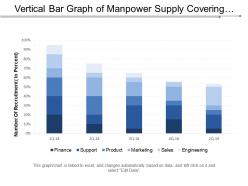
Vertical bar graph of manpower supply covering figure of recruitment across different departments





Try Before you Buy Download Free Sample Product
 Impress Your
Audience
 100%
Editable
 Save Hours
of Time


The course to follow emerges with our Vertical Bar Graph Of Manpower Supply Covering Figure Of Recruitment Across Different Departments. Development will begin to evolve.
People who downloaded this PowerPoint presentation also viewed the following :
Vertical bar graph of manpower supply covering figure of recruitment across different departments with all 5 slides:
People have a deep seated resistance to changes. Help them through with our Vertical Bar Graph Of Manpower Supply Covering Figure Of Recruitment Across Different Departments.


FAQs for Vertical bar graph of manpower supply covering figure of recruitment
Honestly, it mostly comes down to where industries are booming and where the talent actually lives. Tech and healthcare are sucking up everyone because they're growing like crazy and the money's good. Meanwhile manufacturing is stuck dealing with older workers retiring and being tied to specific locations. Retail throws everything out of whack with their seasonal hiring spikes - super annoying to track. You can't just relocate a mining company to where all the programmers hang out, you know? I'd say check quarterly industry reports and local job data if you want to guess where people are headed next.
Honestly, you've gotta stop fishing in the same pond as everyone else. LinkedIn's fine but it's so oversaturated. Try partnering with organizations that actually serve underrepresented communities - way more effective than posting another generic job ad. Also, check your job descriptions for weird biased language that's probably scaring people off without you realizing it. Your referral program needs work too - push employees to refer from their diverse networks, not just their usual crowd. Oh, and this is huge - build relationships with community groups and professional associations BEFORE you're desperately hiring. Makes everything feel less sketchy and transactional.
Honestly, tech makes recruiting so much easier than it used to be. You can blast job posts across multiple boards at once with AI platforms - saves tons of time. The analytics are kind of addictive though, once you see where your good candidates actually come from. Chatbots handle the boring initial screening stuff, so you're not stuck scheduling all day. Then you can focus on real conversations with people who matter. Oh, and don't go crazy with tools right away. Pick one solid platform that plays nice with whatever you're already using, then add more later.
Tech people cluster hard in Silicon Valley, Seattle, Austin - you know the usual spots. Finance bros all end up in NYC and London. High costs actually push decent mid-level people to cheaper cities, which is kinda perfect if you're trying to save on salaries. Remote work mixed things up a bit, but honestly? Location still matters for niche skills and local connections. Oh, and don't even get me started on regulatory stuff - some roles just need to be local. I'd map out where your specific talent actually lives first, then work backwards from there instead of fighting geography.
Start by figuring out all your talent sources - job boards, social media, employee referrals, agencies, universities. The usual suspects. But here's the thing - focus on which ones actually bring you good people, not just tons of resumes (trust me on this one). Track your cost-per-hire and time-to-fill for each channel. Don't put everything into one source because that'll bite you later. Set budgets and timelines for each. Oh, and try testing 2-3 new channels every quarter - keeps things fresh and you might stumble onto something that works really well for your specific roles.
Your employer brand is huge for multi-location recruiting. Candidates always check out your company online before applying - it's literally the first thing they do. Remote people can't just swing by the office to see what you're about, so your website and social presence are basically everything. I'd focus on making your careers page actually show what working there feels like, not just generic corporate speak. Good branding helps you compete for talent and builds credibility with people who've never heard of your company. Also make sure employee reviews match reality - nothing worse than false advertising there.
Honestly, just pick like 3-4 metrics or you'll go crazy with all the data. I'd start with tracking which job boards actually bring in decent candidates - some are total duds despite costing a fortune. Cost-per-hire matters too, though expensive platforms can be worth it if the quality's there. Time-to-fill tells you if your distribution is reaching enough people. Oh, and conversion rates through each step - applications to interviews to offers. That one's huge but people forget about it. Quality of hire is the hardest to measure but probably the most important tbh.
Honestly, social media is a game changer for finding people. LinkedIn's the obvious choice for professional stuff, but Facebook groups are seriously underrated - so many niche industry communities where people actually share job posts. Instagram Stories work too, weirdly enough. Twitter's hit or miss but worth trying with good hashtags. The trick is figuring out where your ideal candidates actually spend time online first. Then just post consistently and don't be robotic about it. Actually respond to comments and stuff. Each platform has its own personality so you can't just copy-paste the same post everywhere.
Honestly, the biggest pain is that hiring managers always default to the same talent hubs - you know, NYC, SF, the usual suspects. Creates these weird imbalances where everyone's clustered in like three cities. Remote work helped but most companies are still figuring that mess out. Then you've got wildly different salary expectations - Ohio rates won't cut it for Bay Area candidates, obviously. Some specialized roles literally don't exist in smaller markets, so clustering happens whether you want it or not. Best thing I learned? Actually set geographic targets from day one and check them monthly. Otherwise you'll blink and suddenly have your entire engineering team in Seattle.
So the gig economy totally changed how recruiting works. Before, companies hired through recruiters for full-time jobs. Now workers just hop on platforms like Upwork or Uber for project work. These platforms basically replaced staffing agencies for tons of roles - happened crazy fast too. Old school recruiting was all about relationships and long-term hires, but now it's algorithms matching skills instantly. Honestly think the future's somewhere in between though. You could probably do both - keep doing permanent placements but also help companies find flexible workers when they need them.
Definitely start with equal opportunity laws - your postings can't discriminate based on race, age, gender, all that stuff. Data privacy is another big one, especially how you're storing candidate info. Oh, and some states now require salary ranges in job posts (totally blindsided us last year). Your distribution partners matter too - you don't want your jobs ending up on weird sites that make you look sketchy. Honestly, I'd just run everything by legal first. Way easier than dealing with problems later.
Honestly, recruitment agencies are like having an insider who knows where all the good people are hiding. They're constantly talking to candidates, so you don't have to spend forever hunting them down yourself. What's really helpful is they can spot patterns - like when certain industries are about to dump talent or when you'll need extra hands for busy seasons. I've seen companies save months of planning headaches this way. They'll help you move people around to different locations or departments way more smoothly than trying to figure it out internally. Basically, let them handle the networking nightmare while you focus on actually running things.
Honestly, you gotta expand where you're posting these jobs - don't just stick to the usual sites. Partner with groups that work with underrepresented folks. Your job descriptions probably suck too (sorry!) - ditch weird requirements that don't actually matter and use language that doesn't accidentally exclude people. Train your hiring team on bias stuff because wow, we all have blind spots we don't realize. Structure interviews the same way for everyone. Focus on what they can actually do, not whether they'd grab beers with the team. Oh, and track your numbers throughout the whole process so you know what's working.
Honestly, the biggest changes I'm seeing are AI matching platforms and everyone going remote-first for hiring. Companies are either casting this massive global net for tech people or getting weirdly specific about local talent in certain areas. The gig economy thing is everywhere now too - way more hybrid contractor setups than before. What's wild is how much data drives these decisions instead of recruiters just going with their gut. Oh, and remote onboarding is becoming standard pretty much everywhere. You'll want to get familiar with the tech-heavy platforms sooner rather than later because that's definitely where this is all going.
Track cost-per-hire for each channel, but don't stop there. Quality matters way more than price - if LinkedIn costs $200 per hire but those people stick around twice as long as Indeed hires at $150, you're actually saving money. I learned this the hard way after hiring a bunch of cheap candidates who all quit within six months. Set up your ATS to tag where each candidate came from, then check retention rates and performance scores by source. Application-to-interview ratios tell you a lot too. Pull reports quarterly to see which channels actually give you the best people, not just the most applicants.
-
Awesomely designed templates, Easy to understand.
-
Presentation Design is very nice, good work with the content as well.