


Visual merchandising strategy retail store positioning and marketing strategies ppt themes




Try Before you Buy Download Free Sample Product
 Impress Your
 Audience
 100%
100% Editable
 Save Hours
 of Time


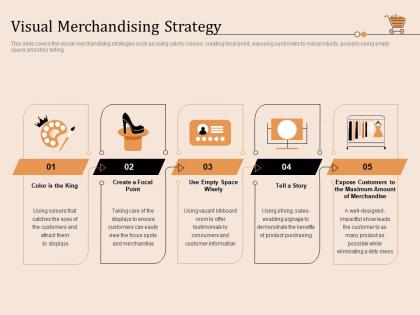
This slide covers the visual merchandising strategies such as using catchy colours, creating focal point, exposing customers to max products, properly using empty space and story telling
People who downloaded this PowerPoint presentation also viewed the following :
Visual merchandising strategy retail store positioning and marketing strategies ppt themes with all 2 slides:
Use our Visual Merchandising Strategy Retail Store Positioning And Marketing Strategies Ppt Themes to effectively help you save your valuable time. They are readymade to fit into any presentation structure.
FAQs for Visual merchandising strategy retail store positioning and marketing
Key elements include store layout optimization, product placement hierarchy, color psychology, lighting design, signage systems, and seasonal adaptability. These components work together by creating cohesive customer journeys, enhancing product visibility, and driving purchasing decisions, with many retailers finding that strategic visual merchandising increases sales conversion rates and average transaction values significantly.
Color theory influences customer emotions and purchasing decisions by leveraging psychological associations, creating strategic mood environments, and guiding behavioral responses through warm colors that energize and cool colors that calm. Retail environments strategically implement color palettes to enhance brand perception, increase dwell time, and ultimately drive conversion rates, with many successful retailers finding that thoughtful color combinations can boost sales performance by creating more compelling customer experiences.
Lighting enhances product displays by creating focal points, highlighting key features, improving color accuracy, and establishing mood and atmosphere that influences purchasing decisions. Through strategic illumination, retailers can guide customer flow, extend shopping time, and create emotional connections with products, with many stores finding that well-designed lighting systems increase sales conversion rates and enhance overall brand perception.
Seasonal themes integrate into visual merchandising through coordinated color palettes, themed product displays, strategic lighting adjustments, and seasonal props that create immersive shopping environments. Retailers like Target and Macy's leverage these elements by rotating window displays, adjusting store layouts, and incorporating seasonal scents, ultimately driving increased foot traffic and sales while enhancing customer engagement throughout the year.
Window displays maximize impact through strategic lighting, color coordination, seasonal themes, product storytelling, and interactive elements that capture attention from multiple angles. These techniques work by creating emotional connections with passersby, highlighting key merchandise through focal points, and driving foot traffic, with many retail brands finding that well-executed displays increase store visits by 30-40% while enhancing brand recognition.
Retailers can measure visual merchandising effectiveness through sales performance tracking, conversion rate analysis, customer dwell time monitoring, heat mapping technology, and A/B testing of different display configurations. These measurement approaches enable businesses to optimize store layouts, enhance product positioning, and ultimately drive higher revenue per square foot, with many retail organizations finding that data-driven visual strategies significantly improve customer engagement and purchasing decisions.
Common visual merchandising mistakes include overcrowding displays, poor lighting, inconsistent branding, ignoring customer flow patterns, and neglecting seasonal updates. These missteps often result from rushing implementations or lacking strategic planning, with many retailers finding that cluttered presentations and inadequate lighting significantly reduce customer engagement and sales conversion rates.
Storytelling transforms visual merchandising by creating emotional connections, guiding customer journeys, and communicating brand values through cohesive displays that resonate with target audiences. Retail environments become narrative spaces where product arrangements, color schemes, and thematic elements work together to enhance customer engagement, increase dwell time, and ultimately drive purchasing decisions through memorable brand experiences.
Digital displays enhance visual merchandising by delivering dynamic content updates, personalized customer experiences, interactive product demonstrations, and real-time promotional flexibility. Through smart digital signage and augmented reality features, retailers streamline inventory showcasing, reduce printing costs, and create immersive shopping environments, with many fashion and electronics stores finding that these technologies significantly boost customer engagement and ultimately drive higher conversion rates.
A brand's identity reflects through visual merchandising via consistent color schemes, strategic product placement, cohesive signage, thoughtful lighting design, and carefully curated displays that embody brand values. These techniques work together by creating immersive customer experiences, reinforcing brand messaging at every touchpoint, and building emotional connections, with many retailers finding that strategic visual alignment ultimately drives stronger brand recognition and increased sales conversion.
Best practices for cohesive in-store layouts include strategic entrance positioning, clear sight lines, logical product groupings, varied display heights, and intuitive wayfinding systems. These design elements streamline customer navigation by creating natural traffic patterns, reducing decision fatigue, and highlighting key merchandise areas, with many retailers finding that well-planned layouts increase dwell time and ultimately drive higher conversion rates.
Retailers can adapt their visual merchandising strategies for online platforms by creating immersive product galleries, utilizing 360-degree product views, implementing virtual try-on technologies, and developing strategic color schemes and layouts that guide customer navigation. These digital approaches enable brands to replicate in-store experiences through enhanced product visualization and interactive elements, with many e-commerce retailers finding that strategic visual merchandising increases conversion rates and customer engagement significantly.
Fashion visual merchandising emphasizes emotional appeal through lifestyle displays, color coordination, seasonal themes, and aspirational styling that encourages impulse purchases and brand connection. Electronics merchandising focuses on functionality demonstrations, technical specifications, hands-on interaction stations, and educational displays, with retailers like Best Buy and Apple stores creating environments where customers can test products before purchasing, ultimately delivering informed decision-making and reduced return rates.
Cultural considerations shape visual merchandising through localized color symbolism, religious sensitivities, shopping behaviors, and aesthetic preferences that resonate with specific demographics. By adapting displays, product placement, and seasonal themes to reflect local traditions and values, retailers enhance customer connection and drive sales, with many international brands finding that culturally-informed merchandising strategies deliver significantly higher engagement and conversion rates across diverse markets.
Customer feedback provides critical insights into display effectiveness, product placement preferences, navigation challenges, and purchasing triggers that influence buying decisions. By analyzing customer responses through surveys, focus groups, and behavioral data, retailers can optimize store layouts, adjust product positioning, and enhance visual elements, ultimately delivering improved shopping experiences and increased sales conversion rates.
-
Great quality slides in rapid time.
-
Illustrative design with editable content. Exceptional value for money. Highly pleased with the product.