


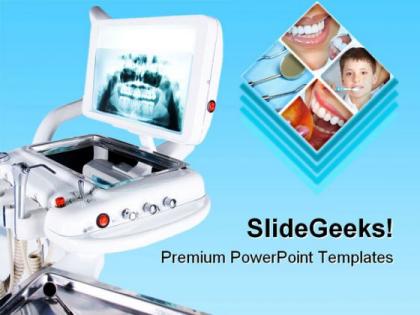
X ray of teeth dental powerpoint templates and powerpoint backgrounds 0811




Try Before you Buy Download Free Sample Product
 Impress Your
 Audience
 100%
100% Editable
 Save Hours
 of Time


Our X Ray Of Teeth Dental PowerPoint Templates And PowerPoint Backgrounds 0811 will let your ideas bloom. Create a bed of roses for your audience.
People who downloaded this PowerPoint presentation also viewed the following :
X ray of teeth dental powerpoint templates and powerpoint backgrounds 0811 with all 3 slides:
Our PT&s are the sinews of your lecture. Give them the muscle of your vibrant thoughts.


FAQs for X ray of teeth dental powerpoint templates and
Oh, dental X-rays are actually pretty useful! They catch cavities hiding between your teeth that your dentist can't spot just by looking. Plus they show bone loss, infections, and those annoying impacted wisdom teeth. My dentist always says kids need them to track how their teeth are coming in. The radiation thing isn't really a big deal anymore - it's like nothing compared to what it used to be. Trust me, getting them done beats finding out about problems when they're already expensive to fix. If your dentist wants X-rays, just do it.
Bite-wings are perfect for catching cavities between teeth - that's what I use for regular checkups. If you think there's root trouble or an abscess, go with periapicals since they show the whole tooth. Panoramic gives you everything at once, which is great for wisdom teeth stuff. I'm probably guilty of ordering too many periapicals but whatever, they're thorough. Oh, and if you're stuck deciding? Start with bite-wings for basic cavity hunting, then throw in periapicals for anything that looks sketchy.
So X-rays are like having detective vision for your mouth. They catch cavities hiding between teeth or under old fillings - stuff you'd never spot otherwise. The real game-changer though? They show bone loss around your tooth roots, which tells you if gum disease has gotten serious beyond just some bleeding when you floss. It's crazy how teeth can look totally normal but be falling apart underneath. My dentist always says it's way cheaper to catch this stuff early than wait until you need a root canal or whatever.
Honestly, there's no magic number anymore - the whole "everyone gets X-rays every year" thing is pretty old school. Low-risk adults? Maybe every 1-2 years is fine. But if someone's constantly getting cavities, I'd probably want to see what's happening every 6 months. Kids are different though, their mouths change so fast. You've gotta look at their history - are they cavity-prone? How's their brushing? Do they live on soda? Any signs of decay when you're poking around? That's what actually matters. Just make sure you write down why you chose that timeline, because someone will definitely ask later.
Yeah, the risks are pretty minimal honestly. You get about the same radiation from a dental X-ray as you would just from a few days of normal background exposure - actually flying across the country exposes you to more. Your dentist should still use those lead aprons though, and only do X-rays when they actually need them for diagnosis. If you're pregnant they'll be extra careful, especially early on. I mean, the benefits of catching problems early almost always make it worth the tiny risk. Just don't let them go crazy with how often they're taking them.
Honestly, digital sensors changed everything. Way better image quality than the old film days, and you get results instantly. The contrast adjustment feature is clutch for spotting tiny fractures - saves so much time. Cone beam CT gives you those 3D views which are super helpful for complex cases. Less radiation exposure too, which patients appreciate. Everything goes straight into their digital records now, so no more lost films (thank god). You can literally show patients their issues in real-time instead of making them wait around. Makes catching problems early way easier.
Dude, you absolutely need X-rays before any ortho work - trust me on this one. They show all the stuff you can't see normally, like where roots are sitting and if there's any weird impacted teeth hiding out. Panoramic ones give you the full picture (jaw joints, sinuses, the whole deal), while cephalometric X-rays help map out how to actually move things. Without them? You're basically guessing and could totally mess up someone's roots or hit bone issues halfway through treatment. I've seen it happen and it's not pretty. Get the radiographs first, plan second.
Oh it's really not bad at all! You just bite down on this little plastic thing while they position the machine. Takes like 2-3 minutes tops - honestly the setup is longer than the actual x-ray. Sometimes you hold your breath for a few seconds, and they might want different angles depending on what they're checking. The tech steps out for like 10 seconds to take the shot. Radiation is super low, way less than flying across the country actually. Just mention if you're pregnant beforehand. Don't stress if you move a bit - they can totally redo it if needed.
So basically you're scanning for decay, cracks, and any previous dental work first. Then check bone density and that periodontal space around each tooth. Honestly, it's one of those things that just takes forever to master - I'm talking years before you'll catch the really subtle stuff. Look for impacted teeth, infections, cysts, bone loss patterns too. The trick is having a solid routine so nothing slips by. Also maybe find someone experienced to practice with? They can point out things you'd totally miss otherwise until your eye gets trained.
Hey! So there's a bunch of safety stuff built into dental X-rays. Lead aprons and thyroid collars are mandatory for every single patient - literally no exceptions. The X-ray beam gets focused just on the area you need, which cuts down on scatter radiation hitting other parts. Digital sensors need way less radiation than those old film X-rays too (honestly kind of crazy how much better the tech got). Equipment gets calibrated regularly. Oh, and this should go without saying but always double-check that lead apron's positioned right before you press the button.
X-rays let you see all the stuff hiding under the gums that you'd totally miss otherwise. Impacted wisdom teeth are the worst - they're always trying to come in sideways or at some ridiculous angle. You'll also catch extra teeth, weird root shapes, cysts, and other developmental issues that would sneak by. Start with a panoramic for the big picture, but honestly? When something looks sketchy, you need periapicals or CBCT to really plan out the surgery properly. It's like having x-ray vision but for teeth.
Honestly, digital X-rays are a game changer. Way faster than waiting around for film to develop - that always drove me crazy. Your patients get like 80% less radiation exposure too, which is huge. Image quality's better since you can mess with the brightness and contrast after. No more giant filing cabinets eating up space either. You can shoot images to specialists instantly instead of mailing them like it's 1995. The equipment costs more upfront, sure. But the time you'll save makes it worth it. Most practices see the workflow improvements pretty quickly once they make the switch.
Dude, you absolutely need X-rays before placing any implant. Panoramic and CBCT scans will show you bone density, volume, and whether there's enough structure to actually support the implant. They also reveal infections, bone loss, or tricky anatomy like nerves and sinuses that could mess up your surgery. I mean, I've seen cases where people skipped proper imaging and regretted it big time. The scans help you figure out exact positioning and implant size too. Honestly, don't even think about surgery without comprehensive imaging during consultation - it's just asking for complications down the road.
Yeah, most dental plans do cover X-rays as preventive stuff, so you shouldn't pay much for the basic ones they do during cleanings. But they're kinda strict about how often - usually once or twice a year for regular bitewings, and those big panoramic ones maybe every few years. If you need fancier imaging for treatment, that might hit your diagnostic coverage differently. I'd definitely check your plan first though, especially if you just had X-rays somewhere else recently. Some offices don't warn you about the limits and then you're stuck with a bill.
Look for obvious stuff first - active cavities, gum disease, or if they're always having dental issues. Dry mouth is a big one too since saliva basically protects everything. People on certain meds need more frequent checks. Previous root canals, crowns, and implants should definitely be monitored regularly. Oh, and jaw pain or TMJ symptoms are red flags. Smokers and diabetics? Their whole risk situation changes. Honestly, I think it's way better to customize based on what's actually going on with each patient instead of just following some generic timeline.
-
Very unique and reliable designs.
-
Easily Editable.