


Zara Value Chain Analysis Framework For Strategic Planning




Try Before you Buy Download Free Sample Product
 Impress Your
 Audience
 100%
100% Editable
 Save Hours
 of Time


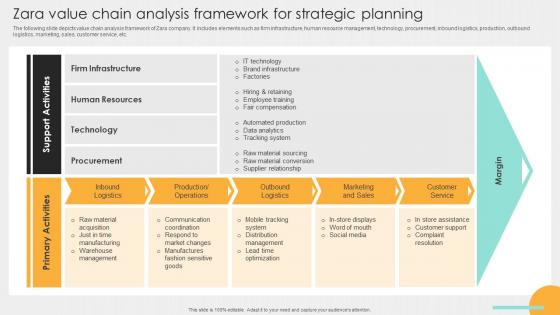
The following slide depicts value chain analysis framework of Zara company. It includes elements such as firm infrastructure, human resource management, technology, procurement, inbound logistics, production, outbound logistics, marketing, sales, customer service, etc.
People who downloaded this PowerPoint presentation also viewed the following :
Zara Value Chain Analysis Framework For Strategic Planning with all 9 slides:
Use our Zara Value Chain Analysis Framework For Strategic Planning to effectively help you save your valuable time. They are readymade to fit into any presentation structure.








FAQs for Zara Value Chain Analysis Framework
Honestly, Zara's whole thing is speed - they can get runway looks into stores in like 2-3 weeks while everyone else takes months. Pretty wild when you think about it. They control their entire supply chain too, from making the fabric to running the stores. This means they can pivot crazy fast when something's trending. Short answer: they've basically made clothes work like fresh produce - constantly rotating new stuff in. That's their secret sauce right there. If you're studying fast fashion, that's definitely where I'd focus.
Okay so Zara's whole thing is speed - they go from sketch to store in like 2-3 weeks while everyone else takes 6 months. Most of their production happens in Spain and Portugal, which is pricier but lets them pivot crazy fast when trends pop up. They start with tiny batches too, so if something bombs it's whatever. But if it takes off? They can scale up immediately. Honestly I think it's brilliant how they've mastered this - like, why didn't other brands think of this sooner? You should definitely consider building that kind of flexibility into your cycles.
So Zara's basically built their whole thing around tech. They track sales data in real-time from stores everywhere, which tells their designers exactly what's working. The design process itself is super streamlined - they use CAD software and digital tools that cut development time from months down to just weeks. Pretty crazy when you think about it. Their design systems talk directly to manufacturing too, so there's no waiting around once something gets approved. That's honestly the biggest difference - most brands have all these handoffs and delays, but Zara's eliminated that gap between spotting a trend and actually selling it.
So Zara's basically doing the opposite of most retailers. Instead of ordering massive amounts months ahead, they make smaller batches way more often. Most stores are literally just guessing what'll be popular and crossing their fingers - meanwhile Zara can switch things up in weeks based on what people actually buy. Honestly makes so much sense? They'd rather sell out of something hot than be stuck with tons of junk nobody wants. You'll notice they restock popular stuff super fast and ditch the failures. It keeps them flexible instead of playing some weird prediction game.
Okay so Zara's whole thing is making their stores feel boutique-y, not like typical fast fashion. Clean lines, good lighting, wide aisles - basically tricks you into thinking you're shopping somewhere expensive. But here's the crazy part: they change displays twice a week sometimes! Creates this whole "buy it now or it's gone" vibe. Smart honestly. The layout gets you wandering around making impulse buys while feeling fancy about it. I always notice how much more I'm willing to spend there versus like, Target or whatever.
So Zara basically keeps most production in Spain and nearby countries instead of shipping everything to Asia. More expensive upfront, sure, but they can watch quality super closely and pivot crazy fast when trends change. Less dead inventory sitting around too. They mix automated cutting with actual people doing assembly - honestly pretty smart move. Since they control everything from design to their stores, there's no middleman drama. Oh and the speed thing? When you can get products to market that fast, you're not stuck with last season's mistakes eating into profits.
So Zara's whole thing is their crazy fast supply chain - like 2-3 weeks from sketch to hanger, which is nuts. They don't really do traditional advertising either. Instead they just rotate inventory constantly and grab the best store spots in cities. Honestly, it's pretty smart because people see something new every time they walk by. The urgency works - you know how you feel like you have to buy that jacket RIGHT now or it'll be gone? That's intentional. Their entire system from factories to trucks is built for speed, not sitting on stuff for months like other brands.
So Zara's basically genius at this - their store managers grab customer feedback every single day and shoot it straight to the design teams in Spain. No waiting around for formal surveys or whatever. That feedback instantly changes what they make next, inventory orders, even how stores are laid out. It's crazy how fast they move compared to other retailers who take months to react. The whole thing comes down to speed, really - they've cut that feedback loop down to just days. Pretty wild when you think about how most fashion brands operate. If you're studying their model, that's the key thing to focus on.
So Zara's been getting roasted for fast fashion lately, which pushed them into sustainability mode. Their "Join Life" collection uses better materials, and they're shooting for 100% sustainable fabrics by 2025. Pretty ambitious honestly. They're switching to organic cotton, recycled stuff, and Tencel for sourcing. Production-wise, there's renewable energy and water-saving tech at their facilities. Oh, and they're testing garment recycling in stores now - though I'm skeptical about how much impact that'll actually have given their massive scale. Definitely check their annual sustainability reports if you're digging into this.
So Zara's basically mastered this whole "fast fashion" thing by controlling everything themselves - design, manufacturing, distribution, the works. They don't make huge batches upfront like most retailers do. Instead they'll test small amounts first, see what people actually buy, then quickly pump out more of the winners. Their supply chain moves ridiculously fast too - we're talking weeks instead of months to restock. Plus they're constantly analyzing sales data from all their stores to figure out what's gonna be hot next. Honestly it's pretty smart - they avoid both running out of popular stuff AND getting stuck with inventory nobody wants.
Honestly, Zara's basically built their whole thing around data - it's pretty wild. They track sales in real time, so if black jeans aren't moving but white ones are flying off the shelves, they'll switch production in like 3 days. Wild, right? Social media trends help them predict what designs will actually sell before they make them. Plus they use all this info to figure out pricing and which stores should get what inventory. The crazy part is how everything connects - one piece of data affects decisions from the design team all the way down to what's hanging in your local store. Definitely worth studying if you're into retail stuff.
So Zara's whole thing is speed over everything else. They keep most of their distribution centralized in Spain, which sounds inefficient but actually lets them restock stores twice weekly. Most retailers take like 6 months to get designs to market - Zara does it in 2-3 weeks, which is honestly pretty wild. Sure, shipping costs are higher, but they can jump on trends instantly and don't get stuck with tons of unsold stuff. I'd say that's their biggest competitive edge - being crazy fast while everyone else is still planning their next season. The transport expenses are worth it when you're never behind the curve.
Honestly, Zara's global strategy is pretty smart when you think about it. They keep all their design and trendy production in Spain to stay fast and maintain control. But then they get flexible with everything else - using local suppliers in places like Asia for basic stuff to avoid crazy shipping costs. Distribution and stores? They adapt those to whatever works locally. The product mix thing is where it gets interesting though - they literally decide what to ship from Spain vs. source locally based on geography. It's like selective localization, if that makes sense.
Honestly, Zara's dealing with some pretty messy stuff right now. Sustainability is their biggest headache - customers want ethical fashion but also cheap, trendy clothes, which is basically impossible with fast fashion. They're also trying to figure out how to make their online and in-store experiences work together better. Most companies are still pretty bad at this, not gonna lie. Global supply chain issues aren't helping either - costs are up, deliveries are wonky. The real test? Whether they can stay fast AND sustainable. That's what'll make or break them.
Okay so Zara's whole thing is speed and being super responsive to trends. Teams can make decisions fast instead of getting stuck in endless meetings - designers, store managers, everyone just reacts instantly. They actually encourage people to take risks and mess up quickly, which honestly seems stressful but whatever works I guess. What's really smart though is how their design, production, and retail people talk to each other constantly instead of staying in their own bubbles. If you want to copy this approach, start by tearing down those department barriers first. That's where the magic happens.
-
Amazing variety of PowerPoint slides. Really helpful in designing professional presentations.
-
Use of icon with content is very relateable, informative and appealing.