

Brief Summary Of Ikea Value Chain Analysis




Try Before you Buy Download Free Sample Product
 Impress Your
 Audience
 100%
100% Editable
 Save Hours
 of Time


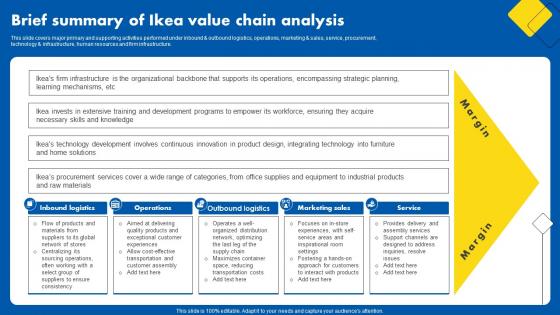
This slide covers major primary and supporting activities performed under inbound and outbound logistics, operations, marketing and sales, service, procurement, technology and infrastructure, human resources and firm infrastructure.
People who downloaded this PowerPoint presentation also viewed the following :
Brief Summary Of Ikea Value Chain Analysis with all 9 slides:
Use our Brief Summary Of Ikea Value Chain Analysis to effectively help you save your valuable time. They are readymade to fit into any presentation structure.








FAQs for Brief Summary Of Ikea
So IKEA's basically built this insane system around three things. They design everything to be flat-packed from the start, which cuts costs like crazy. Their supply chain is massive - we're talking global sourcing that somehow keeps prices low but quality decent. Then there's the genius part: you do half the work by picking it up and assembling it yourself. Each piece feeds into the others though, which makes it super hard to copy. Like, good luck replicating that entire model. For your strategy thing, definitely focus on how making customers do the work changes their whole cost structure - that's where the real magic happens.
So IKEA basically buys insane amounts of stuff, which lets them negotiate crazy low prices with suppliers. Smart move on their part. They also design everything to fit in those flat boxes - saves tons on shipping costs. Instead of hopping between different suppliers for slightly cheaper deals, they stick with reliable ones long-term and do regular quality checks. Oh, and they source from all over the world but keep their supplier list pretty tight. The whole thing works because buying massive quantities consistently beats constantly chasing the lowest price every single time.
So Ikea basically works backwards from affordability - they figure out how cheap they can make something, then design around that. Everything's built for flat-pack shipping and mass production from the start. Their whole "democratic design" thing is pretty smart honestly - clean, simple stuff that doesn't look cheap but won't destroy your wallet. Most of their furniture has that minimalist vibe that works in basically any space. I mean, there's a reason college kids and actual adults both shop there, right? They've cracked the code on making functional design accessible without all the fancy markup you'd get elsewhere.
So Ikea's pretty clever with their tech integration. Their AR app is genius - you can see how furniture looks in your space before buying, which definitely cuts down on returns. They've automated their warehouses and use predictive analytics for supply chain stuff, keeping costs super low. Even the self-service model relies heavily on digital catalogs and mobile checkout (plus those RFID-tracked bags, though honestly I still forget to scan half my items). The smart part? They don't just slap technology onto everything. Instead, they weave digital tools right into their existing business model. That's why it actually works instead of feeling gimmicky.
Ikea's actually crazy good at using customer feedback to shape everything they do. They get input from store visits, online reviews, and these co-creation labs where people test out prototypes. Pretty cool setup honestly. When customers kept complaining about how hard stuff was to assemble, Ikea went back and redesigned packaging plus instruction manuals for thousands of products. That's commitment. The feedback doesn't just sit in some marketing folder either - it directly influences design concepts and supply chain decisions. They treat customer complaints and suggestions like actual data that drives real operational changes throughout the company.
Honestly, Ikea's pretty smart about this - their sustainability stuff actually makes their low prices work better, not worse. They buy renewable materials in huge bulk orders, which cuts costs while hitting environmental targets. Plus consumers expect this now anyway, so it's not really optional. The whole thing strengthens their supplier relationships and reduces risks down the line. Short sentences work. What's cool is they're not just doing sustainability theater - it actually reinforces their entire value model. If you're trying to figure out how to go green without destroying your budget, they're worth looking at.
Dude, IKEA's logistics game is insane. That flat-pack thing? Cuts shipping costs by like 85% because they can cram way more stuff in each truck. They've got these huge warehouses placed perfectly near big cities - classic hub and spoke setup. But here's what blows my mind: they basically made customers do half the work. You're wandering around their warehouse stores picking your own stuff, which is honestly kind of brilliant from a business perspective. They also use AI for predicting what people will buy and have automated warehouses now. If you're studying supply chains, definitely look at how they turned "DIY everything" into their secret weapon.
So IKEA's whole thing is their showrooms - you actually get to see how stuff looks in real rooms instead of guessing from photos. Touch the fabrics, test if chairs are comfy, that kind of stuff. Plus there's the meatballs obviously lol. You can grab things right from the warehouse too instead of waiting weeks for delivery. The maze setup is honestly kind of genius though - yeah you'll be wandering around forever, but most people end up buying way more than they planned. Something about seeing everything in person just makes you want it more than clicking "add to cart" ever could.
So IKEA basically tweaks their stuff for different countries - smaller furniture in Japan since apartments are tiny, different colors depending on what people like. Their food changes too (who knew not everyone's obsessed with Swedish meatballs?). Pricing gets adjusted based on what people can actually afford in each market. The smart thing is they keep their whole "good design for everyone" vibe while making these local changes. Honestly, it's pretty genius how they stay consistent globally but still feel relevant locally. That balance is what makes their strategy work so well.
So basically IKEA gets way more efficient when they expand globally - bigger scale means better supplier deals and they can split R&D costs across tons of markets. That flat-pack thing is honestly pretty clever when you think about it, like they made boring shipping logistics into their whole brand somehow. They've got these standardized processes they can copy everywhere, but still tweak things for local markets when they need to. Global supply routes get optimized too. If you're writing about this stuff, definitely look at how they balance keeping things the same worldwide versus adapting locally - that's where it gets interesting.
So Ikea works with like 1,000 suppliers across 50 countries, but they're not just going for cheapest price. They build long-term partnerships instead. Pretty cool approach honestly. They team up with DHL for shipping stuff around and partner with renewable energy companies too. There's also this co-creation thing where they work with local suppliers to make products that fit different regions. What's smart is how they balance keeping costs down while hitting their sustainability goals - it's not just one or the other, you know? If you're thinking about supply chains, look at how they actually develop their suppliers rather than just squeezing them for lower prices.
So Ikea's really good at staying flexible with their whole supply chain setup. They watch customer data and trends super closely, then pivot fast - like how they went all-in on sustainability once people started caring more about that stuff. What's clever is their modular approach - they'll test products in just a few markets first before going worldwide. Smart move, honestly. Plus they use all their stores to get real-time feedback and tweak inventory on the fly. Oh, and when you're looking at other companies' value chains, those feedback loops are what separate the winners from everyone else.
Honestly, IKEA's genius move is owning their whole supply chain instead of farming everything out. They control the factories, design stuff that's actually buildable from the start, and handle their own logistics - which most retailers are way too lazy to do. But here's the kicker: they made customers do the heavy lifting (literally) with assembly and pickup, then somehow convinced us we love it. Pretty brilliant when you think about it. So look at your business and figure out where you can cut out the middleman or get customers more involved. Sometimes what feels like extra work is actually your biggest advantage.
Ikea's whole thing is cost leadership - it drives literally everything they do. They design stuff to be cheap to make, buy materials in crazy bulk quantities, and honestly? Making customers assemble furniture themselves is pretty smart. Their supply chain is super optimized too. Without keeping costs low at every step, their "affordable design for everyone" concept totally crumbles. You can't sell decent furniture cheap if you're bleeding money somewhere in the process. When you're looking at their strategy, check how each part of their business reinforces those cost savings - that's their real competitive advantage right there.
IKEA's got some pretty big risks lurking in their value chain. Supply chain disruptions hit them hardest - they depend on suppliers worldwide, so when geopolitical drama or disasters strike, it screws everything up. Labor costs keep climbing in manufacturing hubs too, which is rough for a company built on cheap prices. Oh, and sustainability pressure is real now - customers actually care about ethical sourcing these days. They're fighting back by spreading suppliers around different countries and pumping money into automation. Honestly, their sustainability partnerships matter more than people realize. Watch how they diversify suppliers and invest in green initiatives - that's what'll determine if they can keep prices competitive.
-
Thank you SlideTeam for such an excellent service.
-
Huge collection of high-quality templates. Worth each penny.