

Ikea Company Porters Five Forces Model




Try Before you Buy Download Free Sample Product
 Impress Your
 Audience
 100%
100% Editable
 Save Hours
 of Time


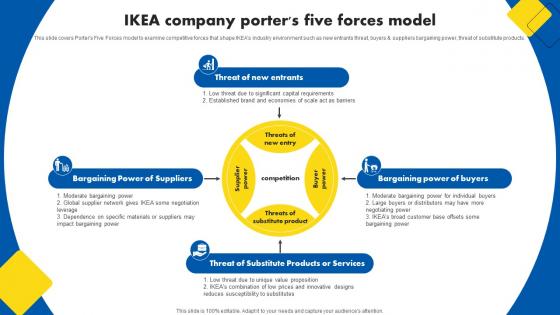
This slide covers Porters Five Forces model to examine competitive forces that shape IKEAs industry environment such as new entrants threat, buyers and suppliers bargaining power, threat of substitute products.
People who downloaded this PowerPoint presentation also viewed the following :
Ikea Company Porters Five Forces Model with all 9 slides:
Use our Ikea Company Porters Five Forces Model to effectively help you save your valuable time. They are readymade to fit into any presentation structure.








FAQs for Ikea Company Porters
Honestly, IKEA's pretty safe from new competitors right now. Building those massive warehouses and supply chains costs a fortune upfront. New companies just can't match their crazy low prices either - the scale advantage is huge. But here's what I'd worry about: online furniture brands that completely skip physical stores. They're going after younger people who'd rather order online than drag stuff home from IKEA (can't blame them tbh). These digital brands don't need the massive infrastructure investment. Worth tracking those direct-to-consumer startups in your analysis.
IKEA basically bullies suppliers into giving them amazing deals because they're so massive. They work with over 1,000 suppliers across 50+ countries, so if one won't cooperate, they'll just find another. Most suppliers are terrified of losing IKEA's business since it's probably like half their revenue or something crazy like that. This gives IKEA insane negotiating power - they can demand rock-bottom prices and strict quality while still keeping their retail prices super low. Honestly, it's kind of genius how they've set it up. When you control that much volume, suppliers don't really have a choice but to follow your rules.
Yeah, substitute products definitely mess with Ikea's sales. Custom furniture draws people who want something unique and higher quality. Budget shoppers hit up second-hand stores instead - honestly, vintage stuff is having a major moment right now. Ikea's had to respond by keeping prices low and constantly updating their designs. They've also expanded customization options and really pushed the sustainability angle to compete with thrift shopping's appeal. It's smart because they can't just rely on being cheap anymore. Watch how they try balancing affordability with better quality to fight back.
IKEA's basically turned shopping into joining a club. People get weirdly obsessed with those blue bags and Swedish meatballs - it's genius marketing, honestly. Once you're buying into the whole "democratic design" thing, you don't really want to shop elsewhere even if Target has similar stuff. The loyalty program keeps you coming back too. It's way more than just furniture at that point. Smart businesses focus on making customers feel something, not just selling features. Makes people stick around when competitors try poaching them. Build that emotional hook and you'll have way less pricing pressure.
Honestly, online retail has been huge for Ikea - way more than it hurt them. Most traditional furniture stores totally bombed when they tried going digital. They just weren't set up for it, you know? But Ikea already had their whole flat-pack shipping thing figured out, plus their supply chain was solid. COVID basically fast-tracked everything and they grabbed tons of market share while other stores were floundering. Plus they can show their entire inventory online while regular stores are stuck with whatever fits in their showroom. Pretty smart positioning if you ask me.
Ikea's basically stuck between a rock and a hard place right now. Their whole thing was always cheap furniture you'd replace in a few years, but customers want sustainable stuff that lasts forever. That's creating huge buyer pressure - they're having to dump money into better materials, buyback programs, all that eco stuff, while somehow keeping prices low. Pretty brutal honestly. Their supply chain's getting torn apart too. The tricky part? They can't abandon what made them successful, but they also can't ignore this sustainability wave. Could totally reshape their market position depending on how they handle it.
IKEA's smart about this - they've created this whole ecosystem thing where you're not just buying a bookshelf, you're buying into their entire world. Those showrooms are perfect for seeing how stuff actually looks in a room. Plus the membership deals and early sale access keep people coming back. Honestly, the food court is probably half the reason people go there (those meatballs hit different). Their return policy doesn't suck either. They've gotten good at letting you shop online or in-store without it being weird. The thing is, once you're in their system, switching to like West Elm or whatever feels like you'd lose all these perks and familiarity.
So when Ikea expands somewhere new, it totally changes their competitive game. They're suddenly dealing with different suppliers who might have way more power than their usual European ones. Plus customer expectations shift completely - remember how they had to shrink everything for Japanese apartments? That was rough. Local competitors vary tons too. Some places have deep furniture traditions that make Swedish minimalism a tough sell, while others eat it up. Each market has different substitutes and threats. Honestly, they can't just copy-paste their strategy everywhere and expect it to work. Smart move is analyzing what makes each place tick first.
Dude, Ikea's whole thing is just crushing everyone on price. They've got this flat-pack system down to a science - plus they buy in massive quantities and have their supply chain dialed in. So they can sell stuff for like 30-50% less than regular furniture stores while still making money. It's honestly pretty brilliant. When new companies try to compete, they can't match those prices without bleeding cash. That's why Ikea stays on top - nobody can touch their pricing model. If you're looking at furniture competitors, just compare everything back to what Ikea charges first.
Honestly, Ikea's in a weird spot with tech. Their AR app is actually pretty cool - you can see how furniture looks in your space before buying, which cuts down on returns. Click-and-collect has been huge too, especially since not everyone wants to trek through those maze-like stores. But here's where it gets tricky: competitors can now rip off Ikea's designs and sell them online way easier than before. Look at Amazon and Wayfair - they're basically doing exactly that. The whole "Ikea experience" matters less when people just want cheap furniture delivered fast. They've got to stay ahead of the copycats somehow.
So Ikea's got this huge problem - they're spread across like 50+ countries with 400+ stores, which sounds great until geopolitics goes crazy. When Russia invaded Ukraine? Boom, had to close everything in both countries. That's massive revenue gone overnight. Currency swings also screw with their whole "cheap Swedish furniture for everyone" thing since they can't really adjust prices country by country without looking inconsistent. Trade wars and supply chain mess-ups hit them from every angle too. Honestly, their quarterly reports during chaotic periods are fascinating - it's like watching a real-time case study of how global drama affects retail giants.
Honestly, IKEA just nailed the whole affordable furniture thing with their flat-pack system. They control everything - design, manufacturing, the works - so they can keep prices crazy low while still looking good. That warehouse setup where you grab stuff yourself? Brilliant, even though those stores are like mazes from hell. The Scandinavian design aesthetic hits different too - it's this whole "good design for regular people" vibe instead of just rich folks. What's smart is how hard it'd be for competitors to copy this model quickly. You can't just flip a switch and suddenly have their supply chain efficiency, you know?
So Ikea's totally flipping their old "good luck assembling that" approach. They're pouring money into delivery and assembly services now because honestly, people have tons of furniture options these days. Smart move though - better customer service lets them charge more than the super cheap knockoffs. It creates this stickiness where you don't want to deal with learning a new store's system. They're basically shifting from just being the cheapest option to being the best value. Makes sense when you think about it - convenience sells just as much as low prices do.
IKEA's going hard on the sustainability thing - they want to be "climate positive" by 2030. Bamboo and recycled plastics are showing up everywhere in their stuff now. Their suppliers have to hit these strict green standards too, which honestly makes total sense with how much people care about this stuff nowadays. You can see it in their products - better materials, smarter packaging. They're even trying out furniture rentals in some places (weird but kinda cool?). It's not just marketing fluff either - being eco-friendly is actually helping them compete against other furniture companies and those trendy sustainable startups.
So social media basically gives customers way more power against Ikea - they can compare prices instantly and roast design fails online (those Billy bookshelf memes are everywhere). But honestly? Ikea's pretty smart about it. They've flipped this into an advantage by posting actual customer rooms instead of perfect showrooms, plus all that "democratic design" content really works on Instagram and TikTok. The competitive pressure is intense though - you gotta keep tabs on what other furniture brands are doing on social and track if people are talking more positively about them than you. It's become this whole sentiment monitoring game.
-
I was really impressed with the presentation I created with their templates. I’ll be using their services moving forward.
-
The PPT layout is great and it has an effective design that helps in presenting corporate presentations. It's easy to edit and the stunning visuals make it an absolute steal!