

Porters five forces model ppt pictures graphics download




Try Before you Buy Download Free Sample Product
 Impress Your
 Audience
 100%
100% Editable
 Save Hours
 of Time


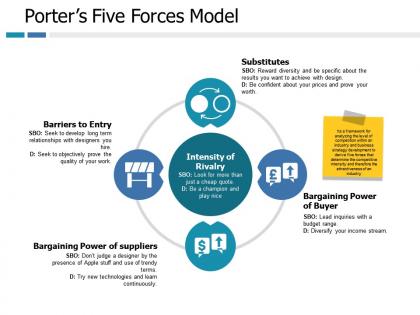
Encourage folks to gaze inward with our Porters Five Forces Model Ppt Pictures Graphics Download. Enable folks to figure out how to improve.
People who downloaded this PowerPoint presentation also viewed the following :
Porters five forces model ppt pictures graphics download with all 5 slides:
Our Porters Five Forces Model Ppt Pictures Graphics Download ensure there are no gaffes. They are doubly checked for any flaws.

FAQs for Porters five forces model ppt
So Porter's Five Forces breaks down like this: competitive rivalry, supplier power, buyer power, threat of substitutes, and new entrants. Picture getting pulled in five different directions at once – kinda exhausting, right? When suppliers have tons of power AND your customers can easily negotiate you down, you're basically screwed from both ends. Then if new competitors keep jumping in while better alternatives pop up? Game over pretty fast. I always tell people to figure out which two or three forces are really crushing them, then focus your energy there instead of trying to fix everything at once.
So basically, when it's easy for new companies to jump into a market, existing ones have to fight way harder to keep customers. You'll see crazy price wars, tons of marketing money getting thrown around, plus everyone racing to innovate. Look at what happened with Uber - taxi companies either had to completely reinvent themselves or they were toast. But when there are big barriers (like needing millions in startup capital or dealing with crazy regulations), the old players can kind of chill since competition isn't breathing down their necks. Just figure out what's actually keeping newcomers out and you'll know how brutal the competition might get.
Honestly, supplier power can totally wreck your pricing game. When they've got you by the balls - like if there's only a few of them or you need super specific materials - they'll jack up costs and you're stuck either eating it or passing it to customers. Auto companies learned this the hard way with chip shortages, what a nightmare that was. But flip it around - weak supplier power means you can actually negotiate and keep prices competitive. My advice? Map out who you depend on now and find backup options before you need them. Don't wait until they decide to screw you over.
So buyer power goes up when customers have tons of options, buy in bulk, or can jump ship easily to competitors. Also when your stuff isn't mission-critical to them. More choices = they'll push harder on pricing. Your best bet? Make yourself different somehow - build in switching costs or get them really dependent on your service. Strong relationships help too, obviously. I've seen bundling work pretty well, though it's not always the right move. The whole point is becoming irreplaceable enough that they can't just shop around whenever they feel like it. What's your unique thing they can't get elsewhere?
Dude, substitute threats are brutal - they can literally kill entire industries overnight. Look at how Netflix destroyed Blockbuster, right? Companies suddenly aren't just competing with their usual rivals anymore. Now they're up against totally different solutions that solve the same customer problem. Industries either adapt fast or they're toast. Some slash prices, others completely reinvent what they offer. I always watch what's happening in tech adjacent to whatever industry I'm looking at - that's where the real disruption usually starts brewing. It's wild how a threat can come from somewhere you'd never expect.
Look, you gotta figure out how cutthroat your market is because it totally affects what you can charge and how much you'll actually make. Intense competition means you're constantly getting squeezed on prices and burning cash on marketing. Plus you'll be innovating nonstop just to stay relevant - honestly sounds brutal but that's some industries for you. Others are way more chill where companies aren't trying to destroy each other. Start by listing your main competitors and see how aggressive they get with pricing and stealing market share. It'll tell you what you're walking into.
Think of Porter's Five Forces like a business cheat sheet - it shows you exactly where your competition is screwing up. High supplier power in your space? Perfect time to cut out the middleman or find new sources. Low barriers to entry means you better start building some serious competitive advantages, like yesterday. I actually love using this framework because it's like having insider info on where your industry's headed. Watch for shifts too - new tech messing with buyer expectations, regulations shaking up rivalries. Position yourself where these forces help you instead of crushing you. It's honestly game-changing once you get the hang of it.
Dude, you can't just lump your whole market together when doing Porter's Five Forces - that's like analyzing "all restaurants" when pizza places and fine dining face totally different pressures. Run separate analyses for each segment you care about. Luxury cars? Different suppliers, buyers, substitutes than economy models. I learned this the hard way on a project once. Streaming services hit older cable viewers differently than younger ones too. Even your competitors change between segments. Short version: segment-specific analysis or you'll miss where the real threats are hiding.
Emerging markets are wild compared to established ones - Porter's Five Forces gets way messier there. Regulatory changes happen overnight. Infrastructure can be sketchy. Consumer behavior shifts constantly, so you can't really bank on historical data like you would in, say, the US or Europe. Political risk becomes huge, plus currency swings that would never matter in mature markets. I'd honestly start by figuring out who the local players are first - that's been my approach anyway. Then layer the traditional framework on top. Don't just copy what worked elsewhere because it probably won't.
Don't treat it like a one-and-done analysis - industries change constantly. Most people oversimplify how the forces connect too. Like, high rivalry doesn't always kill profits; sometimes it actually sparks better innovation. Digital disruption is blurring industry lines everywhere, which the original model wasn't really built for. Honestly, it works way better for traditional businesses than platform or ecosystem models. Oh, and update your analysis regularly instead of just rating each force separately. The magic happens in how they interact with each other, not individual scores.
Digital transformation has completely changed how Porter's Five Forces work. Barriers to entry? Gone - you can start a business online for basically nothing now. Customers have way more power since they can compare prices instantly and jump ship whenever they want. New substitutes pop up constantly because digital platforms make it ridiculously easy for competitors to emerge. Even suppliers are different now that cloud services give everyone access to the same tools. Honestly, the whole landscape is pretty chaotic. But if you can move fast and focus on killer digital experiences while actually using your data smart, there's real opportunity here.
Innovation totally flips Porter's five forces on their head. New tech can make it super easy for startups to jump in, or create crazy high barriers if you need tons of R&D cash. Your supplier relationships change too - sometimes you'll have more options, other times you're stuck needing their specialized stuff. Customers get more power when they have alternatives, but less if you've got them locked into your platform. The substitutes thing is honestly brutal though - tech keeps creating new ways to solve old problems. You've gotta watch what's coming in your industry before someone else beats you to it.
Dude, treat regulators like a sixth force - they mess with everything else in Porter's model. Regulations can totally reshape competitive rivalry by creating barriers or evening things out. They also limit who suppliers and buyers can work with, which changes power dynamics big time. New entrants? Good luck getting through all that red tape. Same goes for substitutes - approval processes are brutal. I'd honestly map out which specific regulations hit each force first, because sometimes (okay, most of the time) regulators have way more pull than actual market competition. It's wild how much they control the game.
You should definitely start with airlines - it's perfect because you can spot all five forces super easily. There's crazy competition between carriers, Boeing and Airbus basically control the supplier game, and corporate buyers have tons of negotiating power. Plus new airlines pop up constantly since barriers aren't that high. Southwest nailed their positioning by getting this stuff. Apple vs Android works great too for showing rivalry dynamics. Netflix is solid for explaining how streaming killed traditional TV through substitutes. Oh, and Amazon's basically the textbook example of platform power with suppliers and buyers. Pick whichever industry your students know best - the framework clicks way faster when they're already familiar with the players.
The Five Forces thing is perfect for spotting what big companies totally ignore. Look for niches where you don't need huge volume to win - maybe where personal relationships trump bulk buying power. Big corps can't pivot fast enough for specialized markets, and honestly? They often don't even try because the margins look too small. Build tight supplier partnerships instead of competing on price. Create customer loyalty through stuff they can't easily copy - personalized service, quick responses, whatever. Short sentences work here. The trick is finding where being small actually helps, then going all-in on those advantages.
No Reviews