


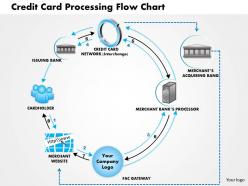
0514 credit card processing flow chart powerpoint presentation




Try Before you Buy Download Free Sample Product
 Impress Your
 Audience
 100%
100% Editable
 Save Hours
 of Time


Thousands of presentations will be ignored this year. Yours won't be forgotten thanks to engaging 0514 Credit Card Processing Flow Chart Powerpoint Presentation design.
People who downloaded this PowerPoint presentation also viewed the following :
0514 credit card processing flow chart powerpoint presentation with all 6 slides:
Fix the boo-boos with our 0514 Credit Card Processing Flow Chart Powerpoint Presentation. They help correct errors committed.




FAQs for 0514 credit card processing flow
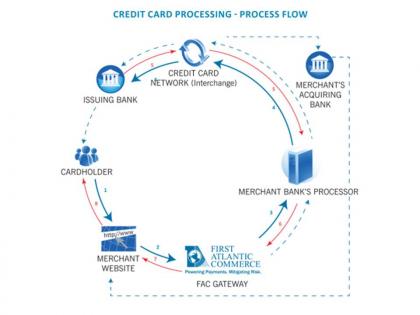
Key components of the credit card processing flow chart include the merchant, payment gateway, processor, card networks, and issuing bank. These interconnected elements work together by authorizing transactions, verifying cardholder information, and facilitating fund transfers, with many retail and e-commerce businesses finding that understanding this flow enables faster payment processing and enhanced customer experiences.
The authorization process serves as the critical gateway within credit card processing, occurring immediately after transaction initiation and before settlement, where the issuing bank verifies cardholder funds and account status in real-time. This seamless integration enables merchants to receive instant approval or decline decisions, automatically triggering either transaction completion or rejection protocols, while simultaneously capturing authorized funds for later settlement, ultimately streamlining payment workflows and minimizing fraud risks.
Payment gateways serve as secure intermediaries that encrypt and transmit transaction data between merchants, customers, and financial institutions during credit card processing. They facilitate authorization requests, manage real-time communication with acquiring banks and card networks, and handle response routing back to merchants, ultimately enabling seamless, secure transactions while protecting sensitive cardholder data throughout the entire payment ecosystem.
Transaction settlement represents the final, critical phase where funds actually transfer from the cardholder's bank to the merchant's account, typically occurring 24-48 hours after authorization. This process ensures payment finality, reduces merchant risk by converting pending authorizations into guaranteed revenue, and enables proper reconciliation between all parties involved, ultimately delivering cash flow certainty and operational efficiency that many businesses depend on for daily operations.
Credit card processing involves authorization request transmission, merchant acquirer verification, card network routing, issuing bank approval, and settlement completion. This multi-step process typically occurs within seconds, enabling merchants across retail, hospitality, and e-commerce sectors to deliver seamless customer experiences while ensuring secure transactions, ultimately reducing abandoned purchases and enhancing operational efficiency.
Fraud detection systems integrate at multiple checkpoints throughout credit card processing, analyzing transaction patterns, merchant data, cardholder behavior, and real-time risk indicators during authorization. These systems enable banks and payment processors to identify suspicious activities within milliseconds, automatically flagging or blocking fraudulent transactions while maintaining seamless customer experiences, ultimately reducing financial losses and enhancing transaction security.
Online transactions involve customer data entry, payment gateway processing, encrypted transmission to processors, and digital receipt delivery, while in-person transactions use card readers, PIN/signature verification, and immediate authorization through point-of-sale systems. These distinct pathways enable retailers to streamline checkout experiences across channels, with many merchants finding that integrated systems deliver faster processing, enhanced security, and improved customer satisfaction.
The flowchart demonstrates how merchants submit transaction requests to acquirers, who then validate merchant credentials, process payment authorizations, and manage settlement procedures. Through visual pathways, it shows acquirers facilitating communication between merchants and card networks, handling risk assessment protocols, and coordinating fund transfers, ultimately enabling streamlined payment processing and faster transaction completion for retail businesses.
Merchants face challenges including high processing fees, complex compliance requirements, chargeback disputes, payment delays, and integration difficulties with existing systems. These obstacles can significantly impact cash flow and operational efficiency, with many retail and e-commerce businesses finding that streamlined processing solutions help minimize costs, reduce fraud risks, and ultimately enhance customer payment experiences while maintaining competitive advantages.
Understanding the flow chart enhances transaction efficiency by identifying bottlenecks, optimizing authorization processes, and streamlining payment pathways from initial swipe to settlement. Through detailed mapping, businesses can reduce processing delays, minimize declined transactions, and implement faster payment routing, with many retail and e-commerce organizations finding that systematic flow analysis ultimately delivers reduced operational costs and improved customer checkout experiences.
Regulatory requirements significantly impact credit card processing by mandating PCI DSS compliance, data encryption protocols, fraud detection measures, and transaction monitoring systems. These regulations enhance security and consumer protection while requiring additional processing steps, with many financial institutions finding that compliance ultimately delivers reduced fraud losses, improved customer trust, and competitive advantage in an increasingly regulated payments landscape.
Businesses optimize processing flow by implementing real-time fraud detection, enhanced authentication protocols, clear transaction descriptions, and comprehensive customer verification at authorization stages. Through advanced analytics and automated risk scoring systems, retailers and e-commerce platforms significantly reduce disputed transactions while streamlining approval processes, ultimately delivering faster checkout experiences and improved customer satisfaction with fewer revenue losses.
Issuing banks authorize or decline transactions, maintain cardholder accounts, and manage credit limits throughout the processing flow. They verify available credit, assess fraud risk, and communicate approval decisions to acquiring banks within seconds, while handling monthly billing, interest calculations, and reward programs, ultimately enabling seamless consumer credit experiences across all merchant transactions.
Different credit cards affect processing flow through varying authorization networks, security protocols, and verification requirements, with premium cards requiring additional validation steps. Debit cards process through PIN networks while credit cards use signature verification, international cards involve currency conversion and cross-border fees, and corporate cards need enhanced reporting capabilities, ultimately requiring merchants to accommodate multiple processing pathways for seamless customer experiences.
Common delays in credit card processing include network connectivity issues, verification timeouts, bank authorization delays, fraud detection holds, and system maintenance windows. These bottlenecks can be mitigated through redundant payment gateways, optimized fraud algorithms, real-time monitoring systems, and strategic processor partnerships, with many retailers finding that diversified processing infrastructure reduces transaction failures while enhancing customer checkout experiences.
-
Enough space for editing and adding your own content.
-
Informative presentations that are easily editable.