

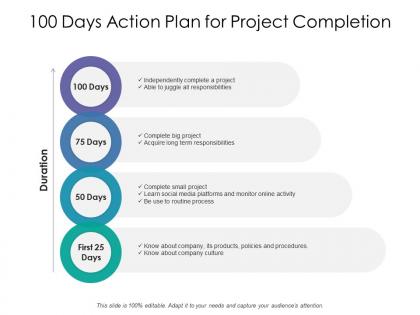
100 days action plan for project completion




Try Before you Buy Download Free Sample Product
 Impress Your
 Audience
 100%
100% Editable
 Save Hours
 of Time


Our 100 Days Action Plan For Project Completion are almost like an encyclopedia. You will get all the facts that concern you.
People who downloaded this PowerPoint presentation also viewed the following :
100 days action plan for project completion with all 5 slides:
Light the torch with our 100 Days Action Plan For Project Completion. Illuminate the road to name and fame.



FAQs for 100 days action plan
So there's five phases but honestly they blur together more than textbooks pretend. First you figure out what you're actually doing and get the green light - that's initiation. Planning comes next where you map timelines and figure out who's doing what. Then execution hits and everything gets chaotic (in a good way usually). You'll be monitoring constantly, tweaking stuff as problems pop up. Closure wraps it all up - document what worked, what didn't. Pro tip: don't expect these to happen perfectly in order. Real projects are messier than that.
So basically, Agile does everything in short bursts with tons of feedback along the way. Waterfall and those older methods? They make you plan out every single detail before you even start. Honestly, Agile felt like total chaos when I first tried it, but you can actually pivot when things change. The traditional stuff sounds safer since you've got your roadmap all figured out - except half the time you end up building something nobody really wants. If there's any chance your requirements might shift (and let's be real, they probably will), go with Agile. Way more adaptable.
Honestly, start with Asana or ClickUp for project stuff - way better than trying to track everything in spreadsheets. Slack's a game changer for quick conversations instead of drowning in emails all day. You'll definitely need Zoom or something similar for face-to-face meetings. Here's the thing though - don't go crazy adding every tool under the sun. Pick maybe 3 max and actually use them well. I learned this the hard way when our team had like 8 different apps and nobody knew where anything was. Get your project management sorted first, then communication. Everything else can wait.
Honestly, you've gotta catch this stuff early or you're screwed. Document your original scope and deliverables upfront - sounds boring but it saves your ass later. When stakeholders come asking for "just one tiny thing" (and oh boy, they will), don't cave immediately. Figure out how it affects your timeline and budget first. Then give them options: push the deadline, add money, or cut something else. I learned this the hard way on my last project - always get changes approved in writing before you do anything. Way better to be the annoying person asking questions now than explaining why you're over budget later.
Track the obvious stuff first - budget, timeline, scope, quality. But honestly? Those numbers don't tell you everything. Stakeholder happiness matters way more than people think. Team morale too - if everyone's burned out, that's a red flag for next time. Did the project actually solve the business problem it was supposed to? That's huge. Oh, and how well you handled curveballs says a lot about your planning. Don't go crazy with metrics though. Pick maybe 3-4 that actually matter for your type of project and stick with those.
Honestly, communication is make-or-break for projects. Start with regular check-ins - I usually do weekly but depends on how crazy things get. Get a shared dashboard going so everyone can see what's happening without constantly asking for updates. Don't be afraid to over-communicate either, way better than people sitting there wondering what's going on. Oh and tailor your message - execs want the big picture while your dev team needs all the nitty-gritty details. The real key though? Make sure people feel safe speaking up when stuff goes wrong. Nobody wants to be the bearer of bad news, but you need them to.
Look, risk management is basically planning for when stuff goes sideways - which it always does. Start by listing everything that could mess up your project, then figure out how screwed you'd be if each thing actually happened. Most people skip this part and then act shocked when deadlines slip. Build extra time into your schedule from day one, not after you're already drowning. Also have backup plans ready to go. I learned this the hard way on a project last year - we didn't think about vendor delays and ended up scrambling for weeks. Update your risk list regularly too since new problems pop up constantly.
Ditch most of the fancy PM stuff - it's way too much for startups. Grab what works: short sprints, milestone tracking, quick check-ins when you need to pivot. Daily standups are clutch. Those heavy docs and endless planning sessions? Total waste when you're moving fast. Honestly, most frameworks assume you've got time and resources you definitely don't have. Start simple with kanban boards and focus on the basics: nail down your MVP, set timelines that won't crush you, keep everyone on the same page about what matters. You can always get fancy later once things stabilize.
Honestly, figuring out your stakeholders early saves so much headache later. Map out who has real influence vs who just thinks they do - trust me on this one. Executives want the 30,000 foot view while your tech people need all the details. I totally overcommunciate now because being vague screwed me over before. Regular check-ins work way better than surprise updates. Make them feel like actual partners instead of just people you have to update. Oh, and a RACI matrix sounds boring but it's clutch for avoiding the "I thought YOU were handling that" moments.
Oh man, cultural stuff can totally derail international projects if you're not careful. Some people are brutally direct, others dance around problems for ages - honestly drives me crazy sometimes. But it's not just communication styles. Different cultures have completely opposite views on hierarchy, deadlines, even basic decision-making. Time zones are the easy part! Here's what really helps: spend time upfront getting to know your team members' backgrounds. Figure out who needs relationship-building first versus who wants to dive straight into work. Then set communication rules everyone actually buys into.
Honestly, weekly one-on-ones are a lifesaver - way better than those awkward team meetings where everyone just nods along. Make sure roles are crystal clear from day one so people aren't constantly bumping into each other. Oh, and create a space where your team can actually speak up without getting shut down. That's huge. Use whatever collaboration tools work for your group to stay on the same page. But here's the thing - don't let conflicts fester. I learned this the hard way. Jump on issues immediately instead of crossing your fingers they'll magically disappear. Maybe do a team retrospective soon?
Honestly, start by celebrating the small wins - like, actually call them out in meetings. People notice that stuff. Don't just dump tasks on your team without letting them weigh in on timelines first. I learned this the hard way lol. Give them space to figure out HOW they'll get things done, but stay tight on what needs doing and when. Quick check-ins catch problems before they snowball into bigger headaches. Oh, and be their shield against all the random corporate nonsense that'll kill their momentum otherwise. Trust me, micromanaging everything just makes people want to quit.
Dude, you really need project management software - it's such a lifesaver. Right now you're probably tracking stuff in your head or random spreadsheets, which is chaos waiting to happen. These tools let you see everything in one place: tasks, deadlines, who's doing what. You'll spot problems before they blow up, and your team can actually collaborate instead of sending a million emails back and forth. Your boss will love seeing progress without bugging you constantly too. I'd start with Trello or Asana - they're pretty user-friendly and won't overwhelm you.
Honestly, good project scheduling is like having GPS for your whole team. Everyone knows what they're doing and when stuff's due. You'll catch problems before they blow up, and resources won't get wasted on random tasks. The best part? No more panicked "oh crap, what's due tomorrow" moments. Stakeholders love it too since you can actually give them real updates instead of just shrugging. Here's the thing though - always pad your timeline. Trust me, weird stuff always comes up that you didn't plan for.
Failed projects are honestly where you learn the most - just gotta figure out what actually broke. Usually it's stuff like terrible communication or timelines that were never realistic to begin with. Scope creep kills everything too. I've watched so many teams blame bad luck when really they just didn't nail down clear requirements from day one. Resource problems and stakeholder drama are huge culprits too. Do real post-mortems without the blame game, then actually document that stuff somewhere people will see it. Build a lessons learned list and reference it when planning new projects - sounds obvious but most teams forget this step completely.
No Reviews