


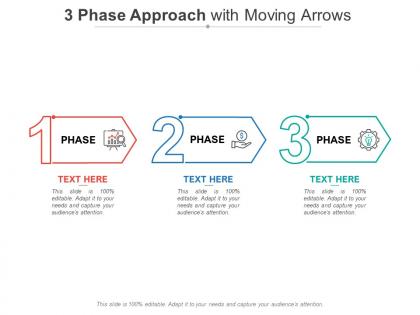
3 phase approach with moving arrows





Try Before you Buy Download Free Sample Product
 Impress Your
 Audience
 100%
100% Editable
 Save Hours
 of Time


Cultivate ideas with our 3 Phase Approach With Moving Arrows. They will cause them to germinate.
People who downloaded this PowerPoint presentation also viewed the following :
3 phase approach with moving arrows with all 5 slides:
Explain the geometry with our 3 Phase Approach With Moving Arrows. They accurately display the layout.




FAQs for 3 phase approach
Key components of a successful change management strategy include clear communication plans, stakeholder engagement frameworks, comprehensive training programs, leadership alignment, and robust feedback mechanisms. These elements work together by building organizational buy-in, minimizing resistance, and ensuring smooth transitions, with many companies finding that strategic combination ultimately delivers faster implementation timelines, reduced costs, and sustained competitive advantage.
Organizations effectively communicate changes through transparent messaging, multi-channel approaches, regular updates, interactive feedback sessions, and leadership visibility. These strategies streamline understanding by addressing employee concerns proactively, ensuring consistent information flow, and creating dialogue opportunities, with many companies finding that combining town halls, digital platforms, and direct supervisor communications ultimately delivers higher acceptance rates and smoother transitions.
Leadership serves as the primary catalyst for organizational change by establishing clear vision, securing stakeholder buy-in, allocating necessary resources, and modeling desired behaviors throughout the transformation process. Effective leaders facilitate change by communicating transparently with teams, addressing resistance proactively, and maintaining momentum during challenging phases, with many organizations finding that strong leadership support significantly increases change initiative success rates and employee adoption.
Resistance to change can be effectively managed through transparent communication, employee involvement in decision-making, comprehensive training programs, and strong leadership support. Organizations like hospitals implementing new systems and banks adopting digital platforms find that addressing concerns early, providing adequate resources, and celebrating small wins ultimately reduces pushback while accelerating successful transitions.
Techniques for measuring change readiness include surveys and assessments, stakeholder interviews, focus groups, readiness scorecards, and behavioral observation tools. These methods evaluate team attitudes, communication patterns, and resistance levels by analyzing feedback data, engagement metrics, and leadership support indicators, ultimately delivering insights that enable organizations to tailor their change strategies and improve implementation success rates.
Organizational culture significantly influences change management by shaping employee attitudes, resistance levels, communication patterns, and adaptation speeds throughout transformation initiatives. Companies with collaborative, innovation-focused cultures typically experience smoother transitions, while hierarchical or risk-averse environments may require more structured approaches, ultimately determining whether changes are embraced or rejected organizationally.
Common change management pitfalls include insufficient stakeholder engagement, poor communication strategies, inadequate training programs, resistance to cultural shifts, and lack of leadership commitment. These challenges can be avoided by implementing comprehensive communication plans, providing targeted training across all organizational levels, and establishing clear metrics for success, with many organizations finding that early stakeholder involvement and consistent leadership support ultimately deliver smoother transitions and higher adoption rates.
Feedback loops can be integrated through regular pulse surveys, structured focus groups, cross-departmental review sessions, real-time digital platforms, and milestone assessment meetings. These mechanisms enable organizations to identify resistance early, adjust implementation strategies dynamically, and maintain stakeholder engagement, with many companies finding that continuous feedback accelerates adoption while minimizing disruption.
Change management tools include project management platforms, communication software, training management systems, analytics dashboards, and collaboration technologies. These solutions streamline implementation by automating workflows, tracking progress, and facilitating stakeholder engagement, with many organizations finding that integrated platforms ultimately deliver faster adoption rates, reduced resistance, and measurable transformation outcomes across departments.
Employee involvement in change initiatives improves outcomes by increasing buy-in, reducing resistance, and leveraging frontline insights for practical implementation strategies. When organizations actively engage employees through feedback sessions, pilot programs, and collaborative planning, they create ownership and accountability, ultimately delivering smoother transitions and higher adoption rates across departments.
**INPUT**: What are the best practices for training employees during a transition? **OUTPUT**: Best practices for training employees during transitions include phased learning approaches, hands-on simulations, peer mentoring systems, continuous feedback loops, and role-specific customization. These methods enhance adoption by building confidence gradually, addressing individual concerns, and maintaining productivity throughout the change, with many organizations finding that structured support programs ultimately deliver smoother transitions and higher employee engagement. [Word count: 58]
Change management principles enhance digital transformations by establishing clear communication strategies, engaging stakeholders early, providing comprehensive training programs, and creating structured feedback loops. Through these approaches, organizations streamline technology adoption, minimize resistance, and accelerate user acceptance, with many companies finding that systematic change management reduces implementation timelines while ultimately delivering smoother transitions and higher success rates.
Effective change management metrics include employee adoption rates, productivity measurements, customer satisfaction scores, financial performance indicators, and timeline adherence assessments. These metrics enable organizations to track progress across multiple dimensions, with many companies finding that combining quantitative data with qualitative feedback delivers comprehensive insights into transformation success and competitive positioning.
Organizations maintain momentum by embedding changes into daily workflows, establishing continuous feedback loops, celebrating incremental wins, and aligning incentives with new behaviors. Through regular progress reviews and stakeholder engagement, companies in sectors like manufacturing and healthcare find that sustained communication, ongoing training, and leadership reinforcement ultimately deliver lasting transformation and competitive advantage.
Incremental change involves gradual, continuous improvements to existing processes, while transformational change requires fundamental shifts in strategy, culture, or operations that reshape entire organizations. Incremental changes benefit from steady communication and small-scale pilot programs, whereas transformational initiatives demand comprehensive change management frameworks, extensive stakeholder engagement, and cultural realignment, with many organizations finding that combining both approaches delivers sustained competitive advantage.
No Reviews