


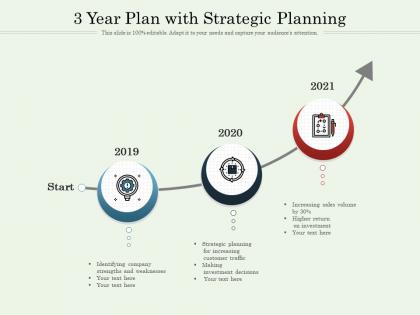
3 year plan with strategic planning




Try Before you Buy Download Free Sample Product
 Impress Your
 Audience
 100%
100% Editable
 Save Hours
 of Time


Our 3 Year Plan With Strategic Planning are topically designed to provide an attractive backdrop to any subject. Use them to look like a presentation pro.
People who downloaded this PowerPoint presentation also viewed the following :
3 year plan with strategic planning with all 2 slides:
Use our 3 Year Plan With Strategic Planning to effectively help you save your valuable time. They are readymade to fit into any presentation structure.
FAQs for 3 year plan
So first, figure out where you're actually at right now - like a real honest assessment. Then work on your vision and goals. Strategy comes next, obviously. But here's the thing - get your leadership team on the same page about the current mess before you start dreaming about the future. Also, don't just invite stakeholders to one kickoff meeting and call it good. You need them involved throughout. Map out who's doing what and with how much budget, because I've watched so many plans just sit there collecting dust when nobody knows their role.
Honestly, your mission and vision should be like your North Star for everything. I see so many companies where those statements just sit there looking pretty on the website - such a missed opportunity. Map each strategic goal back to your mission/vision and ask yourself: "does this actually get us closer to who we want to be?" Sounds obvious but you'd be surprised how often goals don't connect at all. If something doesn't align clearly, either fix it or toss it. Oh, and make this a regular thing during planning, not just once and done.
So SWOT is basically your reality check before making any big business moves. Look at what you're good at internally, what needs work, then scan your market for opportunities and threats. Think of it like... I dunno, checking your bank account before planning a vacation? The whole point is using those insights to actually guide where you put your time and money. Most people just fill out the four boxes and think they're done - but that's missing the entire point. You want those findings to shape your real strategic decisions. Otherwise you're just making fancy lists for no reason.
So data analytics is like having a crystal ball for planning stuff. You can actually see what's working vs what just sounds impressive in meetings. Historical data helps you model different scenarios before throwing money at things. I'd start by figuring out which metrics actually tie to your goals - not just vanity numbers that look pretty. Then set up dashboards to track them regularly. Yeah, gut feelings can be right sometimes, but mixing them with real customer behavior patterns and market trends? That's where you spot the opportunities that actually move things forward.
Honestly, most people mess up by being way too vague with their goals. Like, "increase revenue" means nothing without actual numbers. Getting stakeholders involved late is another killer mistake - suddenly everyone has opinions when you're already halfway done. I've watched teams burn months on gorgeous PowerPoints that never turn into real work (such a waste). Short timelines? Recipe for disaster. Also, if you don't define what success looks like upfront, you'll just wander around wondering if anything's working. Start with stuff you can actually measure and build backwards.
Here's how I'd handle it: First figure out who actually matters - employees, customers, investors, the usual suspects. Set up different ways to hear from them throughout the whole process. Surveys work great early on, focus groups when you're brainstorming ideas. Honestly, the feedback sessions before you lock everything in are probably the most crucial part. But here's the thing - don't just collect all this input and then ignore it! Actually use what they tell you and circle back to show how their thoughts influenced the final plan. Make it continuous, not some one-and-done checkbox exercise.
Okay so officially you're supposed to do a full strategic review once a year. But honestly? Check in way more often. I do quarterly reviews - keeps you from wandering off track and lets you pivot quickly when stuff isn't working. The annual thing is for big changes like shifting your whole direction or updating your mission. Quarterly check-ins are where you catch problems before they blow up and make sure everyone's still on the same page. Trust me, waiting a full year to course-correct is brutal in today's market. Put those quarterly dates in your calendar right now or you'll definitely forget.
Honestly, mix it up because everyone processes info differently. Have leadership cascade through team meetings first. Then set up visual dashboards so people can actually see the progress - those work better than you'd think. Town halls are solid for Q&A, though most companies skip them for some reason. Break down the big strategy into department-specific goals so it's not just corporate speak floating around. Repetition is your friend here. Don't just say it once and hope it sticks. Quarterly check-ins help you course-correct and keep reinforcing the main points.
Look, external stuff basically controls your strategy whether you like it or not. Market trends tell you where the real opportunities are hiding. Economic conditions? They decide how much risk you can actually handle - recession planning hits different than boom times, obviously. You've got to scan this stuff regularly and stay flexible because it moves way faster than internal changes. My old boss used to say quarterly reviews saved his butt more than once. Set up some kind of early warning system so you're not scrambling to catch up later. Way better than getting blindsided.
Honestly, SMART goals are your best friend here - specific, measurable, achievable, relevant, time-bound. Skip the vague stuff like "boost sales." Go for concrete numbers instead: "increase revenue by 15%." Trust me, I've watched too many teams argue later about whether they actually hit their targets when goals were fuzzy. Break big objectives into smaller chunks you can track monthly. Use metrics your team can actually influence with whatever systems you've got now. Oh, and start with an audit of what data you're already collecting - way easier than buying new tracking tools right off the bat.
Honestly, I'd start with something like Miro or Monday.com to get everything in one spot - way better than juggling a million spreadsheets. Real-time dashboards are clutch too since you're not waiting forever for reports. The AI stuff for market trends is actually getting scary good (though I still don't trust it 100%). But here's what really saves my sanity: automated progress tracking. No more awkward "hey, how's that project going?" conversations every week. Pick whatever fixes your biggest headache first, then add more tools later.
Honestly, good planning actually makes you way more agile - sounds backwards but hear me out. You're building flexible frameworks, not some rigid roadmap that you're stuck with. Regular review cycles help a ton, plus scenario planning means you can pivot fast when things change. The magic happens when you set clear priorities upfront so your team knows what to focus on when random opportunities show up. I totally used to think planning killed agility too! But really you're just planning for uncertainty instead of trying to predict the future. Try quarterly reviews instead of yearly ones - game changer.
Honestly, it really comes down to your industry's speed and how much regulation you're dealing with. Tech moves fast with quick pivots, but manufacturing? They need those longer capital planning cycles. Healthcare and finance get bogged down in compliance stuff - I swear the red tape never ends for those guys. Consumer brands are all about catching trends and seasonal patterns. B2B is more relationship-focused since their sales cycles drag on forever. The real difference is your time horizon and how much risk you can stomach. Just figure out what actually drives success in your space first, then build around that instead of some cookie-cutter approach.
Honestly, you can craft the most brilliant strategy ever, but it's worthless without solid leaders pushing it forward. They've got to get everyone on the same page about the vision first - that's huge. Then comes the hard part: actually making stuff happen day-to-day while dealing with budget constraints and keeping people focused. Plans always hit roadblocks (I've never seen one that didn't), so your leadership team needs to roll with the punches and make quick calls when needed. The real trick is breaking down those big strategic goals into bite-sized tasks teams can tackle. Just don't move forward until leadership is 100% committed to this thing.
Honestly, don't save risk assessment for the end - weave it into every part of your planning process. When you're scanning the environment, immediately think about what could go sideways. I've watched so many teams get hyped about opportunities and completely miss the obvious pitfalls. For your biggest risks, create backup plans and put someone in charge of watching them. Update your risk list every quarter because things change fast. The real trick? Make talking about risks normal in your regular meetings. Otherwise you're just crossing your fingers and hoping nothing breaks - which, let's be real, never works out.
-
Understandable and informative presentation.
-
Editable templates with innovative design and color combination.