


30 Day Social Media Calendar For Healthcare Hospital Marketing Plan To Improve Patient Strategy SS V




Try Before you Buy Download Free Sample Product
 Impress Your
 Audience
 100%
100% Editable
 Save Hours
 of Time


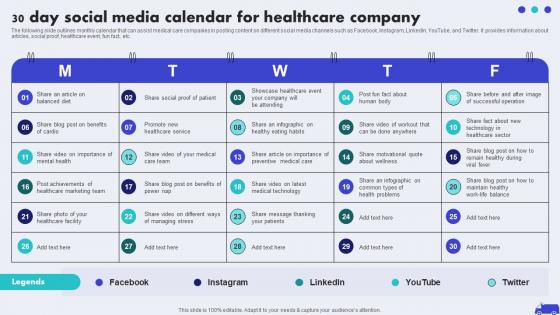
The following slide outlines monthly calendar that can assist medical care companies in posting content on different social media channels such as Facebook, Instagram, LinkedIn, YouTube, and Twitter. It provides information about articles, social proof, healthcare event, fun fact, etc.
People who downloaded this PowerPoint presentation also viewed the following :
30 Day Social Media Calendar For Healthcare Hospital Marketing Plan To Improve Patient Strategy SS V with all 9 slides:
Use our 30 Day Social Media Calendar For Healthcare Hospital Marketing Plan To Improve Patient Strategy SS V to effectively help you save your valuable time. They are readymade to fit into any presentation structure.








FAQs for 30 Day Social Media Calendar For Healthcare Hospital Marketing Plan To Improve Patient
Start with patient education stuff - wellness tips, condition awareness, preventive care basics. Patient success stories work great for engagement, plus some behind-the-scenes posts so people actually see the humans behind your practice. Legal has to review everything though (such a pain but necessary). Sprinkle in promotional content for new services or events, but don't overdo it. Seasonal health campaigns are solid too. Always leave room for breaking health news or urgent updates - you never know when something'll pop up. I'd batch content monthly but check weekly to stay current with trends.
Track click-through rates and appointment bookings, not just follower counts. When patients save and share your health education posts - that's where the magic happens. Check if people respond positively to your tips too. The real goal is turning social media into actual patient trust. UTM codes are a pain to set up but totally worth it - you'll see exactly which posts drive traffic to your portal or booking page. Honestly, I'd rather have 100 engaged followers who actually book appointments than 1000 who just scroll past.
Start with educational stuff - patient tips, explaining conditions, preventive care. People genuinely want to learn from you instead of just seeing another stock stethoscope photo (we're all guilty of that though). Mix in some behind-the-scenes content from your practice and staff spotlights. Community health events are gold for building trust. Patient testimonials work really well too, just get consent first obviously. Being helpful beats being salesy every time. I'd go with something like 70% educational, 20% practice updates, 10% promotional. That ratio's worked for most practices I've seen.
Honestly, it's a game changer for staying consistent without losing your mind. You can batch plan all your educational stuff - health tips, screening reminders, seasonal content. Patients actually start expecting your posts when you're regular about it. I love planning interactive things like polls or Q&As because people get chatty in the comments. Map out monthly themes so you're not stressing about what to post tomorrow. Trust me, your future self will thank you when you're not scrambling for content ideas at 9pm on Sunday.
Oh definitely use more visuals! I mean, nobody wants to read a wall of text about medical stuff. Infographics work really well for breaking down symptoms or health tips into something people can actually understand. Behind-the-scenes shots of your team are great too - makes everything feel more human, you know? People scroll so fast now that visuals are basically the only thing that'll make them pause. Just watch out for HIPAA stuff if you're posting anything with patients (obviously). My advice? Create some template designs you can reuse for different topics. Saves you from starting from scratch every time.
HIPAA's the big one - don't post patient stuff without written consent. Honestly, I've seen so many docs get burned by "before and after" posts they thought were harmless. Keep everything educational instead of patient-specific. Also skip giving direct medical advice to random followers, and throw in disclaimers that your content isn't actual medical advice. Your state medical board probably has their own social media rules too. Oh, and definitely run clinical posts by your compliance team first - way better to be overly cautious than deal with a board complaint later.
Honestly, don't go crazy with posting - like 3-5 times a week tops. Your audience will get annoyed if you're constantly in their face. I'd do the heavier educational stuff Tuesday through Thursday since that's when people actually pay attention to serious content. Weekends are perfect for those lighter wellness tips, you know? Oh, and definitely space out anything too heavy or medical - nobody wants their feed flooded with intense health stuff back-to-back. Batch create everything ahead of time but check your analytics first to see when your people are actually online. Makes a huge difference in engagement.
Honestly, you gotta match each platform's energy. LinkedIn's where your serious stuff lives - think industry insights and professional health content. Facebook's amazing for building community around patient stories (get permission first though). Instagram and TikTok? That's your playground for behind-the-scenes videos and creative health education posts. Twitter works for quick tips and jumping into healthcare debates. I probably spend way too much time on Instagram myself, but the visual format just clicks with people. Take your main message and remix it for each audience. Same info, different vibes.
Honestly, patient testimonials are absolute gold for social media. Real stories from actual patients build way more trust than any fancy marketing copy ever could. People connect with genuine recovery experiences - there's something about hearing from someone who's been through it that just hits different, you know? Short testimonials work great too. They showcase your impact without coming off as braggy or salesy. Plus the engagement is usually way higher since everyone loves authentic stories. Just grab proper consent first and maybe set up some simple way to collect them regularly. Way better than generic health tips that nobody remembers anyway.
Honestly, stop guessing what works and actually look at your data. Pull those monthly reports and check your reach, saves, comments, click-throughs - the whole thing. You'll probably be shocked at what performs well vs. what bombs. I've watched super polished medical posts get like 12 likes while random behind-the-scenes stuff blows up. Makes no sense but whatever. Figure out your best posting times and which platforms actually convert. Then just do more of what's working. Short posts, long ones, videos - the data will tell you. Don't overthink it.
So I'd definitely tap into the big health awareness months - February's heart health, May for mental health, October for breast cancer awareness. January's obvious with all the New Year wellness stuff. During flu season you can go crazy with prevention content, which is super useful actually. Summer means sunscreen posts, winter's all about immune support. The CDC has this calendar of official health days that's pretty handy. Honestly though, don't try to cover everything or you'll burn out. Pick like 2-3 themes each month and batch your content around those. Way easier to stay consistent that way.
Okay so basically having a social media calendar saves your butt during crises because you've already got your posting schedule mapped out. When something hits the fan, you just swap your regular posts for crisis messaging instead of panicking about what to say. Trust me, it's way less stressful than winging it. You can coordinate timing across all your platforms and keep everything consistent too. The trick is making your calendar flexible enough that you can pause normal content and shift gears fast. My old boss used to say "plan to pivot" and honestly? She was right.
Dude, there's so much more than just basic schedulers out there. Hootsuite and Buffer are solid classics, but Later's amazing for visual stuff. Sprout Social kills it with analytics. Oh, and Canva lets you design AND schedule in the same spot which is honestly genius. Since you're in healthcare though, you definitely need approval workflows - compliance is no joke. CoSchedule handles that really well, lets your whole team review before anything goes live. I'd probably test out like 2-3 free trials first to see what actually works with how you guys operate. Don't overthink it too much at first.
Honestly, micro-influencers are where it's at - way better engagement than the big names. Find credible health advocates or patient storytellers in your area who actually align with what you do. Before jumping in though, nail down those medical accuracy guidelines and make sure you're covered compliance-wise. HIPAA's obviously non-negotiable here. Educational stuff works best - myth-busting posts, awareness campaigns, maybe some patient success stories if you've got proper consent. Oh, and check your organization's social media rules first (learned that one the hard way). I'd start small, reach out to like 2-3 potential partners this month.
Create a style guide first - cover your voice, visuals, and main messages. Then actually stick to it! Seriously, I've seen brands drift so fast it's wild. Keep your logo, colors, and fonts the same everywhere. Pick 3-4 core messages about your services that work across channels. Your tone can shift a bit between LinkedIn and Instagram, but your personality should stay consistent. Oh, and do monthly check-ins on all your profiles. Just a quick scan to catch weird inconsistencies before they become a thing. Trust me, it's way easier to fix early.
-
“Ample and amazing variety of templates available, really helpful for making professional PPT for day to day workings.”
-
I never had to worry about creating a business presentation from scratch. SlideTeam offered me professional, ready-made, and editable presentations that would have taken ages to design.