


3P Analysis Business Performance Assessment Management




Try Before you Buy Download Free Sample Product
 Impress Your
 Audience
 100%
100% Editable
 Save Hours
 of Time


Our 3P Analysis Business Performance Assessment Management are topically designed to provide an attractive backdrop to any subject. Use them to look like a presentation pro.
People who downloaded this PowerPoint presentation also viewed the following :
3P Analysis Business Performance Assessment Management with all 12 slides:
Use our 3P Analysis Business Performance Assessment Management to effectively help you save your valuable time. They are readymade to fit into any presentation structure.



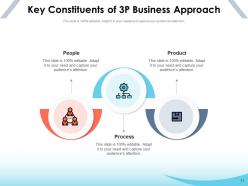

FAQs for 3P Analysis Business
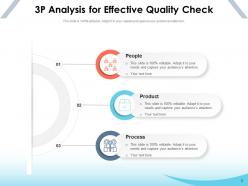
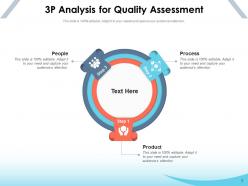
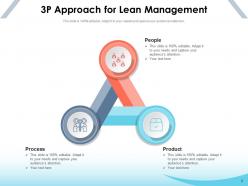
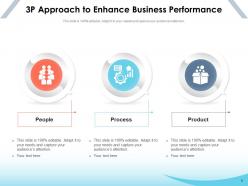
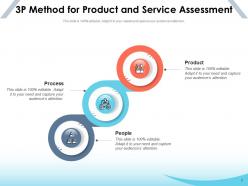
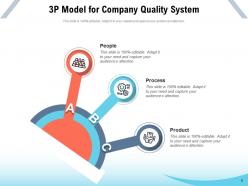
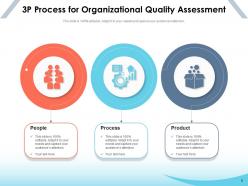
So 3P Analysis is basically People, Process, Product - three ways to look at whatever you're working on. People covers your stakeholders, users, team stuff. Process is your workflows and where things get stuck (this is usually where I find the most annoying problems tbh). Product is features, how it's performing, market fit - you know the drill. Honestly, just pick whichever one seems most screwed up right now and start there. You'll probably get some quick wins that way instead of trying to tackle everything at once.
So 3P Analysis is basically looking at People, Planet, and Profit before making big decisions. Instead of just chasing money, you're thinking about how it affects employees, customers, the environment - all that stuff. I started doing this last year and honestly? Total game-changer. You catch problems way earlier - like when customers might freak out or when regulations could bite you later. Plus you find opportunities that pure profit thinking misses. It sounds kind of hippie at first but the business results are solid. Next time you've got a major choice, just run it through all three angles first.
SWOT's all about looking inward - your strengths, weaknesses, that whole thing. Pretty self-focused honestly. 3P flips it outward though. You're thinking People, Planet, Profit impacts instead of just "what are we good at?" Way more holistic approach. SWOT's great for competitive stuff, but 3P makes you consider how decisions actually affect your community and environment from day one. I've been using 3P more for new projects lately - it gives you this completely different lens than traditional analysis. Forces you to think beyond just your company's immediate needs, which is refreshing tbh.
Manufacturing and automotive companies get the most out of 3P Analysis - makes sense since they've got these crazy complex processes where tiny inefficiencies snowball fast. Healthcare and logistics see huge benefits too. Really, any place with repetitive workflows and quality issues will benefit. Industries where waste costs you real money or safety regs are tight? That's where it shines. Works best when you have standardized processes that different people do all the time. I'd start by mapping your most common, high-risk processes first - that's usually where the low-hanging fruit is.
Yeah, definitely! Just swap out "Profit" for "Purpose" or "Impact" since you're not chasing money. People and Planet stay mostly the same, though I'd probably weight stakeholder stuff heavier - donors can be picky about trust, you know? Track things like how many people you're helping, actual outcomes, cost-per-impact. That kind of stuff. The other pillars work fine as-is. Oh, and start with figuring out your key impact metrics first, then build everything else around those. Makes the whole process way smoother.
Look, data collection is make-or-break for 3P Analysis. Without solid data on your People, Process, and Product stuff, you're basically shooting in the dark. I've seen teams wing it before and... yeah, doesn't go great. You want both hard numbers AND feedback from people actually doing the work. Here's what I'd do: map out what data you can already get your hands on for each area, then figure out what's missing. Don't fall into that trap of only looking at info that backs up what you already think - been there myself. Stay systematic about the whole thing.
So 3P Analysis is basically your cheat code for finding innovation opportunities. Look at People, Process, and Product to spot what's actually broken. Users have unmet needs, workflows are messy, tech has limits - that's where your new product fits in. Honestly, what people *think* is the problem is usually way off from reality. This framework stops you from building random features and makes you think bigger picture. Start with it during discovery to check if you're even solving the right thing, then circle back later so you don't miss any dependencies that'll bite you.
Honestly, the biggest mistake is jumping in without figuring out what you're actually trying to solve first. You'll waste so much time analyzing the wrong stuff. Don't stress too much about whether something fits perfectly into "people" vs "process" categories either - I've watched teams argue about that for hours when it literally doesn't matter. Get the right people involved from the start though, or you'll miss obvious things. Oh, and this might sound dumb but actually DO the action items you come up with. Half the time people just make these nice organized lists and then... nothing happens. Start with nailing down the real problem and keep everyone in the loop.
Look, nobody wants to read through pages of dense 3P Analysis text. Visual tools are your best friend here - dashboards, heat maps, basic charts that actually show the gaps between People, Process, and Performance stuff. I've watched so many smart analyses get completely ignored because they looked boring as hell. Tableau and PowerBI are solid options, but honestly? Even a well-designed PowerPoint can work wonders. The trick is turning your data into actual stories that show real business impact. Charts grab attention way better than paragraphs. Trust me, visuals get you the buy-in that walls of text never will.
Honestly, just get "The 3P Way" handbook first - way better than any online modules your company has. Trust me on this one. Check your learning portal anyway since they probably have some internal stuff, but the book examples actually make sense. Don't just read though. You need to practice with real data from your own team, not the fake scenarios. Monthly sessions with people who already know this stuff will save you tons of time. I learned way faster doing actual cases than staring at theory all day. It's one of those things you've gotta just dive into.
So 3P Analysis is basically your early warning system - you check People, Process, and Product to catch problems before they mess you up. Look for where people might screw up, which processes are falling apart, and what could go wrong with your actual product. Pick one area that's critical to your business and run through all three. Honestly, it sounds boring but you'll be shocked what you find. The cool part is seeing how these things connect - like when a weak process makes human error way more likely. Short version: it's like getting a physical for your business.
Toyota's Prius manufacturing setup is probably the best example - they mapped out people, processes, and physical spaces before building anything. Amazon does this religiously with new warehouses (they're weirdly obsessed with efficiency). Boeing used 3P Analysis for their 737 assembly improvements too. GE ran it through several Six Sigma projects back in the day. Honestly though? The real move is starting your own documentation now. Track what's working and what isn't so you can build case studies that actually matter for your situation.
Honestly, quarterly is the bare minimum but I'd push for every 2-3 months if you're in anything fast-moving. Companies are pivoting so damn quickly these days. Monthly monitoring of your main competitors through automated tools is smart. Save the deep dive stuff for quarterly though - unless you're in tech or retail, then maybe bump it up. Market disruptions don't give a shit about your planning schedule, so better to stay ahead. Oh and actually assign this to someone specific with calendar reminders or it'll just sit on your never-ending to-do list forever.
Honestly, I'd stack 3P with SWOT and Porter's Five Forces - that combo is pretty solid. SWOT breaks down your internal/external stuff, Porter's gets into the competitive weeds. I'm always using those three together tbh. If your market's all over the place, throw in some scenario planning too. Stakeholder analysis helps when you've got multiple parties making things messy. The trick is layering them so they cover each other's blind spots. Start with 3P as your base, then pick whatever else fits your specific situation best.
Honestly, tech makes 3P Analysis way less painful. Instead of manually collecting data, specialized software pulls performance metrics automatically - you'll save so much time. Real-time dashboards show all three P's with charts that actually make sense. Your team can give feedback through collaboration tools instead of sitting through boring meetings (thank god). The trick is picking platforms that play nice with what you already use, otherwise you're just making more work. Oh, and figure out which data collection step is currently eating up most of your day - start there.
-
Professional and unique presentations.