


6 employee survey powerpoint template





Try Before you Buy Download Free Sample Product
 Impress Your
 Audience
 100%
100% Editable
 Save Hours
 of Time


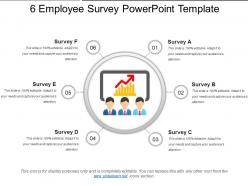
Bring out the best in your teams with our 6 employee survey PowerPoint template. This presentation slide of human resources questionnaire has been designed by a team of professional designers and helps in creating engagement in the team by regularly soliciting feedback from them. With this employee engagement PPT template, you can indicate how happy or content your employees are and you can outline their level of motivation, involvement, or emotional commitment towards business. This slide on employee opinion survey can be used to review the wide variety of questions such as what are the employee engagement outcomes, to review career growth and development of the employees, creating communication between them, recognition and work-life balance. Use this workplace survey PowerPoint slideshow to review if the employees have the flexibility to meet the needs of your work and personal life which will help them in establishing business ownership. Check out this HR survey questions layout help businesses to boost productivity in all levels of the organization. Increase the impact of the joke with our 6 Employee Survey Powerpoint Template. Enhance it with comical images.
People who downloaded this PowerPoint presentation also viewed the following :
6 employee survey powerpoint template with all 5 slides:
Build good habits with our 6 Employee Survey Powerpoint Template. Educate them on the benefits of correct conduct.
FAQs for 6 employee
Definitely focus on job satisfaction, management quality, and workplace culture first. Career development and pay/benefits are obvious must-haves. Work-life balance is massive right now - everyone's burned out. Ask about communication between teams, workload stress, and if people actually feel valued. Training opportunities matter too. Mix rating scales with open-ended stuff so you get real numbers plus the messy honest feedback. Oh, and definitely ask "what would make you stay longer?" - that question always reveals way more than you'd expect. People get surprisingly candid with that one.
Okay so first things first - people need to trust the process is actually anonymous and that you'll do something with their feedback. Nobody wants to waste time on surveys that disappear into the void. Mix up your question types so it's not boring - ratings, open-ended stuff, multiple choice. Balance it out too; don't make it all about what sucks or it becomes a total negativity fest. The real game-changer though? Show them you actually acted on past results, even tiny changes matter. And honestly, if leadership doesn't visibly care about the whole thing, why should employees?
Go with 5-point Likert scales for sure. They're not too simple but won't make people's heads spin either - I've watched surveys crash and burn with those confusing 10-point ones. Stick to "Strongly Disagree" through "Strongly Agree" or the satisfied/dissatisfied version. Throw in some yes/no questions too, like "Do you feel recognized at work?" Those work great for straightforward stuff. Just don't mix up your scale types throughout - people get annoyed when they have to keep switching how they're thinking about answers.
Definitely include department, how long they've been there, and whether they're managers or individual contributors. Location matters if you have multiple offices. Age ranges help too, plus employment type - contractors and part-timers usually have totally different experiences than full-time people. Oh, and remote vs in-office status is huge now for job satisfaction. Don't go overboard though, people hate long surveys. Pick maybe 4-6 categories that'll actually help you spot useful patterns. Like if all your new sales hires are miserable, or your senior remote folks need different support. The whole point is finding actionable insights, not just collecting random data.
Honestly, open-ended questions are where you get the good stuff. Someone rates management as "dissatisfied" - okay, but WHY? Maybe it's micromanaging, maybe zero feedback, maybe terrible communication. The multiple choice thing just doesn't cut it for stuff like that. You'll actually hear things like "my boss expects perfection but never tells me what I'm doing wrong" which gives you something to work with, unlike just staring at a crappy score. People also mention problems you didn't even know existed. I'd throw in 2-3 follow-up questions after your rating sections to dig deeper.
Oh man, anonymous surveys are a total game changer. People will actually tell you what's wrong instead of just saying everything's fine. I've watched response rates go way up when you take names off - suddenly everyone's complaining about their manager or how insane their workload is. Without anonymity? You get nothing but "great job, love working here" BS. Just make sure you're not sneaky about it though. Use a third party platform and don't go hunting for who said what, even when someone writes something that makes you really curious.
So basically you want to ditch the corporate jargon first - nobody actually says "synergistic solutions" in real life lol. Focus on how your team actually talks day-to-day. Think about what makes your workplace tick. Are you guys all about collaboration? Add teamwork questions. Innovation-focused? Ask about creative freedom and idea sharing. I'd start by picking 3-4 things that really define your company culture, then build questions around those. Way more effective than using some generic template that asks about "employee engagement metrics" or whatever. Your people will actually connect with questions that feel relevant to their actual experience there.
Get a senior leader to send it out - not HR. Trust me, response rates are way better when it comes from the top. Timing's huge too. Don't send during quarter-end chaos or holiday season when everyone's checked out mentally. Give people 1-2 weeks with a reminder mid-way through. Be super clear about anonymity and what happens next with the data. Honestly, the worst thing you can do is go silent afterward - that's how you kill participation for future surveys. Always circle back with what you found and your actual plan to fix things.
Twice a year works way better than annual surveys - you'll actually catch trends that way. I'd do mid-year and year-end for the big comprehensive ones. Then maybe toss in those quick pulse surveys quarterly? Just 3-5 questions, nothing crazy. Honestly, annual feels like you're flying blind for 11 months. The timing consistency matters more than you think - same questions, same schedule so you can compare properly. Oh, and whatever schedule you pick, actually put it in your calendar now or it'll never happen. Trust me on that one.
Focus on the stuff that always comes up - communication breakdowns, people feeling overworked, wanting more career growth, manager drama. Honestly, these issues are like clockwork in every survey. Map out who handles what type of problem and give realistic deadlines for fixes. The trick is getting specific with your action plans instead of those vague "we hear you" responses that nobody believes. Also build in how you'll update people on progress - that part's huge. Don't forget about setting up task forces for the bigger issues and sharing the overall results with everyone.
Honestly, just go with SurveyMonkey or Microsoft Forms - they'll do most of the work for you. Set up automated reminders so you don't have to chase people down constantly. The dashboards are actually pretty decent now and will spot patterns you'd probably miss otherwise. If you've got HRIS integration, you can break down responses by department right away which is super helpful. Oh, and definitely test it with a small group first before sending it to everyone - learned that one the hard way. The whole thing basically runs itself once you get it rolling.
Oh man, don't make it crazy long - people bail after like 10-15 questions max. Also avoid those leading questions where you're basically feeding them the answer you want. I've seen surveys that are just word soup with corporate jargon everywhere. Super annoying. Keep the language simple and don't cram multiple topics into one question. And please don't make every single thing required! That's the fastest way to get people to quit halfway through. Test it on a couple coworkers first too - you'll catch weird stuff you didn't notice.
Get those results out within 4-6 weeks tops - any longer and people forget they even took the thing. Don't sugarcoat the bad stuff either. Put together a summary with the main themes and actual numbers, then (this part's huge) spell out exactly what you're gonna do about it. I've watched so many companies just let surveys die and it totally destroys trust. Hit people from multiple angles - team meetings, emails, whatever works. The magic happens when you connect specific complaints to real action steps. None of that vague "we value your input" nonsense.
Honestly, survey data is like a roadmap showing you exactly where you're losing people. Low scores on career growth or work-life balance? That's where you focus your retention efforts. I've watched companies totally ignore this stuff then act shocked when everyone quits lol. The trick is matching what people said in surveys with your actual turnover patterns - they almost always line up. Exit interviews usually confirm the same issues too. Then you can create specific programs instead of those cheesy "pizza party" appreciation things that nobody actually wants. Way more effective than just guessing what's wrong.
So this survey thing is actually pretty smart - it asks people directly about skills they think they're missing and what they want to learn. Way better than just making assumptions about what your team needs, you know? You'll see patterns emerge too, like when half the office says they want project management training or whatever. I'd start with the skills assessment part and career goals section first. Plus people are way more bought-in when you're actually listening to what they want instead of forcing random training on them. Makes the whole planning process less of a headache honestly.
-
Unique research projects to present in meeting.
-
Top Quality presentations that are easily editable.