


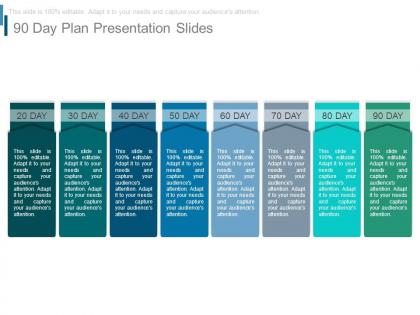
90 day plan presentation slides




Try Before you Buy Download Free Sample Product
 Impress Your
 Audience
 100%
100% Editable
 Save Hours
 of Time


Encourage your team to greater efforts. Aspire for the highest with our 90 Day Plan Presentation Slides.
People who downloaded this PowerPoint presentation also viewed the following :
90 day plan presentation slides with all 7 slides:
Build a good impression as a candidate with our 90 Day Plan Presentation Slides. Enhance the chances of getting elected.



FAQs for 90 day
Okay so for your 90-day thing - first month should be all about getting everyone on the same page and nailing down that project charter. Month two, you want some kind of proof-of-concept or initial deliverable to show. By day 90, aim for a working prototype or solid first version. The beginning is honestly crucial for setting expectations right. Weekly check-ins are your friend here, and flag any roadblocks ASAP. Map out your biggest risks and dependencies first (boring but necessary) - it'll help you pick milestones that actually matter to people. Be ambitious enough to show real progress but don't overpromise and screw yourself over later.
SMART goals work really well for 90-day plans - they make you get specific about what you're actually going to finish. So you want Specific (exactly what you'll deliver), Measurable (clear numbers), Achievable (don't be crazy ambitious here), Relevant (fits your bigger picture), and Time-bound (which is obvious since you've got 90 days). Honestly, the weekly milestone thing is where most people mess up though. Break each goal into weekly chunks so you can see if you're falling behind. I'd start with just 2-3 SMART goals, then figure out what hitting your targets looks like at 30 and 60 days.
Look at impact and deadlines first - what actually moves you toward your goals and what'll bite you if you miss it. Dependencies matter too since some stuff unlocks other work. Then there's the reality check: what can you actually handle right now? Don't jam-pack your 90 days like you're some productivity robot. Leave space to breathe. I'd list everything out, then cut way more than feels comfortable - like 20% more than you think. Quick wins are great for momentum, just don't let them eat up time for the bigger strategic stuff that actually matters.
Honestly, I'd start with weekly check-ins with your boss and get some kind of shared doc going that everyone can actually see. Traffic light system works great - red/yellow/green is stupid simple but people get it instantly. Friday updates are clutch, just keep them short like 3-4 bullets covering wins, problems, and next week's stuff. Don't wait around if something's falling apart though, speak up right away. Oh and document everything now because you'll need that data later for reviews. Trust me on this one.
Dude, get stakeholder feedback ASAP - it's like your sanity check before you commit to anything stupid. Hit up the key players in week one for those one-on-ones. They'll tell you what's actually realistic, what resources exist (spoiler: probably fewer than you think), and where you're gonna hit walls. I learned this the hard way watching plans blow up because someone skipped this step. Don't just nod along either - actually use what they tell you to reshape your priorities. It's basically the difference between looking like you know what you're doing versus... well, not.
Build risk management into your 90-day plan right from day one. First, figure out your biggest potential roadblocks - resource issues, getting stakeholder buy-in, technical stuff that could break. Then create backup plans for each one. I spend like 20% of my planning time on "what if everything goes wrong" scenarios, and honestly it's worth it every time. Set up check-ins every couple weeks to see how things are tracking. Oh, and make risk review a regular agenda item - don't wait until you're already in trouble to think about it.
Honestly, most people go overboard and set like 10+ goals at once. Recipe for burnout right there. Stick to maybe 3-5 that are actually specific - none of that "get healthier" vague nonsense. Oh, and check in with yourself every month or so. I used to skip this part and would realize weeks later I'd been focusing on completely random stuff that didn't matter. Before you pick anything, write down literally everything you want to do. Then be brutal about what's realistic with your current schedule. Life's already crazy enough without overcommitting to a bunch of goals you can't actually hit.
Pick 3-5 metrics that actually matter for your 90-day goals and check them weekly. Mix it up - some stuff you can control (activities) and some results you're hoping for. Honestly, skip the fancy dashboards. A basic spreadsheet beats some complicated system you'll hate updating. Set targets for every 30 days so you can pivot if things go sideways. I always do my review on Fridays - catches problems before they snowball. Oh, and start tracking from day one, even if your system isn't perfect yet. Consistency beats waiting for the "right" setup.
Honestly, start with something like Trello or Asana for tracking your deadlines and milestones. They're pretty solid for seeing where everything stands. I've been using Notion lately and it's kind of addictive - does everything but probably overkill if you're just starting out. For goals specifically, Weekdone or 15Five are decent since they focus on weekly check-ins and that OKR stuff. Oh, and get a time tracker like Clockify so you can see where your time actually goes (spoiler: never where you think it does). But seriously, pick just one tool first. I made the mistake of downloading like five apps at once and used none of them.
Honestly, remote teams need way more check-ins than you'd think. I'd do weekly video calls instead of monthly - maybe that sounds excessive but trust me on this one. Definitely use shared docs or project management tools so everyone can see what's happening in real-time. You can't just pop over to someone's desk anymore, so be super clear about deadlines and what you actually expect. Oh, and shorter sprints work better - like 2 weeks instead of a whole month because things go sideways fast when you're remote. Set up daily Slack updates or shared boards too, especially if people are in different time zones.
Look, stuff changes constantly and your original plan will probably be at least half wrong. I made that mistake once - kept following a strategy that was obviously bombing just because I'd written it down. Dumb move. Weekly check-ins are your friend here. You'll catch what's not working before you waste months on it. Monthly reviews let you dig deeper and pivot when needed. Plus you'll stumble on better approaches as you go - happens all the time. The goal isn't sticking to the plan religiously, it's hitting your targets however you can get there.
Dude, this is huge - cultural stuff will totally make or break your 90-day plan. Some teams love super detailed roadmaps, others want room to pivot. Communication styles are night and day too... like Germans will tell you straight up if something sucks, while other cultures are way more subtle about feedback. You'll have to tweak everything - your milestones, how often you check in, even how you show progress. I bombed a project last year because I didn't get this. Survey your team first about their work preferences before you lock anything down. Trust me on this one.
Honestly, your first month should be all about listening and building relationships - don't try fixing everything right away. I've watched new hires crash and burn doing that. Schedule those one-on-ones with key people and ask tons of questions. Write stuff down because you'll definitely forget half of it (I always do). Look for some quick wins you can knock out easily. Set maybe 2-3 concrete goals that tie into your bigger 90-day plan. The communication thing is huge too - people need to know your style early on. Oh, and resist that urge to go in guns blazing. Trust me on this one.
Totally doable! Block out maybe 10-15% of your week just for experimenting with random ideas. I know it sounds weird to schedule creativity, but honestly it's the only way it actually happens. Fridays work great for this stuff - when you're already mentally checked out anyway. Mix some innovation goals right into your regular milestones, like "try 3 weird approaches this month." Don't wait until everything else is perfect to get creative. Oh, and throw a "what if we completely..." question into your weekly check-ins. Keeps things from getting too rigid.
Yeah, tons of big companies put their templates out there. Microsoft's all about building relationships first month, then you're diving into real projects by month three. Netflix does this "keeper test" thing - honestly sounds kinda stressful but apparently works. Salesforce chunks theirs into 30-60-90 day blocks with specific goals for each. They all follow basically the same flow though: watch and learn, start contributing, then actually own stuff. You should totally grab their frameworks and just tweak whatever makes sense for your team.
-
Content of slide is easy to understand and edit.
-
Great quality slides in rapid time.