

Agile Product Development Playbook Agile Project Management Activities Tracking Dashboard




Try Before you Buy Download Free Sample Product
 Impress Your
 Audience
 100%
100% Editable
 Save Hours
 of Time


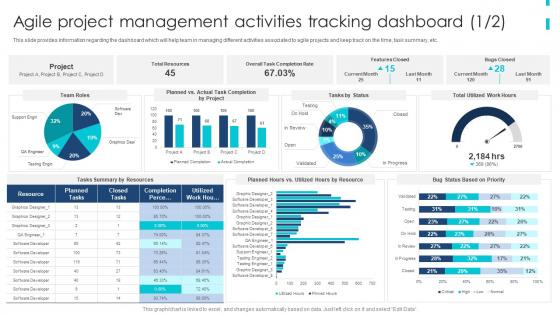
This slide provides information regarding the dashboard which will help team in managing different activities associated to agile projects and keep track on the time, task summary, etc.
People who downloaded this PowerPoint presentation also viewed the following :
Agile Product Development Playbook Agile Project Management Activities Tracking Dashboard with all 8 slides:
Use our Agile Product Development Playbook Agile Project Management Activities Tracking Dashboard to effectively help you save your valuable time. They are readymade to fit into any presentation structure.







FAQs for Agile Product Development Playbook Agile Project Management
So Agile basically flips the script on traditional project management. Instead of obsessing over documentation and rigid plans, you focus on people and actually working software. Customer collaboration beats contracts every time. The whole point is staying flexible when things change - and trust me, they always do. Break everything into short sprints, maybe 2 weeks each. Get feedback constantly and pivot fast when priorities shift. It's way better than waterfall where you're stuck following some plan that made sense six months ago but doesn't anymore.
So basically, instead of planning your entire project upfront and crossing your fingers it works out, Agile chops everything into these short 1-4 week sprints. Way less stressful honestly. You get feedback constantly instead of waiting months to find out you built the wrong thing - been there, not fun! Traditional waterfall is like "here's your rigid plan, stick to it no matter what." Agile? You're adjusting as you go based on what users actually need. I'd say try doing 2-week sprints on something small first. You'll be shocked how much more you can pivot when requirements inevitably change.
Ok so you've got three main roles to worry about. Product Owner handles the "what" - they're writing user stories, managing the backlog, deciding priorities with stakeholders. Development Team actually builds everything. They're cross-functional and self-organizing, which sounds fancy but just means they figure out how to get stuff done together. Scrum Master is the tricky one - they're like a coach who removes blockers and runs ceremonies. NOT a project manager though, even though people mix that up constantly. Honestly, nail down these boundaries first because when roles blur, everything gets messy fast.
Honestly, it's the opposite - iterative stuff makes timelines way more predictable. Breaking work into 1-4 week chunks means you're shipping actual working software regularly instead of waiting forever for some massive release. Yeah, it feels weird at first with all the constant planning meetings (ugh, I know). But here's the thing - you spot problems super early and can pivot fast. No more building the totally wrong feature for half a year. Stakeholders actually see progress every sprint, which keeps them off your back. My advice? Just plan your next sprint in detail, forget mapping out the whole project.
So an MVP is just the bare-bones version of your product that actually solves a problem. Don't overthink it - you're testing if people want your thing before you waste months building features nobody cares about. I learned this the hard way lol. Focus on ONE main problem and nail that first. Skip all the fancy extras for now. Once real users try it, you'll get feedback that's way more valuable than whatever you're imagining in your head. Start with your biggest assumptions and build the tiniest thing possible to prove or disprove them. Then iterate from there.
So the big three you'll see are Scrum, Kanban, and SAFe. Scrum's got all the structure - sprints, standups, the whole nine yards. Works well for most teams starting out. Kanban is way more flexible, just focuses on workflow. Great if you're doing support or your work's all over the place. SAFe is... well, it's what happens when big companies try to do Scrum everywhere at once. Can get messy fast. Honestly? Your team size and company vibe matter more than which framework you pick. I'd probably start with basic Scrum though - easier to learn the basics first, then you can always tweak things later.
Honestly, ditch those old waterfall metrics - they're pretty useless for Agile. What actually matters? Whether customers are happy and using your stuff. Track your velocity and if you're hitting sprint goals, sure, but the real gold is in user feedback and adoption rates. I've seen teams obsess over hours tracked while building features nobody wanted. Your retrospectives should focus on how often you're pivoting based on what you learn. Are people actually using what you shipped? That tells you way more than budget variance ever will.
Most teams I've worked with go for Jira or Trello to track sprints - Azure DevOps works too if you're already in Microsoft land. Slack's pretty much the standard for daily chat, though Teams is fine. You'll need Zoom or whatever for standups and retros. Oh, and Confluence for docs, but honestly that thing can be such a pain sometimes. Don't stress about having every tool from day one though. Pick a basic board tool and messaging app first. You can always add more stuff later when you actually need it instead of drowning in subscriptions.
Oh absolutely, just ditch the techy stuff and focus on the basics. Short sprints work great - maybe 2 weeks to start. Daily check-ins keep everyone honest. I've literally seen people use this for wedding planning, which sounds insane but actually worked? Marketing teams love it too. Break everything into small chunks you can actually finish and show people. Get feedback constantly instead of waiting till the end. Retrospectives are clutch - just ask "what sucked, what didn't" every few weeks. Honestly, the Kanban board thing works for almost anything if you don't overthink it.
Honestly, the technical stuff isn't what trips people up - it's getting your team to buy into all the collaboration. People hate daily standups at first (they feel so forced and weird). Plus you'll probably suck at estimating how long things take initially. Stakeholders will push back hard wanting those detailed project plans upfront. The trickiest part? Convincing everyone that shipping something decent beats waiting months for perfection. Oh, and don't try implementing everything at once - pick like one or two practices first. Otherwise you'll overwhelm everyone and they'll revolt.
Honestly, stakeholder engagement can totally make or break your Agile project. I've watched teams crash and burn when stakeholders vanish mid-sprint then pop up with huge complaints later - it's brutal. Set up regular sprint reviews and actually stick to them. Get them involved in backlog prioritization too, not just sitting on the sidelines. Don't let them become ghost observers who only surface when things go wrong. Yeah, it means more meetings, but trust me - those recurring touchpoints with demos and feedback sessions will save your sanity later.
There are tons of ways to tackle backlog prioritization, honestly. MoSCoW is probably the easiest - just bucket everything into Must have, Should have, Could have, Won't have. Great for when you're dealing with stakeholders who can't decide on anything. Value vs effort matrices are clutch for finding quick wins. The Kano model gets into customer psychology stuff, which is cool but maybe overkill depending on your situation. Weighted scoring takes forever but executives eat that shit up because it looks official. Oh, and story mapping's pretty visual if your team's into that. Really though, just pick whatever clicks with your people and stick with it.
So Agile basically has you doing these retrospectives after every sprint where everyone talks about what sucked and what worked. The cool thing is you actually fix stuff right away instead of waiting forever. Daily standups catch problems early too, which honestly saves so much drama later. Short sprints mean you're always trying new things and getting feedback fast. I'd say start small - just pick one tiny thing to improve each sprint. It really does add up over time, even though it doesn't feel like much at first.
Honestly, feedback is like the heartbeat of Agile - without it you're just building stuff blindly. Sprint demos and user testing sessions are where the magic happens. You'll catch problems early instead of wasting months on features nobody wants (been there, it sucks). The key is being proactive about it though. Don't just sit around waiting for people to tell you what's broken. Schedule regular check-ins with actual users and really listen to their pain points. Quick pivots based on real feedback beats stubborn perfectionism every time.
Honestly, the biggest change is how much your team actually talks - daily standups, sprint reviews, all that stuff means you're not waiting around for some big formal meeting. Sprint boards make everything super visible, which is weirdly satisfying when you can actually see progress happening. Those retrospectives are where the magic happens though - finally a chance to fix annoying problems instead of just venting about them over coffee. Working in sprints together just naturally gets people collaborating more. Oh, and if you want to start small, try those 15-minute daily standups first. You'll be shocked how quickly everyone gets on the same page.
-
You guys are life-saver when it comes to presentations. Honestly I cannot do much without your services. Thank you!!!
-
Easily Editable.