


Automation In Logistics Industry Powerpoint Presentation Slides




Try Before you Buy Download Free Sample Product
 Impress Your
 Audience
 100%
100% Editable
 Save Hours
 of Time


Logistics Management PowerPoint presentation covers a logistics companys introduction with its designs, controls, and details on supply chain management. Grab our efficiently designed Automation in the logistics industry template. This PPT also includes logistics company operations during supply procurement, storage, transportation, order fulfillment, and distribution, depending on the commercial agreement between the parties involved. This presentation also covers the various reasons for poorly integrated shipping and logistics management in the company and identifies the need for an effective logistics management system. Furthermore, it includes an automated solution to overcome the gap between business and technology. Lastly, this PPT aims to provide details on cost-efficient, streamlined, and error-free solutions through automating the processes and using secured software to perform the different tasks. Customize this 100 percent editable template based on your specific business needs.
People who downloaded this PowerPoint presentation also viewed the following :
Content of this Powerpoint Presentation
Slide 1: This slide displays the title Automation in Logistics Industry.
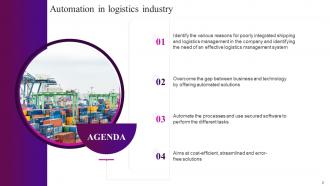
Slide 2: This slide displays the title AGENDA.
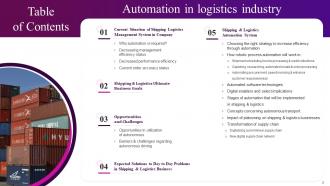
Slide 3: This slide exhibit table of content.
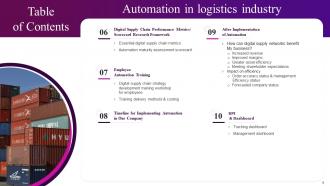
Slide 4: This slide exhibit table of content.
Slide 5: This slide exhibit table of content- Current Situation of Shipping Logistics Management System in Company.
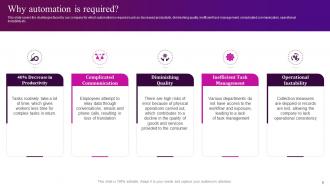
Slide 6: This slide covers the challenges faced by our company for which automation is required.
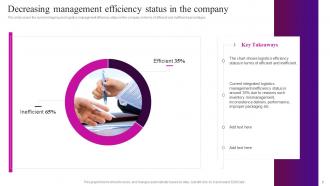
Slide 7: This slide covers the current shipping and logistics management efficiency status in the company in terms of efficient and inefficient percentages.
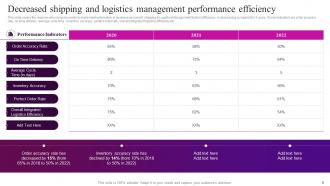
Slide 8: This slide covers the reasons why company wants to implement automation in business as current shipping & Logistics Management System.
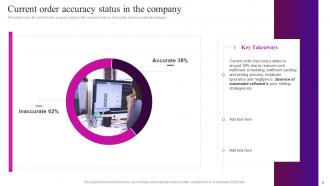
Slide 9: This slide covers the current order accuracy status in the company in terms of accurate and inaccurate percentages.
Slide 10: This slide talks about the topics that are to be discuss further.
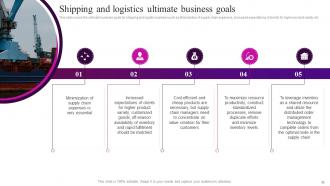
Slide 11: This slide covers the ultimate business goals for shipping and logistic business.
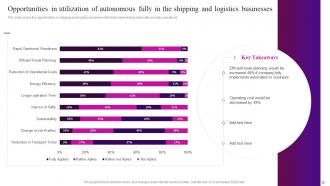
Slide 12: This slide covers the opportunities in shipping and logistics business while fully implementing automation in daily operations.
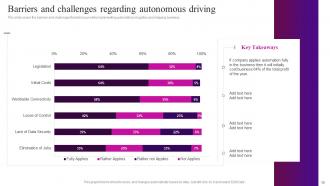
Slide 13: This slide covers the barriers and challenges that will occur while implementing automation in logistics and shipping business.
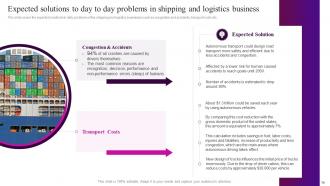
Slide 14: This slide covers the expected solutions to daily problems of the shipping and logistics businesses such as congestion and accidents, transport costs etc.
Slide 15: This slide exhibit table of content- Shipping and Logistics Automation System.
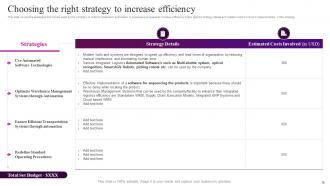
Slide 16: This slide covers the strategies that can be used by the company in order to implement automation in business processes to increase efficiency.
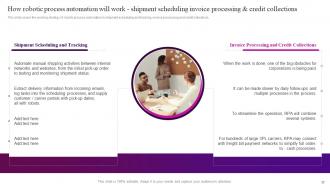
Slide 17: This slide covers the working strategy of robotic process automation in shipment scheduling and tracking, invoice processing and credit collections.
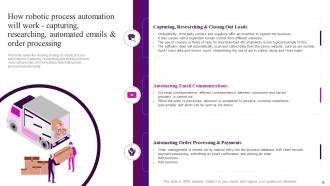
Slide 18: This slide covers the working strategy of robotic process automation in Capturing, researching and closing out loads.
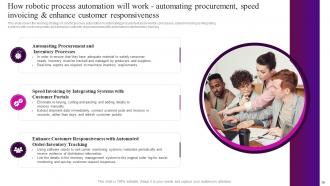
Slide 19: This slide covers the working strategy of robotic process automation in automating procurement and inventory processes.
Slide 20: This slide exhibit table of content- Shipping and Logistics Automation System.
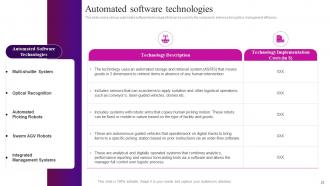
Slide 21: This slide covers various automated software technologies that can be used by the company to enhance its logistics management efficiency.
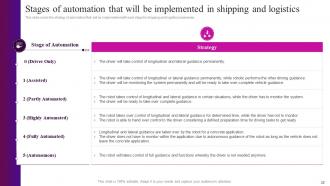
Slide 22: This slide covers the strategy of automation that will be implemented with each stage for shipping and logistics businesses.
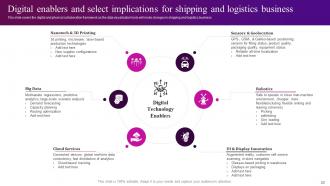
Slide 23: This slide covers the digital and physical collaboration framework as the data visualization tools will make changes in shipping and logistics business.
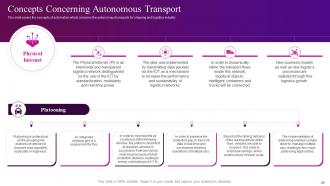
Slide 24: This slide covers the concepts of automation which concerns the autonomous transports for shipping and logistics industry.
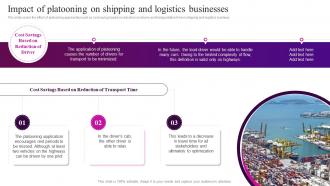
Slide 25: This slide covers the effect of platooning approaches such as cost saving based on reduction on drivers and transportation time in shipping and logistics business.
Slide 26: This slide highlight the topics that are to be discussed further.
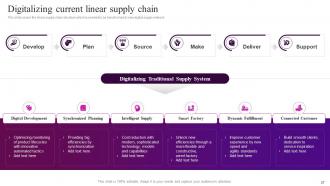
Slide 27: This slide covers the linear supply chain structure which is needed to be transformed In new digital supply network.
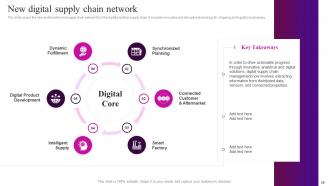
Slide 28: This slide covers the new and transformed supply chain network from the traditional liner supply chain.
Slide 29: This slide exhibit table of content- Digital Supply Chain Performance Metrics/ Scorecard Research Framework.
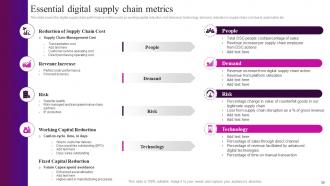
Slide 30: This slide covers the digital supply chain performance metrics.
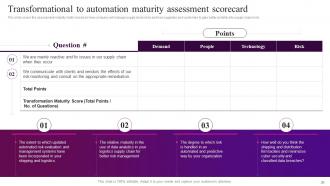
Slide 31: This slide covers the assessment maturity matrix based on how company will manage supply chain risks.
Slide 32: This slide exhibit table of content- Automation in logistics industry & Timeline for Implementing Automation in Our Company.
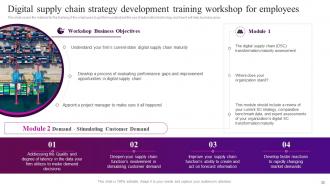
Slide 33: This slide covers the material for the training of the employees to get them understand the use of automation technology and how it will help business grow.
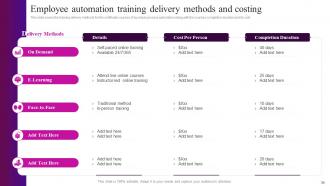
Slide 34: This slide covers the training delivery methods for the certificate courses of business process automation.
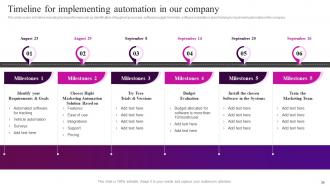
Slide 35: This slide covers a timeline including tasks performed.
Slide 36: This slide exhibit table of content- After Implementation of Automation.
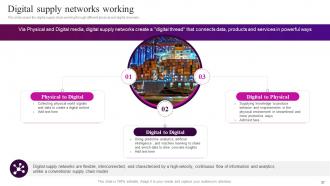
Slide 37: This slide covers the digital supply chain working through different physical and digital channels.
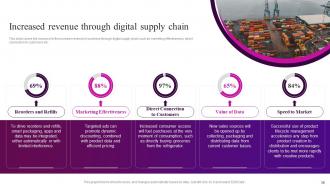
Slide 38: This slide covers the reasons for the increase revenue in business through digital supply chain.
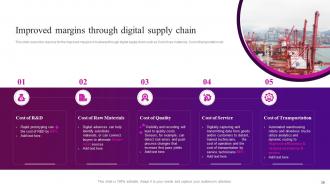
Slide 39: This slide covers the reasons for the improved margins in business through digital supply chain such as Cost of raw materials, Cost of transportation etc.
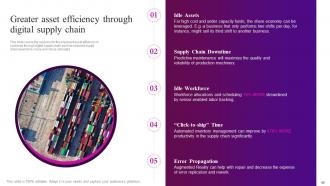
Slide 40: This slide covers the reasons for the improved asset efficiency in business through digital supply chain.
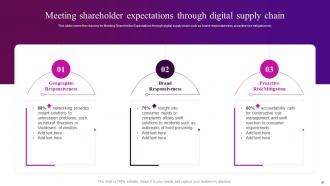
Slide 41: This slide covers the reasons for Meeting Shareholder Expectations through digital supply chain.
Slide 42: This slide exhibit table of content- Impact on Efficiency.
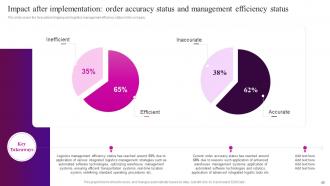
Slide 43: This slide covers the forecasted shipping and logistics management efficiency status in the company
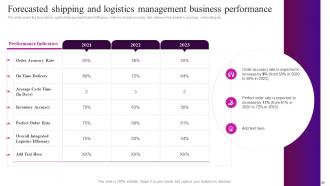
Slide 44: This slide covers the forecasted Logistics Management System Efficiency.
Slide 45: This slide exhibit table of content- KPI & Dashboard.
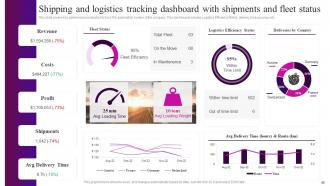
Slide 46: This slide covers Key performance indicators to track the automation system of the company.
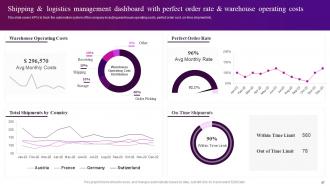
Slide 47: This slide covers KPI’s to track the automation system of the company.
Slide 48: This is the icons slide.
Slide 49: This slide presents title for additional slides.
Slide 50: This slide presents Magnifying glass.
Slide 51: This slide display Venn.
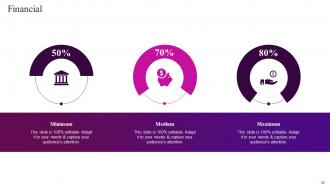
Slide 52: This slide display Financial.
Slide 53: This slide display Our goal.
Slide 54: This slide shows puzzle for displaying elements of company.
Slide 55: This slide depicts posts for past experiences of clientsThis slide depicts posts for past experiences of clients
Slide 56: This slide exhibits ideas generated.
Slide 57: This slide shows roadmap of company.
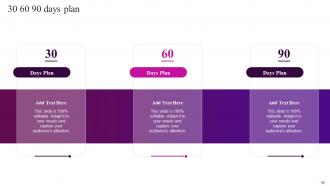
Slide 58: This slide depicts 30-60-90 days plan for projects.
Slide 59: This is thank you slide & contains contact details of company like office address, phone no., etc.
Automation In Logistics Industry Powerpoint Presentation Slides with all 64 slides:
Use our Automation In Logistics Industry Powerpoint Presentation Slides to effectively help you save your valuable time. They are readymade to fit into any presentation structure.







FAQs for Automation In Logistics Industry
So the biggest trends right now? Warehouse management systems with AI, those mobile robots that pick and sort stuff, and IoT sensors tracking everything. The robot thing is honestly crazy to watch in person. Predictive analytics help forecast demand, AGVs move materials around, and drones handle inventory plus last-mile delivery. Here's the thing though - it all works together as one big system rather than separate pieces. My advice? Start with warehouse management since that's what everything else connects to. Also, fair warning, the initial setup can be a headache but it's worth it.
Honestly, automation is a game-changer for supply chain visibility. IoT sensors and RFID tags show you exactly where stuff is in real-time - no more calling around asking "where's my shipment?" The data automatically feeds into dashboards, which beats hunting down updates from five different vendors any day. You get complete tracking of when products moved and what conditions they hit along the way. Automated documentation creates audit trails that even make regulators happy (weird, I know). I'd start by figuring out where you're most blind right now and test automated tracking there first. Customer satisfaction jumps pretty quick once you can actually tell people where their orders are.
Ugh, the money thing hits first - those upfront costs are brutal. Plus trying to mesh new tech with whatever ancient systems you're already running? Total nightmare. People hate learning new stuff too, so expect pushback from your team. Oh and definitely budget for everything breaking during the switch-over because it will. Executives always want results yesterday but ROI takes forever with this stuff. My advice? Don't go all-in right away. Pick one department, test it out, figure out what doesn't work. Way smarter than betting the whole company on something untested.
Yeah, automation's definitely changing things up in logistics. Jobs like manual picking are disappearing, but there's way more demand for robotics techs and data people now. The good news? It's not happening super fast, so workers have time to adapt. Companies still need humans for problem-solving and managing all those automated systems - robots aren't that smart yet, honestly. My advice? Start learning some basic tech stuff now. Even knowing warehouse management systems or basic robotics makes you tons more valuable. Don't wait until you're forced to catch up.
So AI is basically like giving your logistics operation a really smart brain. It crunches tons of data to figure out the best routes, predict what you'll need when, and handle warehouse stuff like inventory and picking. The best part? It learns from your past data to stop problems before they even start. You'll find it everywhere - chatbots talking to customers, algorithms planning deliveries. Honestly, I'd pick just one thing to start with, like route planning, instead of going crazy trying to automate everything right away. Way less overwhelming that way.
Dude, you should totally look into automated inventory systems. Real-time stock tracking is clutch - no more guessing what you actually have. The forecasting gets way better too since everything feeds in automatically. Manual counting is such a pain and people mess up data entry all the time, so automating cuts down on those errors big time. You'll get alerts when stuff's running low instead of those panic moments when you realize you're completely out. Honestly saved my sanity at my last job. I'd start with whatever process annoys you most - probably counting or reordering.
Yeah, the initial costs are brutal - we're talking millions depending on how big your setup is. Equipment, software, integration... it all adds up fast. Most companies hit ROI in 2-3 years though. Labor savings are massive, especially with wages going crazy right now. Plus you'll cut down on workplace injuries and inventory theft, which is honestly underrated. Here's what I'd do: pilot it in just one section first. Prove it works before you blow your entire budget. Way less risky that way.
So basically these delivery bots are packed with sensors - LiDAR measures distances, GPS tracks location, cameras spot obstacles and people. The AI part is pretty wild though, it's constantly learning from every vehicle's trips. Traffic patterns, construction, all that data gets shared across the whole fleet. Your routes actually get smarter over time which is honestly kind of crazy when you think about it. If you're looking into this stuff, definitely start small with easy routes first. Let the system figure out your area before throwing it into downtown chaos or whatever.
Dude, automation is seriously worth it for customer satisfaction and speed. Your fulfillment times can drop from days to hours - which is honestly mind-blowing when you see it happen. Customers love the real-time tracking, plus you'll get way fewer complaints since error rates plummet. The key is starting with your most tedious, repetitive stuff first. That's where you'll see the biggest bang for your buck. Just make sure all your systems actually work together though, or you might create more problems than you solve. I learned that one the hard way at my last job.
Honestly, automation is a game-changer for cutting down those annoying operational screwups. Think about all the times someone miscounts inventory or forgets to update an order status - automation just eliminates that stuff entirely. Real-time tracking means you'll spot problems way earlier instead of scrambling to fix disasters later. The data accuracy boost alone is worth it, trust me. I'd say start with whatever process pisses you off the most - usually something high-volume where mistakes happen constantly. Test it out there first and you'll see what I mean.
Dude, autonomous vehicles and drones are finally happening for real - not just those boring pilot programs anymore. The AI stuff for predicting demand and route optimization is getting insanely accurate, which is honestly a little creepy. Warehouse robots can now switch between different products without needing new programming (still can't wrap my head around that). The real magic though? When all these technologies actually talk to each other instead of working separately. Oh, and definitely map out your manual processes now - your competition is probably already doing it.
Ugh, international regs are such a pain when you're trying to automate logistics. Every country has its own random rules - GDPR in Europe messes with your tracking data, safety certs are totally different everywhere. You can't just copy-paste the same system across borders and hope it works. Honestly learned this the hard way watching a friend's startup get burned. Start by figuring out what rules apply in your main markets first. Then maybe find some local experts who actually know this stuff. Don't blow your budget on tech that won't pass compliance later.
So basically automation helps your carbon footprint in a bunch of ways. Route optimization means trucks take smarter paths instead of just driving around randomly - that cuts fuel by like 15-20%. Warehouses get way more efficient too with electric forklifts replacing those loud diesel ones. Less packaging waste happens because the systems don't mess up inventory counts as much. Honestly, if you want quick results, just start with route optimization software first. It's probably the easiest thing to implement and you'll see both cost savings and environmental benefits pretty fast. The data stuff alone makes a huge difference.
Honestly, it comes down to budget and size. Small businesses usually grab basic stuff first - inventory software, automated shipping labels, that kind of thing. Big companies? They're dropping serious cash on warehouse robots and crazy complex systems. But here's what's changed everything - cloud tools. Now you can get route optimization or demand forecasting without spending a fortune (used to cost like $100k+). My advice? Pick one annoying task first. Maybe set up auto-reordering when you hit low stock levels. Then just add more as you grow.
Think of analytics as what makes your automation actually smart instead of just fast. Real-time dashboards show you where things are getting stuck, plus you can spot maintenance issues before stuff breaks down completely. Route optimization happens automatically once you're tracking the right data - honestly, the waste reduction is pretty impressive once you see the patterns. But here's the thing: fancy sensors mean nothing if you're not measuring what actually impacts your bottom line. Start small though - figure out which 3-4 metrics really matter to your operation, then build from there. Otherwise you'll just be automating the same inefficient processes.
-
Really like the color and design of the presentation.
-
I came across many PowerPoint presentations with excellent creatives and I believe they would be beneficial to my work.