


Shipping And Transport Logistics Management Powerpoint Presentation Slides




Try Before you Buy Download Free Sample Product
 Impress Your
 Audience
 100%
100% Editable
 Save Hours
 of Time


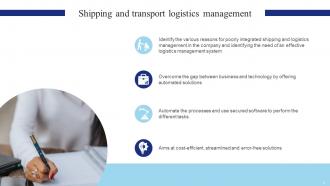
Shipping and Transport Logistics Management PowerPoint presentation covers a logistics companys introduction with its designs, controls, and details on supply chain management. Grab our efficiently designed Shipping and Transport Logistics Management template. This PPT also includes logistics company operations during supply procurement, storage, transportation, order fulfillment, and distribution, depending on the commercial agreement between the parties involved. This presentation also covers the various reasons for poorly integrated shipping and logistics management in the company and identifies the need for an effective logistics management system. Furthermore, it includes an automated solution to overcome the gap between business and technology. Lastly, this PPT aims to provide details on cost-efficient, streamlined, and error-free solutions through automating the processes and using secured software to perform the different tasks. Customize this 100 percent editable template based on your specific business needs.
People who downloaded this PowerPoint presentation also viewed the following :
Content of this Powerpoint Presentation
Slide 1: This slide introduces Shipping and transport Logistics Management. State your company name and begin.
Slide 2: This slide states Agenda of the presentation.
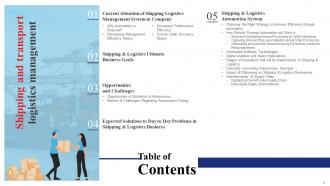
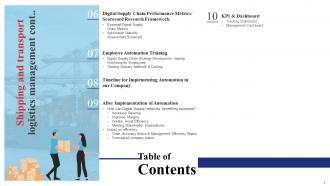
Slide 3: This slide shows Table of Content for the presentation.
Slide 4: This is another slide continuing Table of Content for the presentation.
Slide 5: This slide highlights title for topics that are to be covered next in the template.
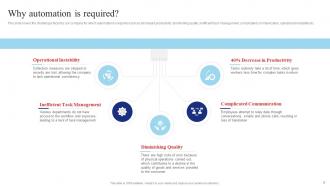
Slide 6: This slide covers the challenges faced by our company for which automation is required.
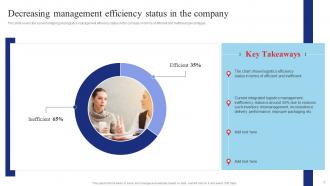
Slide 7: This slide displays Decreasing management efficiency status in the company.
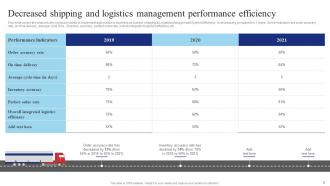
Slide 8: This slide represents Decreased shipping and logistics management performance efficiency.
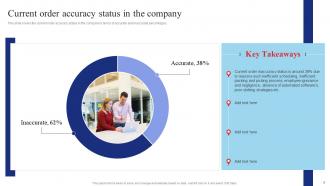
Slide 9: This slide showcases Current order accuracy status in the company.
Slide 10: This slide highlights title for topics that are to be covered next in the template.
Slide 11: This is another slide highlighting title for topics that are to be covered next in the template.
Slide 12: This is another slide highlighting title for topics that are to be covered next in the template.
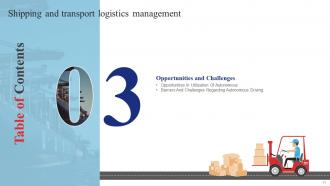
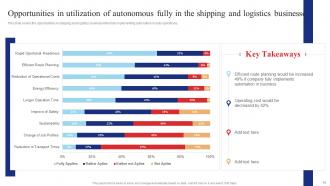
Slide 14: This slide shows Opportunities in utilization of autonomous fully in the shipping and logistics businesses.
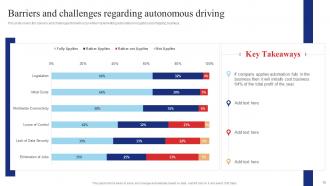
Slide 15: This slide presents Barriers and challenges regarding autonomous driving.
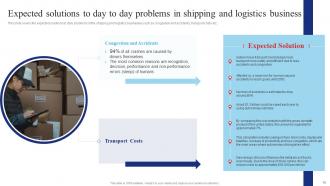
Slide 16: This slide displays Expected solutions to day to day problems in shipping and logistics business.
Slide 17: This slide highlights title for topics that are to be covered next in the template.
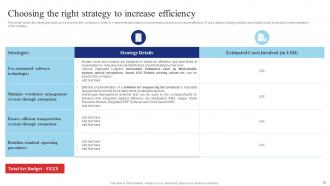
Slide 18: This slide represents Choosing the right strategy to increase efficiency.
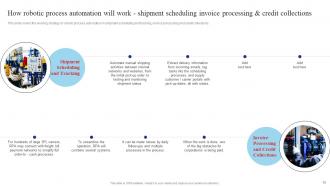
Slide 19: This slide showcases How robotic process automation will work - shipment scheduling invoice processing & credit collections.
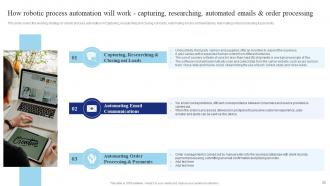
Slide 20: This slide displays How robotic process automation will work - capturing, researching, automated emails & order processing.
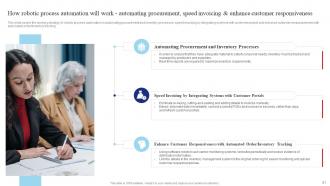
Slide 21: This slide presents How robotic process automation will work - automating procurement, speed invoicing & enhance customer responsiveness.
Slide 22: This slide highlights title for topics that are to be covered next in the template.
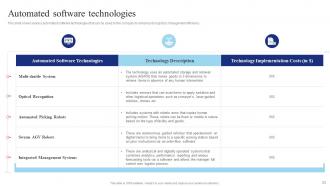
Slide 23: This slide displays Automated software technologies.
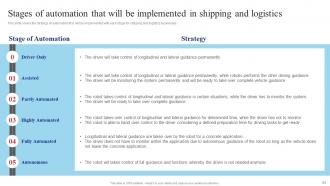
Slide 24: This slide represents Stages of automation that will be implemented in shipping and logistics.
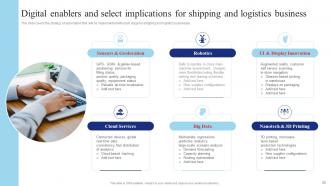
Slide 25: This slide showcases Digital enablers and select implications for shipping and logistics business.
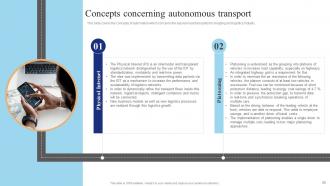
Slide 26: This slide shows Concepts concerning autonomous transport.
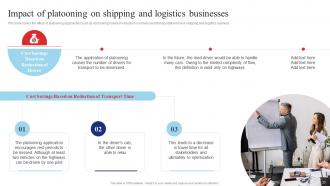
Slide 27: This slide presents Impact of platooning on shipping and logistics businesses.
Slide 28: This slide highlights title for topics that are to be covered next in the template.
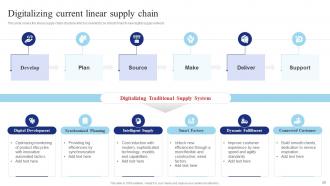
Slide 29: This slide displays Digitalizing current linear supply chain.
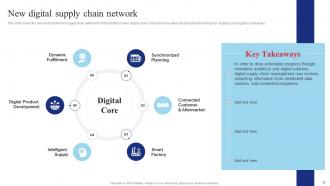
Slide 30: This slide represents New digital supply chain network.
Slide 31: This slide highlights title for topics that are to be covered next in the template.
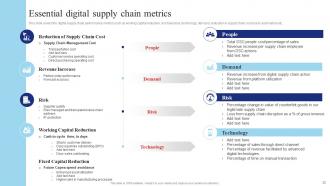
Slide 32: This slide showcases Essential digital supply chain metrics.
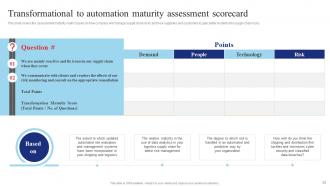
Slide 33: This slide shows Transformational to automation maturity assessment scorecard.
Slide 34: This slide highlights title for topics that are to be covered next in the template.
Slide 35: This is another slide highlighting title for topics that are to be covered next in the template.
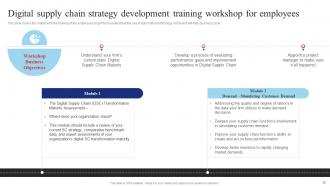
Slide 36: This slide presents Digital supply chain strategy development training workshop for employees.
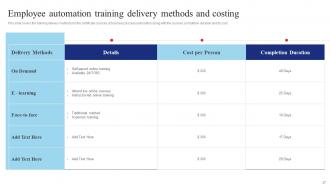
Slide 37: This slide displays Employee automation training delivery methods and costing.
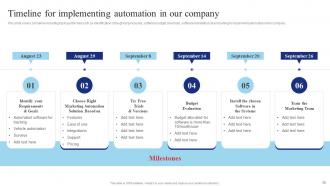
Slide 38: This slide represents Timeline for implementing automation in our company.
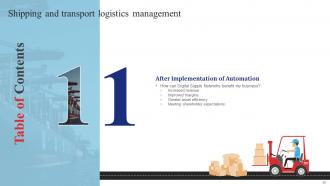
Slide 39: This slide shows Table of Content for the presentation.
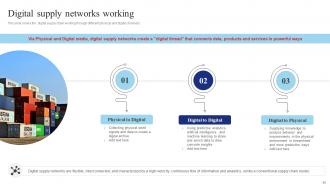
Slide 40: This slide presents Digital supply networks working.
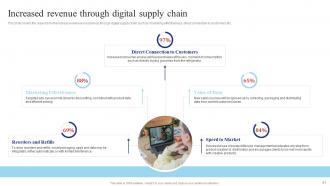
Slide 41: This slide displays Increased revenue through digital supply chain.
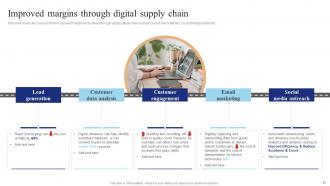
Slide 42: This slide represents Improved margins through digital supply chain.
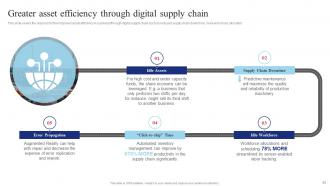
Slide 43: This slide showcases Greater asset efficiency through digital supply chain.
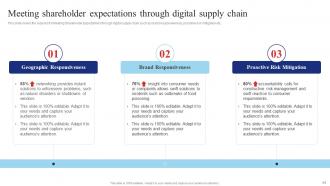
Slide 44: This slide shows Meeting shareholder expectations through digital supply chain.
Slide 45: This slide highlights title for topics that are to be covered next in the template.
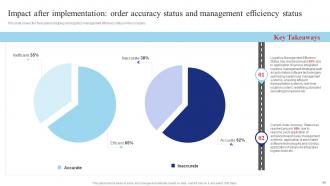
Slide 46: This slide covers the forecasted shipping and logistics management efficiency status in the company.
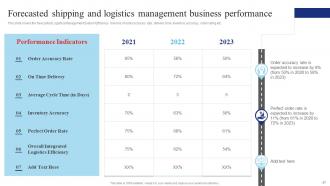
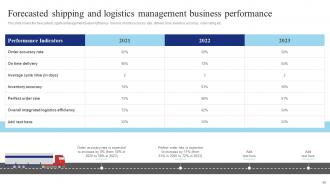
Slide 47: This slide represents Forecasted shipping and logistics management business performance.
Slide 48: This is another slide continuing Forecasted shipping and logistics management business performance.
Slide 49: This slide highlights title for topics that are to be covered next in the template.
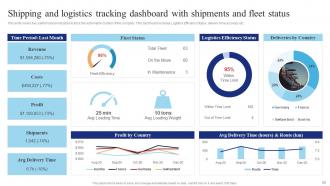
Slide 50: This slide presents Shipping and logistics tracking dashboard with shipments and fleet status.
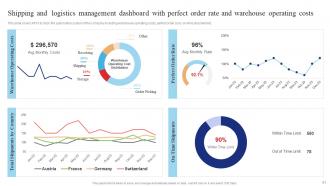
Slide 51: This slide displays Shipping and logistics management dashboard with perfect order rate and warehouse operating costs.
Slide 52: This slide contains all the icons used in this presentation.
Slide 53: This slide is titled as Additional Slides for moving forward.
Slide 54: This slide showcases Magnifying Glass to highlight information, specifications etc
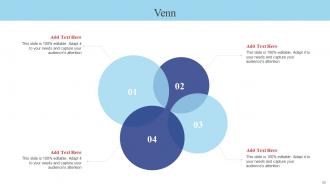
Slide 55: This slide depicts Venn diagram with text boxes.
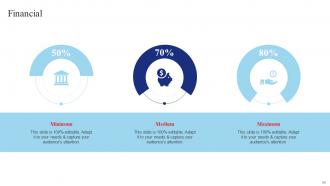
Slide 56: This is a Financial slide. Show your finance related stuff here.
Slide 57: This is Our Goal slide. State your firm's goals here.
Slide 58: This slide contains Puzzle with related icons and text.
Slide 59: This slide shows Post It Notes. Post your important notes here.
Slide 60: This is an Idea Generation slide to state a new idea or highlight information, specifications etc.
Slide 61: This slide presents Roadmap with additional textboxes.
Slide 62: This slide provides 30 60 90 Days Plan with text boxes.
Slide 63: This is a Thank You slide with address, contact numbers and email address.
Shipping And Transport Logistics Management Powerpoint Presentation Slides with all 68 slides:
Use our Shipping And Transport Logistics Management Powerpoint Presentation Slides to effectively help you save your valuable time. They are readymade to fit into any presentation structure.










FAQs for Shipping And Transport Logistics Management
You've gotta focus on three things: inventory, carriers, and tracking. Get your warehouse locations and stock levels dialed in so you're not panicking during busy periods. Don't rely on just one shipping company - I learned this the hard way when my main carrier suddenly jacked up their rates. Work with multiple carriers instead. Good tracking systems are crucial too, you need real-time visibility on everything. Most businesses totally mess up the data side though. I'd start by looking at what you're actually spending on shipping and how long deliveries take. That'll show you where the real problems are.
Dude, the shipping world is crazy different now. Real-time tracking means you actually know where your stuff is - remember when packages just disappeared into the void? GPS and AI figure out the fastest routes, plus these automated warehouses are insanely fast compared to people running around with clipboards. Machine learning even predicts delays before they happen, which honestly blows my mind. IoT sensors track everything from temperature to fuel usage. Fewer delays, cheaper costs, everyone wins. If you're trying to upgrade your logistics, start with real-time visibility tools first.
So basically supply chain visibility is like having GPS for your whole logistics setup - you can see everything happening with inventory and shipments in real-time. I honestly don't get how companies operated without this stuff before. You'll catch delays before they snowball into bigger problems. Plus you can reroute things on the spot and actually give customers realistic delivery dates instead of crossing your fingers. The trick is getting systems that show you the full picture, not just bits and pieces. Way better than playing guessing games with your supply chain.
Honestly, start by looking at where you're actually spending money - most people have no clue how much they're wasting. Try grouping shipments together when you can and map out better routes. The big shipping companies aren't always your best bet - smaller regional ones are way cheaper for shorter trips. Also, shop around more! I swear, nobody bothers comparing rates between different carriers. Get some lighter packaging that still protects your stuff well. Oh, and zone skipping works great for long hauls if you're doing that. It's kind of annoying to set up initially but saves a ton.
Focus on getting real-time tracking set up first - that's your foundation. ABC analysis helps you figure out which items actually matter (spoiler: it's probably like 20% of your stuff). Don't go crazy with safety stock though, I've seen people tie up way too much cash there. Cycle counts beat doing those nightmare annual inventories every time. Your warehouse system needs to talk to your shipping software or you'll end up selling things you don't have. Super awkward. Start forecasting with whatever historical data you've got, then tweak as you go.
Ugh, international shipping is such a pain honestly. You've got customs delays, different labeling rules for every country, import restrictions that make zero sense sometimes. My advice? Start researching destination requirements way ahead of time - don't wait until the last second like I did once. Build in 2-3 extra days for customs because they're never fast. Oh and find a good freight forwarder who actually knows what they're doing. They'll save your sanity. The paperwork alone will make you want to cry, but mapping everything out early makes it way less stressful.
Honestly, route optimization software is where I'd start - it'll cut your fuel costs like crazy and help the environment too. Switch to eco-friendly packaging while you're at it. Try consolidating shipments when you can, and find carriers using electric or hybrid trucks if possible. Carbon offset programs are worth looking into, plus setting up a good returns system. Oh, and measuring your fuel savings from better routes will probably surprise you with how much you save. That's usually the biggest impact anyway.
Honestly, analytics is a game-changer for shipping stuff. You can catch delays before they screw you over and find routes that actually make sense cost-wise. I've seen companies cut shipping costs by like 10-15% just from basic route optimization - not bad for starters, right? Real-time data helps you figure out which carriers don't suck under different conditions too. The cool part is watching random logistics chaos suddenly show patterns you can work with. Oh, and you'll get way better at that whole speed versus cost thing instead of just guessing. Start simple though.
Honestly, shipping costs are gonna wreck your margins if you're not careful. Customer expectations are insane too - everyone wants next-day delivery for free basically. Returns are a nightmare to handle, and don't even get me started on damaged packages. International stuff? Forget about it unless you enjoy customs paperwork at 2am. Speed vs cost is this constant battle. Inventory gets chaotic when you're dealing with multiple warehouses. My take? Pick one solid carrier first. Get your packaging down to a science, then worry about fancy tracking systems. Build from there instead of trying to do everything at once.
So here's the thing - whatever shipping method you pick totally changes your whole supply chain setup. Air freight costs way more but gets there fast, so you don't need as much inventory sitting around. Ocean's super cheap but takes forever, which means you better nail your demand forecasting or you'll be scrambling. Trucking's solid for regional stuff since it's flexible. Rail works if you're moving bulk items long distances - honestly underrated option. Bottom line though, match it to what your customers actually expect and what you can afford. Each product line might need something different.
Dude, last-mile delivery will absolutely make or break you. Customers don't give a shit if everything else was perfect - if their package arrives late or busted, that's what they remember. The crazy part? It eats up like 40-50% of your shipping costs because you're hitting individual houses, dealing with failed deliveries, and navigating weird residential stuff. Narrow streets are the worst. My advice? Get your delivery routes dialed in first. Then maybe partner with local carriers who actually know the neighborhoods - they'll save you tons of headaches compared to your regular drivers fumbling around with GPS.
Start by figuring out what's actually killing you - maybe it's expensive warehousing or your international shipping is a nightmare. Find 3PLs that know your industry inside and out. Here's the thing though: most companies totally screw up the tech integration part, so get that sorted first before anything else. You'll want partners who can grow with you since your needs will definitely change. Run a pilot with just one product line or shipping route first. Once that's working smoothly, then expand. Oh, and make sure you've got good visibility into what they're doing - dashboards, regular calls, whatever works.
Honestly, warehouses are going full robot mode - AI's handling everything from inventory to delivery routes now. Electric trucks are everywhere because customers won't shut up about carbon footprints (not that I blame them). Same-day delivery is the new normal, which is wild if you think about it. Companies are building these tiny fulfillment centers all over cities just to keep up. Real-time tracking isn't optional anymore either - people expect to watch their package move in real time like it's some kind of GPS game. Start looking into automation stuff now though, because everyone who waits is gonna be scrambling to catch up later.
Build risk assessment into your planning from the start. Map out what could go wrong - weather delays, port backups, supplier problems, customs drama. Then create backup plans for each one. I swear, sometimes you need a Plan C too! Buffer time into your schedules and don't rely on just one carrier. Real-time tracking helps you pivot fast when stuff hits the fan. The trick is making this standard practice, not something you're figuring out mid-crisis. Way less stressful that way.
Track these four main ones: on-time delivery (customers will roast you if packages are late), shipping costs per unit, transit times, and damage rates. Honestly, damage rates might be the worst to deal with - returns are such a pain. If you've got multiple carriers, add their performance scores too. Start by measuring where you're at now, then set targets you can actually hit. Focus on on-time delivery and damage first since those directly mess with customer happiness. The cost stuff matters but won't kill your reviews like late deliveries will.
-
I loved the hassle-free signup process. A few minutes and, I had this giant collection of beautiful designs.
-
Easy to use and customize templates. Helped me give a last minute presentation.