


B2b Brand Positioning Framework Bulls Eye Template




Try Before you Buy Download Free Sample Product
 Impress Your
 Audience
 100%
100% Editable
 Save Hours
 of Time


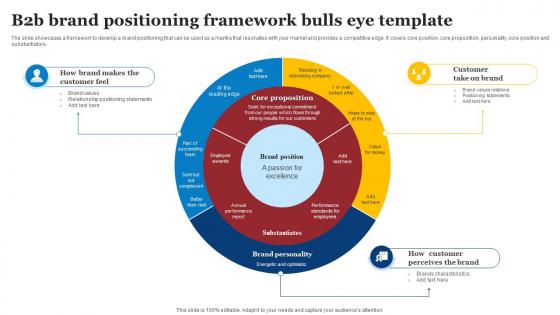
The slide showcases a framework to develop a brand positioning that can be used as a mantra that resonates with your market and provides a competitive edge. It covers core position, core proposition, personality, core position and substantiators.
People who downloaded this PowerPoint presentation also viewed the following :
B2b Brand Positioning Framework Bulls Eye Template with all 6 slides:
Use our B2b Brand Positioning Framework Bulls Eye Template to effectively help you save your valuable time. They are readymade to fit into any presentation structure.





FAQs for B2b Brand Positioning Framework
Focus on three core things: what problem you solve that nobody else can, who exactly needs that solution, and why you're their best bet. Most B2B companies screw this up by sounding way too generic - like they're trying to appeal to everyone. You need real proof backing up your claims. Case studies, actual numbers, whatever shows you deliver. Your brand voice should match how your buyers think and talk. Here's a test: write your positioning in one sentence. If you can't make it crystal clear in one line, your audience won't get it either. Sometimes I think companies overthink this stuff when simple usually wins.
Start by stalking your competitors' websites, case studies, and LinkedIn posts - basically see what they're claiming and who they're targeting. I always throw this into a spreadsheet because there's no way I'm remembering all that. Hunt for the gaps where nobody's really owning a specific benefit or customer segment. Their pricing and partnership stuff matters too, honestly. You want to find that sweet spot where you can claim something unique that buyers actually care about. It's like finding the one empty parking spot at the mall.
Look, customer feedback is your reality check. Without it, you're basically talking to yourself in a bubble. You might think your brand positioning is perfect, but if customers don't see it that way? You're missing something big. Their input shows you where the gaps are - what benefits actually matter to them vs what you assume should matter. Honestly, assumptions will kill you every time. Set up regular feedback loops through surveys, interviews, win/loss reviews. That real market data beats guessing any day. Keep adjusting based on what they're telling you, not what sounds good in your head.
Honestly, start with one solid brand doc - messaging, visuals, tone, all that stuff. Then actually force people to use it (this is where most companies fail miserably). Get marketing, sales, and customer success talking regularly so they're not all doing their own thing. Shared templates help too. Someone needs to be the brand police though - usually falls to marketing ops or whoever cares most about consistency. Oh, and audit what you've got now first. You'll probably find some cringeworthy stuff that needs fixing ASAP.
Stop trying to be everything to everyone - pick one thing you're actually great at. Your messaging probably sounds like every other "enterprise solutions" company out there (which honestly makes it easier to stand out). Get specific about who you help and what exact problem you fix. Your tech stack? How you implement stuff? Industry expertise? Something makes you different. Here's what actually works: call your best customers and ask why they picked you over the competition. I know, talking to people... but their answers will basically hand you your positioning strategy. Most companies skip this step and just guess.
Look, B2B storytelling is huge for positioning - way more than people realize. Your prospects are totally overwhelmed by feature dumps and specs, so a good narrative actually cuts through that mess. Even the most numbers-focused CFO connects with stories that hit home. You want to link your company's mission directly to what keeps your customers up at night and what they're dreaming about. Creates this emotional connection that data alone just can't touch. Figure out what transformation you're really delivering for clients. Then tell that same story everywhere - consistently. It's honestly the difference between being seen as another vendor versus becoming their go-to strategic partner.
Track brand awareness surveys and share of voice first - those tell you if people actually know you exist. Then watch consideration rates and RFP inclusion. But honestly? The metrics that really matter are pipeline velocity, deal size, and win rates. If those aren't moving up after 6-12 months, your positioning sucks. Don't forget internal surveys too since your sales team has to actually deliver the message consistently. I'd set up a quarterly dashboard mixing brand stuff with revenue data. Oh, and competitor win rates are probably the most telling metric of all.
Dude, the whole B2B game is about to flip. AI can personalize your messaging for thousands of customers at once. VR demos? Your prospects can literally walk through your product. Blockchain makes everything transparent, which builds crazy trust. Companies jumping on this stuff early are gonna dominate - I'm talking about owning entire markets. Things are moving so ridiculously fast right now. You need positioning that shows you're solving problems in totally new ways. Pick one tech that actually fits your audience and start messing around with it. Don't overthink the timing.
Honestly, the worst thing you can do is be generic - everyone claims they're "innovative" or whatever. I've watched so many companies try appealing to literally everyone instead of nailing down their actual ideal customer. Don't just copy competitors either. Find what actually makes you different. Also, don't promise stuff you can't deliver consistently. Your sales team needs proper training on this positioning too - I've seen great strategies completely tank because nobody briefed the sales folks. Get super specific about your difference first. Then figure out who genuinely cares about that difference.
Honestly, personas are everything when it comes to positioning your brand. Like, you can't talk to a CTO the same way you'd pitch a CFO - one cares about tech specs, the other's all about ROI. Makes total sense when you think about it. A risk-averse procurement manager needs different messaging than some startup founder who's hungry for growth. Short sentences work. But you also want to dig into what actually bugs each persona and what language clicks with them. I always map my main messages against what motivates each type of person and how they make decisions. Game changer.
Your value prop is literally what separates you from all the other vendors saying they solve the exact same stuff. B2B buyers are getting hit with identical-sounding pitches constantly, so you need to spell out the actual outcomes you deliver - not just features. Nobody gives a damn about your 47 integrations, honestly. Focus on measurable business impact instead. Got to be specific and speak directly to their biggest headaches. Think of it as your "okay, but why should I actually care?" statement. Without a solid one, you're just more noise in their already crowded inbox.
Honestly, partnering up is one of the smartest moves you can make. Find brands that either complement what you do or have that credibility you're after. Co-marketing, joint ventures, strategic alliances - whatever works. I've watched this strategy completely transform companies when they nail it. Your ideal customers already trust certain brands, right? Start there and map those out. The trick is making sure it doesn't feel forced or weird. Both audiences should actually benefit from the partnership. Oh, and don't go after partners just because they're big names - alignment matters way more than size.
Honestly, just throw those customer logos right up front when you're talking about your company. Fortune 500 names are like instant credibility - works every time. I'd grab specific numbers from your best case studies to back up whatever you're claiming. Awards and analyst stuff works great too as third-party validation. The trick is making it sound natural, not like you're just bragging about who you know (even though... you kind of are). Start by looking at what proof you've already got lying around, then work it into your pitch and website copy. Short sentences hit harder sometimes.
Content marketing is how you actually prove your positioning instead of just talking about it. Say you're the "innovative leader" - your content better show fresh insights and forward-thinking stuff, not generic fluff. Anyone can claim they're smart, but can you solve real problems? Look at your last 10 blog posts or whitepapers. Do they actually back up what you say you are? Most companies fail this test honestly. Your webinars, thought leadership pieces - they should all reinforce your market position. It's like showing your work in math class, except way more important for your business.
Look at what problems your customers are actually dealing with right now - not six months ago. Your old messaging probably sounds pretty out of touch at this point (happens to everyone). Talk about outcomes instead of features. Maybe people care more about reliability than flashy new stuff now, or they need to save money over being cutting-edge. I'd test any new positioning with your current customers first - they won't sugarcoat it if your pivot feels fake. Honestly, this whole process is kind of messy but you'll figure out what sticks.
-
Eye-catching PPT designs, outstanding team, and best customer service. I’m a super satisfied customer here!
-
Amazing product with appealing content and design.