


Brand Positioning Bullseye Template For Beverage Company




Try Before you Buy Download Free Sample Product
 Impress Your
 Audience
 100%
100% Editable
 Save Hours
 of Time


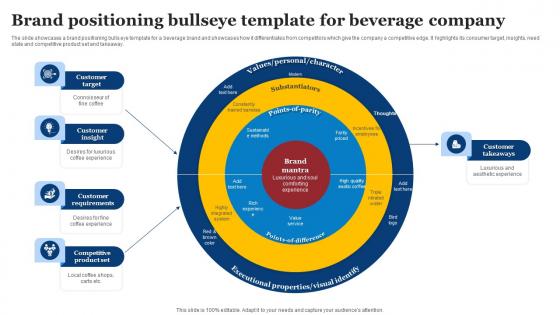
The slide showcases a brand positioning bulls eye template for a beverage brand and showcases how it differentiates from competitors which give the company a competitive edge. It highlights its consumer target, insights, need state and competitive product set and takeaway.
People who downloaded this PowerPoint presentation also viewed the following :
Brand Positioning Bullseye Template For Beverage Company with all 6 slides:
Use our Brand Positioning Bullseye Template For Beverage Company to effectively help you save your valuable time. They are readymade to fit into any presentation structure.





FAQs for Brand Positioning Bullseye Template
Okay so there's four things you gotta nail down. First - who exactly are you talking to? Like, get specific about your audience. What makes you different from your competitors? That's huge. Then figure out your main promise - think Nike's "just do it" but for your thing. Oh and honestly, this is where most people mess up - you need actual proof that backs up whatever you're claiming. Could be your track record, some unique feature, whatever. But something real. All four pieces have to work together or you'll just sound like every other brand out there saying nothing.
Honestly, knowing your demographics is like having a cheat code for marketing. You can actually speak to what matters to them instead of just guessing. Gen Z cares about sustainability and keeping it real, while boomers want reliability and good value - totally different approaches needed. Once you figure out their age, income, and what they value, you can position your brand to actually hit home. I'd start by mapping out maybe 2-3 core audience segments first (don't go crazy with too many). Then dig into what drives their buying decisions. Makes everything so much clearer.
Okay so storytelling is basically what makes people actually remember your brand instead of forgetting you exist five minutes later. Don't just list what your product does - create something that hits them emotionally. Nike's a perfect example, right? They could talk about shoe technology all day, but instead they go with the whole "push your limits" thing. That's why people think of them when they want to feel athletic. You need to figure out what story you want to own in your space, then just... stick with it everywhere. Consistency is key here. Otherwise you're just another company shouting features at people.
Start with surveying your customers about how they see you vs competitors - quality, price, service, the usual stuff. Social listening tools are clutch for seeing what people actually say online. Map out where everyone sits competitively too, like premium vs budget positioning. Your sales team probably hears the best objections though - they're on the front lines dealing with real pushback. Sometimes that's more valuable than any fancy research. The real gold is in that gap between how you think you're positioned and what customers actually think. That disconnect usually tells the whole story.
Oh man, the worst thing you can do is flip everything overnight - customers will be so confused. Also don't abandon your current customers while hunting for new ones (we totally screwed that up at my old job). Most companies skip the research part too, like actually figuring out what people think of you right now. Then they're inconsistent everywhere... Instagram looks different from their website, etc. Honestly? People just aren't patient enough. Repositioning takes forever to work. Test small changes first, see how people react, then commit to the bigger stuff.
Dude, cultural stuff will make or break your brand overseas. Seriously, what kills it in America might be a total disaster in Japan. You've got to dig into local values, how people communicate, even what colors mean - like white means purity here but death in some Asian countries. Ouch. Your whole vibe might need changing for different places. Religious beliefs matter too, obviously. Even your product itself might need tweaks. I learned this the hard way with a client once. Bottom line: research the hell out of each market first and test everything locally before you go big.
So there's this classic framework most people use - "For [target] who [need], our [brand] is the [category] that [benefit] because [reasons to believe]." Super basic but it works. You could also try perceptual mapping if you want to see where you stack up against competitors visually. Jobs-to-be-Done is solid too, especially for product stuff. Honestly though? The tool doesn't really matter that much. What matters is getting everyone on the same page about who you're going after and why you're different. I'd just start with that simple template first - you can always get fancier later once you nail the basics.
Honestly, good brand positioning is like being that friend people can count on - they know exactly what you're about. When customers get what makes you different, they'll stick around because there's real trust there. Plus (and this might sound obvious but hear me out) - clear positioning makes it way easier for happy customers to tell their friends about you. You're basically filtering for people who actually want what you've got instead of trying to please everyone. That's where the magic happens. Don't water yourself down trying to appeal to masses who probably aren't your people anyway.
You'll want to track brand recall and recognition surveys first - see if people actually remember you. Then check brand attribute tracking to know if they connect your brand with what you're going for. Social listening is honestly where you get the realest feedback though, way better than formal surveys sometimes. Monitor your share of voice and sentiment there. Don't forget consideration and purchase intent scores - those tell you if positioning translates to actual interest. Oh and track how it affects your customer acquisition costs. Set up quarterly brand health surveys to measure everything consistently against your positioning goals.
Honestly, digital marketing has made brand positioning way more complicated - but also way more interesting. You're dealing with like 20 different touchpoints now instead of just TV and print ads. The tricky part is keeping your core message consistent across Instagram, Google, podcast ads, whatever, while making sure it doesn't sound weird on each platform. What's cool though is you can actually see which messages work with different audiences in real-time (took me forever to figure out Google Analytics, but it's worth it). I'd start by looking at how your positioning sounds across all your channels right now and spotting where it feels forced or off-brand.
Honestly, customer feedback is like looking in a mirror - sometimes you don't like what you see, but it's better than walking around with spinach in your teeth. I'd start with surveys and reviews to see what people actually think about your brand versus what you *think* they think. Social listening helps too since people are way more honest when they don't know you're watching. Look for patterns in how they describe your stuff and what bugs them. The surprising feedback is usually the most valuable, even if it stings a bit. Once you spot the consistent themes - like what they really care about or which competitors they mention - you can tweak your messaging to match reality instead of your wishful thinking.
Your product name basically IS your brand positioning - customers experience it first. Premium positioning? Go with "Pro" or "Elite." Budget-friendly? "Basic" works. Don't fight your own message (seriously, so many startups pick random names that mean nothing). Look at iPhone - it screams innovation and simplicity, which is exactly Apple's whole thing. When you're naming something new, just ask: does this immediately tell customers what we want them to feel? The name should back up your positioning, not confuse people about what you're actually offering.
Honestly, don't panic and do some crazy rebrand - I've watched so many companies mess this up. Stick to what your brand actually stands for, but shift how you talk about it. Like if you're the "reliable" brand, show people how you're being reliable right now during all this chaos. Innovation-focused? Cool, innovate your way through the current mess. Quick thing to try: look at your brand pillars and see if your messaging still lines up. You're not changing WHAT you are, just tweaking HOW you say it. The brands that survive this stuff? They evolve their voice without losing their soul.
Your visual stuff is literally how people see your brand positioning - colors, fonts, logo, all of it. Comic Sans for a luxury brand? Hard no. Each design choice either backs up what you're trying to say or totally kills it. Apple nailed this - their super clean look screams "we make complex things simple." Honestly, most brands mess this up because their designers don't actually understand the positioning. Give your design team a solid brief so they're not just making things look pretty. Short version: every visual should connect back to your brand story.
Honestly, you've got to keep watching how people's habits change and adjust accordingly. Don't chase every trend that blows up on TikTok though - that's exhausting and usually pointless. Sustainability is a perfect example of something that went from nice-to-have to absolutely essential almost overnight. Pick the trends that actually make sense for your brand and audience. Your core message should stay the same, but how you communicate it needs to evolve. I'd say do quarterly check-ins to separate real shifts from just internet noise, then tweak your approach based on what's actually sticking.
-
The design is very attractive, informative, and eye-catching, with bold colors that stand out against all the basic presentation templates.
-
Based on my personal experience, I would recommend other people to subscribe to SlideTeam. No one can be disappointed here!