

Best Practices For Successful Implementation Of Handover Plan




Try Before you Buy Download Free Sample Product
 Impress Your
 Audience
 100%
100% Editable
 Save Hours
 of Time


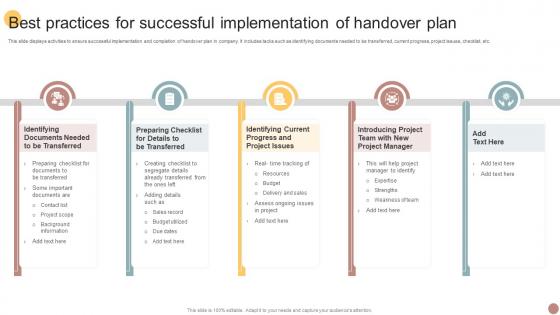
This slide displays activities to ensure successful implementation and completion of handover plan in company. It includes tacks such as identifying documents needed to be transferred, current progress, project issues, checklist, etc.
People who downloaded this PowerPoint presentation also viewed the following :
Best Practices For Successful Implementation Of Handover Plan with all 6 slides:
Use our Best Practices For Successful Implementation Of Handover Plan to effectively help you save your valuable time. They are readymade to fit into any presentation structure.





FAQs for Best Practices For Successful Implementation
Key components of an effective handover plan include detailed project documentation, stakeholder contact lists, pending task inventories, risk assessments, and timeline specifications. These elements streamline knowledge transfer by ensuring continuity, minimizing disruptions, and maintaining accountability, with many organizations finding that comprehensive handover documentation reduces transition time by 40% while preserving operational efficiency.
A handover plan improves project continuity by systematically documenting processes, responsibilities, deliverables, and stakeholder relationships, while facilitating seamless knowledge transfer between team members. Through structured documentation and clear communication protocols, organizations streamline transitions, minimize operational disruptions, and enhance collaborative workflows, with many project-based industries finding that comprehensive handover processes ultimately deliver faster onboarding and sustained productivity.
Common pitfalls include inadequate documentation, rushed timelines, poor stakeholder communication, lack of knowledge transfer sessions, and insufficient testing phases. These oversights often result in project delays, miscommunication between teams, and operational disruptions, with many organizations finding that structured handover processes significantly reduce transition risks and enhance project continuity.
Technology enhances handover effectiveness by automating documentation, centralizing knowledge repositories, and enabling real-time collaboration across teams and locations. Through cloud-based platforms and AI-powered systems, organizations streamline information transfer, reduce manual errors, and maintain comprehensive audit trails, with many companies finding that digital handover tools accelerate transition timelines while ensuring critical knowledge retention.
Communication serves as the foundation of successful handovers, ensuring knowledge transfer accuracy, stakeholder alignment, and continuity preservation through structured documentation, regular check-ins, and clear expectation setting. Effective communication protocols enable seamless transitions in healthcare settings, project management, and corporate restructuring, with many organizations finding that comprehensive communication strategies reduce errors, minimize disruptions, and ultimately deliver improved operational efficiency.
Responsibilities should be clearly defined by documenting specific tasks, deliverables, deadlines, and accountable parties for each handover element, while establishing clear communication protocols and escalation procedures. Through detailed role matrices and structured documentation, organizations streamline transition processes, minimize knowledge gaps, and ensure continuity, with many finding that comprehensive responsibility mapping reduces handover time and enhances operational efficiency.
**Priority handover information includes project objectives, current status updates, pending deliverables, key stakeholder contacts, and critical deadlines or dependencies. This comprehensive documentation enables seamless transition by eliminating knowledge gaps, reducing miscommunication risks, and maintaining project momentum, with many organizations finding that structured handovers significantly enhance operational continuity and team productivity.**
**INPUT**: How can feedback from previous handovers inform better practices? **OUTPUT**: Feedback from previous handovers reveals critical gaps in documentation, communication timing, and knowledge transfer methods, enabling organizations to refine their processes systematically. Through structured post-handover reviews, teams identify recurring challenges like incomplete task lists or unclear responsibilities, ultimately streamlining future transitions and reducing project delays across departments. [Word count: 50]
Effective handover plan templates include structured documentation frameworks, task transfer matrices, knowledge repositories, stakeholder contact sheets, and timeline tracking tools. These organizational tools streamline transitions by centralizing critical information, standardizing communication protocols, and ensuring comprehensive knowledge transfer, with many organizations finding that digital platforms and customizable templates ultimately enhance operational continuity and minimize disruption during personnel changes.
A handover plan addresses knowledge gaps by documenting critical processes, identifying key stakeholders, mapping institutional knowledge, creating comprehensive training materials, and establishing mentorship structures. Through systematic knowledge transfer sessions, teams ensure continuity in operations, minimize disruptions during transitions, and maintain productivity levels, with many organizations finding that structured handovers significantly reduce onboarding time and operational risks.
Handover plans should be customized based on project complexity, duration, stakeholder requirements, technical specifications, and industry regulations, with IT projects requiring detailed system documentation while construction projects emphasize safety protocols and compliance standards. Strategic tailoring ensures seamless knowledge transfer, minimizes operational disruptions, and accelerates project closure timelines, with many organizations finding that sector-specific handover frameworks ultimately deliver enhanced stakeholder satisfaction and reduced post-project support requirements.
Ensure handover plan accessibility by creating centralized digital repositories, using clear formatting with headers and bullet points, implementing searchable document systems, and establishing standardized templates across departments. Through cloud-based platforms and intuitive navigation structures, organizations streamline knowledge transfer processes, reduce onboarding time, and minimize information gaps, with many teams finding that well-organized handover systems ultimately enhance operational continuity and employee productivity.
Stakeholder involvement strategies include regular communication checkpoints, collaborative documentation reviews, structured feedback sessions, cross-functional training workshops, and designated liaison roles throughout the transition. These approaches enhance transparency and accountability by establishing clear escalation paths, facilitating knowledge transfer between teams, and ensuring continuous stakeholder input, with many organizations finding that early engagement minimizes resistance while accelerating project acceptance.
Handover plans should be reviewed quarterly and updated whenever significant role changes, new responsibilities, or process modifications occur. Regular reviews ensure documentation remains current and comprehensive, with many organizations finding that proactive updates during transitions, system implementations, and strategic shifts ultimately streamline knowledge transfer and minimize operational disruptions.
**INPUT**: What training or resources should be provided to support a successful handover? **OUTPUT**: Essential handover resources include comprehensive documentation, process walkthroughs, stakeholder contact lists, system access credentials, and timeline templates for structured knowledge transfer. These materials streamline transitions by enabling hands-on training sessions, facilitating direct mentorship periods, and providing reference guides, with many organizations finding that combining formal documentation with interactive training ultimately delivers faster onboarding and maintains operational continuity. [Word count: 60]
-
One word for SlideTeam–Versatile!
-
I was able to find the right choice of PPT template for my thesis with SlideTeam. Thank you for existing.