


Binary Multi Level Marketing Compensation Plan Executive MLM Plan MKT SS V




Try Before you Buy Download Free Sample Product
 Impress Your
 Audience
 100%
100% Editable
 Save Hours
 of Time


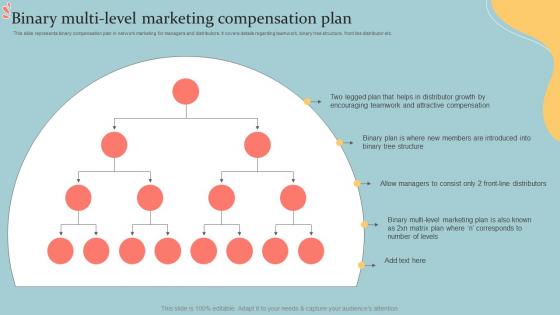
This slide represents binary compensation plan in network marketing for managers and distributors. It covers details regarding teamwork, binary tree structure, front line distributor etc.
People who downloaded this PowerPoint presentation also viewed the following :
Binary Multi Level Marketing Compensation Plan Executive MLM Plan MKT SS V with all 9 slides:
Use our Binary Multi Level Marketing Compensation Plan Executive MLM Plan MKT SS V to effectively help you save your valuable time. They are readymade to fit into any presentation structure.








FAQs for Binary Multi Level Marketing Compensation Plan Executive MLM Plan
So with binary MLM, you're stuck with just two legs - left and right. No building wide like other plans. Here's the kinda annoying part: you only get paid on whichever leg is doing worse, so you're always trying to balance them out. Your upline can drop people under you though, which is nice I guess - doesn't happen with unilevel stuff. They cap how much you can make daily or weekly too. Oh and there's this "flushing" thing where your volume resets after payouts. Honestly it's way different than just recruiting everyone you can find.
So with binary MLM plans, you only get paid based on whichever team is doing worse - not your stronger side. Kind of annoying but makes sense from their perspective. If your left team brings in $10K but your right only hits $3K, you're stuck getting paid on just that $3K. Can't ignore one side and pile everything into the other. Both legs need attention or you're basically leaving money on the table. It's designed to force balanced growth, which honestly keeps people more engaged than other compensation models I've seen.
Honestly, binary plans are great for newbies. You literally just need 2 people to start making money - way better than those crazy plans wanting 5+ recruits right away. Your upline actually wants you to win because of spillover, so sometimes people just get placed under you without you doing anything (pretty sweet deal). The whole thing's super easy to explain to people too. I'd focus on finding just two solid recruits first, then help them get their two. Way less stressful than trying to manage some massive network from day one. Makes the whole thing feel actually doable, you know?
So spillover is when your upline dumps new people into your downline because their main leg is maxed out - free recruits you didn't even find. Compression moves active people up when inactive ones get kicked out of the structure. Honestly, it's kinda cool getting commissions from people you never met, but your team shifts around constantly so your income can be all over the place. You can't really control who ends up where either. I'd say don't count on spillover too much - actually work on building both sides yourself.
Ugh, the biggest pain is definitely the unbalanced leg thing. One side of your team explodes while the other barely grows, but you only get commissions from whichever side is weaker. Super annoying when you're busting your ass recruiting but your paycheck doesn't reflect it. You're basically at the mercy of how well everyone else performs too - kinda sucks having zero control there. Oh and don't get me started on those volume requirements while trying to keep everything balanced. Honestly? Train your people hard from day one and check your leg balance every week. That way you can pivot your recruiting before it gets totally out of whack.
Honestly, the biggest mistake I see people make is just dumping everyone on one side of their binary tree. You've gotta build both legs at the same time or your commissions will suck. And here's the thing - don't just recruit people and disappear. Actually mentor your direct recruits because when they fail, you fail thanks to that weaker leg payout structure. I try to add one person to each side weekly while still coaching the people already on my team. Takes more effort upfront but it's worth it. Your success literally depends on theirs succeeding too.
Honestly, pricing can totally make or break your MLM. Look at what similar stuff sells for in regular stores first - that's your starting point. Your products can't be way overpriced or nobody except distributors will actually buy them, which gets legally messy fast. Real customers need to want the product at that price point. You've got to balance decent company profits with good commissions for distributors. It's tricky but doable. Oh and avoid the trap where people only buy to hit quotas - that's not sustainable long-term.
Yeah so with binary MLM, it's kinda weird - you're not really focused on selling stuff yourself. Most of your money comes from balancing those two downline "legs" you build. Personal sales give you tiny commissions, but that's not where the real cash is. You'll spend way more time recruiting people and helping them succeed than actually moving products. Honestly feels backwards from normal sales jobs. The whole thing pushes you to find solid recruiters early on, not just people who are good at selling. Building strong leaders on both sides is what matters - oh and keeping those legs balanced or you lose out on bonuses.
Dude, first thing - make sure you're actually selling real products, not just recruiting people. The FTC will come after you hard if it looks like a pyramid scheme. Your comp plan needs to reward product sales, not just building downlines. Also, be super honest about income potential - none of that "make millions from home" crap. States have different MLM rules too, which is honestly kind of annoying to navigate. But seriously, get an MLM lawyer to look at your plan before you launch anything. Trust me, paying a lawyer upfront is way cheaper than getting shut down later.
Dude, the software handles all that crazy binary tracking automatically - downlines, commissions, spillovers, the whole mess. Real-time dashboards show your tree structure and team performance. Automated payouts are clutch too. Honestly? Doing this manually would drive you insane with all the volume matching between legs. The platforms track balance ratios and send notifications to your people. Oh, and definitely get one with a mobile app - your distributors will be checking their stats constantly anyway. Payment processor integration is pretty much non-negotiable these days.
Most binary plans pay 5-15% on your weaker leg's volume - that's what really matters. Don't get too hung up on just the percentage though. Your slower team caps you anyway, so a company offering 15% isn't automatically better than one doing 10%. The structure itself is pretty motivating since you have to build both sides. But here's what I'd actually look at - how often they pay out and what volume you need to hit. Getting 10% weekly usually keeps people way more excited than 15% once a month. Trust me on that one. Weekly momentum just hits different when you're trying to keep a team engaged.
So with binary plans, you're basically going deep instead of wide - building downward rather than just grabbing everyone you know. When your local area dries up, your downlines are still expanding into places you'd probably never reach anyway. Think of it like a tree that can't spread out anymore so it just grows deeper roots. The spillover thing actually works pretty well here too - your stronger legs prop up the weaker ones, so you don't lose steam when recruiting gets tough. Honestly, train your team to dig into those deeper markets instead of burning through their contact lists.
Start with solid product training - that's the foundation. The binary comp plan is where people get totally lost though, so spend real time on how pairing and spillover actually work. I've seen too many people quit just because they didn't get it. Your team needs sales skills obviously, but recruiting training is just as critical since you're building two legs. Online marketing can't be an afterthought either - social media, lead generation, all that stuff. Back office systems training so they don't feel stupid navigating everything. And honestly? Regular mentorship calls make or break retention.
Dude, you gotta focus on both sides of your team - I've watched so many people baby their strong leg while the weak side just dies. Set up regular calls and group chats where people actually talk. Celebrate everything publicly, even the small stuff. Recognition works like crazy in these structures. Weekly check-ins with your direct people is clutch. Don't just push sales though - do virtual coffee things, share real success stories, mentor them properly. Being accessible matters way more than most leaders think. Oh and honestly? Care about their growth, not just what commission you'll make off them.
So basically you need balanced growth on both sides to rank up - like hitting $10K volume on each leg. One side always grows faster though, which is super annoying. You'll also need to personally sponsor people and keep your own sales up. Higher ranks = better commission rates and bonuses. Here's what I'd focus on: work your weaker leg first since that's what's holding you back anyway. Most people ignore their slow side and wonder why they're stuck at the same rank forever. The balance requirement is honestly the hardest part of the whole thing.
-
Thank you SlideTeam for such an excellent service.
-
Thank you SlideTeam for such an excellent service.