


Diapositivas de presentación de Powerpoint de Blockchain





Try Before you Buy Download Free Sample Product
 Impress Your
 Audience
 100%
100% Editable
 Save Hours
 of Time


Utilice las diapositivas de presentación de PowerPoint de Blockchain ampliamente investigadas para educar a su audiencia sobre las transacciones de pago seguras en línea y las técnicas criptográficas. Muestre métodos de cifrado y concepto de red descentralizada que permite la fácil transferencia de valores digitales como moneda y datos. Los desarrolladores de Bitcoin pueden incorporar estas plantillas de presentación de PowerPoint blockchain listas para el contenido diseñadas profesionalmente para su trabajo. Esta plataforma cubre temas como el libro mayor distribuido, el funcionamiento de un libro mayor distribuido, casos de uso, beneficios de la cadena de bloques industrial, limitaciones de la cadena de bloques y más. Ilustre la idea de transferir fondos directamente entre dos partes sin ningún banco o compañía de tarjetas de crédito utilizando plantillas de presentación PPT de blockchain. Demuestre el funcionamiento de las criptomonedas, muestre el proceso y sus beneficios con la ayuda de diapositivas PPT de criptomonedas. Estas plantillas son completamente personalizables. Puede editar las diapositivas según su conveniencia. Cambie el color, el texto, el icono y el tamaño de fuente según sus necesidades. Descargar ahora. Interactúe con los incrédulos a través de nuestras diapositivas de presentación de Powerpoint de Blockchain. Explique los fundamentos de sus creencias.
People who downloaded this PowerPoint presentation also viewed the following :
Contenido de esta presentación de Powerpoint
Diapositiva 1 : Esta diapositiva presenta BLOCKCHAIN con imágenes relevantes. Indique el nombre de su empresa y comience.
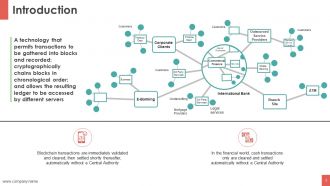
Diapositiva 2 : Esta diapositiva muestra la Introducción con los siguientes puntos: Negocio, Clientes, Sucursal, Sitio, Cajero automático, Servicios de terceros, Departamento de tesorería, Banca móvil, Departamento de finanzas, Suscripción, Hipoteca, Proveedores, Servicios legales, Clientes, Banco internacional, Empleados internos, comercial, financiero, servicios, banca electrónica, clientes corporativos, proveedor de servicios de pago, subcontratados, proveedores de servicios.
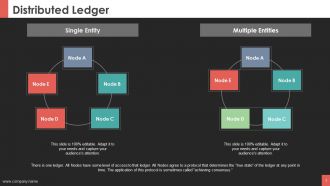
Diapositiva 3 : esta diapositiva muestra una sola entidad del libro mayor distribuido y varias entidades con nodos.
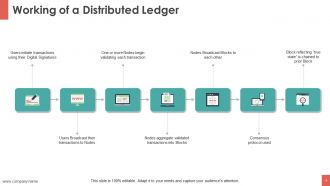
Diapositiva 4 : Esta diapositiva muestra el funcionamiento de un libro mayor distribuido: los usuarios inician transacciones utilizando sus firmas digitales, los usuarios transmiten sus transacciones a los nodos, uno o más nodos comienzan a validar cada transacción, los nodos agregan transacciones validadas en bloques, los nodos transmiten bloques entre sí , Se utiliza el protocolo de consenso, el bloque que refleja el "estado verdadero" se encadena al bloque anterior.
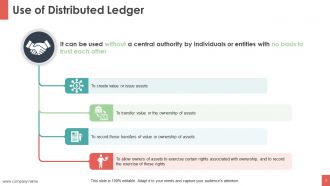
Diapositiva 5 : Esta diapositiva muestra el uso del libro mayor distribuido con los siguientes puntos: puede ser utilizado sin una autoridad central por personas o entidades sin una base para confiar entre sí, para crear valor o emitir activos, para transferir valor o la propiedad de activos , Para registrar esas transferencias de valor o propiedad de activos, Para permitir que los propietarios de activos ejerzan ciertos derechos asociados con la propiedad, y para registrar el ejercicio de esos derechos.
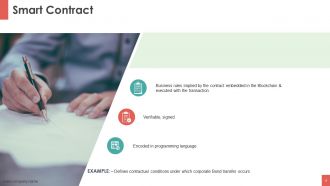
Diapositiva 6 : esta diapositiva muestra el contrato inteligente.
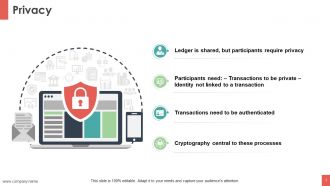
Diapositiva 7 : Esta diapositiva muestra la privacidad con los siguientes puntos: el libro mayor se comparte, pero los participantes requieren privacidad, los participantes necesitan: - las transacciones deben ser privadas - la identidad no está vinculada a una transacción, las transacciones deben estar autenticadas, la criptografía es fundamental para estos procesos.
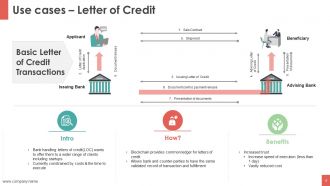
Diapositiva 8 : Esta diapositiva muestra Casos de uso - Carta de crédito que muestra - Mayor confianza, Aumento de la velocidad de ejecución (menos de 1 día), Costo muy reducido, Beneficios, Introducción, Solicitante, Beneficiario, Banco emisor, Banco asesor, Contrato de venta, Envío , Solicitud de carta de crédito, Liberación de documentos, Emisión de carta de crédito, Carta de crédito de asesoría, Presentación de documentos, Presentación de documentos, BANCO, Control de documentos, Liberación de pagos, Transacciones de cartas de crédito básicas.
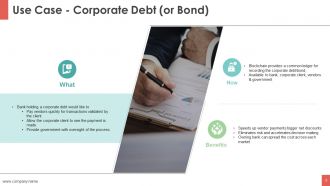
Diapositiva 9 : Esta diapositiva muestra el caso de uso: deuda corporativa (o bono).
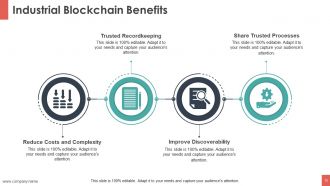
Diapositiva 10 : Esta diapositiva muestra los beneficios de la cadena de bloques industrial, tales como: reducir los costos y la complejidad, mejorar la capacidad de detección, mantener registros confiables, compartir procesos confiables.
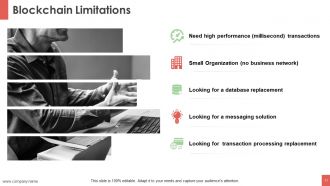
Diapositiva 11 : Esta diapositiva presenta las Limitaciones de Blockchain como: Necesita transacciones de alto rendimiento (milisegundos), Organización pequeña (sin red comercial), Buscando un reemplazo de base de datos, Buscando una solución de mensajería, Buscando un reemplazo de procesamiento de transacciones.
Diapositiva 12 : se titula Diapositivas adicionales con imágenes para avanzar. Altere / edite la imagen según el requisito.
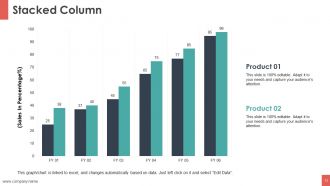
Diapositiva 13 : Esta diapositiva muestra un gráfico de columnas apiladas para la comparación de dos productos / entidades, información, especificaciones, etc.
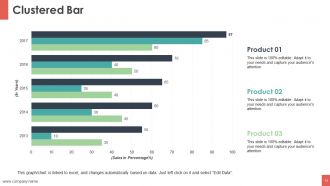
Diapositiva 14 : Esta diapositiva muestra un gráfico de barras agrupado para la comparación de dos productos / entidades, información, especificaciones, etc.
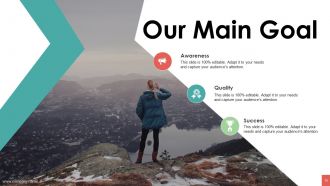
Diapositiva 15 : Esta es una diapositiva de Nuestros objetivos principales. Indique sus metas aquí.
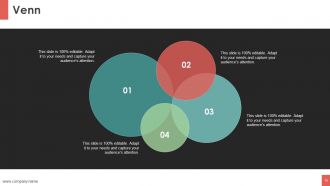
Diapositiva 16 : Esta es una diapositiva de imagen de diagrama de Venn para mostrar información, especificaciones, etc.
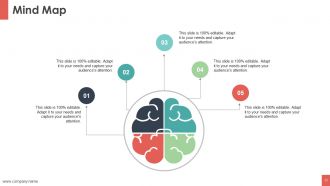
Diapositiva 17 : Esta es una diapositiva de imagen de mapa mental para mostrar información, especificaciones, etc.
Diapositiva 18 : Esta es la diapositiva Generar idea. Indique aquí información, especificaciones, aspectos innovadores, etc.
Diapositiva 19 : Esta es una diapositiva de agradecimiento con dirección # número de calle, ciudad, estado, números de contacto, dirección de correo electrónico.
Diapositivas de presentación de Powerpoint de Blockchain con las 19 diapositivas:
Evoque la compasión con nuestras diapositivas de presentación de Powerpoint de Blockchain. Desarrolle sus sentimientos por sus semejantes.

FAQs for Blockchain
So blockchain is this digital record book that gets copied across tons of computers. New info gets "chained" to old blocks using some crypto math stuff - makes it super hard to mess with old records. Here's the thing though - you'd have to hack most of the computers at once to change anything, which is basically impossible. Everyone can see the same transactions happening live, so there's your transparency. Honestly, most projects don't actually need this level of trust verification. Only go blockchain if you really need that decentralized security aspect, otherwise you're just overcomplicating things.
So blockchain is basically like having a permanent receipt for everything in your supply chain. Raw materials, manufacturing, shipping - it all gets logged and can't be changed later. Honestly, it's pretty wild how fast you can trace stuff back now, like minutes instead of weeks. Super helpful for recalls obviously. The cool part is nobody can mess with the records without everyone else knowing, so you actually know who screwed up where (sorry, but it's true lol). I'd probably start by figuring out which suppliers would even be down to try this tech first.
So basically blockchain just cuts out all those middleman banks that usually make international transfers take forever and cost a fortune. Your money can move peer-to-peer in minutes instead of bouncing around between 3-4 banks for days. Ripple's doing this with some major banks already, though adoption is still kinda all over the place honestly. The cool part is you can actually track your payment in real-time - no more wondering where your cash went for three business days. My cousin uses it for his overseas freelance work and loves it. If you're doing regular international payments, definitely check out blockchain options.
So basically, public blockchains like Bitcoin are open to anyone - total transparency but they're slow and expensive as hell. Private ones? Only certain people get access. Banks love these because they can control everything and transactions are way faster. If you're building something where trust matters and you want everyone to see what's happening, go public. But honestly, most businesses just use private ones for internal stuff since they don't want competitors peeking at their data. Really depends on whether you prioritize openness or speed.
Okay so smart contracts are basically programs that run themselves on blockchain. When certain conditions get met, they automatically execute - no need for a middleman or anything. It's like setting up "if this happens, then do that" rules that nobody can mess with once they're live. Pretty neat concept honestly. You get transparency since anyone can check the code, plus way lower costs without all those intermediaries taking their cut. They work great for insurance payouts, tracking supply chains, payment automation - that kind of stuff. If you're curious about trying it out, I'd start simple. Maybe set up an automated recurring payment or something basic just to see how it actually works.
So crypto is basically what makes blockchain networks actually work - it's like paying miners to validate transactions and keep everything secure. No government controls it, which is pretty cool honestly. You can send it anywhere instantly without dealing with banks or those annoying exchange rates. The thing is, most people think it's just digital money, but it's more like the economic backbone that holds these networks together. Without crypto incentives, the whole decentralized thing would fall apart. That's why every blockchain project needs some kind of token - it's not just hype, it actually serves a purpose.
So basically, blockchain keeps a permanent record of every single change made to patient files - like who touched what and when. Once something's logged, you can't go back and mess with it without everyone knowing. Pretty clever honestly. Healthcare providers get verified through cryptography before they can access anything, so there's always a clear trail of who did what. Makes it way harder for people to pull shady stuff since everything's out in the open. I'd say start small though - maybe test it out with prescription records first since that's where you see the most fraud anyway.
Yeah so blockchain's biggest headache is speed - Bitcoin only does like 7 transactions per second, Ethereum's around 15. Meanwhile Visa's crushing thousands. It's genuinely annoying waiting ages for stuff to process. Most projects are using layer-2 solutions now though. Lightning Network for Bitcoin, Polygon for Ethereum - they handle transactions off the main chain which is way faster. There's also sharding where you basically split everything into smaller chunks, plus newer consensus methods that don't suck like proof-of-work does. Honestly if you're building anything, just go straight to those layer-2 options. Way less headache.
Dude, so blockchain basically flips the script on digital identity. Instead of Facebook or Google hoarding your info, you control it yourself. Say you need to prove you're 21 - you can do that without giving up your birthday or home address. No single company owns your data anymore, which honestly feels long overdue. Microsoft and some governments are testing these "self-sovereign identity" things already. It's pretty wild - you pick what to share and when. If you're building something that needs identity verification, check out Hyperledger Indy or uPort. They'll show you how it actually works in practice.
Yeah so blockchain's environmental impact is pretty rough - Bitcoin burns through electricity like crazy, we're talking Argentina-level consumption. It's all because of this "proof of work" thing where computers basically race to solve puzzles that eat tons of energy. But here's the thing - Ethereum just switched to "proof of stake" and cut their energy use by like 99%, which is wild. I mean, if you're thinking about blockchain stuff for work or whatever, just check what consensus mechanism they're using first. Makes a massive difference.
Blockchain basically lets customers own their loyalty points for real - they can transfer them between programs or trade with other people. Way more flexible than regular airline miles. Smart contracts handle the automation part, so bonus points hit accounts instantly when someone reaches spending goals. The transparency is huge too since customers see exactly how everything works, which honestly builds way more trust than traditional programs. Cross-brand partnerships become possible where your points work at totally different businesses. I'd check out existing blockchain loyalty platforms first though - no point reinventing the wheel when there's already decent options out there to build on.
Honestly, it's a total shitshow right now - no country can agree on how to handle crypto regulation. The US calls everything securities, China just banned it all (typical), while Europe's actually putting together decent frameworks like MiCA. Singapore and Switzerland are basically rolling out red carpets for crypto companies though. What kills me is how something totally legal in one place can land you in jail somewhere else. Cross-border compliance is genuinely nightmare fuel. My buddy's startup spent like 6 months just figuring out licensing requirements. Don't even think about expanding without getting lawyers in each country first.
So blockchain's actually changing how real estate works - crazy stuff. Property ownership history gets recorded permanently, which means way less fraud and title drama. Smart contracts handle escrow automatically too, cutting out tons of paperwork (thank god). Some counties are already putting property records on blockchain systems. Title searches that used to take forever now happen super fast. You'll see shorter closing times and lower costs, which is huge. Oh, and if you're house hunting soon, definitely ask your agent about blockchain platforms - not all of them use it yet but it's worth checking.
Honestly, blockchain voting could be pretty game-changing. Your vote gets locked in with crypto security, and anyone can verify the results are legit - no more worrying about stuffed ballot boxes or those sketchy voting machines breaking down. Nobody controls the whole system since it's decentralized, which builds way more trust. Remote voting actually becomes possible without sacrificing security. Though obviously you'd still need to figure out the whole digital divide thing and keep votes private while staying transparent. Estonia's been testing this stuff out, plus some cities here in the US if you want to see how it's going.
Look, forget the overpriced monkey pics for a sec. NFTs are actually pretty cool because they let you prove you own digital stuff without some company controlling it. Concert tickets that can't be faked, diplomas you can verify instantly, game items that work across different games - that kind of thing. Real estate shares too, which is wild to think about. The royalty part is genius though - artists get paid every time their work gets resold. My advice? Skip the hype projects and look for ones solving actual problems. That's where the real money will be.
-
This Template So Bueatiful
-
Great Work! I have been looking for a recommended blockchain certification training course
and managed to find this link. -
this template so bueatiful
-
Innovative and attractive designs.