

Aufbau einer leistungsstarken Unternehmenskultur - Präsentationsfolien




Try Before you Buy Download Free Sample Product
 Impress Your
Audience
 100%
Editable
 Save Hours
of Time


Unsere Präsentationsfolien "Aufbau einer leistungsstarken Unternehmenskultur" sind thematisch gestaltet, um einen attraktiven Hintergrund für jedes Thema zu bieten. Nutzen Sie sie, um wie ein Präsentationsprofi auszusehen.
People who downloaded this PowerPoint presentation also viewed the following :
Inhalt dieser Powerpoint-Präsentation
Folie 1: Aufbau einer leistungsstarken Unternehmenskultur
Folie 2: Agenda für den Aufbau einer leistungsstarken Unternehmenskultur
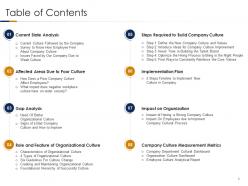
Folie 3: Inhaltsverzeichnis
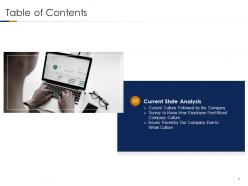
Folie 4: Inhaltsverzeichnis
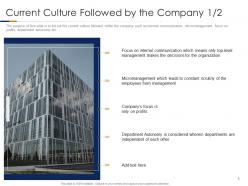
Folie 5: Aktuelle Unternehmenskultur 1/2
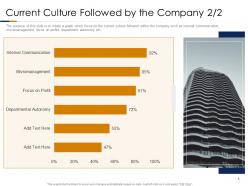
Folie 6: Aktuelle Unternehmenskultur 2/2
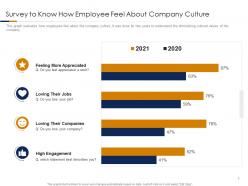
Folie 7: Umfrage zur Wahrnehmung der Unternehmenskultur durch die Mitarbeiter
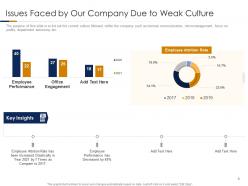
Folie 8: Probleme unseres Unternehmens aufgrund einer schwachen Kultur
Folie 9: Inhaltsverzeichnis
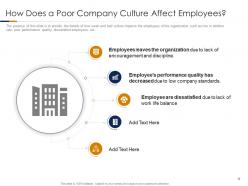
Folie 10: Wie wirkt sich eine schlechte Unternehmenskultur auf die Mitarbeiter aus?
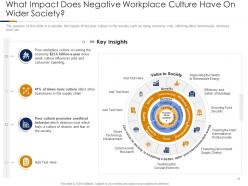
Folie 11: Welche Auswirkungen hat eine negative Arbeitsplatzkultur auf die Gesellschaft?
Folie 12: Inhaltsverzeichnis
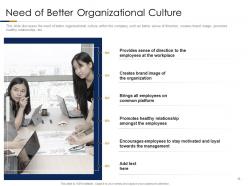
Folie 13: Notwendigkeit einer besseren Unternehmenskultur
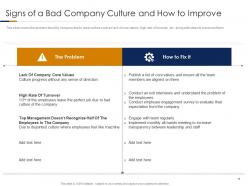
Folie 14: Anzeichen einer schlechten Unternehmenskultur und wie man sie verbessert
Folie 15: Inhaltsverzeichnis
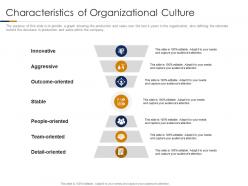
Folie 16: Merkmale der Unternehmenskultur
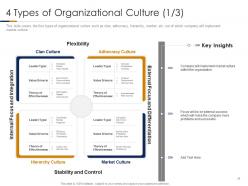
Folie 17: 4 Arten der Unternehmenskultur (1/3)
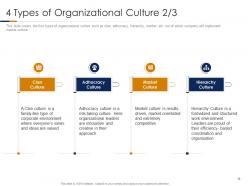
Folie 18: 4 Arten der Unternehmenskultur (2/3)
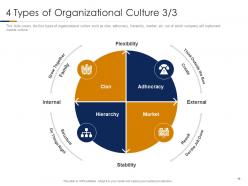
Folie 19: 4 Arten der Unternehmenskultur (3/3)
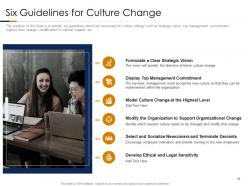
Folie 20: 6 Richtlinien für den Kulturwandel
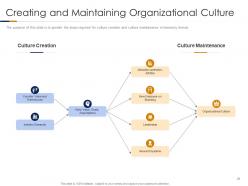
Folie 21: Schaffung und Erhaltung der Unternehmenskultur
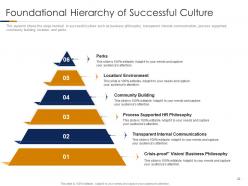
Folie 22: Grundlegende Hierarchie einer erfolgreichen Kultur
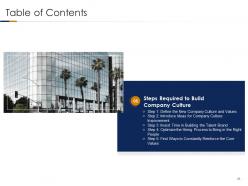
Folie 23: Inhaltsverzeichnis
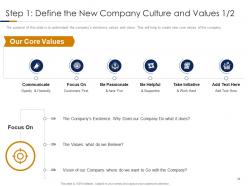
Folie 24: Schritt 1: Definition der neuen Unternehmenskultur und -werte (1/2)
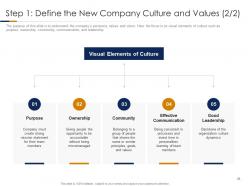
Folie 25: Schritt 1: Definition der neuen Unternehmenskultur und -werte (2/2)
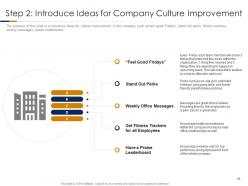
Folie 26: Schritt 2: Einführung von Ideen zur Verbesserung der Unternehmenskultur
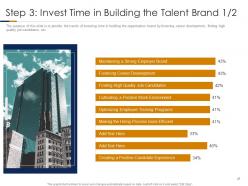
Folie 27: Schritt 3: Investition in den Aufbau der Arbeitgebermarke (1/2)
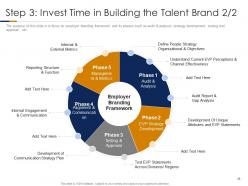
Folie 28: Schritt 3: Investition in den Aufbau der Arbeitgebermarke (2/2)
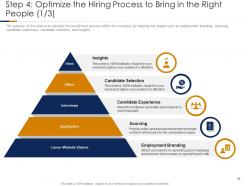
Folie 29: Schritt 4: Optimierung des Einstellungsprozesses zur Gewinnung der richtigen Mitarbeiter (1/3)
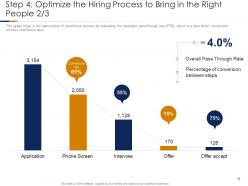
Folie 30: Schritt 4: Optimierung des Einstellungsprozesses zur Gewinnung der richtigen Mitarbeiter (2/3)
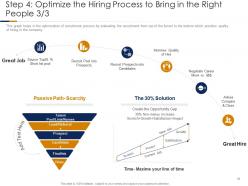
Folie 31: Schritt 4: Optimierung des Einstellungsprozesses zur Gewinnung der richtigen Mitarbeiter (3/3)
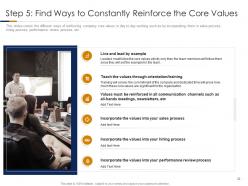
Folie 32: Schritt 5: Finden von Wegen zur ständigen Bekräftigung der Kernwerte
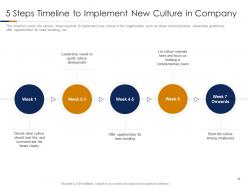
Folie 34: Zeitplan für die Umsetzung der neuen Kultur im Unternehmen in 5 Schritten
Folie 35: Inhaltsverzeichnis
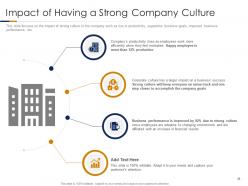
Folie 36: Auswirkungen einer starken Unternehmenskultur
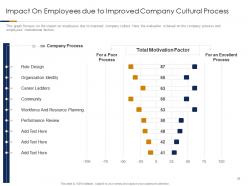
Folie 37: Auswirkungen auf die Mitarbeiter durch den verbesserten Prozess der Unternehmenskultur
Folie 38: Inhaltsverzeichnis
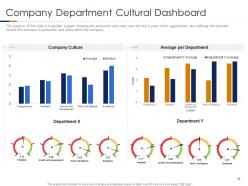
Folie 39: Unternehmenskultur-Dashboard für Abteilungen
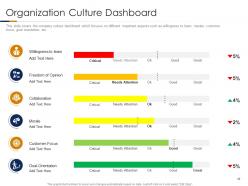
Folie 40: Unternehmenskultur-Dashboard für die Organisation
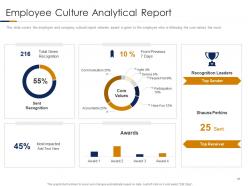
Folie 41: Mitarbeiter-Kulturbericht mit Analyse
Folie 42: Folie mit Icons zum Aufbau einer leistungsstarken Unternehmenskultur
Folie 43: Zusätzliche Folien
Aufbau einer leistungsstarken Unternehmenskultur - Präsentationsfolien
Verwenden Sie unsere Präsentationsfolien "Aufbau einer leistungsstarken Unternehmenskultur", um Ihre wertvolle Zeit effektiv zu sparen. Sie sind fertig erstellt, um in jede Präsentationsstruktur zu passen.

FAQs for Building high performance company culture
Look, high-performing teams nail a few basics. Everyone's crystal clear on goals - not that vague corporate speak nonsense. People feel safe calling out problems without getting thrown under the bus. Learning happens constantly, not just during those painful annual trainings we all hate. Quick decisions matter too - nobody wants to sit in meeting hell forever. Trust between managers and teams? Non-negotiable. Oh, and recognition that actually means something, not generic "thanks for your hard work" garbage. I'd start by honestly looking at what you've got versus what's missing.
Start with psychological safety - your team won't take risks if they're scared of screwing up. Set clear goals but let them figure out the how. I'm big on regular check-ins too, not just those useless annual reviews. Actually celebrate the wins when they happen (seriously, why do so many managers skip this?). Ask what's blocking them first, then remove those roadblocks. The tricky part is staying consistent with all this stuff. Short bursts of good management don't really move the needle.
Look, engaged employees are basically your secret weapon for building a high-performance culture. Without that genuine investment, you're just herding people through daily tasks. When your team actually cares about the mission and feels connected to the work, they'll naturally push boundaries and hold each other accountable. It's night and day compared to people just clocking in for a paycheck. Give them meaningful projects and consistent feedback - honestly, that's where you'll see the biggest shift. These folks will take ownership, collaborate without being forced to, and actually speak up when something's not working. Trust me on this one.
Track your engagement scores and retention rates - those numbers don't lie. But honestly, annual surveys are pretty much garbage for real-time feedback. Instead, watch internal promotion rates and how fast teams actually ship stuff. Quarterly pulse checks work way better. The real magic happens when people start doing the right things without you nagging them about it. That's when you know it's actually sticking. Ask your team what's broken and what isn't - they'll tell you straight up if you're paying attention.
Honestly, most companies get this backwards - they just dump goals on people from above. Break down your vision into specific stuff that connects to each person's actual job. But here's the key part: let your team help set their own goals that still roll up to the big picture. I'd do regular check-ins to see how it's going. When people can actually see how their daily work moves the needle for the company, that's when things click. The best setup is where someone crushing their personal goals automatically helps the whole business win.
Honestly, diverse teams just perform better - that's not even debatable anymore. When you've got people from different backgrounds, they tackle problems in ways you'd never think of. Innovation happens naturally. But here's the thing - inclusion is what actually matters. You can hire all the diversity you want, but if people don't feel safe speaking up, you're wasting everyone's time. I worked with this one team where everyone had the same background and... wow, the blind spots were painful to watch. Short version: psychological safety beats surface-level diversity every time. People need to feel genuinely valued, not just collected like Pokemon cards.
Honestly, it's usually the leadership being all over the place - saying one thing but doing another. Middle management hates change too, which doesn't help. Communication is often trash, and they're still using performance metrics from like 2015 or something. The worst part? Companies try to fix everything at once instead of picking a few things to focus on. My advice - get your leadership on the same page about what "high performance" even means first. Then tackle one cultural thing at a time. Way less overwhelming that way.
Honestly, regular feedback changes everything. Your team can't improve if they don't know what's working or what isn't. Those yearly reviews? Total waste of time - people need to know way sooner when they're off track. I've seen it create this environment where people actually want feedback instead of dreading it. Quick weekly check-ins work great, or even just grabbing someone after a meeting like "yo, that presentation killed it because of X." Once you start doing it naturally, they'll give feedback back to you too. Game changer.
Yeah remote work can totally boost high performance if you do it right. But you'll miss those random conversations that spark great ideas - zoom calls just aren't the same, honestly. What I've found works is being super clear about what you expect from people and celebrating wins out loud since nobody sees the day-to-day hustle anymore. Regular one-on-ones are clutch, and don't just talk shop. Actually ask how people are feeling about their work. Remote teams need way more intentional communication than office ones. The upside though? People focus on actual results instead of just appearing busy at their desk.
Honestly, you've gotta bake this stuff right into how you hire and promote people. Don't just look at their sales numbers - actually measure if they're walking the walk on your company values. Your leadership team needs to be doing this constantly too (and trust me, everyone's watching them). Set up ways for people to speak up when someone's not living up to the values, then actually do something about it. Oh, and make sure your performance reviews weight this as heavily as hitting targets. People will figure out pretty quick what really matters based on who gets promoted.
Skip the boring one-time training sessions - they're pretty much useless. Mentoring and cross-functional projects work way better. Stretch assignments are gold because they push people without breaking them. Leadership development is critical since your best people usually end up managing others anyway. Honestly, the companies that crush this stuff let employees own their growth paths and tie everything to actual career moves. Oh, and survey your team first about what they actually want to learn - don't just roll out some generic corporate program nobody asked for.
Connect recognition to specific actions, not just end results. Skip the generic "nice work" stuff - tell people exactly what they nailed and why it moved the needle. Honestly, annual bonuses are pretty useless if you want daily behavior changes. Mix up your rewards too. Money's great, but growth opportunities and public shoutouts work wonders. Flexible schedules can be huge motivators for some people. Your top performers need to see that extra effort pays off immediately, not months later. Oh, and figure out what actually drives each person individually - it's different for everyone.
Honestly? Leadership has to walk the walk first - can't expect your team to change if the executives aren't doing it themselves. Look at Satya Nadella turning Microsoft around with that whole growth mindset thing. Here's the thing though - you've gotta connect culture shifts to actual business results, not just make it some warm fuzzy HR project (even though that part does matter). Real change takes forever - like 2-3 years minimum, which sucks but whatever. Pick one specific behavior you want more of and just reward the hell out of it every chance you get.
Start with making people feel safe to screw up without getting blamed. Actually listen when someone pitches a crazy idea instead of immediately saying why it won't work. Ask "how could we test this?" Cross-team collaboration works wonders - weird perspective combos create the best stuff. Give people time to experiment, even if it's just an hour here and there (forget Google's 20% thing, who has that?). Celebrate the smart failures out loud. Honestly, most "innovation programs" die because leadership kills ideas before they breathe. Reward the risk-taking itself, not just wins.
Honestly, emotional intelligence makes or breaks teams when things get intense. I've watched super talented groups completely implode because no one could handle feedback without getting defensive or notice when someone was drowning. The best teams? They call out problems without being jerks about it and actually have each other's backs during rough patches. You can't just ignore the feelings stuff - people need to manage their own reactions and pick up on what's happening with others. Start small though. Just acknowledge when tensions are high in meetings and check how everyone's doing. Trust me, it's way better than pretending everything's fine while your team slowly burns out.
-
The content is very helpful from business point of view.
-
Designs have enough space to add content.
-
Awesome use of colors and designs in product templates.