


Business Development Representative Playbook Powerpoint Presentation Slides




Try Before you Buy Download Free Sample Product
 Impress Your
 Audience
 100%
100% Editable
 Save Hours
 of Time


Business development playbook serves as a blueprint for your organization as it helps the organization by efficiently guiding them and optimizing the process. Check out our competently designed Business Development Representative Playbook that helps you with new BDRs onboarding process. The following playbook is helpful for organizations and Managers intending to help their business development representative come on board and learn about the organizations sales process. This playbook is divided into four major parts these parts serve as a step-by-step guide for the organization as they guide your organization by mapping out a blueprint for the organization. The first part includes the introduction, which provides an overview of the BDR playbook. The second part displays the entire process of sales, which highlights the onboarding process, ideal customer profile identification process, client journey, etc. The third part of the playbook displays the essential tools that enable the business process; these tools are assessed on various metrics. In the end, the best practices for sales are shown along with a case study. Download it now.
People who downloaded this PowerPoint presentation also viewed the following :
Content of this Powerpoint Presentation
Slide 1: This slide introduces Business Development Representative Playbook. State Your Company Name and begin.
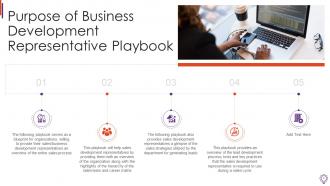
Slide 2: This slide shows Purpose of Business Development Representative Playbook.
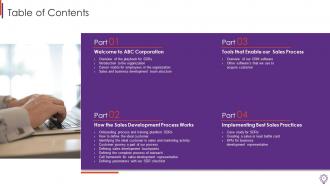
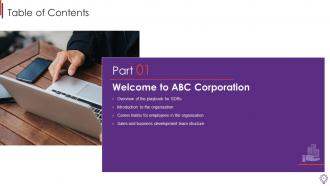
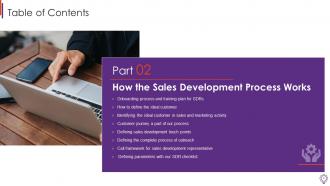
Slide 3: This slide presents Table of Contents for Sales Development Representative Playbook.
Slide 4: This slide highlights title for topics that are to be covered next in the template.
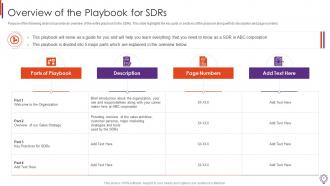
Slide 5: This slide displays overview of the entire playbook to the SDRs.
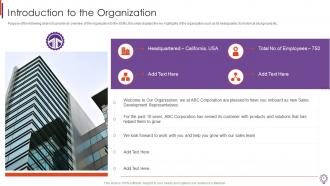
Slide 6: This slide represents key highlights of the organization such as its headquarter, its historical background etc.
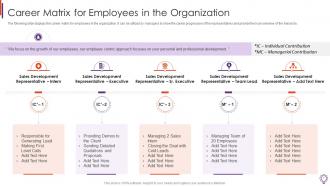
Slide 7: This slide showcases Career Matrix for Employees in the Organization.
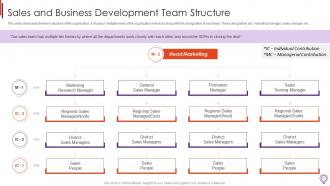
Slide 8: This slide shows Sales and Business Development Team Structure.
Slide 9: This slide highlights title for topics that are to be covered next in the template.
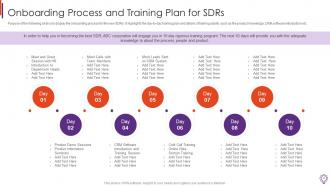
Slide 10: This slide presents Onboarding Process and Training Plan for SDRs.
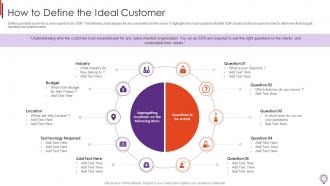
Slide 11: This slide displays major questions that the SDR should ask the prospect in order to determine their budget, objective and requirements.
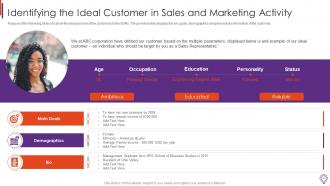
Slide 12: This slide represents Identifying the Ideal Customer in Sales and Marketing Activity.
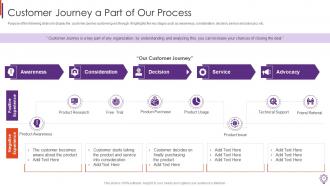
Slide 13: This slide showcases Customer Journey a Part of Our Process.
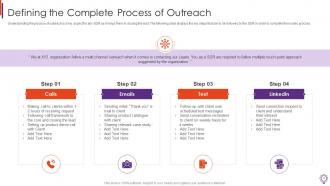
Slide 14: This slide shows Defining the Complete Process of Outreach.
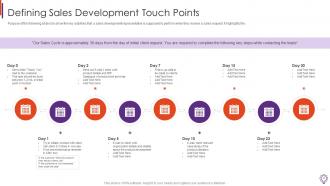
Slide 15: This slide presents key activities that a sales development representative is supposed to perform when they receive a sales request.
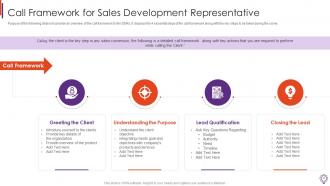
Slide 16: This slide displays Call Framework for Sales Development Representative.
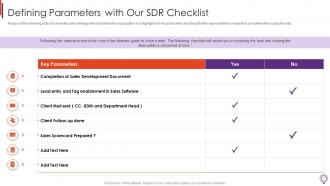
Slide 17: This slide represents Defining Parameters with Our SDR Checklist.
Slide 18: This slide highlights title for topics that are to be covered next in the template.
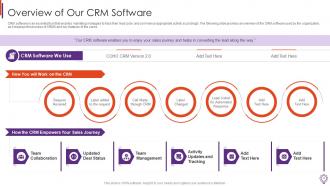
Slide 19: This slide showcases Overview of Our CRM Software that enables marketing managers to track their lead cycle.
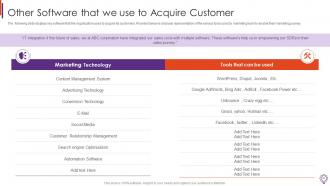
Slide 20: This slide shows Other Software that we use to Acquire Customer.
Slide 21: This slide highlights title for topics that are to be covered next in the template.
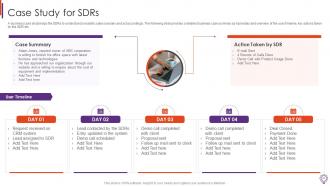
Slide 22: This slide presents case study that helps the SDRs to understand a realistic sales scenario.
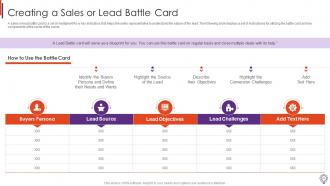
Slide 23: This slide displays Creating a Sales or Lead Battle Card.
Slide 24: This slide highlights title for topics that are to be covered next in the template.
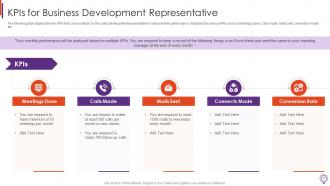
Slide 25: This slide represents KPIs for Business Development Representative.
Slide 26: This slide showcases Icons for Business Development Representative Playbook.
Slide 27: This slide is titled as Additional Slides for moving forward.
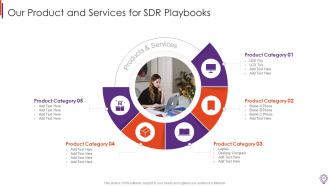
Slide 28: This slide shows Our Product and Services for SDR Playbooks.
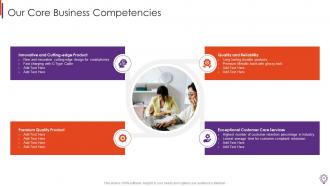
Slide 29: This slide represents Our Core Business Competencies.
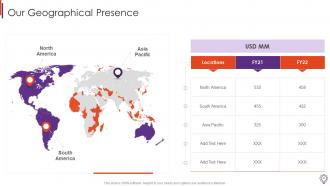
Slide 30: This slide showcases Our Geographical Presence.
Slide 31: This slide highlights title Welcome to ABC Corporation.
Slide 32: This slide provides 30 60 90 Days Plan with text boxes.
Slide 33: This slide presents Roadmap with additional textboxes.
Slide 34: This slide shows Post It Notes. Post your important notes here.
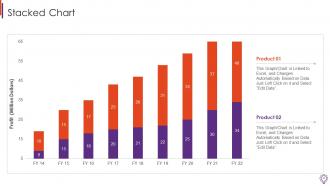
Slide 35: This slide represents Stacked Bar chart with two products comparison.
Slide 36: This is a Comparison slide to state comparison between commodities, entities etc.
Slide 37: This slide showcases Magnifying Glass to highlight information, specifications, etc.
Slide 38: This is Our Target slide. State your targets here.
Slide 39: This is a Thank You slide with address, contact numbers and email address.
Business Development Representative Playbook Powerpoint Presentation Slides with all 44 slides:
Use our Business Development Representative Playbook Powerpoint Presentation Slides to effectively help you save your valuable time. They are readymade to fit into any presentation structure.
-
Business Development Representative Playbook Powerpoint Presentation Slides
-
Business Development Representative Playbook Powerpoint Presentation Slides
-
Business Development Representative Playbook Powerpoint Presentation Slides
-
Business Development Representative Playbook Powerpoint Presentation Slides
-
Business Development Representative Playbook Powerpoint Presentation Slides
-
Business Development Representative Playbook Powerpoint Presentation Slides
-
Business Development Representative Playbook Powerpoint Presentation Slides
-
Business Development Representative Playbook Powerpoint Presentation Slides
-
Business Development Representative Playbook Powerpoint Presentation Slides
-
Business Development Representative Playbook Powerpoint Presentation Slides
-
Business Development Representative Playbook Powerpoint Presentation Slides
-
Business Development Representative Playbook Powerpoint Presentation Slides
-
Business Development Representative Playbook Powerpoint Presentation Slides
-
Business Development Representative Playbook Powerpoint Presentation Slides
-
Business Development Representative Playbook Powerpoint Presentation Slides
-
Business Development Representative Playbook Powerpoint Presentation Slides
-
Business Development Representative Playbook Powerpoint Presentation Slides
-
Business Development Representative Playbook Powerpoint Presentation Slides
-
Business Development Representative Playbook Powerpoint Presentation Slides
-
Business Development Representative Playbook Powerpoint Presentation Slides
-
Business Development Representative Playbook Powerpoint Presentation Slides
-
Business Development Representative Playbook Powerpoint Presentation Slides
-
Business Development Representative Playbook Powerpoint Presentation Slides
-
Business Development Representative Playbook Powerpoint Presentation Slides
-
Business Development Representative Playbook Powerpoint Presentation Slides
-
Business Development Representative Playbook Powerpoint Presentation Slides
-
Business Development Representative Playbook Powerpoint Presentation Slides
-
Business Development Representative Playbook Powerpoint Presentation Slides
-
Business Development Representative Playbook Powerpoint Presentation Slides
-
Business Development Representative Playbook Powerpoint Presentation Slides
-
Business Development Representative Playbook Powerpoint Presentation Slides
-
Business Development Representative Playbook Powerpoint Presentation Slides
-
Business Development Representative Playbook Powerpoint Presentation Slides
-
Business Development Representative Playbook Powerpoint Presentation Slides
-
Business Development Representative Playbook Powerpoint Presentation Slides
-

Business Development Representative Playbook Powerpoint Presentation Slides
-
Business Development Representative Playbook Powerpoint Presentation Slides
-
Business Development Representative Playbook Powerpoint Presentation Slides
-

Business Development Representative Playbook Powerpoint Presentation Slides
-

Business Development Representative Playbook Powerpoint Presentation Slides
-

Business Development Representative Playbook Powerpoint Presentation Slides
-

Business Development Representative Playbook Powerpoint Presentation Slides
-

Business Development Representative Playbook Powerpoint Presentation Slides
-

Business Development Representative Playbook Powerpoint Presentation Slides
FAQs for Business Development Representative Playbook
So basically you're hunting for leads and figuring out which ones are actually worth pursuing. Cold emails, calls, LinkedIn outreach - the whole nine yards. Once you find someone who seems promising, you qualify them to see if they're serious buyers or just window shopping. Then you set up meetings for the account execs and log everything in the CRM. Oh, and you've got monthly quotas to hit obviously. Honestly, sending fewer but really personalized messages works way better than mass blasting everyone. Quality beats quantity every time in this role.
Stick to BANT - Budget, Authority, Need, Timeline. Just ask straight up "what's your budget range?" and "who makes this call?" Don't waste time being polite about it. Dig into their actual pain points when they bring up problems. Make sure they can influence the decision somehow - I've burned weeks on people who couldn't even get me in front of their boss, which honestly sucks. Oh, and timeline matters too. Always nail down concrete next steps before hanging up, otherwise you'll be chasing them forever.
Figure out your ideal customer first - what industry, company size, what problems they're dealing with. LinkedIn Sales Navigator is seriously worth the money for filtering by all that stuff plus funding rounds and new hires. Check their websites and social media for any expansion news or leadership shake-ups. Your current customers are goldmines for referrals too - just ask who else they know. ZoomInfo works well, or honestly even Google alerts if you're on a budget. The whole thing only works if you stick to some kind of system though.
Dude, networking is honestly a game-changer for BDR work. Way better than grinding cold calls all day. Hit up industry events and actually engage on LinkedIn - but like, thoughtfully comment on posts, not just "great insight!" Focus on building real relationships with prospects, customers, even other BDRs who might send referrals your way. The whole "give first" thing isn't just fluff - share useful stuff, make intros for people. I'd start with maybe 30 minutes a week just engaging with prospects' content. Sounds basic but you'd be surprised how many conversations that starts.
Dude, start with automating your follow-ups - that's where the magic happens. Templates for common emails will save your sanity, plus set up those automated sequences so you're not manually chasing every lead. Lead scoring is honestly a game changer for figuring out who's actually interested vs just browsing. I was drowning in manual tracking until I let the CRM handle most of it. Map out your pipeline stages clearly and check the reports to see what's actually converting. Oh, and those task reminders? Total lifesaver for staying on top of outreach. You'll probably save like 2 hours daily just from follow-up automation alone.
Dude, your first 15 seconds are everything in cold calling. Skip the company pitch - hit them with a pain point they actually care about. For emails, I've seen "Quick question about [their recent news]" work way better than generic subject lines. Most BDRs screw this up by making it all about themselves from the start. Do your LinkedIn homework first and mention something real about their role. Oh, and that "before I hang up" thing? Sounds cheesy but it actually gets people to listen again when they're ready to bail. Make everything about solving their problems, not selling your stuff.
Honestly, you gotta track everything - response rates, how many emails turn into actual meetings, pipeline from each channel. Test different subject lines, call scripts, messaging angles. I'm weirdly obsessed with send times too, sounds dumb but it actually matters. Do weekly check-ins to see what's working vs what just makes you feel productive. Email responses below 2%? Time to pivot fast. Oh and don't go with your gut on this stuff - the numbers will tell you way more than your instincts ever will.
Track four main things: calls/emails made, connect rate, meeting set rate, and qualified opps generated. Most people get stuck obsessing over call volume - honestly it's kind of pointless without context. What actually matters? How many conversations become meetings, then how many meetings turn into real deals your AE can close. Pipeline contribution is huge since that's what your manager really cares about anyway. I'd benchmark these weekly at first, then double down on whatever's converting best. Activity's important but efficiency pays the bills, you know?
Dude, just be genuinely curious about what they're dealing with instead of going straight for the pitch. Ask real questions about their role or whatever challenges they mentioned. When they drop personal stuff - like working crazy hours or their kid being sick - actually acknowledge it. People can tell when you're listening vs. just waiting to talk, and honestly? That's half the battle right there. Mirror how they communicate too. Oh, and use their name but don't be weird about it. The whole thing works better when you focus on understanding their world first, then worry about selling later.
Honestly, just listen first instead of planning what you'll say next. I use this "feel, felt, found" thing - like "I get how you feel, others felt that way too, but here's what they discovered." Sounds cheesy but it actually works because you're not dismissing them right away. Most people give you surface-level objections anyway, so ask follow-up questions to figure out what's really bugging them. Oh, and practice responses with your team beforehand so you're not stumbling around. Don't try to solve everything in one go - just ask for something small as the next step.
Dude, BDR-sales alignment is make or break for your pipeline - I can't stress this enough. Most leads die during handoff because there's zero context or feedback happening. Weekly 15-minute syncs are a game changer. Get sales to actually tell you what happened with your leads. Set up shared Slack channels for quick updates too. Oh, and make sure you both agree on what qualifies as a good lead upfront - sounds obvious but you'd be surprised how many teams skip this step. Honestly, once you fix the communication piece, your close rates will jump pretty fast.
Dude, continuous learning is what makes or breaks BDRs. Top performers are always updating their game - product knowledge, messaging, industry stuff. Buyers are way smarter now than they used to be. What worked last year? Probably useless today. Training helps you crush objections and actually qualify people properly instead of just throwing stuff at the wall. I'd block out like 30 minutes daily - call recordings, industry blogs, whatever. Honestly, the ones who skip this step are the same ones complaining about low conversion rates. It's not rocket science but most people won't do it consistently.
Social media's honestly a game changer for prospecting if you're smart about it. I always stalk people on LinkedIn first - their posts, company news, job changes, mutual connections. Comment on their stuff before you ever reach out so you're not some random person. Twitter's actually clutch too since people complain about work problems there all the time. Just be helpful instead of pushy. Share articles they'd care about, congratulate them on promotions, whatever feels natural. You want them to recognize your name when you finally slide into their DMs asking for a call.
Look, just treat people like people, not walking dollar signs. Be upfront about who you are and why you're calling - none of that fake "following up on our conversation" BS when you've never talked before. When someone says no, actually listen and back off. I learned this the hard way early on, but pushing after a clear no just burns bridges. Don't promise stuff you can't deliver just to get that meeting booked. Sure, quotas matter, but you'll hit them more consistently by building real relationships. Quick gut check: would you want to get the email you're about to send?
Honestly, the handoff process makes or breaks everything. Before you even book that first meeting, brief your AE on all the good stuff - pain points, what hooked them, timeline, budget (if you managed to get it), plus any pushback they gave you. I always fire off a quick email with conversation highlights and context about their company. Don't just dump leads and pray! Use your CRM or maybe a shared doc to track handoff details. Your AE needs to walk in looking like they actually understand what's going on. Nothing worse than a prospect having to repeat their whole story again.
-
Editable templates with innovative design and color combination.
-
Innovative and creative templates with high-quality designs. Helped me with my presentation as the slides were easy to edit.