


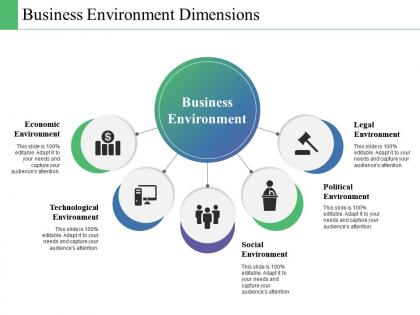
Business environment dimensions ppt powerpoint presentation diagram graph charts




Try Before you Buy Download Free Sample Product
 Impress Your
 Audience
 100%
100% Editable
 Save Hours
 of Time


Gift them fortitude with our Business Environment Dimensions Ppt Powerpoint Presentation Diagram Graph Charts. Encourage them to followa fearless approach.
People who downloaded this PowerPoint presentation also viewed the following :
Business environment dimensions ppt powerpoint presentation diagram graph charts with all 5 slides:
Emphasize the importance of cleanliness with our Business Environment Dimensions Ppt Powerpoint Presentation Diagram Graph Charts. It helps create healthy conditions.


FAQs for Business environment dimensions ppt powerpoint presentation
So there's basically six things that affect your business: economic stuff (like inflation, how the market's doing), political/legal (regulations, government bs), tech changes, social trends (what people want, demographics), your competition, and physical factors like location or resources. I know it sounds like a lot to track! The real trick though? Figure out which 2-3 actually matter for your industry instead of trying to watch everything. They all influence each other anyway, so you'll naturally pick up on the big shifts. Way less stressful that way.
Honestly, economics drives pretty much every business decision you'll make. Strong economy? Go wild with expansion and R&D spending. Recession hitting? Time to slash costs and focus on budget-friendly offerings instead of that expensive product launch you were planning. Interest rates and inflation mess with everything too - they literally dictate what moves you can afford to make. I learned this the hard way during COVID when our whole strategy had to flip overnight. Check economic trends every quarter and build wiggle room into your plans. Trust me on this one.
Honestly, your customers' backgrounds shape everything about how they buy stuff. Family traditions, religion, social class - it all matters way more than most people realize. Like, if your audience values fitting in versus standing out, that completely flips your whole approach. Cultural holidays and peer pressure are massive factors too. I learned this the hard way when a campaign that crushed it here totally flopped overseas. You've gotta dig deep into your market's specific cultural context first. What resonates in one place can be tone-deaf somewhere else, and that's an expensive mistake to make.
Tech advancements basically make your current business model irrelevant overnight. Look at Netflix vs Blockbuster - boom, done. Uber did the same thing to taxis. It's wild how fast it happens, honestly. New tech either automates stuff to cut costs, cuts out middlemen completely, or just gives customers a totally different experience. You've gotta stay paranoid about what's coming next in your space. Always ask yourself "could this kill what we're doing?" I sound dramatic but seriously - pivot before you're forced to. Better to cannibalize yourself than let someone else do it.
So basically, political and legal stuff controls what your business can actually do. Tax laws, labor rules, trade regulations - honestly, it's a nightmare but you can't ignore it. These frameworks directly hit your costs and risks. Clear, stable laws? Planning becomes way easier. Messy or constantly changing regulations? Good luck with that uncertainty. Oh, and compliance teams exist for a reason - this stuff gets complicated fast. When you're thinking about new markets or major decisions, you've got to factor in the whole political landscape first.
Look, environmental stuff isn't just tree-hugger nonsense anymore - it'll actually make or break your business. New regulations pop up constantly and can flip your operations overnight. Your customers and investors are demanding greener practices, plus resource shortages are making sustainable options cheaper anyway. Climate change messes with your supply chain and facilities too. The market's shifting hard toward eco-friendly products, so you might as well get ahead of it. Figure out which environmental pressures hit your industry worst, then flip those challenges into actual advantages. Way better than scrambling to catch up later.
Look, globalization basically throws you into competition with everyone worldwide - no choice in the matter. Sure, you're fighting companies with way lower costs, but you also get access to their supply chains and markets. Customers become pickier since they can compare you to literally anyone online. Honestly, the whole thing is pretty overwhelming at first. You've got to stay up on what businesses everywhere are doing. The trick? Use those global resources but don't lose what makes you special locally. I mean, there's gotta be something unique about serving your specific area, right?
Look at who your customers are becoming - age changes, income shifts, where they're moving. Then adapt everything. Aging customer base? Make packaging easier to open, move ads from TikTok to Facebook (yeah, it's boring but it works). Don't forget your workforce changes too when demographics shift. The trick is spotting this stuff before your competitors do. I'd check your customer data every quarter - you'll catch patterns early. Way better than scrambling to catch up later when everyone else has already figured it out.
Look, ethics aren't just some feel-good thing - they actually matter for your bottom line. Customers stick around longer when they trust you, and good people want to work for companies that aren't sketchy. Plus legal headaches are expensive as hell. I've seen businesses get absolutely destroyed overnight because of one bad ethical decision that went viral. The companies that do well long-term? They're usually the ones people actually respect. Set some clear guidelines for your team, but here's the thing - you gotta actually follow them yourself or nobody will take it seriously.
So competition literally puts companies in survival mode - innovate or die, you know? Your competitors are always improving stuff or slashing prices, which forces everyone else to keep up. Look at smartphones - once Apple kicked things off, everyone went crazy trying to outdo each other. It creates this weird cycle where one company's breakthrough makes all the others scramble even harder. Honestly, the best way to tell how innovative your industry really is? Check out R&D spending and how often new products drop. That'll give you the real picture.
Honestly, market research is just figuring out what's actually going on so you don't make dumb decisions. Look at trends, see what competitors are doing, and - this is huge - find out what customers really want instead of guessing. Threats like new regulations? You'll spot them early. Don't do it once and forget about it though. Pick maybe 2-3 things to track consistently - customer feedback and competitor prices work well. Then expand from there. Way better than flying blind, trust me.
Your supply chain is basically make-or-break for profits. Good flow means lower inventory costs, fewer stockouts, faster delivery - all money in your pocket. But man, one hiccup and everything falls apart (hello, pandemic chaos). I'd honestly start by mapping out your main suppliers first. Strong relationships with them plus having backup options keeps you flexible when markets go crazy. Short bursts work better than long chains, trust me. Supply chain management done right? That's your edge over competitors. Find those bottlenecks now before they bite you later.
Dude, the regulatory stuff is getting crazy. Data privacy laws like GDPR are spreading everywhere, and environmental rules are getting way stricter. AI governance is the new hot thing too. Supply chain transparency, cybersecurity mandates, ESG reporting - it's all becoming mandatory now instead of just nice-to-have. What's wild is regulators aren't waiting around anymore, they're jumping ahead of problems. Oh, and trade associations are actually useful for once - they track all this mess so you don't have to. Set up some Google alerts though, new rules drop constantly.
Digital transformation is basically using tech to make your business way more flexible when markets change. I'd start with automation - frees up your team for better stuff. Data analytics is clutch too because you'll spot trends before your competition does. Cloud infrastructure lets you scale without dropping huge money upfront, which honestly saved my last company's budget. Mobile apps and chatbots improve customer experience while cutting costs. But here's the thing - pick maybe 2-3 digital projects that tackle your biggest pain points first. Don't try digitizing everything because that's a recipe for chaos.
Honestly, you need to stay on top of three things. Keep scanning what's happening around you - regulations, competitors, market shifts. Don't get lazy about this part. Spread your risk around too - different revenue sources, suppliers, markets. I can't stress this enough after seeing so many businesses get burned. Your operations should be flexible enough to change direction fast when stuff hits the fan. Oh, and make contingency plans for different scenarios. Update them regularly or they're useless. Start by figuring out what could really mess you up this quarter.
No Reviews