


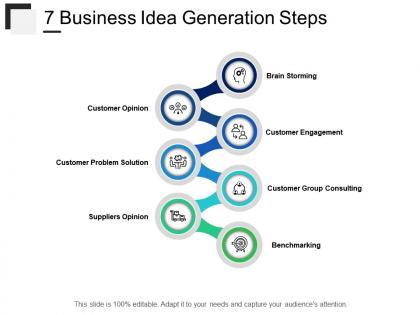
Business idea generation steps




Try Before you Buy Download Free Sample Product
 Impress Your
 Audience
 100%
100% Editable
 Save Hours
 of Time


Our Business Idea Generation Steps will get them bright and cheery again. They will bring back the feel good factor.
People who downloaded this PowerPoint presentation also viewed the following :
Business idea generation steps with all 5 slides:
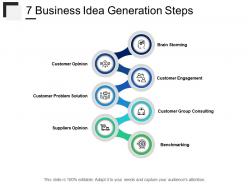
Indicate the essential elements with our Business Idea Generation Steps. Inform folks about the core constituents.

FAQs for Business
Honestly, just look at what pisses you off on a daily basis - that's where the good stuff is. Talk to real people (not your mom) to see if they'd actually pay for a solution. The whole "lightbulb moment" thing is BS most of the time. Check out what your competition sucks at. Would you use this thing yourself? Like, actually spend your own money on it? If not, you're probably barking up the wrong tree. I've seen too many people fall in love with ideas that sound cool but solve zero real problems.
Look, market research is honestly your best friend when brainstorming. It shows you what people actually need versus what's out there right now - that's where the good ideas hide. I've watched so many entrepreneurs chase "brilliant" concepts that nobody wants to buy. Don't do that to yourself! Check out emerging trends and customer complaints first. Those frustrations? Pure gold for idea generation. My cousin learned this the hard way with his failed app idea. Use research as your starting point, then go wild with brainstorming from there.
Dude, customer feedback is everything. Talk to potential customers super early - like before you build anything. You need to know if people actually have the problem you think they do and if they'd pay to solve it. I've totally been guilty of falling in love with an idea without checking if anyone wanted it first (oops). Getting their input helps you tweak features or pricing. Sometimes you'll realize you need to pivot completely, which honestly saves you tons of time and cash later. Start casual - just have conversations. Then maybe do surveys or show them rough prototypes once you get going.
Mind mapping is seriously underrated - it lets you connect random stuff visually and suddenly things click. Also try those "yes, and..." exercises where you can't shoot down ideas immediately. I swear my weirdest thoughts have turned into my best projects. Set a timer for 10 minutes and just dump every idea out there, even the stupid ones. Don't filter anything at first. Quality comes later, but you need quantity to work with. Oh, and create spaces where nobody judges your brainstorming - that's when the magic happens and you stop overthinking everything.
For idea mapping, I'd go with MindMeister or Lucidchart if you want something digital and collaborative. Miro's pretty solid too - has that sticky-note vibe that feels more natural for brainstorming. XMind handles complex stuff really well when you've got layers of ideas to organize. But honestly? Sometimes I still grab a pen and just scribble everything out first - there's something about writing by hand that gets my brain moving differently. Mural's another good one if your team's into visual collaboration. Just pick whatever doesn't make you overthink the process and try mapping out one business problem this week.
So here's the thing - you want to find the gap between where everything's headed and what actually exists right now. Like everyone's obsessed with AI, but most small businesses still have no clue how to use it properly. That's your opening. Follow maybe 3-5 industry blogs and pay attention to what problems keep popping up without real solutions. The trick is catching trends early enough to build something before everyone else floods in. I swear half the best opportunities are just sitting there waiting for someone to notice the disconnect between what people need and what's actually available.
Ugh, creative blocks are the worst! First thing - get out of wherever you're stuck. Coffee shop, different room, whatever. Sometimes I'll literally brainstorm the dumbest ideas possible on purpose. Sounds weird but it actually works? The pressure thing is real too - give yourself like 10 minutes max and just go. Your brain stops overthinking when there's no time. Oh, and find someone random to explain your problem to. They don't need to know anything about what you do. Fresh eyes see stuff we totally miss.
Working with others is honestly a game changer for brainstorming. They'll spot blind spots you'd miss completely, plus you get their expertise filling knowledge gaps. Different backgrounds = totally different ways to tackle problems. Someone might see gold where you see roadblocks. Ideas just snowball when people bounce off each other - way better than anything you'd come up with alone. Having to pitch your concept forces you to sharpen it too. I'd set up regular sessions with folks from different fields. Even my accountant friend has surprising creative insights sometimes.
Yeah definitely do competitor research first - it's super important. Look at what's already out there so you can find gaps or ways to improve on existing stuff. No point starting something if someone's already killing it in that space. But also, if literally nobody else is doing what you're thinking... that might mean there's no real demand for it, you know? I'd say pick like 5-10 main competitors and really study what they're nailing vs where they suck. It'll save you tons of headaches later and help you figure out if your idea actually has legs.
Honestly, I'd start by talking to people who might actually buy whatever you're thinking of selling. Survey them, see what competitors are doing - that kind of thing. Then crunch some numbers on startup costs and when you'd break even (boring but necessary). Testing a bare-bones version first is way smarter than just hoping it'll work. Do a quick SWOT analysis too - strengths, weaknesses, all that. Oh, and be real about what skills you actually have vs. what you think you have. The market research will tell you pretty quickly if your idea has legs or not.
Okay so first thing - make a list of what you're actually passionate about AND good at. Don't be modest here, be real about your skills. Then you gotta figure out if people are searching for help with that stuff. Google Trends is your friend, or just scroll through forums where your target people hang out. Honestly, asking friends what annoys them daily works too lol. The magic happens where your excitement meets a problem people will actually pay money to fix. Because let's face it - passion without profit is just an expensive hobby! Look for spots where your weird mix of interests could fill a gap that others missed.
Honestly, tech has completely changed how I approach business ideas now. AI tools help me brainstorm way faster - like I'll throw ideas at ChatGPT for 20 minutes and come out with stuff I never would've thought of. Google Trends is clutch for seeing what's actually trending vs what you think is hot. Social media listening gives you the real tea on what people want (not the BS they tell surveys). The best part? You can prototype and test everything digitally now instead of spending months building something nobody wants. I'd say pick maybe two tools that don't overwhelm you and just mess around with them this week.
Honestly, social media is like a goldmine for this stuff. I'd start with Twitter - people complain about EVERYTHING there in real time, which is perfect for spotting problems. Reddit threads are amazing too, especially niche subreddits where people get really specific about their frustrations. Don't sleep on Instagram comments either - they're way more honest than you'd expect. Facebook groups can be hit or miss but sometimes you'll find gems. Set up Google Alerts for keywords in your space and just scroll for like 15 minutes daily. Look for the same questions or complaints that keep coming up - that's your signal right there.
Honestly, design thinking just forces you to stop and actually understand what people need before you start building stuff. You dig into their real problems first - not what you think they want. Then you define what you're actually solving. Way better than the usual "let's make another productivity app" approach that crashes and burns constantly. The whole thing keeps you focused on users while still letting you get creative with solutions. Oh, and prototyping early means you won't waste months on something nobody wants. Next time you're brainstorming, try sketching out how customers currently deal with the problem.
Dude, you gotta build something physical - even if it's just cardboard and duct tape. Seriously, the second you make a prototype, all your assumptions basically explode. Users do weird stuff you'd never think of on paper. I've seen people discover better solutions just by accident while testing. Short prototypes are perfect for getting real feedback too, since people can actually mess around with your idea instead of just imagining it. Oh, and don't overthink the first version - my buddy spent months "perfecting" his prototype when he should've been iterating. Start rough, test fast, then improve.
No Reviews