


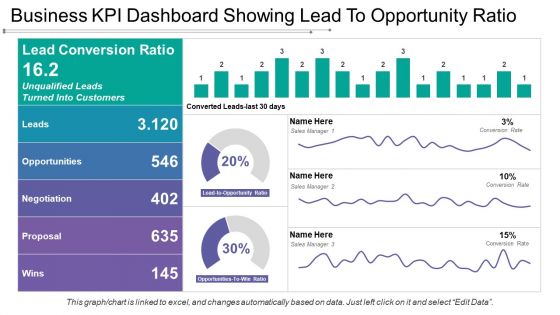
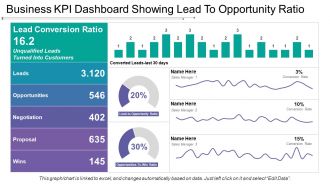
Business kpi dashboard showing lead to opportunity ratio





Try Before you Buy Download Free Sample Product
 Impress Your
 Audience
 100%
100% Editable
 Save Hours
 of Time


Be the detective with our Business Kpi Dashboard Showing Lead To Opportunity Ratio. Solve the mystery with your thoughts.
People who downloaded this PowerPoint presentation also viewed the following :
Business kpi dashboard showing lead to opportunity ratio with all 6 slides:
Our Business Kpi Dashboard Showing Lead To Opportunity Ratio extract better effort. Create a better environment for your employees.




FAQs for Business kpi dashboard showing lead
So basically, lead-to-opportunity ratio is just how many of your leads actually become real sales opportunities. Like if 100 people show interest but only 20 are actually worth pursuing, you've got a 20% ratio. This metric matters because it shows whether you're attracting quality prospects or just random people who'll waste your time. Low numbers? Your lead scoring probably sucks, or marketing is being way too broad with targeting. I'd check it monthly to catch any weird trends - honestly saved my butt a few times when I noticed drops early and could fix things before budgets got torched.
Just divide qualified opportunities by total leads, then multiply by 100. So 50 opportunities from 200 leads = 25%. Easy enough, right? The real headache is defining what counts as "qualified" - like do demo requests count or only people with actual budget? I'd track it monthly because you'll start seeing patterns. Oh and stay consistent with your definitions or the numbers won't mean much when you're comparing month to month. Trust me on that one.
Your sales cycle length is probably the biggest thing here. B2B tech companies usually hit 15-25% because deals drag on forever and get complicated. E-commerce can reach 40%+ since people buy faster. Higher ticket items naturally convert less - makes sense, right? People need way more convincing for expensive stuff. Lead quality from different sources varies like crazy too. Oh, and honestly your sales team's nurturing skills make or break everything. Industry competition plays a part. I'd check what 3-4 similar companies are doing to see where you're actually at compared to them.
So here's the thing - when you convert more leads into actual opportunities, your revenue just naturally goes up. Think about it: instead of burning through 100 leads to get 10 solid prospects, you might only need 50 leads for the same result. Your marketing budget suddenly stretches way further, and your sales team isn't chasing dead ends anymore. Honestly, the ripple effect gets pretty wild over time. I'd start by figuring out what separates your best leads from the total time-wasters, then tweak your qualification process around those differences. Makes a huge difference.
You're way better off focusing on lead quality over quantity - seriously, don't get sucked into that numbers game. Set up some kind of scoring system so you're only chasing prospects who actually fit what you're looking for. Your sales team should jump on leads fast (like within an hour, though good luck with that lol). Train your reps to spot real buying intent during those first calls instead of wasting time on tire-kickers. Oh, and create some standard process for moving people through your pipeline stages. Better to be picky upfront than pray that crappy leads somehow turn into sales later.
So the lead-to-opportunity ratio is basically how you figure out if your sales funnel is actually working. Just divide your qualified opportunities by total leads. Pretty straightforward math, but man, this number will tell you everything about your pipeline health. If it starts tanking, you've got problems - could be crappy leads coming in, maybe your qualification process sucks, or timing's off. I'd check it monthly and compare against what you normally see. That way you'll catch issues before they wreck your forecasts. Trust me on this one.
Honestly, just get a decent CRM - Salesforce, HubSpot, or Pipedrive all track leads automatically and calculate those ratios for you. Super helpful. If your current system sucks at reporting (seriously, some of these older platforms are painful), connect Tableau or Power BI to pull the data instead. Way cleaner dashboards that way. Google Analytics works too if you're mainly dealing with web leads. I'd probably just go with whatever plays nice with what you're already using - no point getting fancy software that your team won't actually touch.
Honestly, you're probably being way too broad with your targeting. Focus on your actual ideal customers instead of trying to reach everyone - I see this mistake constantly and it's such a waste. Add better qualifying questions to your forms. Sure, you'll get fewer leads, but they'll actually be worth something. Then use lead scoring to figure out which channels bring in people who convert vs. just tire kickers. Oh, and audit your current sources this week if you can. Might sound boring but you need to see what's actually working first.
Dude, it's all about filtering out the time-wasters early. You gotta check if they actually have budget, decision-making power, real need, and a timeline that makes sense. Otherwise your sales team ends up chasing people who were never gonna buy anyway - which honestly drives me crazy to watch. Better qualification upfront means way more of your leads actually turn into real opportunities. Like, if you're only passing along prospects who can actually purchase, your conversion rates shoot up fast. Start tightening up those qualification questions and you'll see the difference pretty much right away. Short answer: stop letting junk leads clog your pipeline.
Honestly, your team probably needs better qualification skills more than anything else. Train them to ask smarter questions upfront - like actually digging into budget, pain points, who makes decisions. Role-play objection handling too because most reps just give up after hearing "not interested" once. That's crazy to me. Teach them to spot buying signals and create some urgency without being sleazy about it. The whole thing is about qualifying hard early instead of wasting time on leads that'll never convert. I'd start by looking at where your leads typically fall off in the process.
Honestly, most people just chase more leads without fixing the quality first - you end up drowning in garbage. Don't rush prospects through either; I've watched teams force unqualified leads forward just to hit their numbers, then wonder why conversions suck. When you're testing changes, only tweak one thing at a time or you'll never know what actually moved the needle. Your lead scoring needs to be realistic and based on real data, not what feels right. Oh, and definitely audit your current process before you blow everything up and start over.
So here's the thing - customer personas are basically your secret weapon for converting leads. You'll know which prospects are worth your time right away instead of chasing everyone who shows mild interest. Honestly, it's kind of like having x-ray vision for sales. Match a lead to your core personas? Those convert way better because they actually need what you're selling. I'd start scoring leads against your personas immediately. Focus on the high-matches first and watch your conversion rates jump. Way better than that spray-and-pray approach most people use.
Oh absolutely, seasonal stuff messes with those ratios big time. I've seen swings of like 20-30% just from timing - B2B folks basically hibernate during holidays while retail goes crazy during shopping season. Track your numbers monthly for at least two years so you can actually see the patterns. Once you know when things typically slow down, you can shift your budget around. Maybe spend less when conversions suck, or do more nurturing to keep leads interested. Q4 is always weird compared to other quarters anyway, so don't stress too much about those dips.
Track your lead quality score and conversion velocity first - those tell the real story. Cost per lead matters too, but honestly don't obsess over it if the quality's there. Your opportunity-to-close rate is huge because tons of leads mean nothing if they just die in your pipeline. Check which sources are actually sending you decent prospects, not just volume. Sales cycle length and average deal size will help with forecasting (though that's probably obvious). Pull these weekly and you'll start seeing patterns. Oh, and don't just focus on that one conversion metric - optimize the whole funnel or you're basically playing whack-a-mole with problems.
Check out HubSpot, Salesforce, or MarketingSherpa - they drop annual benchmark reports with sector breakdowns. Most B2B companies hit 13-27% lead-to-opportunity conversion, though that's a pretty massive range honestly. SaaS usually performs better than manufacturing (no surprise there). LinkedIn groups can be goldmines too when people actually share real numbers. Industry associations work if you're into that scene. Just make sure you're comparing similar deal sizes and sales cycles, not some random company that happens to be in tech like you.
-
Enough space for editing and adding your own content.
-
Innovative and Colorful designs.