


Business Model Generation Value Proposition Powerpoint Presentation Slides
If cracking the business deal with your best shot is on your mind, then go forward with this amazing PowerPoint presentation that not only offers the best graphics but also compiles information in a presentable manner. The one stop solution, when it comes to compiling of text and graphic is Business Model Generation Value Proposition PowerPoint Presentation Slides. Presentation layout can be customized as per the topic you need to address in the meeting. The business model generation PPT slide helps deliver the content and maintain a record of the same in the best possible manner. To the point and crisp information is conveyed which a perfect roadmap for the financial years by business model ppt . May it be revenue model, swot analysis or business model, planning or comparison, every core issue is addressed by wonderful mix of colored graphs and graphics in presentation slides. For business model visionaries, the PPT are a game changer and strive to map, design and test different strategies. Delve into all the facts involved with our Business Model Generation Value Proposition Powerpoint Presentation Slides. It helps investigate the issue.






































-

- Google Slides is a new FREE Presentation software from Google.
- All our content is 100% compatible with Google Slides.
- Just download our designs, and upload them to Google Slides and they will work automatically.
- Amaze your audience with SlideTeam and Google Slides.
-

Want Changes to This PPT Slide? Check out our Presentation Design Services
-

- WideScreen Aspect ratio is becoming a very popular format. When you download this product, the downloaded ZIP will contain this product in both standard and widescreen format.
-

- Some older products that we have may only be in standard format, but they can easily be converted to widescreen.
- To do this, please open the SlideTeam product in Powerpoint, and go to
- Design ( On the top bar) -> Page Setup -> and select "On-screen Show (16:9)” in the drop down for "Slides Sized for".
- The slide or theme will change to widescreen, and all graphics will adjust automatically. You can similarly convert our content to any other desired screen aspect ratio.
Compatible With Google Slides

Get This In WideScreen
You must be logged in to download this presentation.


Do you want to remove this product from your favourites?
PowerPoint presentation slides
Images quality is not sacrificed on resolution when edited in PowerPoint presentation. Good quality of graphics, charts and Venn diagrams help to frame the information well. Works well on different platforms like Windows 7, 8, 10, XP, and Vista. Editing in presentation slide show can be handled using any device. Students, teachers, businessmen or industrialist can put to use PPT slide as per their satisfaction. PPT graphic alters font size which can be read from a distance. Quality and standard resolution is offered by the presentation slide show.

People who downloaded this PowerPoint presentation also viewed the following :
Content of this Powerpoint Presentation
Slide 1: This slide introduces Business Model Generation Value Proposition. State Your Company Name and begin.
Slide 2: This is an Agenda slide. State your agendas here.
Slide 3: This is also an Agenda slide. State your agendas here.
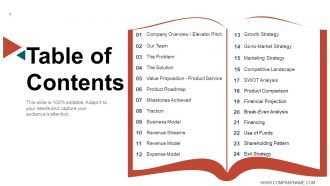
Slide 4: This slide presents Table of Contents showcasing- Company Overview / Elevator Pitch, Our Team, The Problem, The Solution, Value Proposition - Product Service, Product Roadmap, Milestones Achieved, Traction, Business Model, Revenue Streams, Revenue Model, Expense Model, Growth Strategy, Go-to-Market Strategy, Marketing Strategy, Competitive Landscape, SWOT Analysis, Product Comparison, Financial Projection, Break-Even Analysis, Financing, Use of Funds, Shareholding Pattern, Exit Strategy.
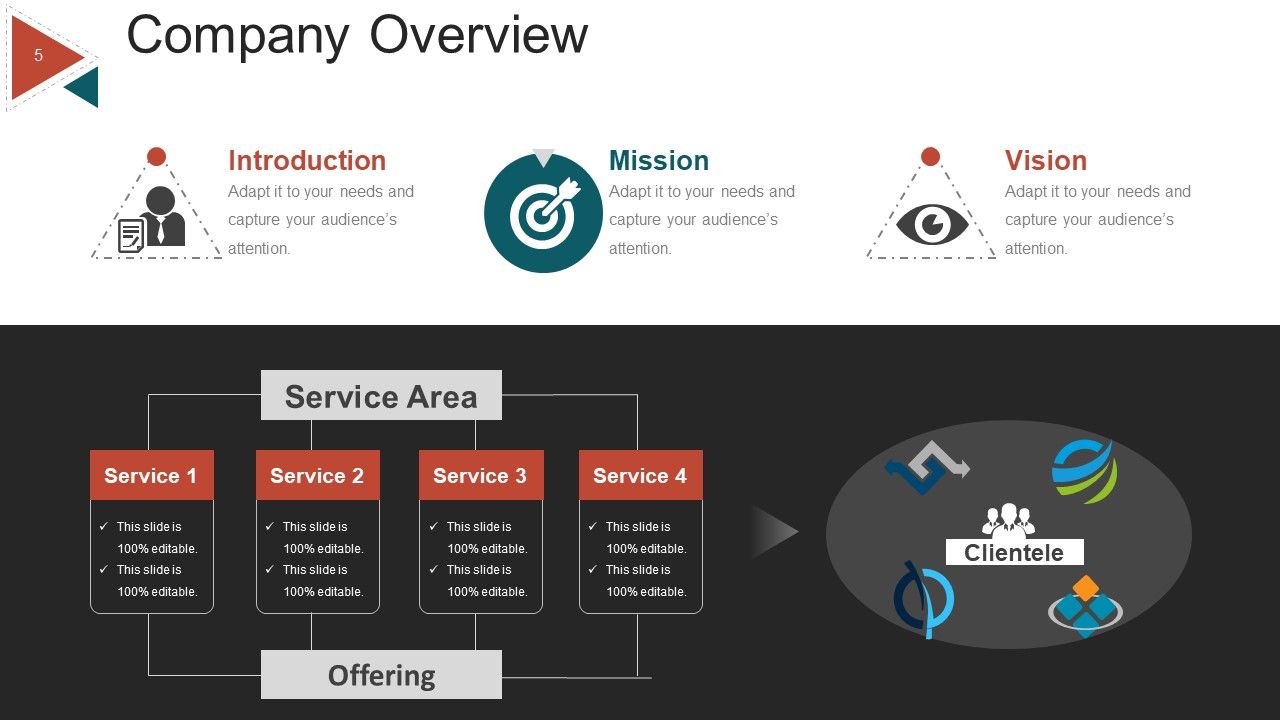
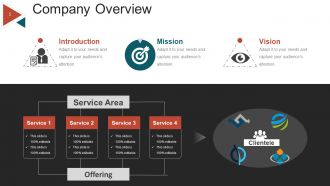
Slide 5: This slide present Company Overview consisting of- Mission, Introduction, Vision, Offering, Service Area, Clientele.
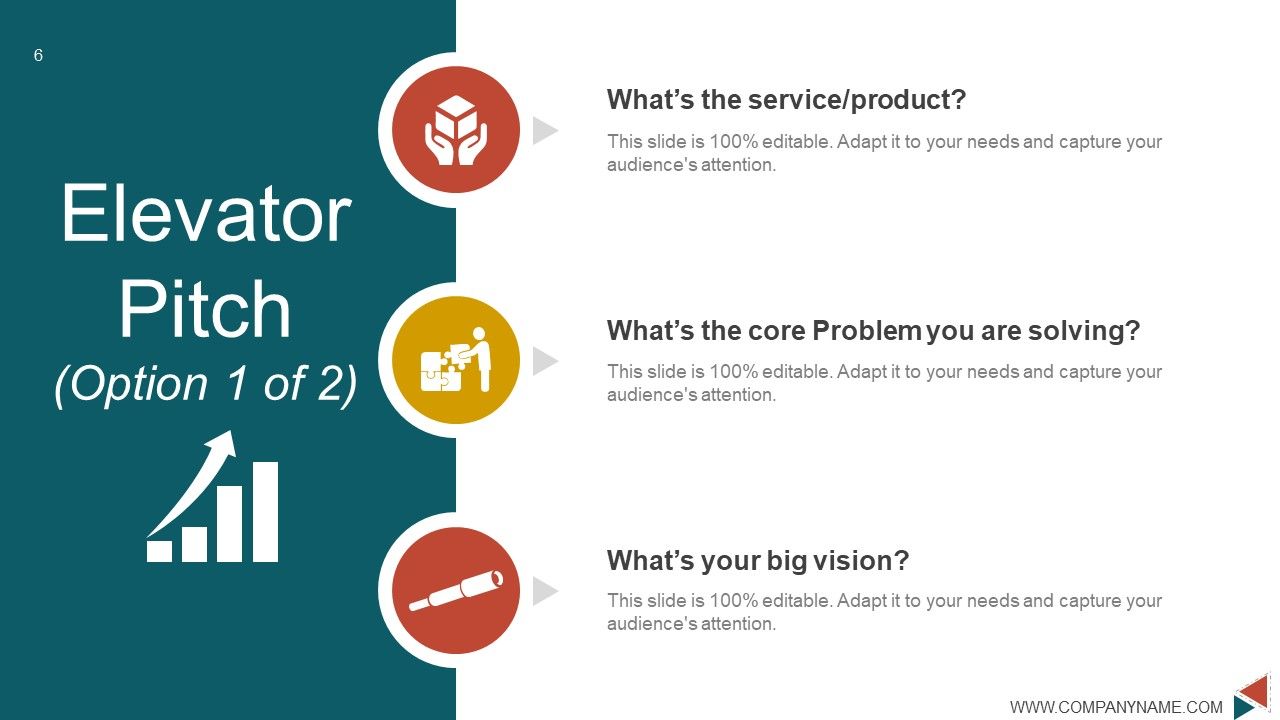
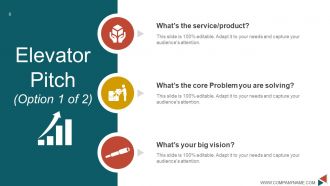
Slide 6: This slide presents the first Elevator Pitch displaying- What’s the service/product? What’s the core Problem you are solving? What’s your big vision?
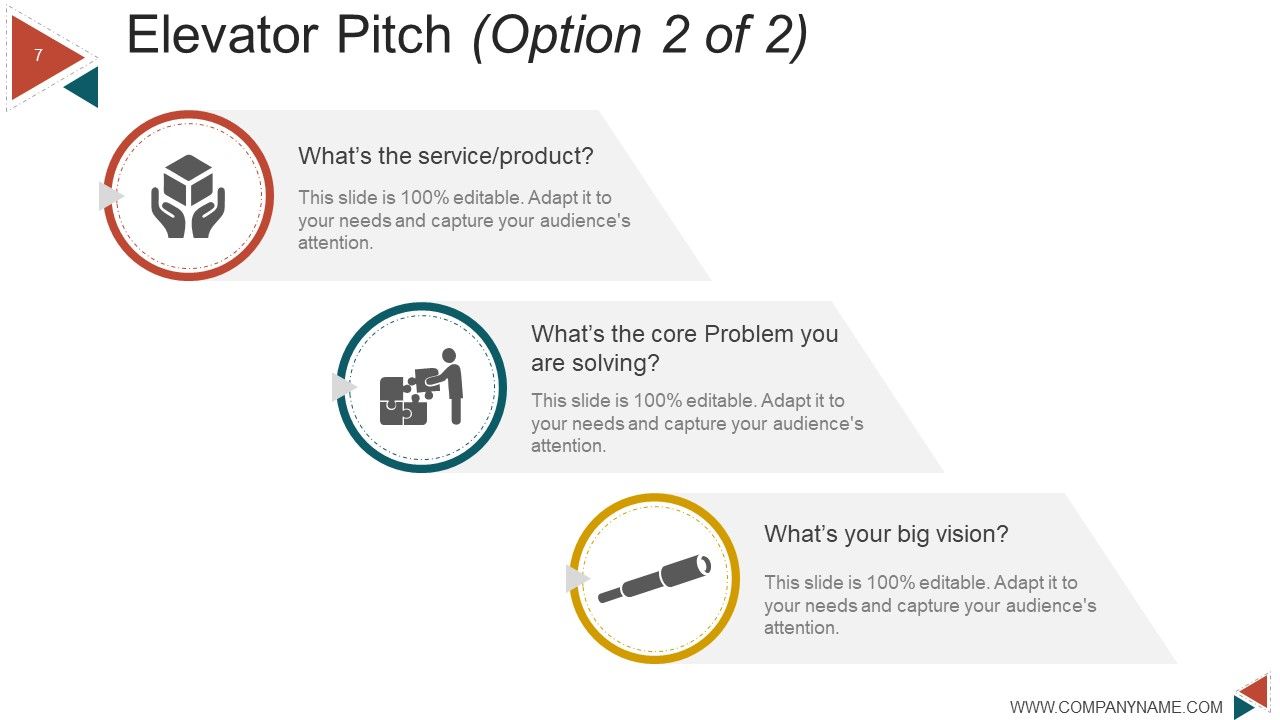
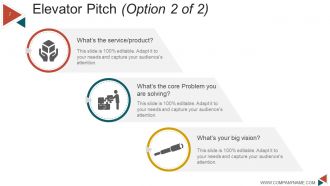
Slide 7: This slide presents the second Elevator Pitch displaying- What’s the core Problem you are solving? What’s the service/product? What’s your big vision?
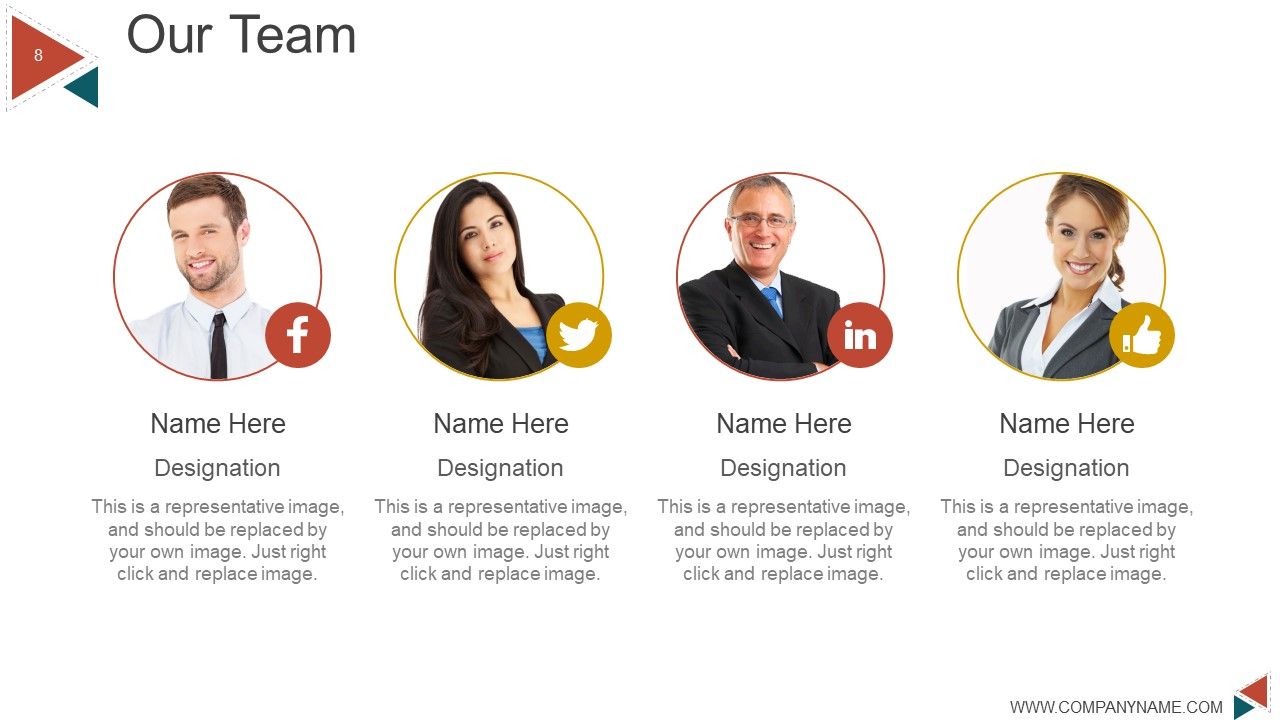
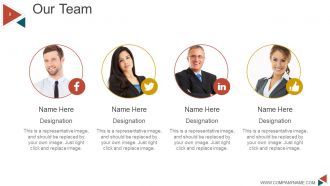
Slide 8: This is an Our Team slide with name, image & text boxes to put the required information.
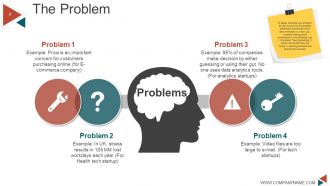
Slide 9: This slide presents The Problem of the business. To better illustrate your problem, as well as convey the problem statement to someone who’s less immersed in it than you, consider adding some components in the following way: 1. Customer Tries Something; 2. Here’s the terrible they are facing; 3. Existing solutions are broken/Non-existent
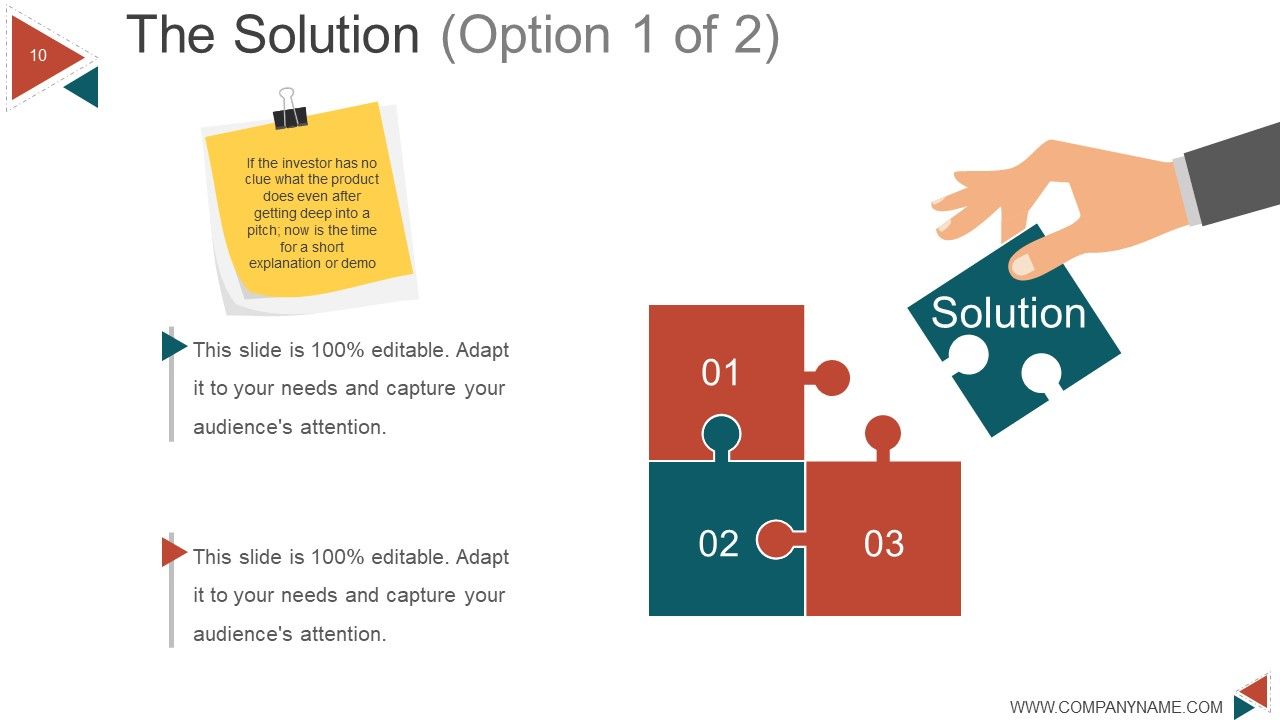
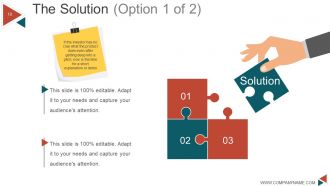
Slide 10: This slide showcases The Solution provided by the upcoming/existing business endeavors. If the investor has no clue what the product does even after getting deep into a pitch; now is the time for a short explanation or demo.
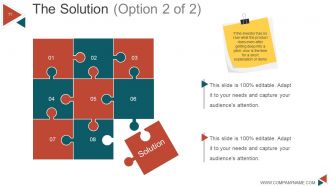
Slide 11: This slide also showcases The Solution provided by the upcoming/existing business endeavors.
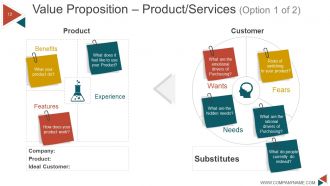
Slide 12: This slide shows Value Proposition – Product/Services slide displaying- Product, Customer, Company, Product, Ideal Customer, Features, Benefits, Experience, Substitutes.
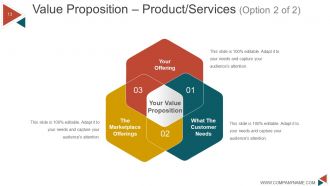
Slide 13: This slide showcases Value Proposition – Product/Services second slide displaying- Your Offering, What The Customer Needs, The Marketplace Offerings, Your Value Proposition.
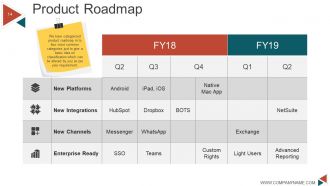
Slide 14: This slide presents a Product Roadmap. We have categorized product roadmap in to four most common categories just to give a basic idea on classification which can be altered by you as per your requirement.
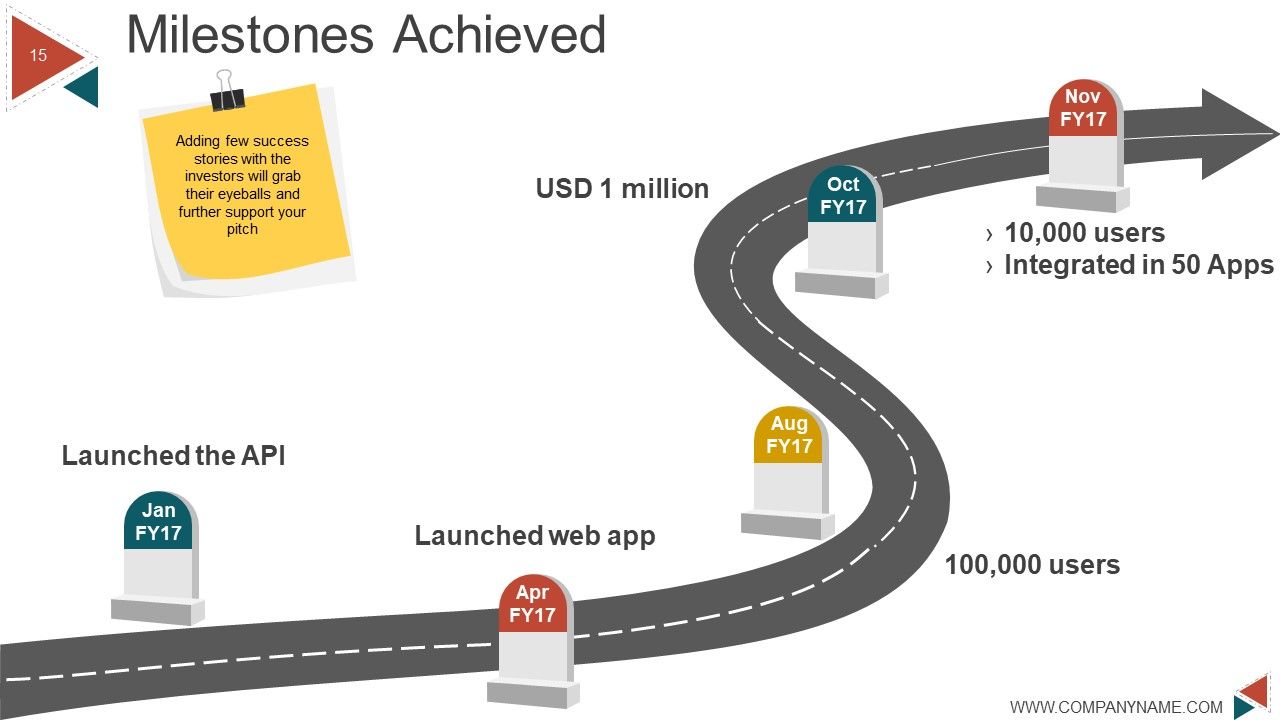
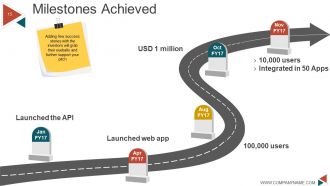
Slide 15: This slide showcases Milestones Achieved. Adding few success stories with the investors will grab their eyeballs and further support your pitch.
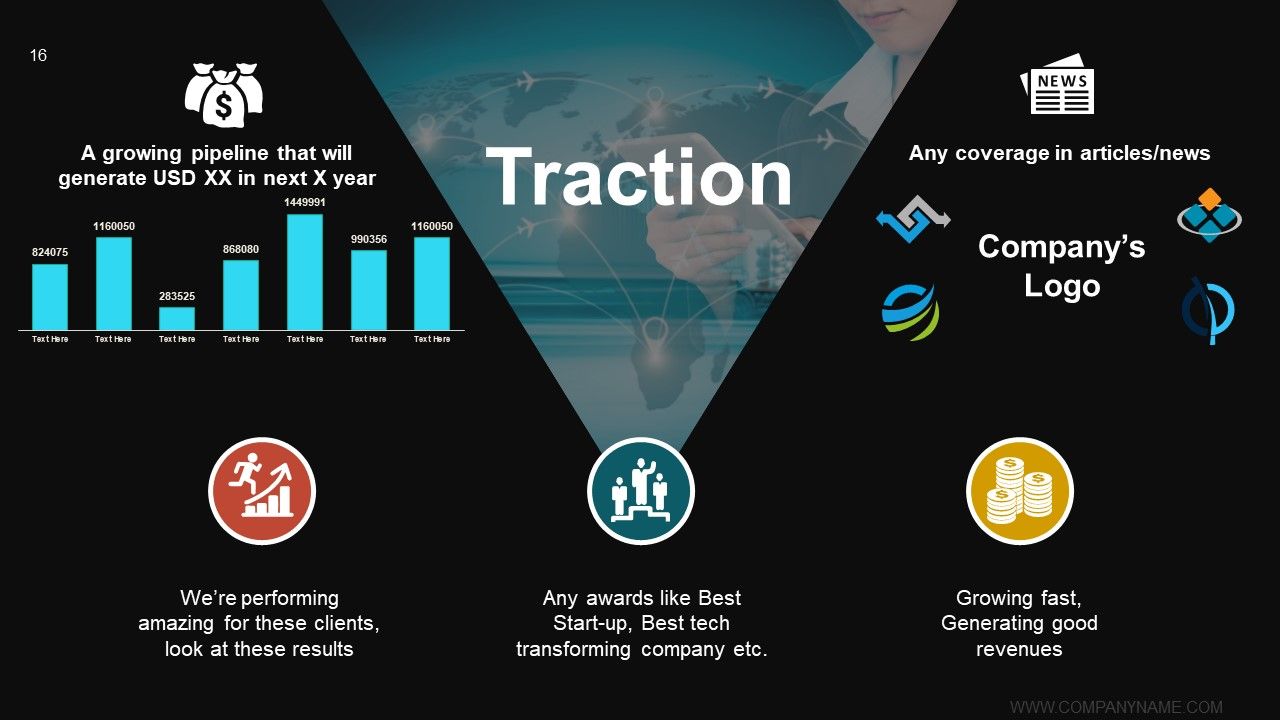
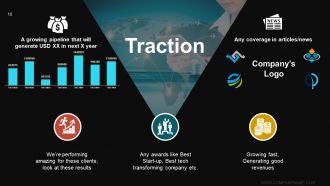
Slide 16: This slide shows Traction for the business/startup.
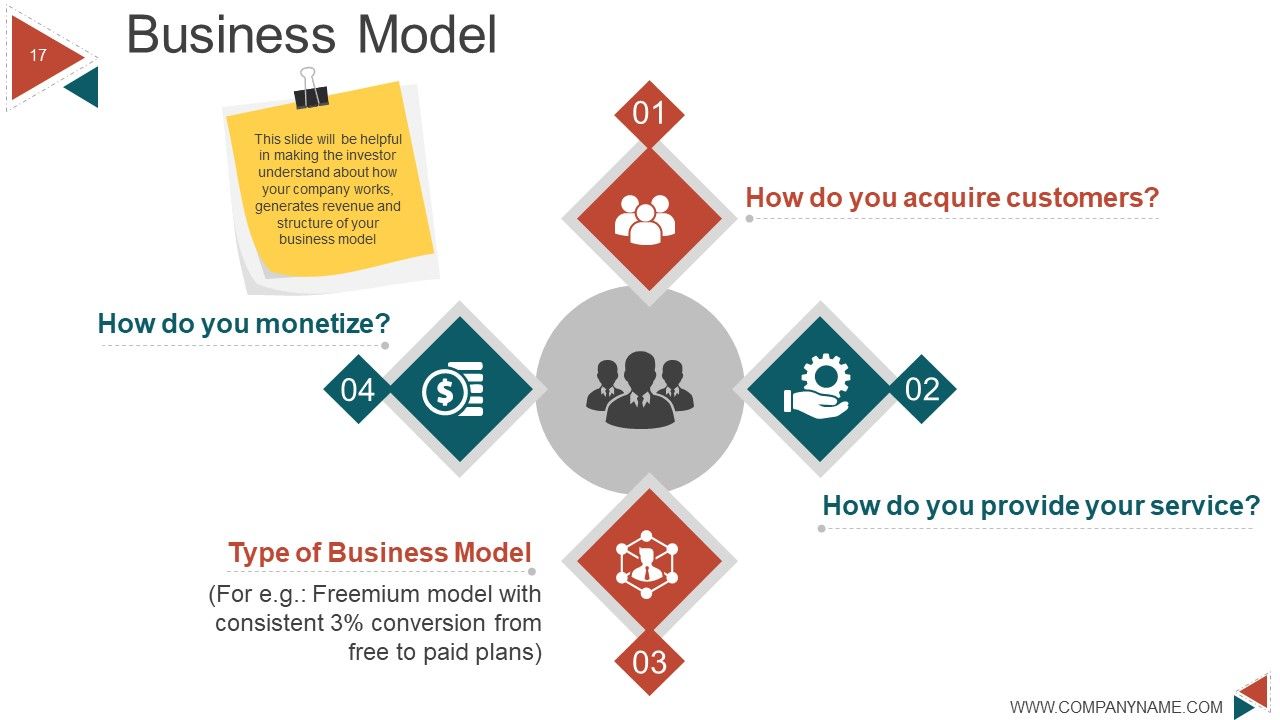
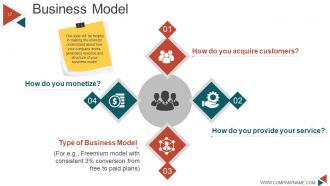
Slide 17: This slide presents a Business Model showcasing- How do you acquire customers? How do you provide your service? How do you monetize? Type of Business Model This slide will be helpful in making the investor understand about how your company works, generates revenue and structure of your business model.
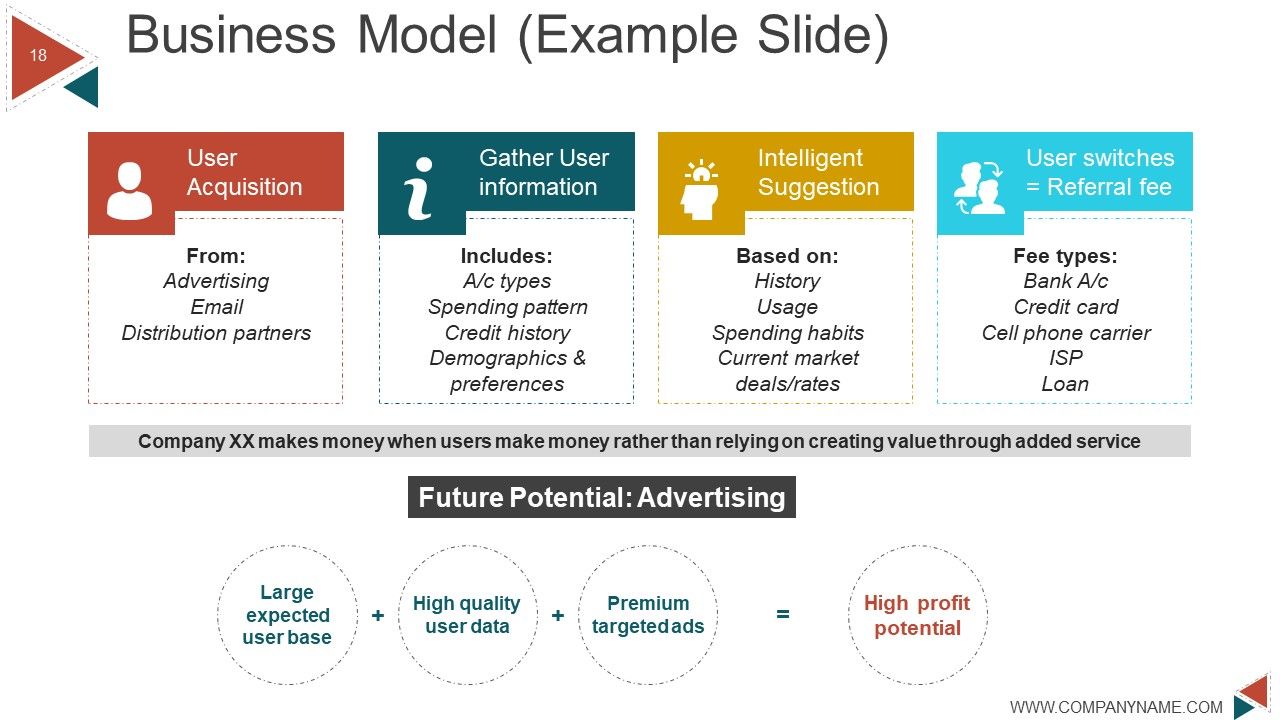
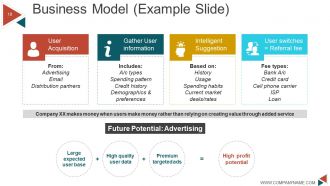
Slide 18: This slide shows a Business Model (Example Slide) displaying- User Acquisition- From: Advertising, Email, Distribution partners: Gather User information. Includes: A/c types, Spending pattern, Credit history, Demographics & preferences, Intelligent Suggestion. Based on: History, Usage, Spending habits, Current market deals/rates, User switches = Referral fee. Fee types: Bank A/c, Credit card, Cell phone carrier, ISP, Loan, Future Potential: Advertising High profit potential, Large expected user base, High quality user data, Premium targeted ads.
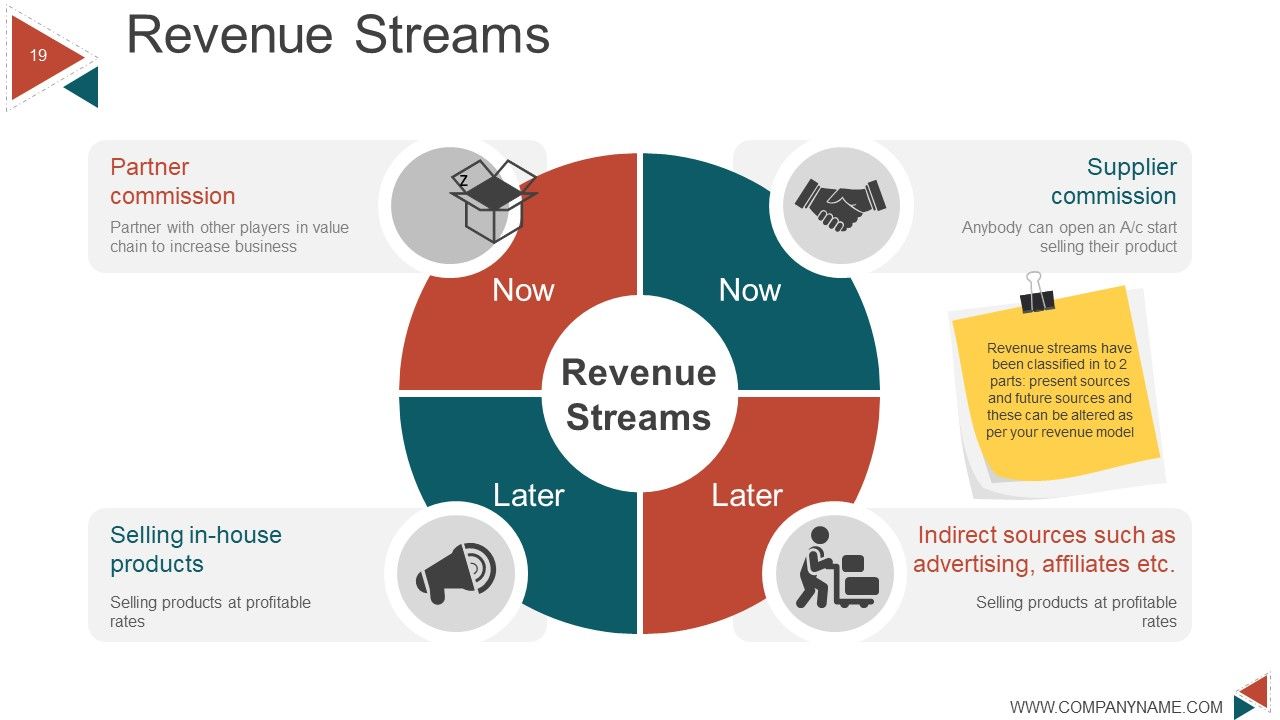
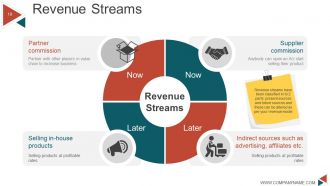
Slide 19: This slide showcases Revenue Streams with- Partner with other players in value chain to increase business, Partner commission, Anybody can open an A/c start selling their product, Supplier commission, Selling products at profitable rates, Selling in-house products, Selling products at profitable rates, Indirect sources such as advertising, affiliates etc. Revenue streams have been classified in to 2 parts: present sources and future sources and these can be altered as per your revenue model
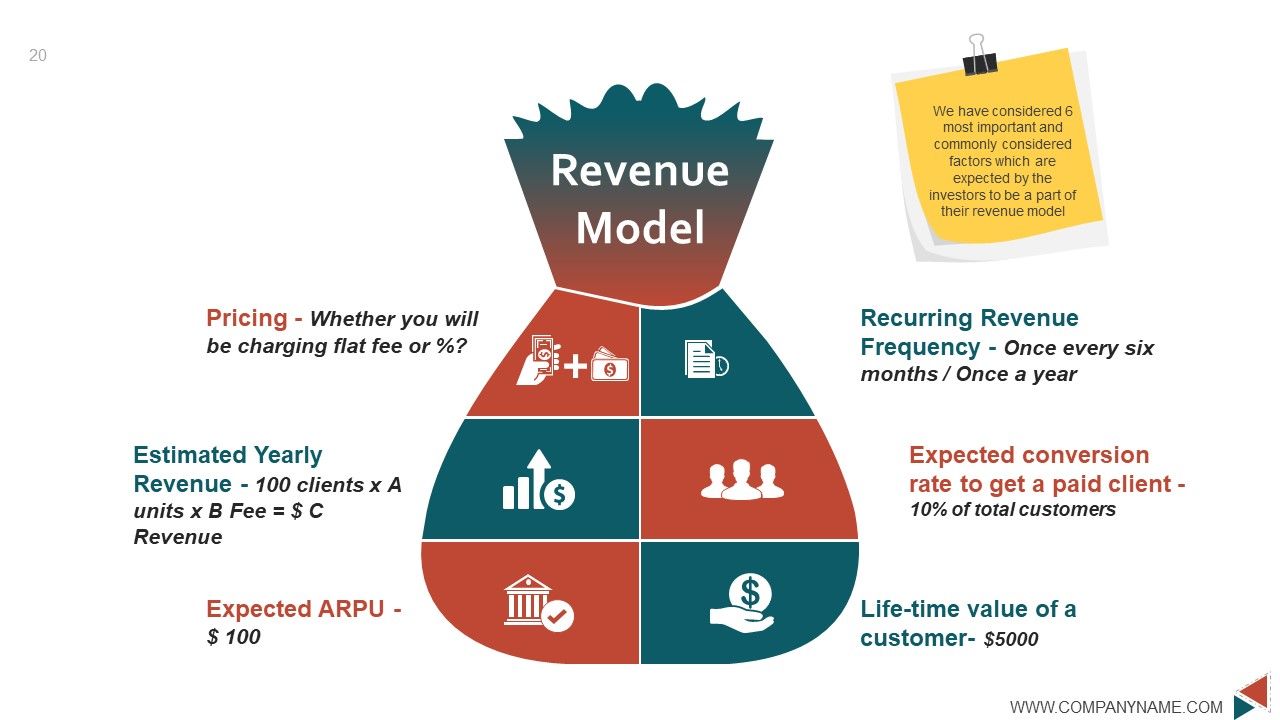
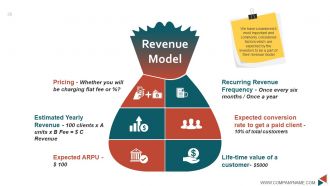
Slide 20: This slide showcases a Revenue Model with- Pricing, Estimated Yearly Revenue, Expected ARPU, Life-time value of a customer, Recurring Revenue Frequency , Expected conversion rate to get a paid client.
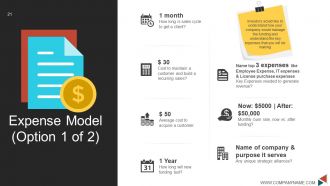
Slide 21: This is an Expense Model. State expenditure aspects here. Investors would like to understand how your company would manage the funding and understand the key expenses that you will be making
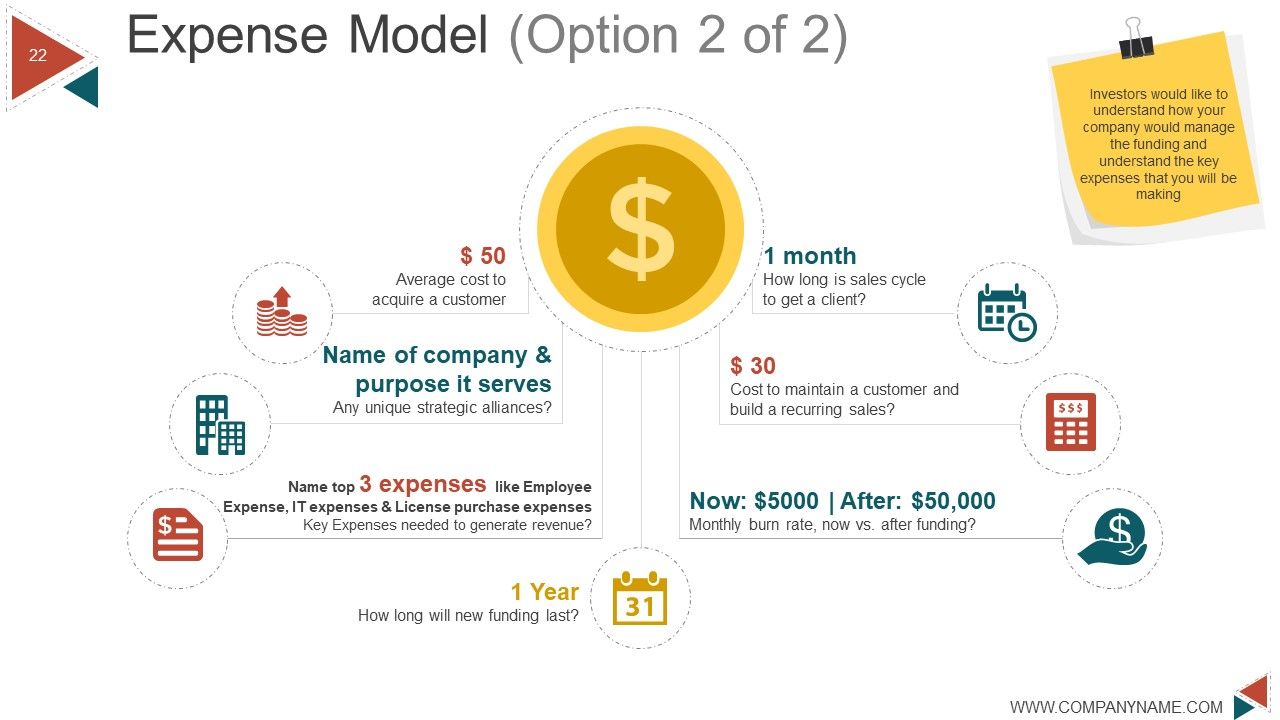
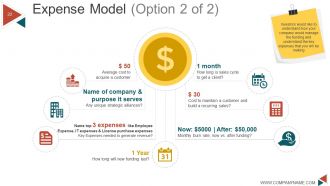
Slide 22: This is an Expense Model. State expenditure aspects here. Investors would like to understand how your company would manage the funding and understand the key expenses that you will be making
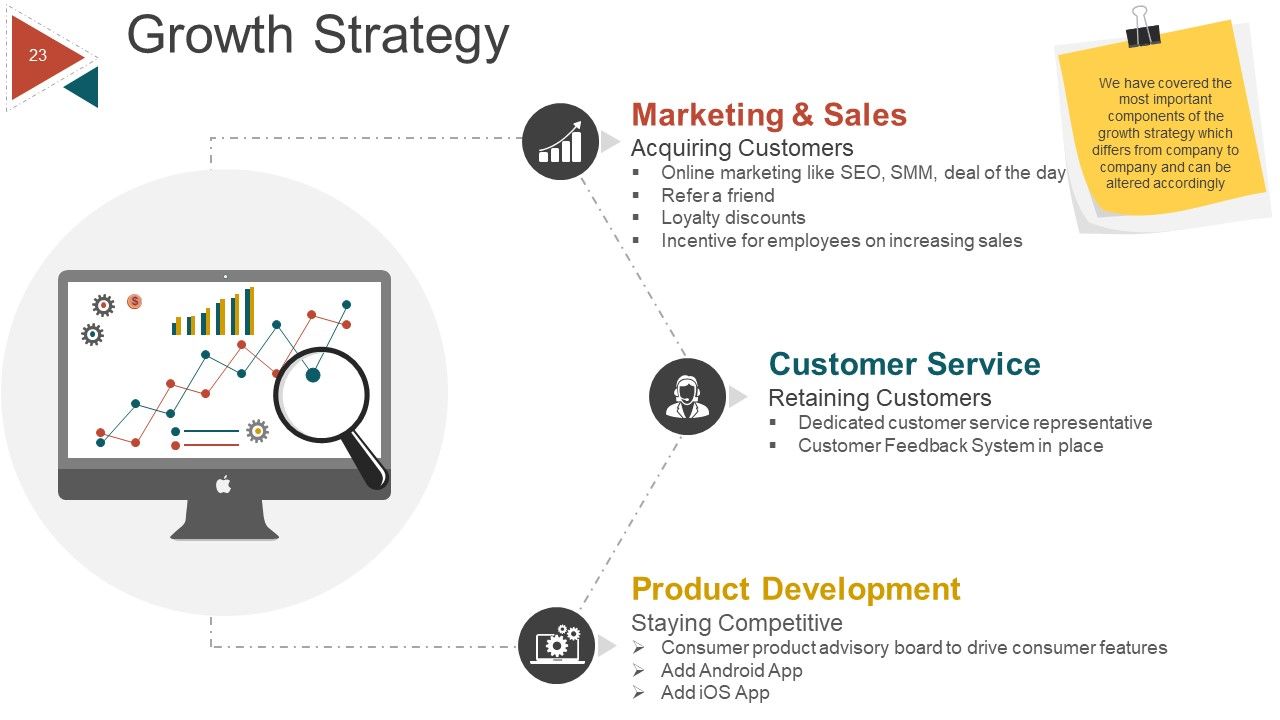
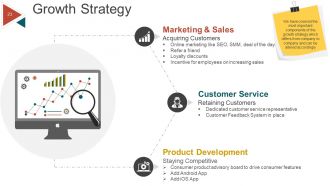
Slide 23: This slide presents Growth Strategy showcasing- Marketing & Sales, Customer Service, Product Development. We have covered the most important components of the growth strategy which differs from company to company and can be altered accordingly.
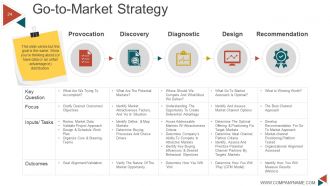
Slide 24: This is a Go-to-Market Strategy slide presenting- Provocation, Discovery, Diagnostic, Design, Recommendation. This slide varies but the goal is the same: Show you’re thinking about (or have data or an unfair advantage in) distribution.
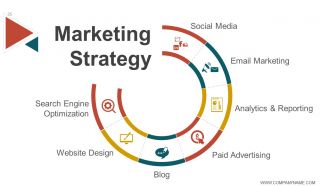
Slide 25: This slide showcases the Marketing Strategy with the following points- Social Media, Email Marketing, Analytics & Reporting, Paid Advertising, Blog, Website Design, Search Engine Optimization.
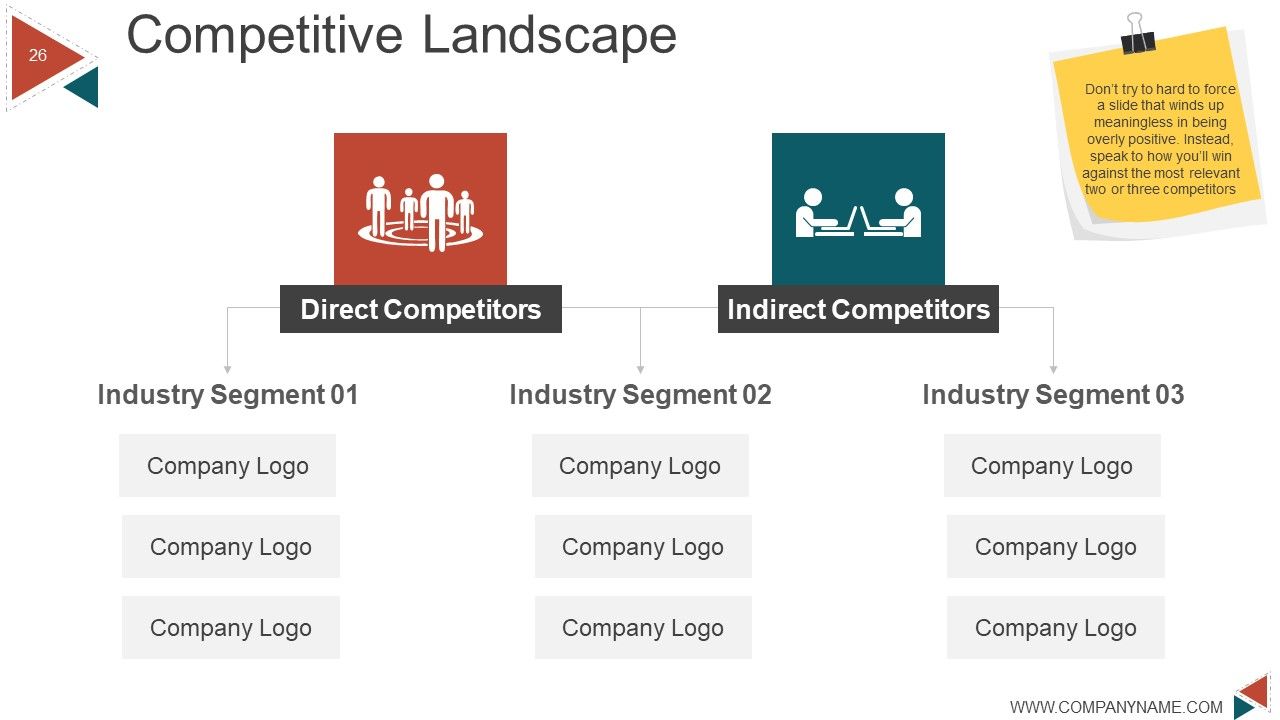
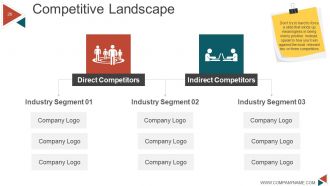
Slide 26: This slide presents a Competitive Landscape Direct Competitors, Indirect Competitors, Industry Segment, Company Logo. Don’t try to hard to force a slide that winds up meaningless in being overly positive. Instead, speak to how you’ll win against the most relevant two or three competitors
Slide 27: This is a Coffee Break slide to halt. You may change it as per requirement.
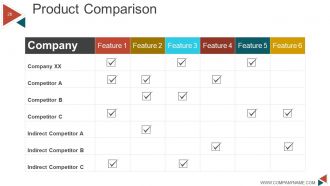
Slide 28: This is a Product Comparison table slide.
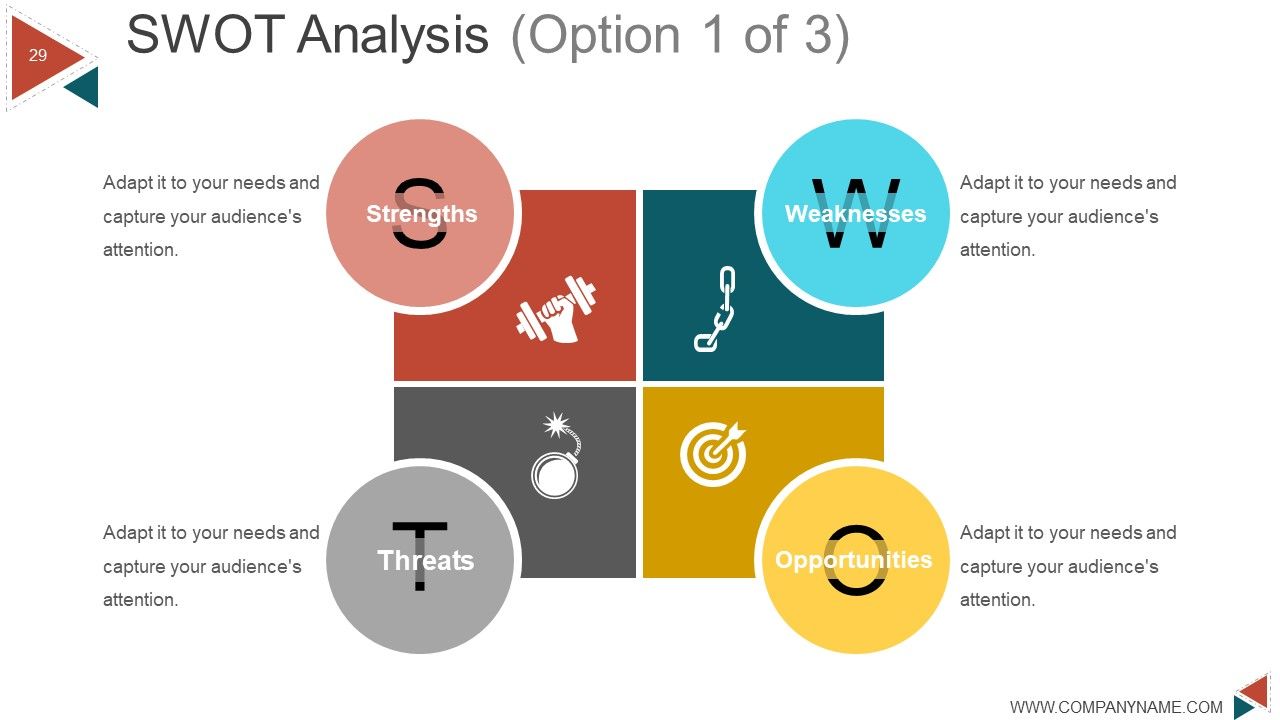
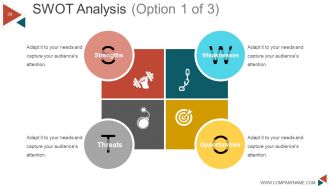
Slide 29: This is a SWOT Analysis slide.
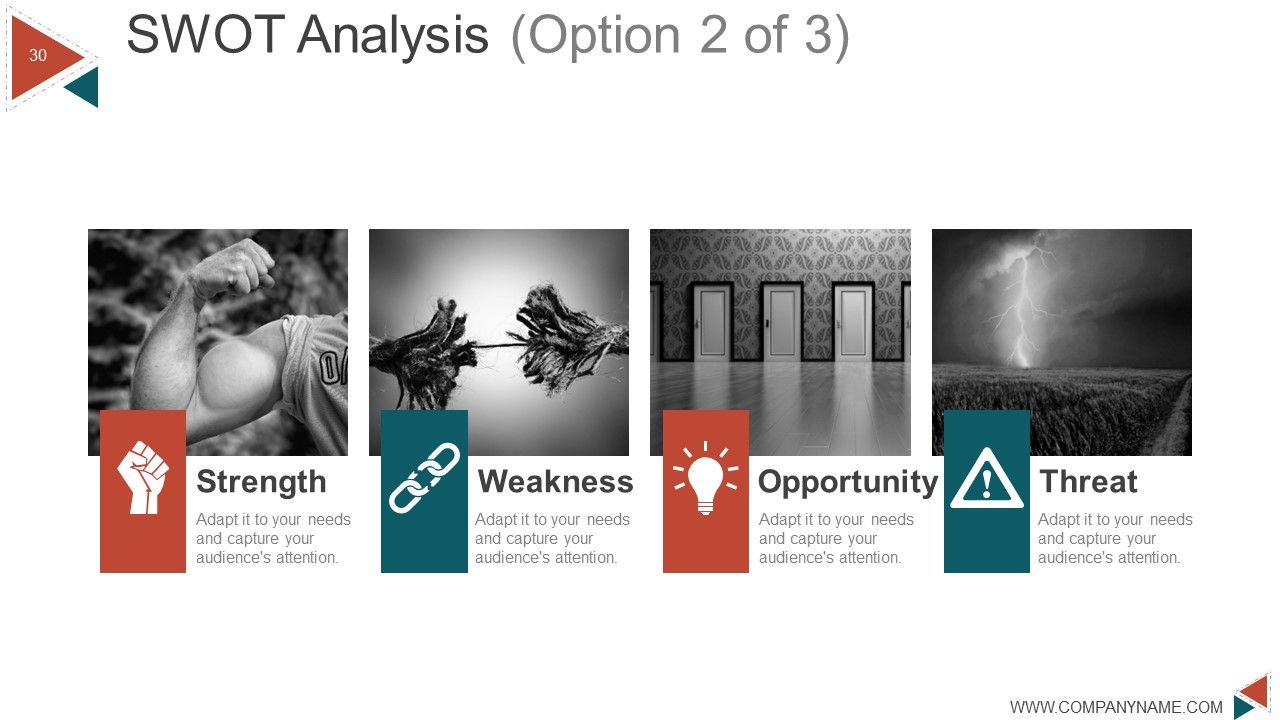
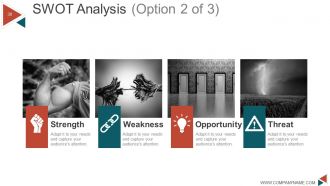
Slide 30: This is another SWOT Analysis slide.
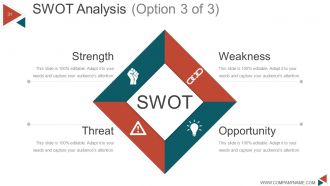
Slide 31: This is also a SWOT Analysis slide.
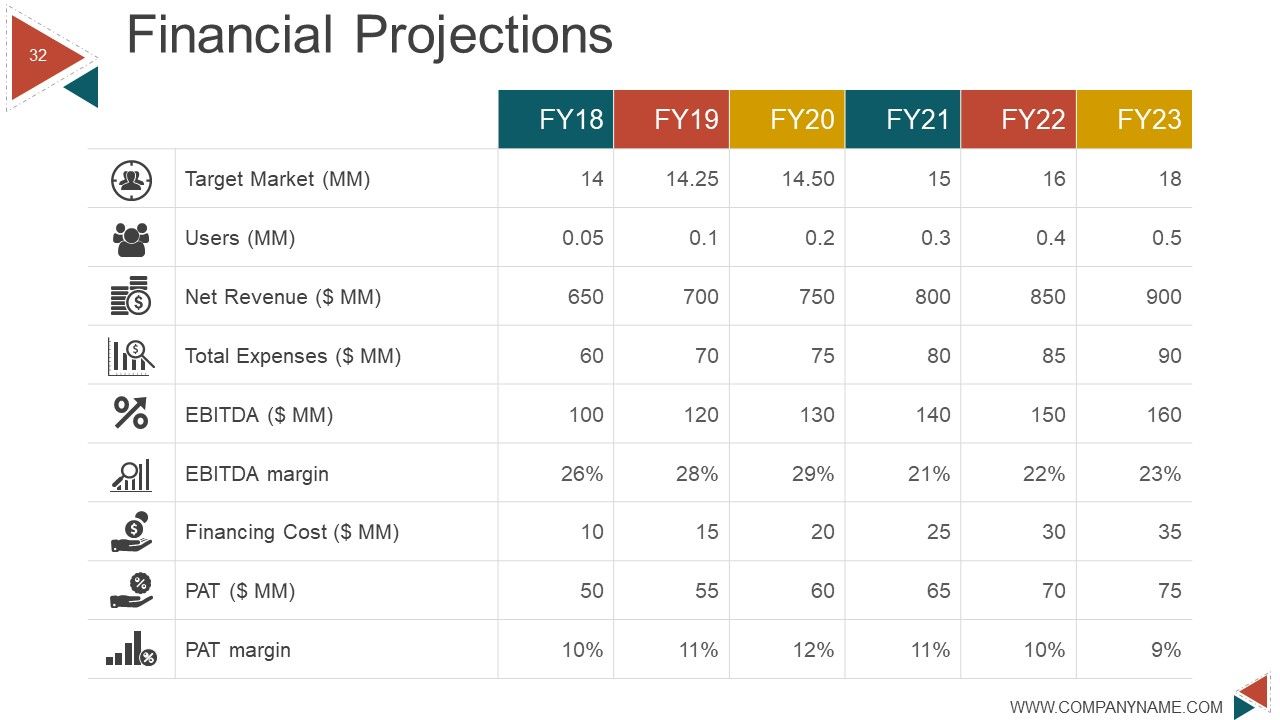
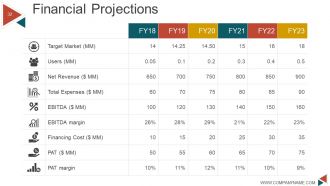
Slide 32: This is a Financial Projections table slide.
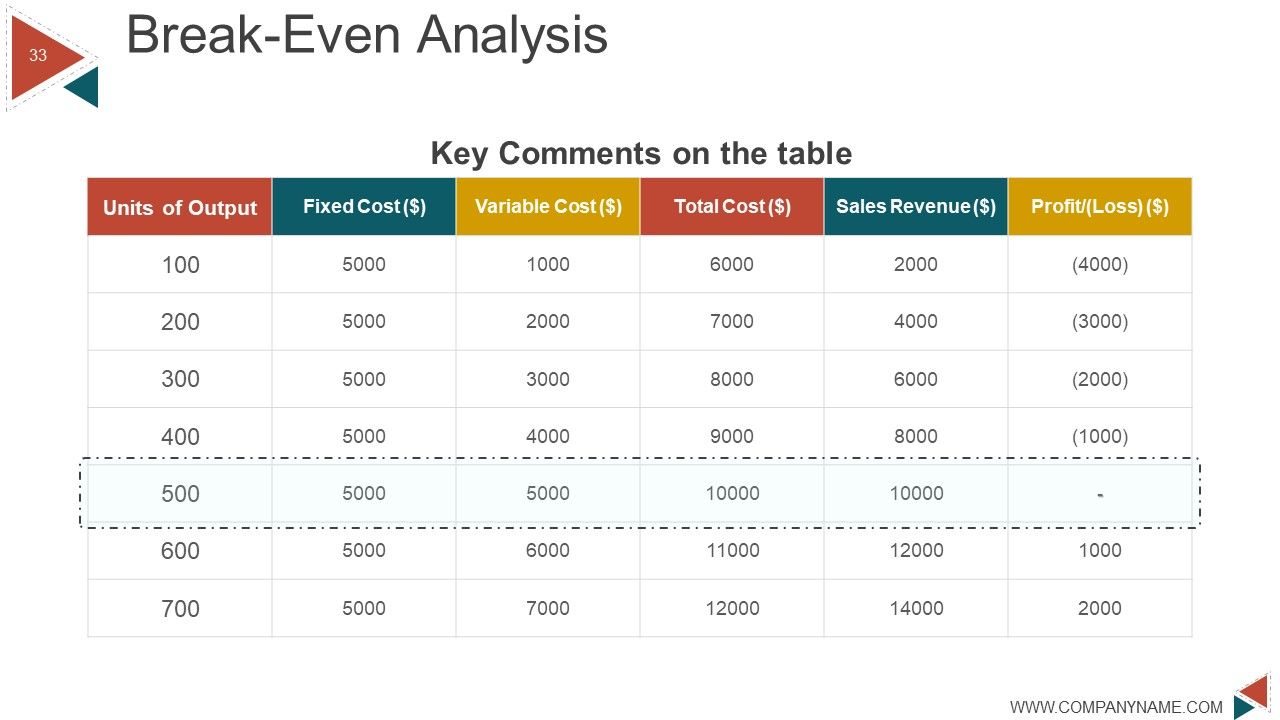
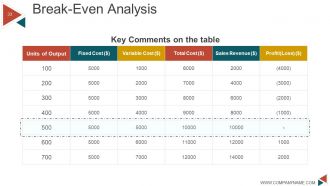
Slide 33: This is a Break-Even Analysis table slide.
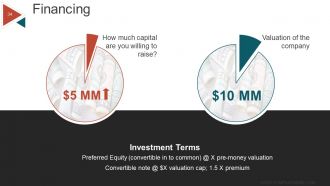
Slide 34: This slide is titled Financing. State financial aspects, highlights, stats etc. here.
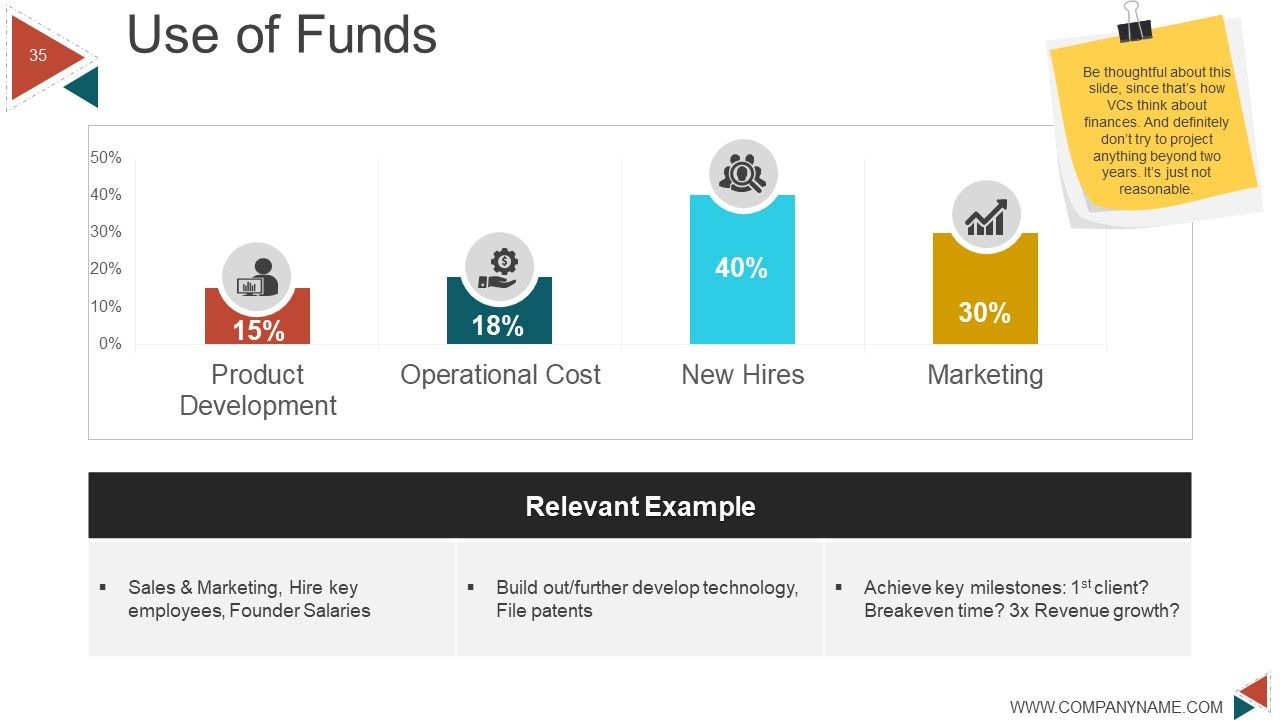
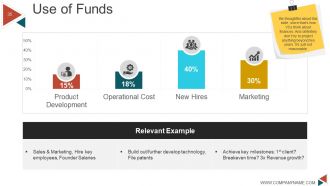
Slide 35: This slide shows Use of Funds in a creative graph form.
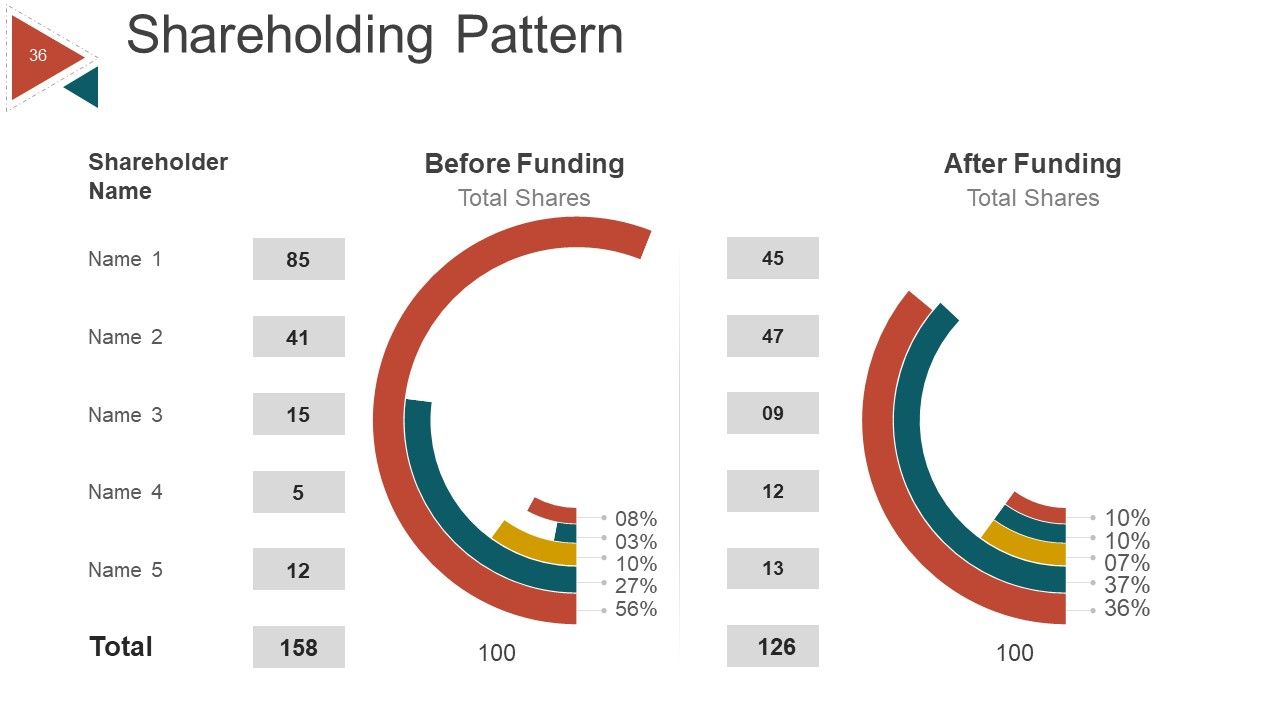
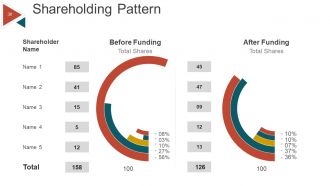
Slide 36: This slide displays the Shareholding Pattern.
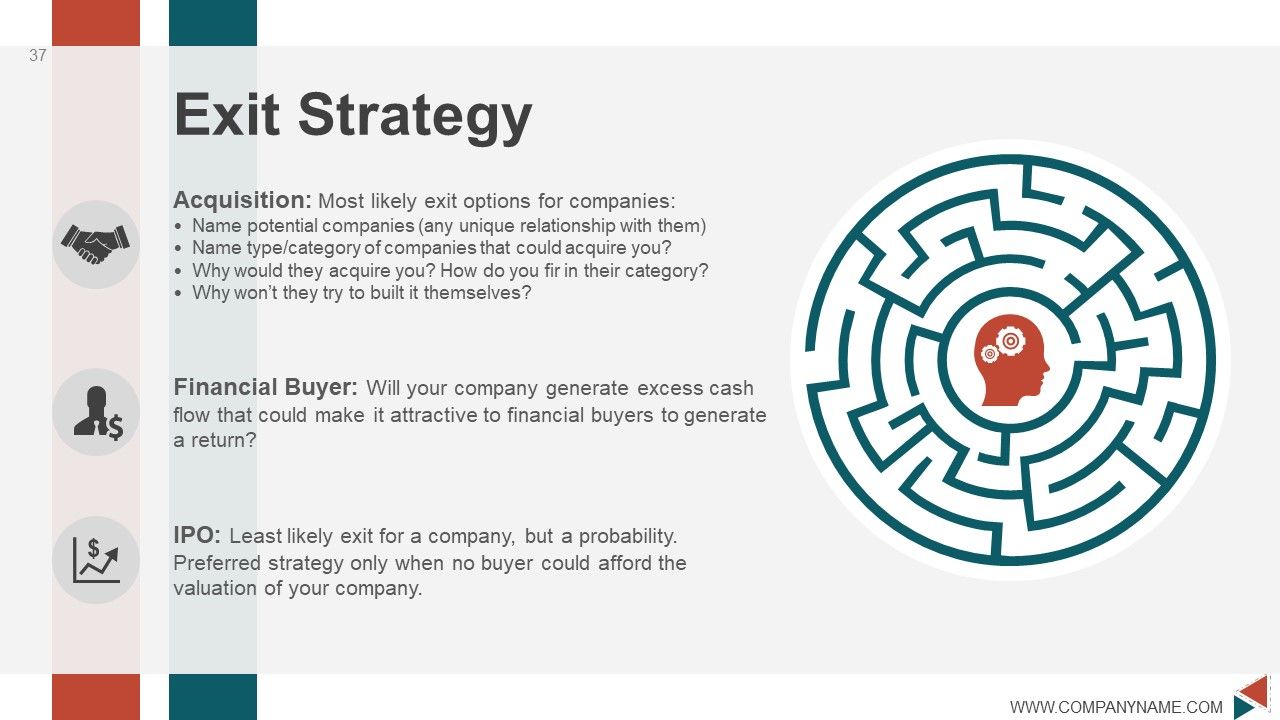
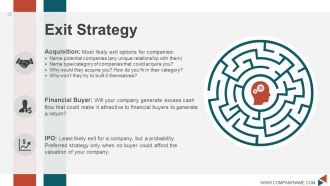
Slide 37: This slide presents the Exit Strategy with- Acquisition, Financial Buyer, IPO.
Slide 38: This slide showcases Client Testimonials to be shown.
Slide 39: This is Icons Slides For Business Model. Use them as per requirement.
Slide 40: This slide is titled Additional Slides. You may change the slide content as desired.
Slide 41: This is an Our Mission slide. State it here.
Slide 42: This is an About Us slide. State team/company specifications here.
Slide 43: This is Our Main Goal slide. State your goals here.
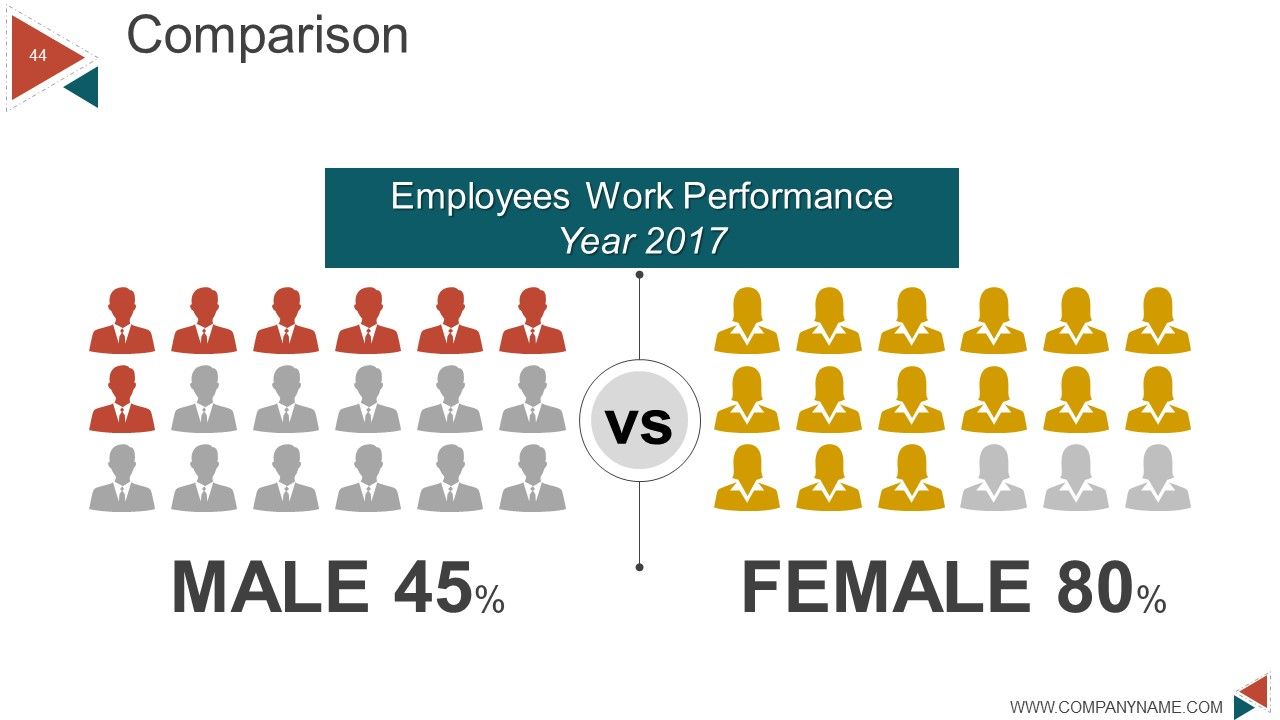
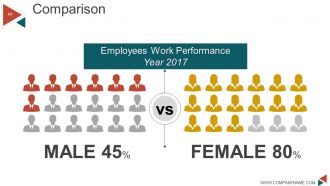
Slide 44: This is a Comparison slide for comparing entities/products etc. here.
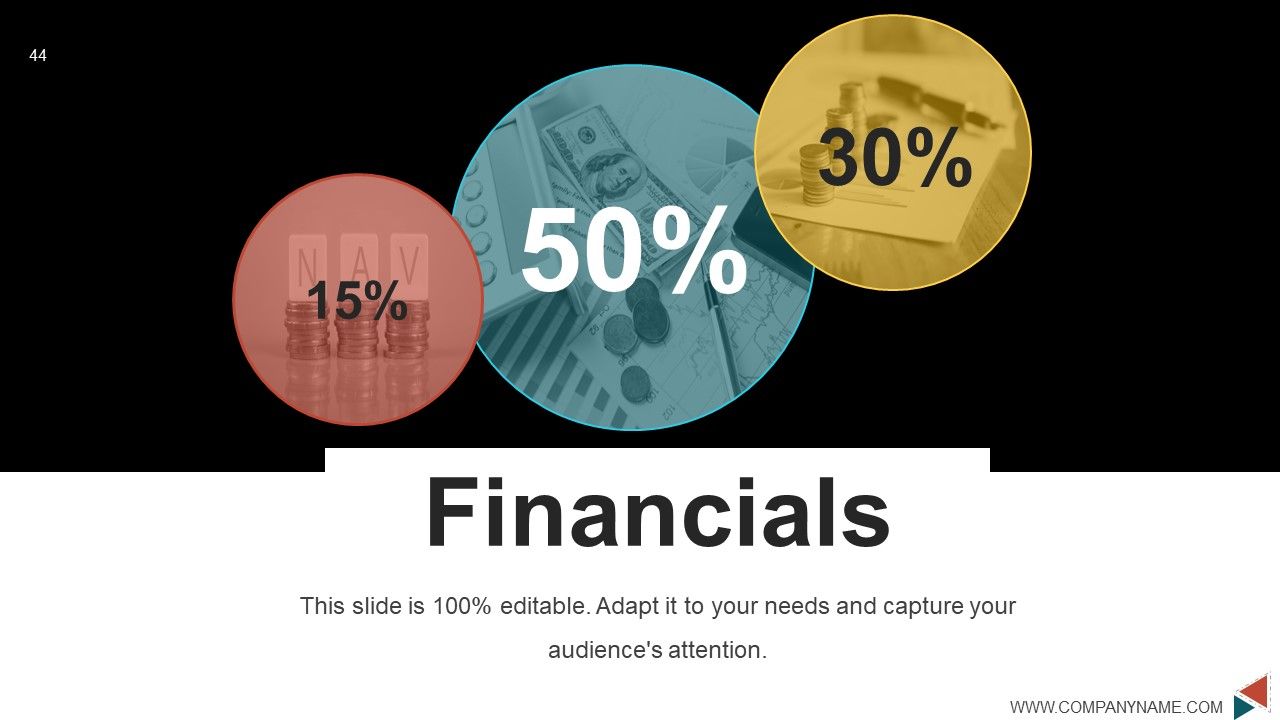
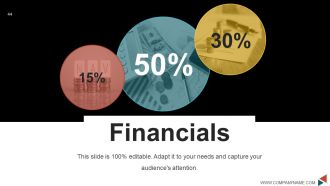
Slide 45: This is a Financial score slide. State financial aspects etc. here.
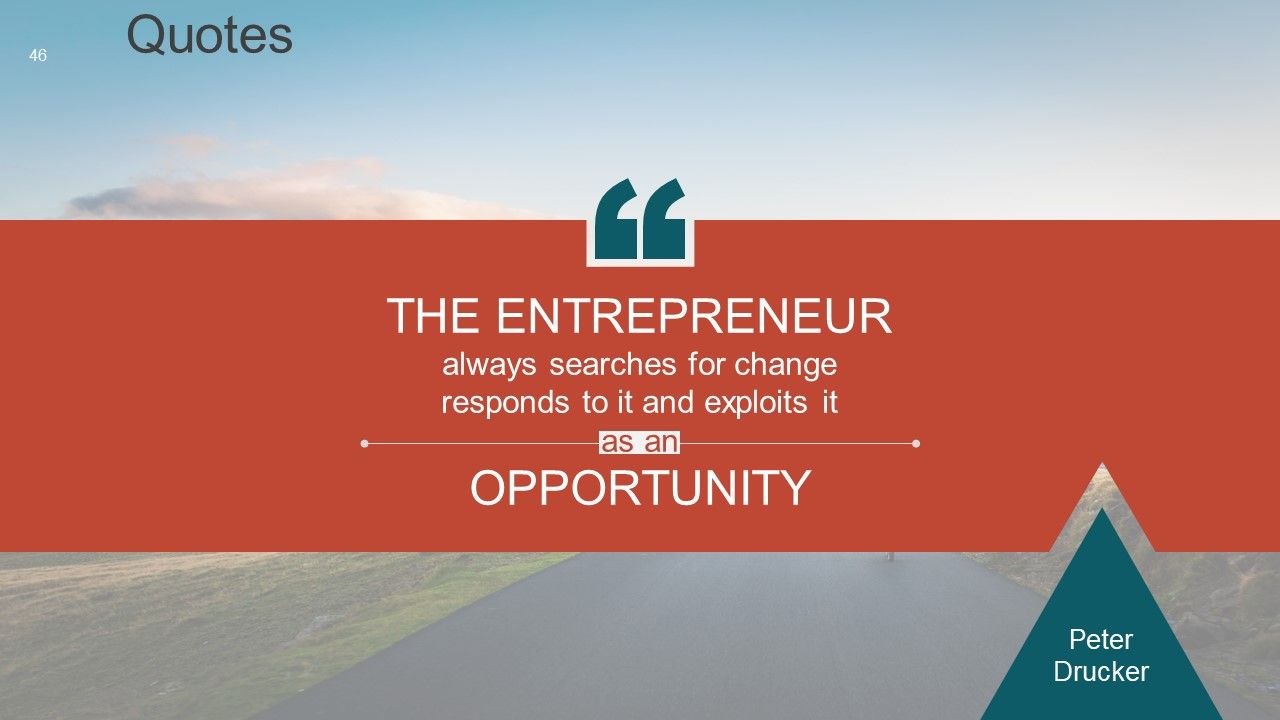
Slide 46: This is a Quotes slide to convey company messages, beliefs etc. You can change the slide contents as per need.
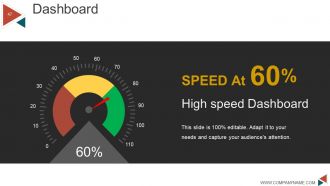
Slide 47: This is a Dashboard slide to state metrics, kpis etc.
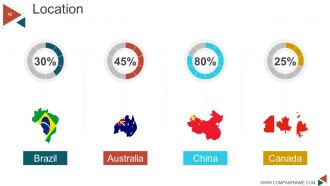
Slide 48: This is a Location slide of world map image to show global presence, growth etc.
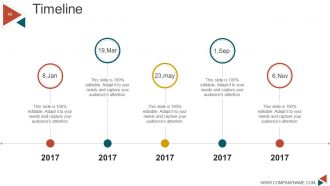
Slide 49: This is a Timeline slide to show evolution, growth, milestones etc.
Slide 50: This is a Post It slide to mark events, important information etc.
Slide 51: This is a Newspaper slide to show news, events etc. You can change the slide contents as per need.
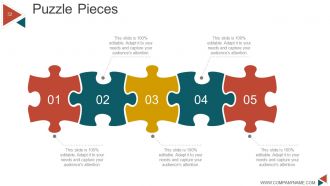
Slide 52: This is a Puzzle pieces image slide to show information, specifications etc.
Slide 53: This is a Target image slide. State targets, etc. here.
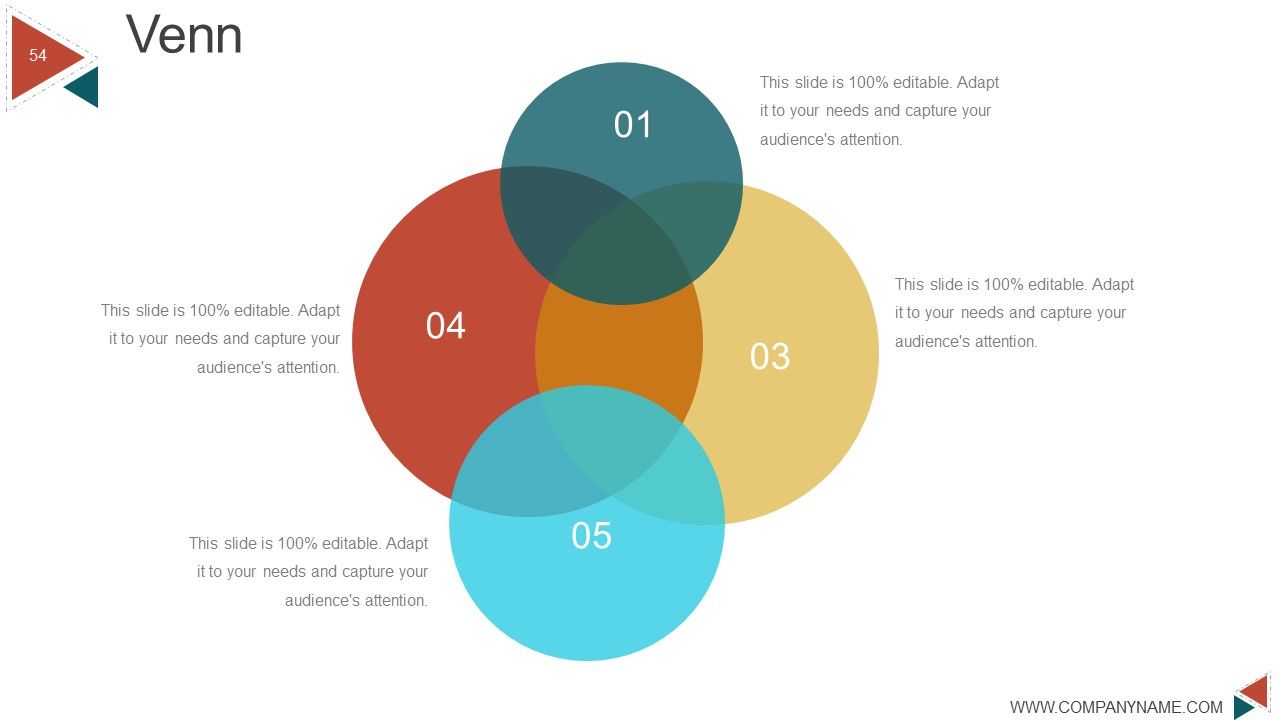
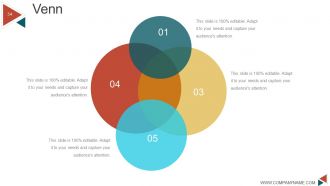
Slide 54: This is a Venn diagram image slide to show information, specifications etc.
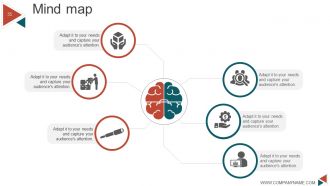
Slide 55: This is a Mind map image slide to show information, specifications etc.
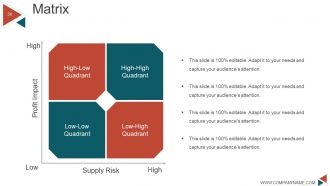
Slide 56: This is a Matrix slide to show information, specifications etc.
Slide 57: This is a Lego infographic slide to show information, specifications etc
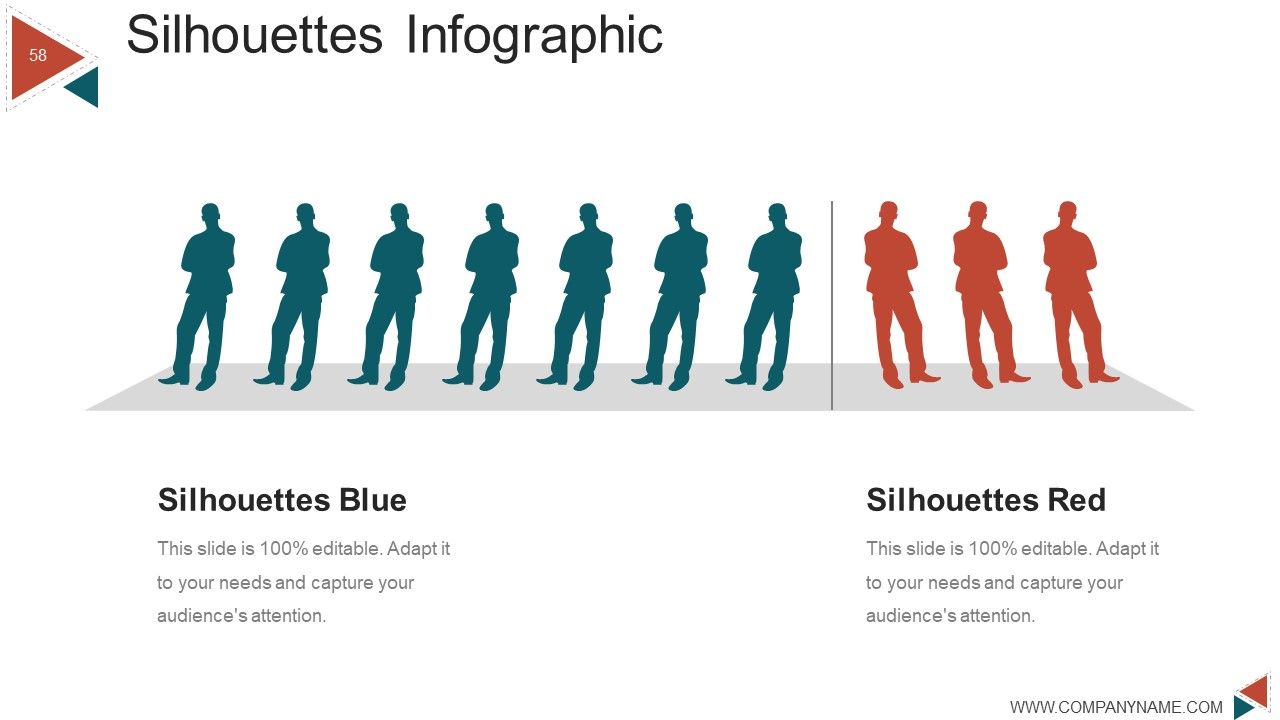
Slide 58: This is a Silhouettes infographic slide to show information, specifications etc.
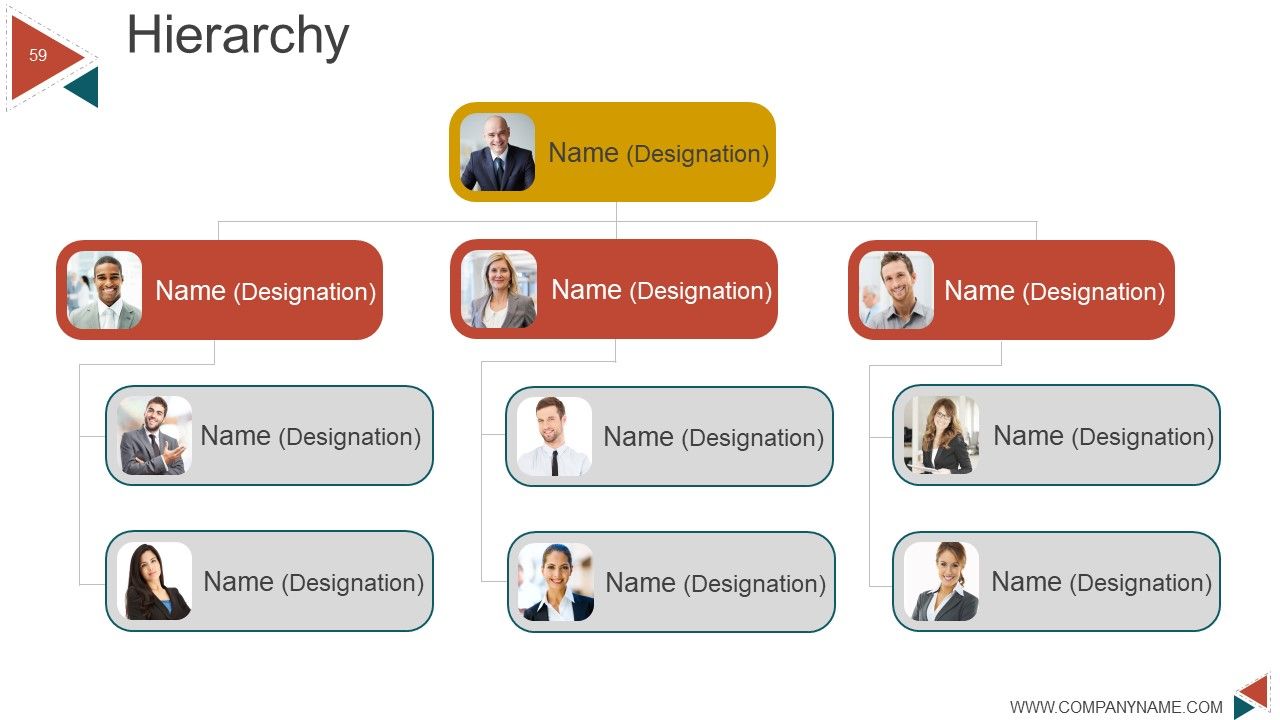
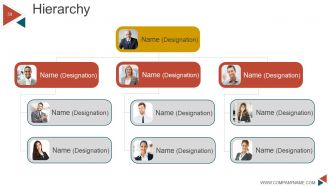
Slide 59: This is a Hierarchy image slide to show information, specifications etc.
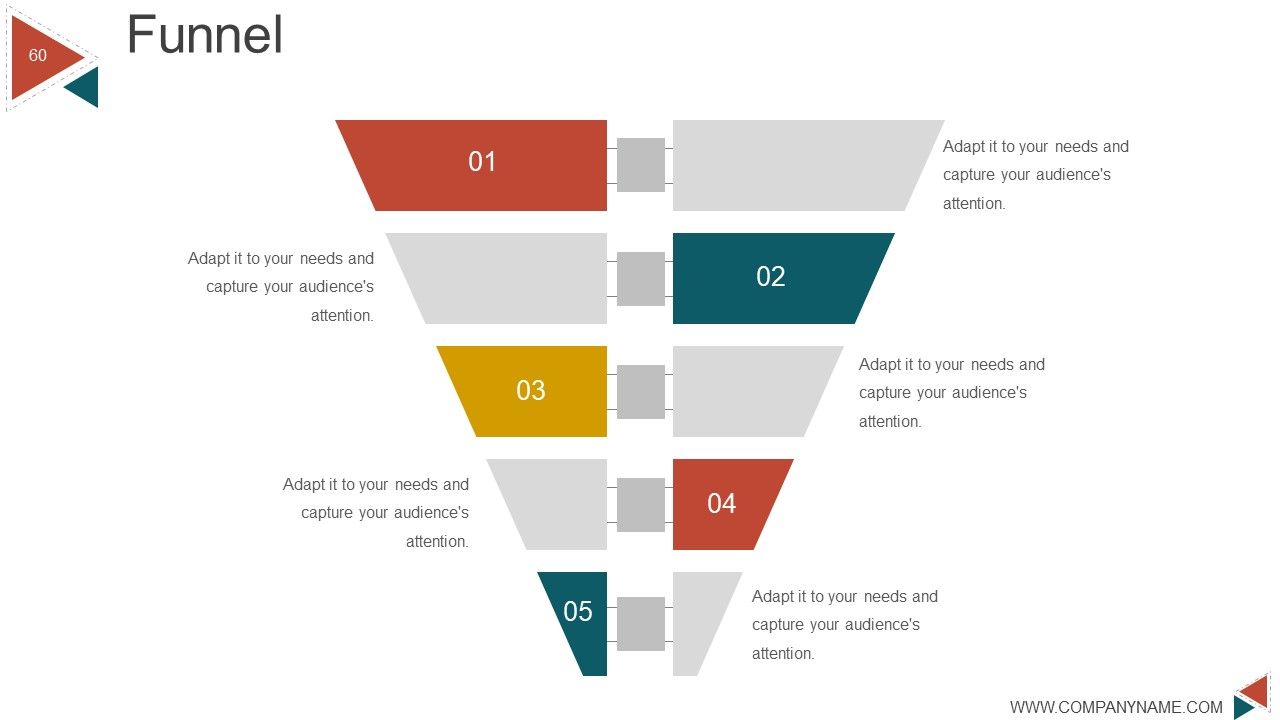
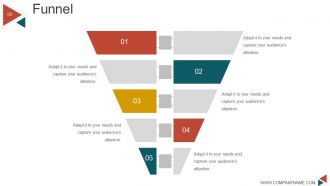
Slide 60: This is a Funnel image slide to show information, specifications etc.
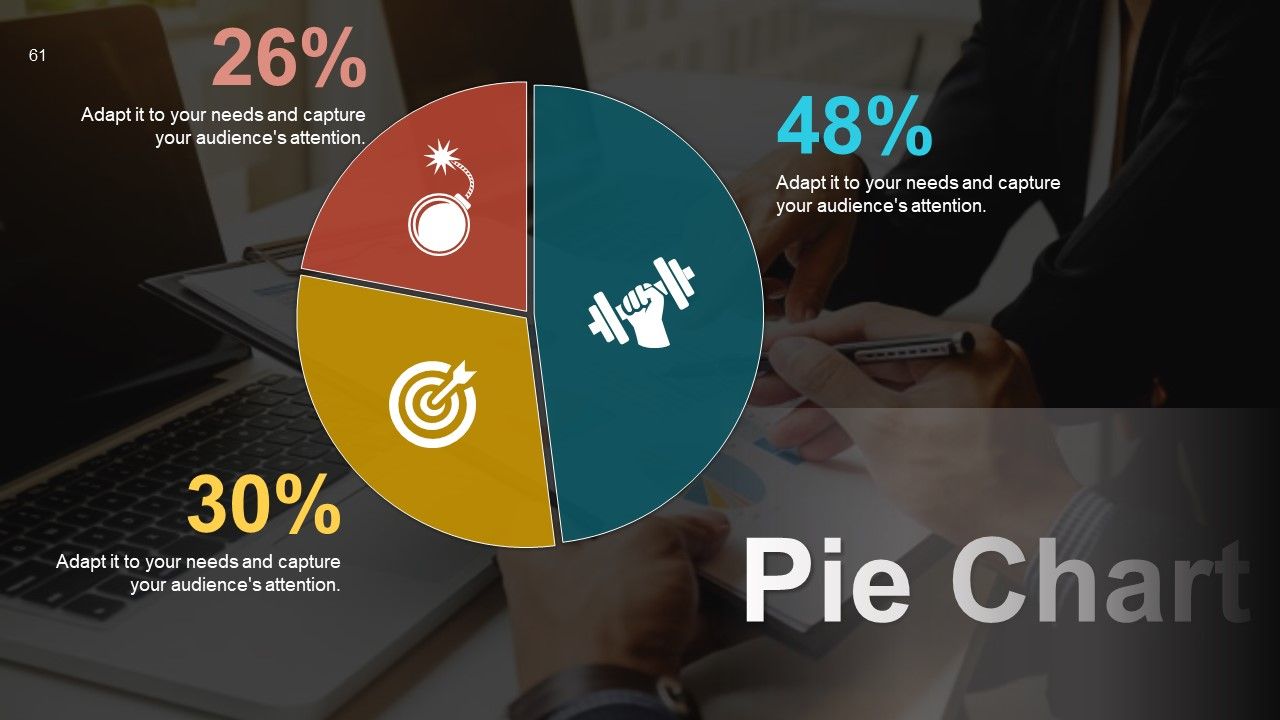
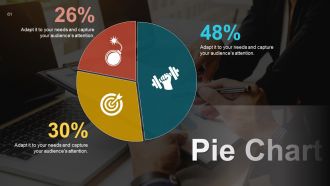
Slide 61: This is a Pie Chart slide to show product/entity comparison, specifications etc.
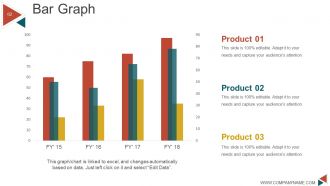
Slide 62: This is a Bar Graph slide to show product/entity comparison, specifications etc.
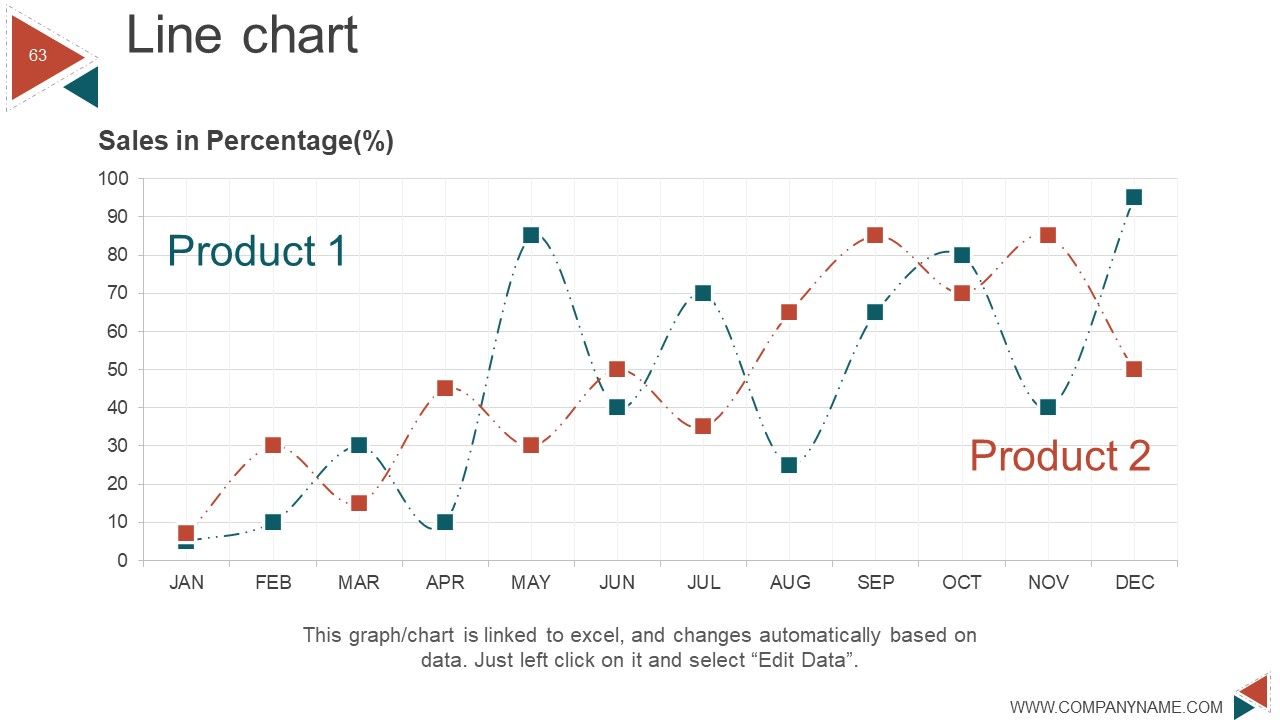
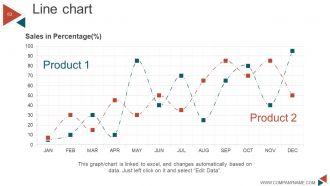
Slide 63: This is a Line Chart slide to show product/entity comparison, specifications etc.
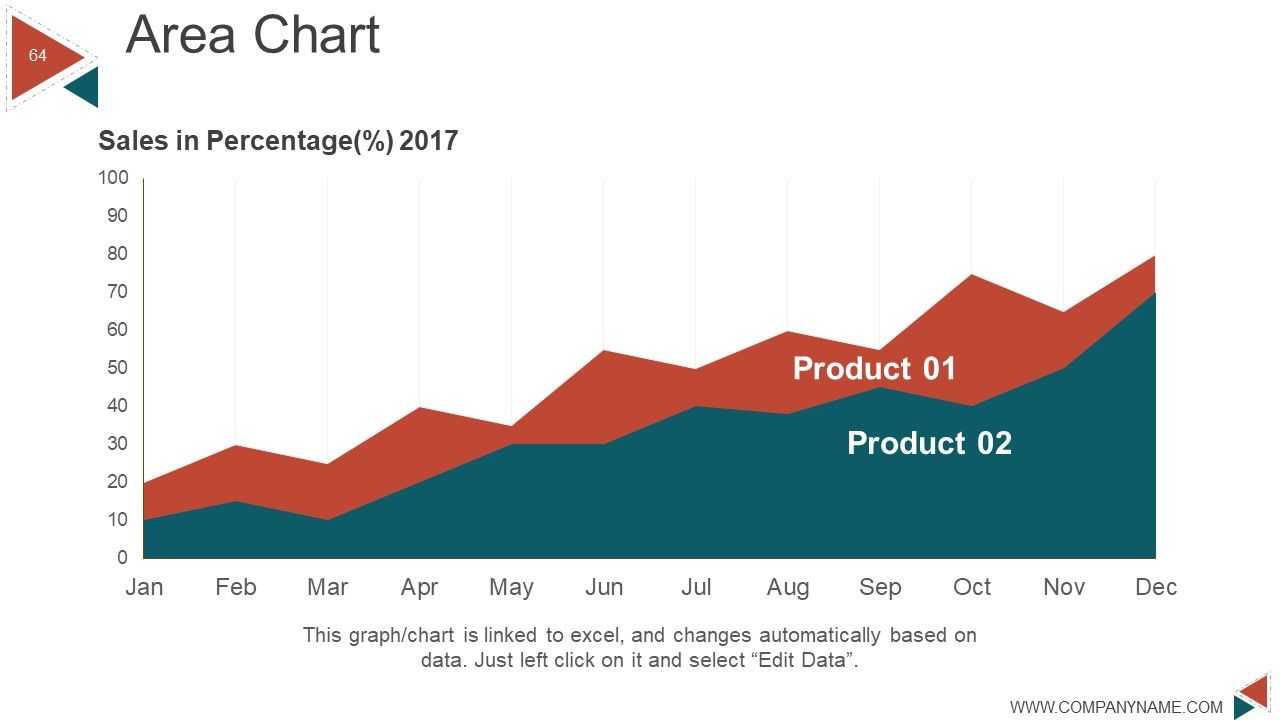
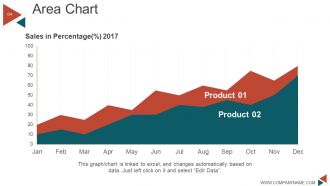
Slide 64: This is an Area Chart slide to show product/entity comparison, specifications etc.
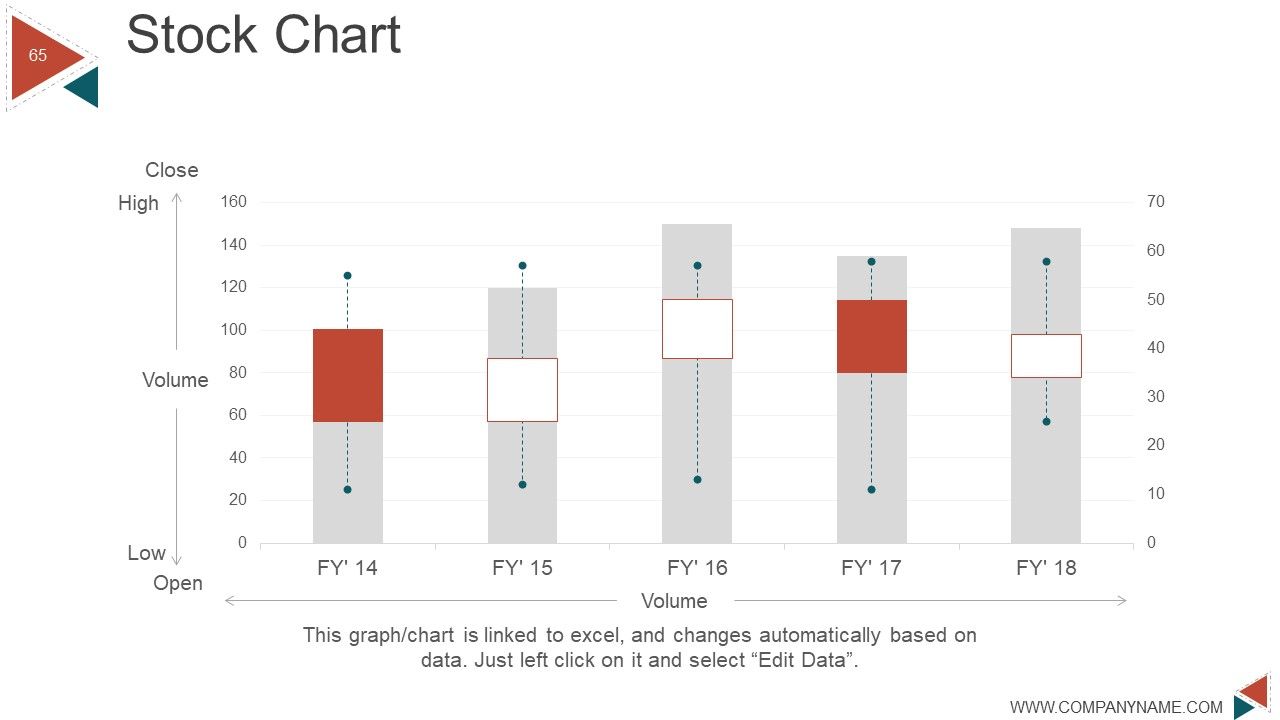
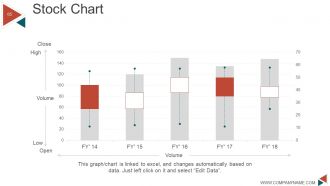
Slide 65: This is a Stock Chart slide to show product/entity comparison, specifications etc.
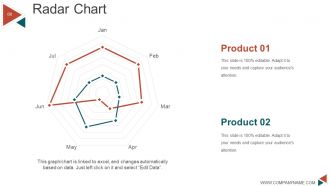
Slide 66: This is a Radar Chart slide to show product/entity comparison, specifications etc.
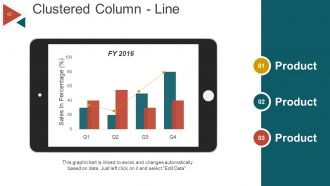
Slide 67: This is a Clustered Column - Line graph slide to show product/entity comparison, specifications etc.
Slide 68: This is a Contact Us slide with Email, Address# street number, city, state, Contact Numbers.
Slide 69: This is a Thank You slide for acknowledgement.
Business Model Generation Value Proposition Powerpoint Presentation Slides with all 69 slides:
Be the beacon with our Business Model Generation Value Proposition Powerpoint Presentation Slides. Guide them to a better future.
-
Out of the box and creative design.
-
Great product with highly impressive and engaging designs.
