


Capacity management powerpoint presentation slides






Try Before you Buy Download Free Sample Product
 Impress Your
 Audience
 100%
100% Editable
 Save Hours
 of Time


Make a habit of practicing capacity management within an organization to meet current and future needs of the customers. Use professionally designed capacity management PowerPoint presentation slides to right size IT resources to fulfil business requirements in a cost-effective manner. Identify opportunities and scope of improvement in an organization with capacity management PowerPoint presentation slideshow. Remove bottlenecks, minimize risks and find scalable solutions to the problems by technology enhancement. This deck comprises of templates such as capacity planning for project, create a weekly schedule, work breakdown structure, cost management in capacity planning, pending tasks template, etc. These templates are completely customizable. Change color, text, icon, and font size as per your need. Add or remove content, if needed. Grab this content-ready capacity management PowerPoint presentation templates to bring needed change in information technology resources. Our Capacity Management Powerpoint Presentation Slides have a fresh face. Eyeballs will find them attractive.
People who downloaded this PowerPoint presentation also viewed the following :
Content of this Powerpoint Presentation
Slide 1: This slide introduces Capacity management. State Your Company Name and begin.
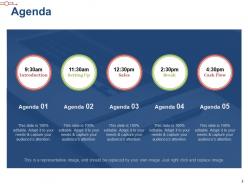
Slide 2: This is an Agenda slide. State your agendas here.
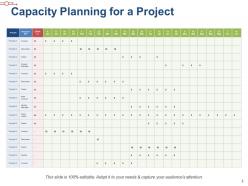
Slide 3: This slide shows a table for Capacity Planning for a Project. Put relevant data accordingly.
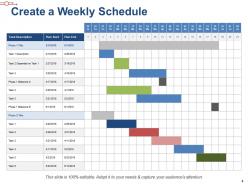
Slide 4: This slide displays Create a Weekly Schedule showing task description, plan start and plan end dates. You may change the data as per requirement.
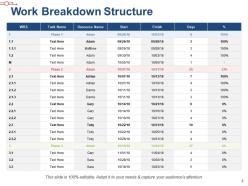
Slide 5: This slide presents Work Breakdown Structure describing tasks, resources, start and finish date, no. of days and data in percentage.
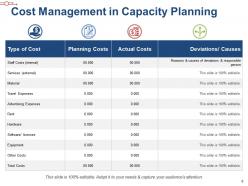
Slide 6: This slide showcases Cost Management in Capacity Planning describing- Type of cost, Planning costs, Actual costs and Deviation/causes.
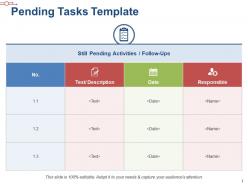
Slide 7: This slide represents Pending Tasks Template describing- No. of tasks, Task Description, Task Date and person responsible for the task.
Slide 8: This slide shows Capacity Management Icons.
Slide 9: This slide is titled Additional slides for moving forward. You may change the content as per need.
Slide 10: This is Our mission slide with imagery and text boxes to go with.
Slide 11: This is Our team slide with names and designation.
Slide 12: This is an About us slide to state company specifications etc.
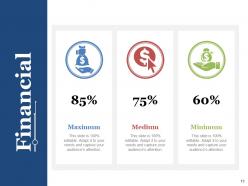
Slide 13: This is a Financial slide. Show your finance related stuff here.
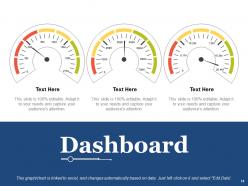
Slide 14: This is a Dashboard slide with text boxes to show information.
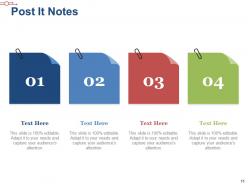
Slide 15: This slide displays Post It Notes. Put your relevant notes here.
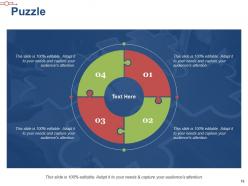
Slide 16: This is a Puzzle slide with imagery and text boxes to go.
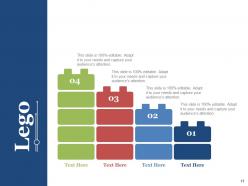
Slide 17: This is a LEGO slide with text boxes to show information.
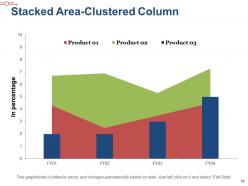
Slide 18: This slide shows Stacked Area-Clustered Column chart with three product comparison.
Slide 19: This slide shows a Scatter Bubble Chart. You can change the content as per needs.
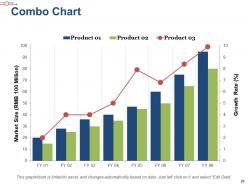
Slide 20: This slide presents a Combo Chart with three product comparison.
Slide 21: This is a Thank You slide with Address# street number, city, state, Contact Number, Email Address.
Capacity management powerpoint presentation slides with all 21 slides:
Alternatives abound on our Capacity Management Powerpoint Presentation Slides. There is absolutely no dearth of them.







FAQs for Capacity management
So you basically need four things: demand forecasting, resource planning, performance monitoring, and scalability planning. First, figure out what capacity you'll actually need - this is harder than it sounds. Map out your current stuff (people, tech, infrastructure) and track how you're doing against targets. Growth planning is where it gets tricky though - nobody really knows when things will spike. The biggest mistake? Treating this like a one-time project instead of something ongoing. I'd start with auditing what you have vs. what you need, then set up regular check-ins. Most people skip that last part and wonder why everything falls apart later.
Honestly, you can't just look at last year's sales and call it a day - I've watched so many people mess this up. Start with your historical stuff, sure, but mix in real-time signals too. Customer surveys, market research, economic indicators, whatever makes sense for your business. Build three scenarios: worst case, realistic, and best case. The trick is updating these constantly as new info rolls in. Oh, and figure out your top 3-5 demand drivers first - like, what actually moves the needle? Track those obsessively. Social media sentiment can be surprisingly useful depending on what you're selling.
Map out your whole process and time each step - the slowest one's your bottleneck. Track cycle times, queue lengths, and how much each resource gets used. Value stream mapping helps, but honestly? Just walk around and watch what's happening. You'll catch stuff the data misses. Look for work piling up or people standing around waiting. Also run the numbers - compare what you should be able to handle versus what you're actually pushing through. The math usually tells the story. Once you find your constraint, that's where you focus first.
Look, capacity management is basically about having the right number of people and resources when you need them. Too few staff? You get bottlenecks and pissed off customers. Too many? You're burning money for no reason (plus people get lazy when there's not enough work, honestly). Think of it like grocery store checkout lines - you want just enough open so people don't wait forever but you're not paying cashiers to stand around. Track what your current usage looks like first. That gives you something to work with. Once you figure out those patterns, workflows get smoother and customers actually get what they want when they want it.
Honestly, tech tools are a lifesaver for this stuff. Real-time monitoring shows you what's actually happening vs what you thought would happen - super eye-opening. Predictive analytics help forecast those crazy demand spikes, and automation handles scaling without you babysitting everything. Cloud platforms are clutch since you can adjust on the fly. The data helps catch bottlenecks early instead of scrambling later. Way better than just winging it based on hunches, you know? If you don't have basic monitoring set up yet, start there first. You'll probably find some weird patterns you never noticed.
Don't max out at 100% - shoot for like 80-85% instead so you've got wiggle room when things get crazy. Track your demand patterns (even basic forecasting beats just winging it, I learned this the hard way). Cross-train people so they can jump around when bottlenecks happen. Oh, and definitely tell stakeholders about capacity limits early - way better than scrambling later to explain why you can't deliver. Start measuring what you're actually using now so you know where you stand. Honestly, most people have no clue how stretched they really are.
Track your utilization rates, response times, and throughput first. Keep utilization around 70-80% - go higher and you're screwed when traffic jumps unexpectedly. SLA compliance and capacity-related incidents matter too. Honestly, forecast accuracy is huge because bad predictions will torpedo everything else you're doing. Oh, and set up dashboards that actually warn you before things break. There's nothing worse than watching your system melt down in real time when you could've prevented it. Short sentences work. Longer ones help you catch problems early instead of just dealing with the aftermath.
Manufacturing's way easier to predict, honestly. You've got actual machines and inventory you can count and measure. Services are a nightmare - you're dealing with people's schedules, random demand spikes, skills that vary by person. Like, a factory can just optimize their production line, but a consulting firm? Good luck juggling which consultant is free when. Plus services have this weird thing where unused capacity just vanishes - those empty restaurant tables Tuesday night don't help you Friday when you're slammed. Manufacturing can at least stockpile stuff. Focus on equipment efficiency for manufacturing, but with services you need flexible staff and ways to smooth out demand.
So capacity management is figuring out how much work your team can actually handle - like knowing you can do 100 tickets a week. Resource allocation is the part where you decide who does what to hit those numbers. Sarah gets the bug fixes, John takes new features, whatever. Honestly, one's pretty useless without the other. You can't allocate resources smartly if you don't know your limits first. I'd start with nailing down your baseline capacity - once you've got that solid, the allocation decisions get way easier. It's like having a roadmap instead of just winging it.
So first thing - grab your usage data from the past year and hunt for patterns. Trust me, there's way more insight buried in there than you'd think. Machine learning can predict those demand spikes once it learns your patterns, which gives you time to actually prep instead of scrambling. Check your utilization rates and when you hit peak demand periods. Seasonal trends are huge too, plus any outside factors that mess with your capacity needs. Honestly, just identifying where your bottlenecks happen will save you so much headache down the road.
Honestly, data quality is your biggest nightmare - half your systems don't even talk to each other. Forecasting demand? Good luck with that, especially when business priorities change every quarter. Seasonal spikes will mess with you too. People get weird about capacity planning because they think it means layoffs or tighter budgets. My advice? Don't try to boil the ocean. Pick one critical system, show it actually works, then expand. Way less drama that way and you won't burn out your team trying to fix everything simultaneously.
Look, scenario planning is basically stress-testing your capacity before stuff hits the fan. Map out your best case, worst case, and realistic demand scenarios - see how your current setup handles each one. Way smarter than crossing your fingers and hoping things work out, right? You'll spot bottlenecks early and figure out when to scale resources or make investments. Instead of scrambling when you're overwhelmed, you're ready for whatever comes. Oh, and don't overthink it - just pick 3 or 4 realistic scenarios for next quarter and crunch the numbers.
Set up monthly capacity reviews - weekly if things change fast in your setup. Automated alerts before you hit those critical thresholds will save your butt. Your monitoring data should predict future needs, not just show what's happening right now. Get your stakeholders involved early since they usually know about big projects before IT catches wind (go figure). Document what went wrong during capacity incidents - that stuff's gold for your forecasting. Oh, and don't try to boil the ocean. Pick one critical service first, then expand once you've got that dialed in.
So you've got two main options with seasonal demand - keep your capacity steady all year (wasteful but predictable) or constantly scale up and down. Scaling saves money but god, the headache of constantly hiring and firing people. Most places I've seen do a mix - they keep their core team for baseline demand, then pile on overtime and temp workers during busy seasons. Oh and outsourcing too if they're desperate. You really need to nail your forecasting though, otherwise you'll be panicking trying to find people last minute when everyone else is also hiring.
Dude, when capacity management goes wrong, your customers are gonna hate you. Wait times get ridiculous. Service crashes randomly. People can't get what they ordered when they need it - which honestly is the fastest way to lose them forever. They'll complain everywhere, trash you online, then bounce to whoever can actually handle their business. The worst part? Those angry customers don't just disappear quietly. They tell literally everyone how much you suck. You should probably check your capacity numbers regularly so you catch problems before customers start freaking out about them.
No Reviews