


Career growth opportunity example of ppt




Try Before you Buy Download Free Sample Product
 Impress Your
 Audience
 100%
100% Editable
 Save Hours
 of Time


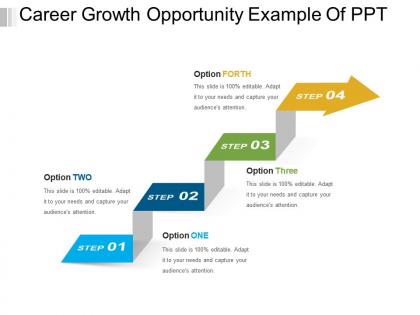
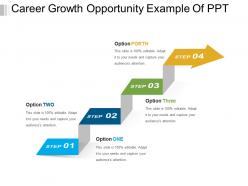
Every professional wants to progress in his career. By using our career growth opportunity PPT slide, you can motivate the professionals. Chalk out a development plan using a career growth PPT template. The career growth opportunity presentation slide design incorporates a user's past experiences, his skills as well as actions that are essential for improving the skills. You can take the assistance of the career development plan PPT template diagram for motivating viewers to improve the career path. By using the career growth plan template for PowerPoint, you can illustrate that preparing a plan for developing a career is the first step in order to get the career graph up. The executive career development plan PPT slide diagram is ideal for all executives who move ahead in their career path. You should make use of the career growth plan PowerPoint template for achieving the career objectives is an orderly manner.
People who downloaded this PowerPoint presentation also viewed the following :
Career growth opportunity example of ppt with all 5 slides:
We've put years of experience to work supporting your presentations. Select from thousands of Career Growth Opportunity Example Of Ppt.

FAQs for Career growth opportunity
Honestly, communication skills and emotional intelligence are what most companies really care about. Can you make hard calls when everything's falling apart? That's key. Also, don't be that person who hoards info or blames their team when stuff hits the fan - developing others matters way more than people think. Strategic thinking's obviously important, but so is rolling with changes since nothing stays the same anymore. Oh, and learning how to give feedback without being a jerk? Underrated skill. Best move is jumping on cross-team projects or mentoring someone junior. Shows leadership before you've got the actual title.
Dude, networking beats job boards every time. You'll find hidden jobs that never get posted online, plus you get the real scoop on what companies are actually like to work for. When something opens up, you've got people who already know you can do the work. Don't just collect business cards though - that's useless. Build actual relationships with people at companies you want or in roles you're aiming for. Most folks are surprisingly cool about grabbing coffee or doing a quick 15-minute call about their career path. People love talking about themselves anyway, so it works out. Think of it like having unpaid scouts everywhere.
Honestly, you gotta keep learning new stuff or you'll get left behind. Industries move crazy fast now - what worked five years ago is probably useless today. Employers notice when you're actually growing vs just doing the bare minimum. I mean, the people getting promoted are usually the ones picking up new skills. Could be formal classes, certifications, whatever. Even following industry blogs helps. My cousin ignored this advice and got stuck in the same role for like 6 years. Pick one trending skill in your field and just commit to it this quarter. Opens way more doors than you'd think.
Look for someone 2-3 levels above you who's already where you want to be. Don't overthink the "formal mentor" thing - honestly, the best relationships just happen naturally when you connect with the right person. Come prepared with specific questions about industry stuff, skills, or navigating workplace drama. Respect their time though. Actually follow through on what they tell you (this is huge) and circle back with updates on how it went. I learned this the hard way after basically ghosting someone who gave me solid advice. Start scanning your network this week for potential people.
Make sure everything matches up - your LinkedIn, email signature, how you talk about yourself in meetings. Post stuff regularly about what you know. I used to think sharing work insights was just showing off, but honestly? It works. People actually remember what you're good at. Help others before asking for anything back - that's how real networking happens. Get recommendations on LinkedIn when you can. Oh, and keep your profile current (I'm terrible at this). Here's the thing though - just be genuinely helpful. Your reputation kinda builds itself from there.
Honestly, EQ might matter more than being technically brilliant once you hit a certain point in your career. I've watched super smart people get stuck because they can't read a room or handle conflict without making things weird. Meanwhile, people who just *get* how to connect with others? They climb fast because everyone sees them as future leadership. It's wild how much this stuff matters. You should definitely start noticing how your words land with people. Practice actually listening instead of just waiting for your turn to talk. And learn to keep your cool when things get stressful - that alone will set you apart.
You definitely need both types of goals, trust me on this. Long-term ones give you that bigger picture - like where you actually want to end up in 5 years. But short-term goals? Those are your sanity savers. They give you quick wins that keep you motivated when work gets soul-crushing. I learned this the hard way because I used to only focus on the big stuff and felt lost constantly. Now I break everything into 6-month chunks. It's way less overwhelming, plus future employers love when you can explain why you made certain moves. Oh, and write this stuff down - your brain will thank you later.
Honestly, feedback is like getting free coaching - even when it stings a bit. Listen without getting all defensive (which is hard, trust me) and ask follow-up questions to get the real details. Write down stuff you keep hearing because that's probably where you actually need work. Good feedback shows you what you're already crushing, so lean into those strengths more. When someone gives you constructive criticism, make a plan with actual steps you can measure. Oh, and start small - just ask one person you trust for honest input on something specific this week.
Honestly, workplace culture makes or breaks your career trajectory. I've seen too many places where it's all about politics instead of actual performance - so annoying. Good companies have clear promotion paths and managers who genuinely care about developing you. Some places love promoting from within, others are obsessed with outside hires (which never made sense to me). Watch how people around you got promoted recently. Are leaders actually invested in your growth? That tells you everything. Also look at whether advancement seems merit-based or just... who plays the game best.
Honestly, you can learn pretty much anything online these days. I've been doing Spanish on Duolingo while waiting for my coffee order (don't judge me lol). Check out Coursera or LinkedIn Learning - they've got courses from actual universities and industry pros. YouTube's great too, obviously. For coding, those bootcamps are solid if you can stick with them. Oh, and join some online communities in your field - way better than learning in a vacuum. My advice? Pick one platform and do like 15 minutes daily. I know it sounds basic, but showing up consistently beats those 3-hour weekend cramming sessions every time.
Ditch the objective statement - nobody cares what you want anymore. Lead with your biggest wins instead. Numbers are everything here, so "boosted sales 30%" beats "managed sales team" every time. Most managers literally spend 6 seconds skimming, so one page max unless you're like C-suite level. Oh, and definitely match keywords from the job posting since those tracking systems will filter you out before a human even sees it. I learned this the hard way! Get specific with your results, not just what you were responsible for. Proofread twice, then ask someone else to catch what you missed.
Honestly, don't just kiss up to your manager - build real connections with people in other departments too. In meetings, listen way more than you speak and figure out who's actually calling the shots (hint: it's not always the person with the fanciest job title). Make sure you document your successes and get them in front of the right people, but don't be weird about it. Office politics isn't as gross as it sounds. It's just understanding how everyone works together and where the real power sits. For your next big project, map out who matters and what drives them.
Depends what you're doing, but some certs can really boost your pay. AWS or Azure are huge in tech right now. PMP's solid for project management too. Finance people love CFA and FRM - though honestly those are brutal to get. Google Ads and HubSpot work well for marketing, but they expire pretty quick so you'll be renewing constantly. Healthcare's got a million specialized ones depending on your role. I'd just look at job postings you actually want and see what keeps showing up. No point collecting random certificates that nobody cares about, you know?
Honestly, just pay attention to what doesn't feel like work. You know those tasks where you're like "wait, it's already 3pm?" That's your brain telling you something. Also notice what completely drains you - equally important. I'd try talking to people actually doing jobs that sound cool to you. Or volunteer somewhere related, even if it's just weekends. Side projects work too if you're more of a solo experimenter type. The whole "follow your passion" thing is kinda overrated though - sometimes you discover what you love by just trying stuff. Don't overthink it, just start somewhere small and see what clicks.
Ugh, the biggest trap is thinking hard work automatically equals promotion. Your boss is drowning in meetings and probably hasn't noticed half your wins. You've got to speak up for yourself - document everything you accomplish and actually bring it up in conversations. Don't bail immediately if it doesn't happen right away, but also don't whine to coworkers about getting passed over (learned that one the hard way). Ask your manager straight up what you need to work on and when they'd realistically consider promoting you. Build connections outside your team too. Start these conversations way before review season hits or you'll be waiting another year.
-
Really like the color and design of the presentation.
-
Unique and attractive product design.