


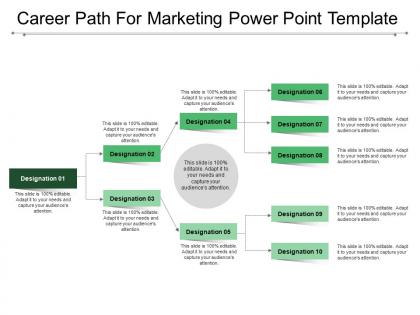
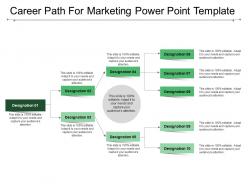
Career path for marketing power point template




Try Before you Buy Download Free Sample Product
 Impress Your
 Audience
 100%
100% Editable
 Save Hours
 of Time


Our Career Path For Marketing Power Point Template seek new horizons. They will take your vision to new frontiers.
People who downloaded this PowerPoint presentation also viewed the following :
Career path for marketing power point template with all 5 slides:
Build a bedrock for greater growth with our Career Path For Marketing Power Point Template. They encourage better discipline.
FAQs for Career path for marketing
Marketing's honestly a weird mix of creative and numbers stuff. Writing's huge - you'll be doing everything from social posts to presentations. The analytics part scared me at first, but Google Analytics isn't actually that bad once you mess around with it. Communication matters too since you're always working with sales teams and agencies. Oh, and project management - there's constantly like 5 campaigns running at once. ROI tracking becomes your life lol. I'd start with some online courses or maybe try running social for a local business? Side projects help way more than you'd think.
Honestly, just start making stuff - even if it's random personal projects or helping out local nonprofits for free. Companies want to see actual work, not just a degree. LinkedIn is your best friend for connecting with people already doing what you want to do. I'd focus on one thing first (social media, content, whatever clicks) instead of trying to be good at everything right away. Entry-level coordinator roles are perfect, especially at smaller companies where you'll wear like ten different hats. Oh and don't sleep on informational interviews - most people actually enjoy talking about their jobs if you ask nicely.
Yeah, digital stuff is pretty much everywhere in marketing now. You can't really escape it - even "traditional" roles expect you to know social media, email campaigns, SEO basics. I've been scrolling through job posts lately and literally every single one mentions digital skills somehow. But here's the thing - you don't have to be some coding wizard or anything. Just get comfortable with Google Analytics and maybe Facebook or LinkedIn ads. That foundation alone will put you ahead of tons of other candidates. Trust me, it's worth the time investment.
Definitely start with Google Ads and Analytics certs - they're free and everyone uses those tools. HubSpot's good too, particularly for inbound stuff. Facebook Blueprint is worth it for social roles, but honestly the platform changes every five minutes so real experience trumps the certification. Oh, and if you're going for senior positions, the AMA's Professional Certified Marketer thing costs more but hiring managers actually respect it. I'd knock out the Google ones first since you can bang them out over a weekend and slap them on LinkedIn right away.
Dude, networking is EVERYTHING in marketing. Like, I can't stress this enough - sometimes it matters more than being good at your job, which is kinda wild when you think about it. Marketing runs on who you know and who likes you. I've literally watched mediocre people get dream jobs because they met someone at a random event. All the best opportunities? They never even make it to job boards. People just text their contacts first. Hit up industry meetups, slide into LinkedIn DMs, whatever. Just start connecting with people whose work doesn't suck.
So traditional marketing is like print ads, TV spots, radio - the old school stuff. Digital's obviously all online: social media, SEO, email campaigns, that whole world. Here's the thing though - digital gives you crazy detailed analytics in real time, while traditional marketing is more about brand building and those fuzzy metrics that are impossible to track. With digital you need to know tools like Google Analytics and A/B testing. Traditional leans way more on storytelling and building actual relationships with people. Honestly depends if you're more of a numbers person or creative type.
Totally doable! First thing - look at what you're already doing that applies. Project management, data analysis, customer service stuff all translates really well to marketing. Google Digital Marketing and HubSpot have free courses that don't suck. Build some kind of portfolio, even if it's just volunteer work or random personal projects. Get comfortable with Google Analytics and social platforms. Honestly, I've watched people jump from finance, teaching, you name it. LinkedIn's great for connecting with marketing people. You might have to start entry-level or grab an internship, but that's how most people break in anyway.
Honestly, AI tools are where it's at right now - everything's getting automated from writing to targeting customers. Privacy stuff is huge too since cookies are basically dead. Short videos are still crushing it on TikTok and Insta, and everyone's obsessed with personalization at scale. Influencer marketing is shifting toward smaller, more authentic creators which I actually think is way better. But seriously, just start messing around with ChatGPT or Jasper for random projects. Even if you're just testing them out, you'll be ahead of everyone else when you're applying for jobs later.
Honestly, focus on the numbers that actually matter to the business - conversion rates, cost per acquisition, ROI. I made the mistake early on of rambling about engagement rates in interviews (huge eye roll from the hiring manager). What they really want is proof you moved the needle. Track stuff like lead quality scores and how much pipeline you actually contributed to. Customer lifetime value from your campaigns is gold too. Always have specific numbers ready because "boosted qualified leads 40%" sounds way more impressive than some vague "improved lead gen" nonsense. Document everything as you go so you're not frantically trying to remember your wins later.
So brand management is like being the guardian of how people see a company - you control the messaging, visuals, all that stuff across every touchpoint. It's actually pretty strategic compared to other marketing roles since you're thinking long-term brand equity instead of just hitting quarterly numbers. You'll need solid analytical skills for tracking brand health metrics, some creative abilities, and honestly? Really good project management skills because you're constantly juggling like five different teams. I swear coordination is half the job. If you're thinking about it, start studying brands you actually admire and figure out what makes their positioning so consistent.
So basically, you need to figure out what makes your customers actually buy stuff. Look at your analytics and do some surveys - even simple ones work. This shows you where people shop, what convinces them, and honestly? Where they bail out of buying. Then you can actually target the right channels instead of wasting money everywhere. Your messaging will hit different when you know what resonates. Timing matters too - like, way more than people think. I started doing this last year and it completely changed how I approach campaigns. Short version: know your customers, then everything else gets easier.
Okay so Google Analytics is a must-have, obviously. Social media tools like Hootsuite or Buffer will save your sanity when managing multiple accounts. Email marketing? Mailchimp or HubSpot are solid choices. Design stuff - honestly Canva's probably enough unless you're going full creative, then maybe Adobe. CRM systems help track leads but there's like a million options. SEO tools such as SEMrush are pretty clutch too. The whole landscape shifts constantly which is kind of exhausting tbh. Start with one tool category and get really good at it first, then branch out based on what your job actually needs.
There's honestly so many directions you can go - content strategist, SEO specialist, copywriter, content manager. What's cool is these skills work together really well. Most companies actually want someone who understands both sides. You could work in-house somewhere, join an agency, or freelance (which I've heard can be pretty lucrative). Career-wise, you'll usually start as a coordinator then work up to specialist, manager, director levels. The constant algorithm updates and new platforms keep things from getting boring, though sometimes it's exhausting keeping up. I'd say pick one area first, get solid at it, then branch out.
Honestly, volunteering for cross-functional stuff is probably your best bet. Mentoring junior people helps too. But here's what really moves the needle - start running those campaign strategy meetings instead of just showing up. I know presenting to senior folks sounds terrifying, but that's where you'll really stand out. Lead some brainstorming sessions or take on vendor relationships. Maybe pitch something totally new like a company podcast? Sounds random but initiatives like that get noticed. Oh, and managing content strategy revamps is solid experience. Start small though - maybe just run your next team retro and see how it feels.
Dude, definitely build a portfolio site or use something like Behance to show off your campaigns. ROI numbers are honestly way more impressive to hiring managers than pretty graphics - though you need both obviously. Walk them through your whole process with case studies: what problem you tackled, how you fixed it, what happened after. LinkedIn's perfect for posting quick wins too. Oh and always put your absolute best stuff first because let's be real, most people won't scroll that far down. Each project should tell a clear story about impact you created. Keep adding new work regularly!
-
Visually stunning presentation, love the content.
-
Graphics are very appealing to eyes.