


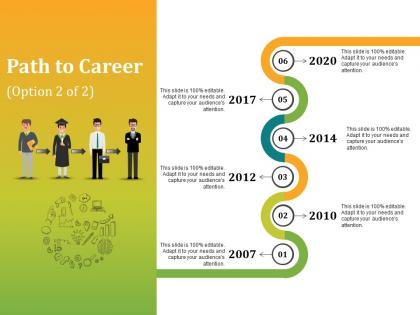
Path to career presentation powerpoint example




Try Before you Buy Download Free Sample Product
 Impress Your
 Audience
 100%
100% Editable
 Save Hours
 of Time


Our Path To Career Presentation Powerpoint Example are designed with a modern touch that serves to present your ideas in a clear and consistent manner. You don?t have much to do other than fill in the blank spaces.
People who downloaded this PowerPoint presentation also viewed the following :
Path to career presentation powerpoint example with all 5 slides:
Be the director with our Path To Career Presentation Powerpoint Example. Distribute the roles to your team members.
FAQs for Path to career
Honestly, adaptability is everything right now - companies want people who can pick up new tools fast and roll with changes. Remote work totally flipped how we collaborate, so communication skills are clutch. Problem-solving's always been big, but now they want that creative thinking too. Oh, and don't underestimate emotional intelligence. Being able to work well with people matters just as much as being technically solid. Maybe even more sometimes? I'd focus on your 2-3 weakest areas first. Online courses work, or just mess around with side projects. You'll see improvement pretty quick.
Honestly, SMART goals are a game changer because they turn "I want to get promoted someday" into an actual plan. You know - Specific, Measurable, Achievable, Relevant, Time-bound. The whole framework thing. It's so much easier to see if you're making progress instead of just wondering where the hell your career is going. Your boss will definitely notice when you can point to real stuff you've accomplished during reviews. I learned this the hard way after floating around for like two years with zero direction. Try taking one goal you have and just run it through those five criteria - you'll be surprised how much clearer everything becomes.
Dude, networking is seriously a game changer for your career. Most jobs never even get posted - people just hire who they know. Build real relationships and you'll be the person they think of when something opens up. Yeah, it feels super awkward at first (I still hate it sometimes), but just focus on being genuinely curious about what others do instead of selling yourself. Your network becomes this amazing source for advice and industry gossip too. Start simple - message one new person weekly. Could be an old coworker or someone random on LinkedIn in your field.
Honestly, online courses are a game changer for your career. Pick up coding, data analysis, project management - whatever you need at your own speed. Way cheaper than going back to school too. Employers actually take Coursera and LinkedIn Learning seriously now, which is kinda surprising but cool. Some courses are literally taught by Google and Facebook people, so you're getting solid info. Just don't be like me and start five courses then finish none - pick something that fills a gap in your current job first. Once you complete it, you'll see how much it helps.
Having a mentor is honestly a game-changer for your career. They help you dodge mistakes they've already made, plus you get access to their whole network (which is huge, trust me). The decision-making gets so much better when you have someone who's been there. You'll pick up industry insights you'd never learn otherwise. And the soft skills? Way easier to develop when someone's actually coaching you through it. Oh, and promotions tend to happen faster too. Just find someone whose path you respect and ask them for coffee - most people are flattered to be asked.
Honestly, you probably have way more transferable skills than you think - dig into those first. Do your homework on the industry through podcasts and articles, but also try to chat with people actually working there. Networking feels gross but it really works if you're genuine about it. Maybe take on some freelance stuff or volunteer work to show you're serious. Your resume should highlight relevant skills instead of just listing your old job titles. Oh, and don't just spam applications - most people who switch careers successfully do it through connections. You might have to take a small step back salary-wise initially though.
Okay so first things first - you gotta research what people in your role actually make and write down your wins with real numbers. Timing is huge too. I made the mistake of asking right before budget cuts once, so learn from my stupidity lol. Go for performance reviews or after you've crushed a big project. Practice what you'll say beforehand, but focus on your value, not that you need money for rent. If base salary's off the table, negotiate other stuff - benefits, remote days, training budget. Oh and if they shut you down? Ask exactly what you need to accomplish for next time. That part's key.
Honestly, getting feedback from coworkers is such a game-changer for your career. They see you in action every day and notice stuff you're totally blind to - like how you come across in meetings or skills you didn't know you had. Managers definitely ask around before promoting people too (learned that one the hard way). Don't just wait for reviews though. Ask specific questions like "what should I work on to get to the next level?" The trick is actually doing something with what they tell you, which is harder than it sounds.
Honestly, certs are totally worth it. Your resume will actually stand out when everyone else looks the same. Employers see them as proof you know your stuff, which usually means better pay and job opportunities. The studying part might suck, but you'll pick up things you actually use every day - I still reference stuff from my last cert program. Oh, and some roles literally require specific credentials, so they can unlock doors you didn't even know existed. The people you meet during these programs are goldmines for networking too. Just pick something that matches where you want your career to go and don't overthink it.
So basically, personal branding is you controlling your professional reputation instead of leaving it to chance. Think of yourself as your own PR person - sounds cheesy but it works. You want people to automatically think of you when certain opportunities come up. The thing is, most people with similar skills don't bother building a clear professional identity, so you'll stand out. Start by figuring out what you want to be known for, then consistently share stuff that backs that up. LinkedIn posts, networking events, even casual work conversations. It builds trust with recruiters and managers before they've even met you.
Honestly, I'd start with stuff that builds on what you're already good at - makes the learning curve way less brutal. Online courses are great, but I've learned tons just volunteering for random projects at work that were totally outside my normal stuff. Maybe cross-train with people in other departments if you can swing it. Read things outside your usual bubble too - industry stuff from completely different fields. Pick like 2-3 skills max each quarter though, otherwise you'll just end up half-assing everything. Trust me on that one.
Dude, soft skills are seriously underrated career boosters. They help you actually connect with people - your boss, teammates, random clients. I've watched super smart people hit walls because they couldn't read social cues or gave feedback like a bulldozer. It's wild how much being likeable matters for promotions. You don't have to be fake, just... thoughtful? Pay attention to how different people tick in meetings. Some want data, others need the big picture first. Building those relationships early makes everything easier down the road. Way more important than most people realize.
Dude, performance reviews are honestly your best shot at moving up if you play them right. Come with concrete examples of stuff you crushed this year. Don't just sit there nodding like I used to - total waste of time. Ask straight up what you need to do for that promotion and what skills you're missing. Get specific feedback on the gap between where you are and where you wanna be. Then here's the key part: write everything down and send a follow-up email with your action items. Makes it way harder for them to forget what they promised you. Turn that boring meeting into your actual career plan.
Dude, remote work isn't going anywhere - it's here to stay. AI skills are becoming mandatory for basically every job now, which is kinda wild if you think about it. Career paths are totally different too. Nobody's doing that old-school ladder climb anymore. People hop between industries constantly instead of staying loyal to one company for decades. Skills get outdated so fast now that you've gotta keep learning new stuff. Oh, and companies are finally getting smart about promoting from within and retraining people. Honestly? Start building your digital skills ASAP and get used to switching things up, because being adaptable is everything.
Honestly, volunteering can really help your career in unexpected ways. You'll pick up new skills and meet people who might open doors later - I've seen friends get jobs through random connections they made volunteering. Employers love seeing that you're willing to give back too, shows you're not just thinking about yourself. It's also perfect for testing out different fields without the stress of an actual interview process. Oh and here's the thing - pick something you genuinely care about. Your real interest will show through, and that makes all the difference professionally.
-
Graphics are very appealing to eyes.
-
Helpful product design for delivering presentation.