


Path to career ppt model

You must be logged in to download this presentation.




Try Before you Buy Download Free Sample Product
 Impress Your
 Audience
 100%
100% Editable
 Save Hours
 of Time


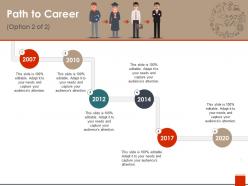
Introducing Path To Career PPT Model PowerPoint presentation. The career path PPT slide demonstrates the growth of an employee in an organization. This career-growth PowerPoint layout describes the various job levels hierarchy of an employee in your firm. This career ladder PPT presentation helps in showcasing a realistic picture of the current job position at the department and company level. Using our career assessment PowerPoint theme you can identify the areas which require improvement. In order to build competencies in the employees, relevant training for team management, leadership skills, time management, etc. can be suggested using this career-building PPT layout. Career development of your colleagues can be tracked using this career management PowerPoint slide. The year-wise accomplishments of an employee and the future goals can be determined with this career scope PPT theme. The potential success of the organization can be significantly improved by employing this career-building PowerPoint template by conducting training sessions that can help in developing a new skill set in the employees.
People who downloaded this PowerPoint presentation also viewed the following :
Path to career ppt model with all 5 slides:
Handle intrigue with our Path To Career Ppt Model. Expose attempts at dubious deeds.
FAQs for Path to
Honestly, I'd say focus on three things: digital literacy, emotional intelligence, and being adaptable. Even if you're not in tech, you still need to get comfortable with data and new tools. Emotional intelligence is massive though - like actually knowing how to talk to people and handle workplace drama without losing your mind. Adaptability matters because everything's changing so damn fast these days. Oh, and soft skills are kinda becoming the new hard skills now, which is wild if you think about it. Maybe pick whichever one you suck at most and work on it this quarter?
Oh totally depends on your field! Tech people live on GitHub and Stack Overflow - hackathons are huge too. Finance is all about those alumni connections and conferences (boring but effective lol). Creative industries are weird though - the best networking happens at random coffee chats after gallery events, not the formal stuff. Healthcare sticks to professional associations mostly. Don't waste time on LinkedIn if everyone in your space uses Twitter instead. You gotta go where people actually are, not where you think they should be.
Honestly, continuous learning is like insurance for your career - it keeps you from getting left behind when everything changes. Industries move so fast now. Just look at how AI has flipped everything upside down lately! You don't need fancy degrees though. Podcasts during your commute, online courses, even picking your coworkers' brains - it all adds up. The key is staying valuable to employers and keeping doors open for promotions or switching paths entirely. Pick one skill you're weak at right now and tackle it this month. That's literally all it takes to get started.
Oh totally, mentors are game-changers! They give you the real insider scoop that training programs never cover. Plus your network expands like crazy through their connections. Honestly, it's like having someone who's already made all the mistakes so you don't have to. The confidence boost alone is worth it - they'll push your thinking in ways that make you grow way faster. Don't overthink it though. Just find someone you respect and ask them directly. Formal mentorship programs are fine but kinda overrated if you ask me.
Make your goals way more specific - like "get promoted to team lead in 18 months" instead of just "become a manager." Way easier to actually work toward something concrete. I learned this the hard way after setting these ridiculously broad 5-year plans that went nowhere lol. Break everything down into smaller chunks you can track. Figure out what skills you need and which people you should connect with. Also make sure you're not chasing something that'll be obsolete in two years - your goals should match where the industry's going. Write this stuff down and check it every few months, otherwise you'll just keep moving the goalposts.
Look, personal branding is what makes you stick in people's heads when they're hiring. Recruiters actually search for you instead of the other way around. Your LinkedIn (and honestly, who isn't on there constantly?) should show what you're good at and what you care about. Makes it super easy for hiring managers to see you're the right fit. Plus networking becomes way more effective - people remember you and refer colleagues they trust. Once you've got that solid reputation going, opportunities start coming to you. Promotions happen faster when you're seen as the expert in your thing. Just keep everything consistent across platforms and you're golden.
Dude, remote work totally changes the career game. No more bumping into your boss by the coffee machine, so you've gotta be way more intentional about everything. Schedule regular check-ins with your manager and actually document your wins - like, really spell them out because nobody sees you grinding at your desk anymore. The networking thing is harder but honestly? Some of these virtual training platforms are actually pretty solid, way better than those awkward conference room sessions we used to sit through. You'll need to get comfortable with self-promotion and actively reach out to people across different teams. It's more work but kinda forces you to be strategic about it.
Don't just sit around waiting for feedback to magically appear. Book those one-on-ones with your manager and come with actual questions, not just "how am I doing?" That's useless and you'll get nothing back. Try stuff like "what skills do I need for the next level?" or "how's my presentation game?" Hit up coworkers you're tight with too - they see different sides of your work. Honestly, the biggest thing is staying consistent with asking AND actually doing something with what people tell you. Otherwise they'll just start giving you the polite corporate BS instead of real advice.
Honestly, certs can really help your career in a bunch of ways. Companies love seeing them because it proves you actually know your stuff - super helpful when you're going for promotions or new roles. The learning process itself is valuable too since you'll pick up current techniques that make you better at what you do day-to-day. Oh, and most places will actually pay for relevant ones, which is awesome free training. You'll meet other people in similar fields during the process, which never hurts for networking. I'd look into what certifications are big in your industry first though.
Dude, you're so right about this stuff. Being smart only gets you so far if you can't deal with people. I've seen brilliant coworkers stuck in the same role for years because they're awkward in meetings or can't handle feedback. The people who move up? They're the ones who actually listen, can work with anyone (even the jerks), and don't freak out under pressure. Management is basically just people skills with a fancy title. Oh, and office politics - you gotta learn to navigate that mess. Start watching how the successful people at your company talk to others. It's honestly eye-opening.
Look for skills that actually transfer over - there's probably more overlap than you realize. LinkedIn networking is huge, plus try to get some informational interviews going. Maybe grab a certification or take a course to fill gaps and show you're serious about the switch. Freelance work helps too if you can swing it. Your resume needs to highlight anything relevant, even if it's not obvious. Oh, and honestly? Industry events can be awkward but they're worth it for connections. The whole thing is really about flipping your experience into an advantage instead of making excuses for it. Start having those conversations now though - don't wait until you're "ready."
Honestly? Work-life balance is huge for career happiness. Like, probably one of the biggest factors in whether you'll actually enjoy what you do long-term. I found this out the hard way my first couple years - even jobs you love start sucking when you're burned out all the time or missing everything that matters outside work. You just can't keep performing at a high level forever without boundaries. It's not sustainable. Figure out what you absolutely won't compromise on personally and guard those things first. Everything else can be more flexible, but protect your non-negotiables.
Honestly, volunteering has been a game-changer for my career. I actually got my current job through someone I met while volunteering - crazy how that works out! It's perfect for building skills and meeting people in whatever industry you're trying to get into. Employers love seeing that you're involved in your community too. The trick is picking stuff that actually relates to what you want to do professionally. Like, if you want to manage people someday, find volunteer gigs where you can lead projects or coordinate events. That way you're helping out AND getting experience you can actually use. Two birds, one stone kind of thing.
Honestly, most managers wait until people are already halfway out the door before they think about development - huge mistake. Have those career conversations quarterly, not just during reviews. Map out where they want to go and actually help them get there. Training, mentorship, stretch projects - all that stuff matters. Cross-department moves are gold but yeah, they're a pain to set up. Individual development plans sound formal but they work if you don't just file them away somewhere. Your best people will leave if they can't see what's next.
Look, self-assessment is like having a GPS for your career - way better than just stumbling around hoping something works out. You've gotta be real about your strengths, what you're actually into, and what drives you. Trust me, there's nothing worse than being stuck in a job that makes you want to hide under your desk every morning. Write down what you loved and hated about previous jobs. Pay attention to patterns - what gives you energy vs. what makes you feel dead inside. Figure out which work environments don't make you crazy. It sounds obvious but most people skip this step and wonder why they're miserable.
-
Helpful product design for delivering presentation.
-
Informative design.