


Case Study On Digital Transformation At DBS Bank Training Ppt




Try Before you Buy Download Free Sample Product
 Impress Your
 Audience
 100%
100% Editable
 Save Hours
 of Time


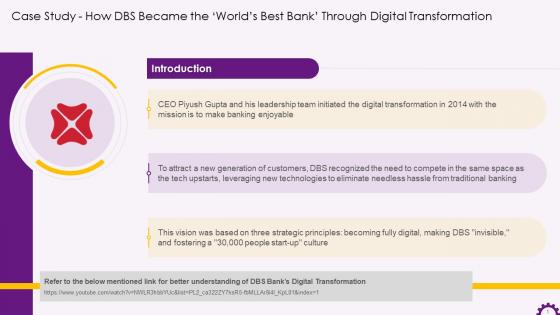
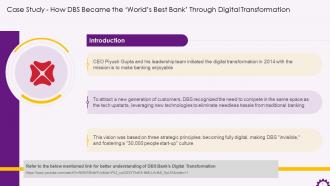
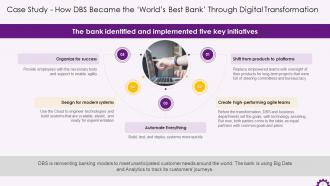
This case study highlights that DBS recognized the need to compete in the same space as the tech upstarts, leveraging new technologies to eliminate the unnecessary hassle in traditional banking. It also includes the banks key initiatives, such as creating high-performing agile teams, automating processes, and designing modern systems for successful digital transformation.
People who downloaded this PowerPoint presentation also viewed the following :
Case Study On Digital Transformation At DBS Bank Training Ppt with all 17 slides:
Use our Case Study On Digital Transformation At DBS Bank Training Ppt to effectively help you save your valuable time. They are readymade to fit into any presentation structure.






FAQs for Case Study On Digital Transformation At DBS
Honestly, most companies mess this up by going straight for the fancy tech without getting their people on board first. You need leadership backing you 100% and a solid plan for where you're heading. Train your team well - they're gonna make or break this whole thing. Pick technology that actually fixes real problems, not just the latest shiny object. Good data helps too, obviously. I'd start by figuring out what's really broken in your current setup. Those pain points? That's where you'll get quick wins that'll keep everyone motivated.
Track the obvious stuff first - revenue growth, cost cuts, how much faster things get done. Employee adoption rates matter way more than people think though, seriously. If your team hates the new system, you're screwed long-term regardless of what the numbers say. Customer satisfaction is huge too. Set your baselines before you change anything (learned this the hard way), then check quarterly. Oh, and if you're doing anything with data, definitely measure how clean your analytics are getting. Time-to-market improvements are solid metrics too.
Honestly, you can't do this without leadership backing you up. They control the budget and set the vision - but more than that, they're the ones who actually get people to care about changing. I've watched so many projects just die because executives weren't really on board. Your C-suite needs to explain WHY this matters, not just bark orders about new tech. And here's the thing - leaders have to actually USE the new stuff themselves, otherwise nobody takes it seriously. Oh, and they need guts to axe old processes that don't work anymore. Get them aligned first before touching anything else.
So cloud computing is basically what makes digital transformation possible - you get all these scalable resources instantly without dropping crazy money on infrastructure upfront. Instead of building data centers everywhere (ugh, imagine that nightmare), you can launch new apps and test stuff globally. Plus it handles real-time analytics, remote work, and integrates AI tools across healthcare, finance, retail - you name it. Honestly, I'd just pick one cloud service that fixes your biggest headache first. You can always expand later once you see how it works for you.
Honestly, the worst part is dealing with people who just refuse to adapt - they'll cling to old processes like their lives depend on it. Budget's always tight too, obviously. Then you've got technical headaches when systems don't talk to each other properly. Your team probably doesn't know the new tools either, which slows everything down. Oh, and moving data over? That can go sideways fast if you mess it up. I'd say test things out small first - maybe just one department. Spend real money on training though. Trust me, it's worth it to avoid the chaos later.
Look, data analytics is like having a GPS for digital transformation - shows you what's actually working vs what's total garbage. You can ditch the guesswork and see real customer patterns, where operations are choking up, and if those shiny new tech toys are worth the money. Honestly, data beats hunches every single time (and definitely beats whatever that sketchy vendor pitched you). Pick 2-3 metrics that actually matter for your goals first. Then build everything around those. You'll find opportunities hiding in plain sight and dodge expensive screw-ups before they bite you.
So basically, you use data to figure out what customers actually want, then automate the easy stuff so they're not stuck on hold forever. People can jump between your app, website, whatever - it all connects smoothly. Those AI chatbots? They're actually pretty decent for handling simple questions 24/7. Plus self-service portals are clutch when people just want to fix things themselves. The whole point is meeting customers where they already are and maybe predicting what they'll need next. I'd start by looking at your customer journey now and finding the most annoying parts to fix first. Makes everything way more personalized too.
Make failure feel safe first - that's honestly the biggest thing. Celebrate small wins loudly and when stuff doesn't work out, focus on what you learned instead of pointing fingers. People won't take risks if they think they'll get roasted for trying. Give teams some actual time to mess around with new ideas, maybe 10% of their week? Cross-functional stuff works great too since mixing perspectives usually creates the best solutions. Leadership can't just talk about innovation from their ivory tower - they need to get their hands dirty. Set up regular showcases where anyone can pitch ideas and get real feedback, not just polite head nods.
Honestly, you've got a huge advantage over big corporations - you can move way faster. No endless meetings or approval chains slowing you down. I'd start with automating the boring stuff first (like scheduling - trust me, it adds up). Then hit the customer-facing things: better website, maybe some social media tools. Don't try to digitize everything though, that's overwhelming. Pick 2-3 things that'll actually make a difference. Test them out, see what works, then do more of that. Oh and measure results - otherwise you're just throwing money around hoping something sticks.
Honestly, digital transformation can be a game-changer for engagement and productivity if you don't screw it up. Your team will actually want to work when they're not fighting ancient systems all day. Automation takes care of the mind-numbing tasks, so people can focus on stuff that matters. Workflows get smoother, data's easier to find - the usual productivity wins. But here's where most companies mess up: they don't loop employees into the planning. Do that and you'll get pushback instead of buy-in. Oh, and implementation always takes longer than you think it will.
Oh absolutely, cybersecurity stuff definitely slows things down. Companies get paranoid about breaches and compliance - I mean, rightfully so - but then they spend forever on security assessments. One place I know took like 4 months just for that part alone! It's frustrating because you want to move fast with new tech, but you can't ignore the risks either. My advice? Don't treat security as something you deal with later. Build it into your planning right from the start. Sounds backwards, but it'll actually save you time in the long run.
Honestly, I'd start with getting your cloud setup sorted out first - everything else builds on that. Data analytics and AI stuff is where the money is right now, and you obviously can't ignore cybersecurity anymore. Automation platforms are clutch too, they'll eliminate so much tedious work for your team. Mobile and API integrations are basically expected at this point. But here's the thing - don't try to do it all at once or you'll burn out. Pick cloud migration plus maybe one or two other things that fix your worst headaches first. Then just keep adding pieces as you go.
Dude, first thing - audit everything your old systems do and map their dependencies. It's gonna be way messier than you think. Don't try replacing everything at once though, that approach fails constantly. Build APIs or middleware that translate between old and new systems instead. Run everything parallel during transitions and create data bridges. Oh and definitely test the hell out of it in staging first - learned that one the hard way lol. Start with just one integration, see what breaks, then scale from there. Trust me on this one.
Honestly, customer feedback should drive your whole digital transformation - it's like having a GPS instead of wandering around lost. Don't wait until the end to ask what people think. Set up surveys, user testing, whatever works to get constant input. I've watched too many companies blow their budget on fancy tech that sits there unused because nobody bothered asking customers what they actually wanted first. The feedback shows you which problems to tackle and helps you pivot fast when things aren't clicking. Start gathering input before you even make your plans.
So digital transformation in schools is basically about using tech to make learning better. Start with personalized learning platforms - they're honestly amazing for tracking how each student's doing. Virtual classrooms are obvious now, but don't sleep on VR stuff for making lessons actually immersive. Mobile apps give kids flexibility (which they love), and cloud collaboration makes group work way easier. The real magic happens with AI analytics though - you can spot learning gaps instantly instead of waiting for test results. I'd say pick one thing first, see how it affects student performance, then expand from there. Hybrid models and automated grading are solid next steps.
-
Great product, helpful indeed!
-
Templates are beautiful and easy to use. An amateur can also create a presentation using these slides. It is amazing.