

Cassava Sector Value Chain Analysis Powerpoint Ppt Template Bundles




Try Before you Buy Download Free Sample Product
 Impress Your
 Audience
 100%
100% Editable
 Save Hours
 of Time


Unveil the intricacies of the cassava industry with our comprehensive PowerPoint presentation on Cassava Sector Value Chain Analysis. Dive deep into the cultivation, processing, and distribution phases, exploring the economic dynamics and key players in this vital sector. From farm to table, this PPT elucidates each step, providing insights into opportunities, challenges, and strategic interventions. Navigate through the intricacies of cassava production, showcasing a holistic view of the value chains impact on regional economies. Ideal for agricultural experts, policymakers, and businesses, this presentation empowers stakeholders with data-driven perspectives for informed decision-making in the cassava sector.
People who downloaded this PowerPoint presentation also viewed the following :
Cassava Sector Value Chain Analysis Powerpoint Ppt Template Bundles with all 22 slides:
Use our Cassava Sector Value Chain Analysis Powerpoint Ppt Template Bundles to effectively help you save your valuable time. They are readymade to fit into any presentation structure.















FAQs for Cassava Sector Value Chain Analysis Powerpoint
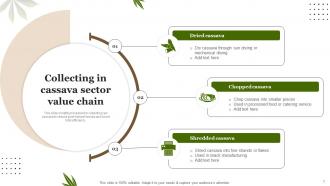
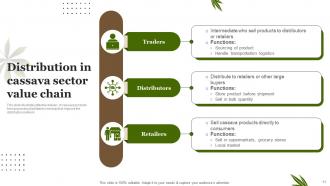
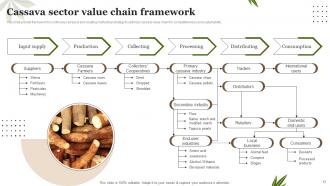
So cassava's got five main stages you need to track: farming/production first, then post-harvest handling (this part's brutal because cassava goes bad super quick), processing where it becomes flour or starch or whatever, marketing and distribution, then finally consumption. Processing is honestly where the real money gets made - that's where basic roots turn into actual products people want. After that it flows through different market channels until consumers buy it for food, animal feed, industrial stuff. The sweet spot? Look for bottlenecks between these stages. That's usually where you'll find the biggest wins for making things better.
Dude, quality makes a huge difference in cassava prices. Buyers will pay 20-40% more for the good stuff - you know, roots with low moisture, no pest damage, proper handling. Makes sense since it processes better and lasts longer. The crappy cassava? Gets dumped into animal feed markets for basically nothing, or buyers just reject it outright. Timing your harvest right is key. Storage matters too, but honestly most farmers mess up the harvesting part first. Focus there and you'll see way better prices. It's really that simple - quality pays.
So smallholder farmers basically grow 80% of the world's cassava - they're doing everything from planting to that first round of processing like peeling and drying. Most of them sell straight to local markets or middlemen though, not the bigger processors. Here's the thing that gets me: their yields could be so much higher if they had better seeds and techniques, but they're stuck with limited resources. That creates these annoying bottlenecks throughout the whole chain. If you want real impact, focus on getting them quality planting materials and connecting them with reliable buyers who'll actually pay decent prices.
Honestly, the mechanized graters and hydraulic presses are game-changers - your workers will actually thank you instead of complaining about sore backs all day. You can process way more cassava per hour compared to doing everything by hand. Solar drying systems help too, and those digital moisture meters? They're clutch for getting your flour quality just right. I'd say start with whatever's causing your biggest headache right now - maybe automated peeling if that's where you're losing time. Then add more tech as you start seeing the money come back. Don't try to upgrade everything at once though.
Honestly, cassava storage is a nightmare - those roots go bad in like 2-3 days because of bacterial stuff and just natural deterioration. Transportation's rough too since they're heavy as hell and break easily during shipping. Roads in most growing areas are pretty terrible, which makes everything worse. You're looking at losing maybe 40% of your harvest without cold storage or processing nearby. I learned this the hard way on a project last year. Focus on building local processing first - way cheaper than hauling fresh roots around.
Dude, cassava's got tons of potential! Food processing is probably your biggest win - gluten-free flour, food starch, tapioca for bubble tea (that stuff's not going anywhere). Industrial uses are solid too: biofuel, paper, textiles all need cassava starch. Oh and don't sleep on animal feed since it's loaded with carbs. Honestly though, I'd map out what people actually want locally first. Way easier than jumping straight to exports. Once you nail down your processing setup and quality control, then you can think bigger. Start small, see what sticks.
So basically, government policies control pretty much the entire cassava game. Subsidies decide what farmers plant. Import/export rules affect where processors can sell stuff. Then you've got food safety standards and infrastructure spending on top of that. Trade policies are probably the biggest factor though - they literally determine market access. One policy shift can mess up the whole chain, which is kinda wild when you think about it. My advice? Map out the key policies in whatever region you're looking at first. Trust me, it'll save you from missing obvious stuff later when you're deep in the analysis.
So many ways you could go with this! Processing equipment that cuts down waste is solid. Then there's new product forms - cassava flour, starch, even biofuels if you're thinking big. Packaging and branding is where I'd probably start though, especially ready-to-cook stuff since everyone's busy these days. Fermented products are still pretty niche in most places, which could be good for you. But honestly? Figure out what people in your area actually want first. I've seen too many people build something cool that nobody buys. Once you know the market, you can work backwards to see which improvements will actually make you money.
Start by getting everyone in the same room - farmers, processors, distributors, retailers. They barely talk to each other which is honestly ridiculous. Regular meetings where you share demand forecasts and pricing data will solve half your problems right there. Most supply chain disasters? Just poor communication. Pool money for shared storage and standardized grading systems that help everyone. Sustainability certs are good too since the whole chain can market those together. Oh, and don't try to fix everything at once - pick 2-3 key partners for a pilot first, then expand from there.
So cassava's kinda interesting environmentally - it grows in crappy soil where other crops just die, which is cool. Plus it handles climate change pretty well. But yeah, there are downsides too. If you plant it on slopes without thinking it through, you'll get soil erosion. Also drains specific nutrients from soil over time, and the processing waste can mess up water sources. Honestly though, it's still way better than most staple crops overall. For your thing, I'd probably focus on sustainable farming methods and making sure the waste gets handled right.
Look, cassava prices are all about demand. Food processors need it, starch companies buy tons, export markets go crazy for it - any of those heat up and boom, prices jump. Here's the weird part though: demand swings with seasons, especially when other crops like maize are harvested. Industrial stuff matters too - biofuel, animal feed, you name it. I'd honestly watch what substitute crops are doing since people switch between cassava and sweet potato pretty easily. Don't put all your eggs in one basket either. Having buyers across different sectors saves you when one market tanks.
Wait for those leaves to start yellowing and dropping - usually takes 8-12 months after planting. Make sure it's dry weather when you dig them up, otherwise you'll get root rot (learned that the hard way). Patience really pays off here because rushing it just kills your yield. Dig around the base super carefully so you don't damage anything, then lift the whole plant and shake the dirt off. Handle those roots gently - bruised cassava goes bad crazy fast. You've got maybe 2-3 days to process them once they're out of the ground. Start checking a few plants around month 8 to see how they're doing.
Honestly, the biggest mistake is putting all your hopes on cassava alone. Mix in other crops to spread your risk around. Disease-resistant varieties are a total lifesaver too - trust me on this one. Storage is huge since cassava goes bad fast, so get proper facilities sorted early. Join a farmer cooperative if you can, the shared knowledge alone is worth it. Oh and definitely line up buyers BEFORE you plant anything - learned that the hard way. Crop insurance helps too if it's available where you are.
Hey! So there's some really cool stuff happening with cassava fermentation right now. Controlled chambers are huge - they manage temp and pH so you get consistent results every time. Starter cultures can cut your fermentation from days down to just hours, which is insane. People are also doing bioaugmentation with specific bacterial strains to pump up nutrition levels. Oh, and enzyme applications help with starch conversion efficiency too. But honestly? The real-time monitoring systems that track everything digitally might be the biggest win. If I were you, I'd look into controlled environment setups first since they'll give you the most bang for your buck quality-wise.
Honestly, it's all about how people see cassava culturally. In tons of places, it's got this "poor person's food" stigma - like you only eat it when you can't afford rice or whatever. That perception totally kills demand in cities where people have options. But here's the thing - communities that actually embrace it as part of their food culture? They keep eating it regardless. Same goes for places where people know it's nutritious. When you're doing your market analysis, these cultural attitudes matter way more than just price and supply stuff. They're basically the best predictor of who'll actually buy it.
-
Easily Editable.
-
“I required a slide for a board meeting and was so satisfied with the final result !! So much went into designing the slide and the communication was amazing! Can’t wait to have my next slide!”