


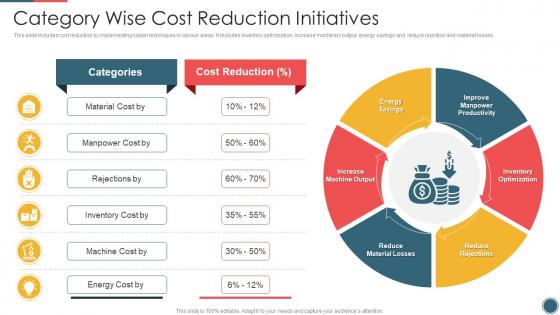
Category Wise Cost Reduction Initiatives




Try Before you Buy Download Free Sample Product
 Impress Your
 Audience
 100%
100% Editable
 Save Hours
 of Time


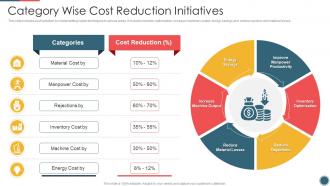
This slide includes cost reduction by implementing kaizen techniques in various areas. It includes inventory optimization, increase machinery output, energy savings and reduce rejection and material losses.
People who downloaded this PowerPoint presentation also viewed the following :
Category Wise Cost Reduction Initiatives with all 6 slides:
Use our Category Wise Cost Reduction Initiatives to effectively help you save your valuable time. They are readymade to fit into any presentation structure.





FAQs for Category Wise
Honestly, start with your biggest expense categories - that's where tiny improvements actually move the needle. Automate whatever repetitive stuff is eating up time. Renegotiate those vendor contracts too. You'd be shocked how much cash just sits there in forgotten software subscriptions we never use anymore. Energy costs are another quick win, plus maybe rethink office space if people are still working remote. Oh, and cross-train your team so you're not stuck overstaffed in weird specialized roles. Just audit your top 10 expenses this month and ask yourself: does this actually make us money? Most of the time the answer's pretty obvious.
Look at your biggest headaches first - stuff like manual data entry or teams buying the same software twice. Automation handles the repetitive junk so your people can actually think. Cloud migration saves money eventually (upfront costs suck though, not gonna lie). AI's pretty solid for customer service and scheduling now. Data analytics will show you where you're bleeding cash - sometimes it's obvious stuff you just missed. Don't buy flashy tech just because it looks cool. Map your current mess first, then find tools that actually cut out steps or reduce how many people you need for boring tasks.
Look, training your people is honestly a no-brainer investment. Fewer screw-ups means less money thrown away on fixing things later. Your team works faster when they actually know what they're doing, and you won't need to babysit them constantly. Companies that cheap out on training always wonder why everything's falling apart - like, connect the dots? Plus people stick around longer when they feel competent at their job, so you're not constantly hiring replacements. I'd focus on whatever's bleeding the most money first and train around that.
Definitely track your gross and net profit margins first - that's where you'll see the real impact. Operating expense ratios matter too, plus cost per unit if you're manufacturing stuff. Here's the annoying part though: figuring out what savings actually came from your changes vs. just normal market fluctuations. Revenue shifts can make everything look weird. Set up a good baseline period so you have something solid to compare against. Track it monthly, but honestly don't get hung up on just the dollar amounts. The percentage improvement in margins is what actually tells the story of whether your initiatives are working.
Don't cut costs blindly - that's the fastest way to tank your customer experience. Avoid those lazy "everyone cuts 20%" mandates because your marketing budget isn't the same as your office supplies, you know? Never slash training or dump your best people for quick savings. That's just dumb. Get your team involved instead of deciding everything solo - they actually see where money gets wasted daily. Oh, and figure out what your customers truly value first. Then you can trim the fat around those must-haves without shooting yourself in the foot.
Basically, outsourcing lets you swap fixed costs for variable ones - way more budget flexibility. You're only paying for what you actually need instead of full salaries, benefits, all that overhead stuff. Those specialized companies are usually better at it anyway since it's literally what they do all day. Honestly, the best part is scaling without the drama of hiring sprees or awkward layoffs. I'd start with stuff like IT support or bookkeeping - things that cost you time and money but aren't really making you money, you know?
Focus on cost per unit and your cost-to-revenue ratio first - those are the big ones. ROI on whatever cost-cutting stuff you're doing matters too (like, did spending $5K to streamline processes actually save you $20K?). Don't forget operational efficiency though, because sometimes you cut costs and accidentally tank quality or slow everything down. Monthly tracking works well so you can pivot fast if something's off. Honestly, pick 2-3 metrics max that fit your business instead of tracking everything under the sun. Data overload is real and you'll just confuse yourself.
Honestly, most companies just throw money away because they don't actually look at their supply chain data. You can cut serious costs by ditching inefficient suppliers and working with fewer reliable ones - better rates that way too. Map out your current setup first and see where delays keep happening. Better demand forecasting means you're not sitting on tons of inventory (that stuff gets expensive fast). Oh, and streamline your shipping routes - I know it sounds obvious but you'd be surprised how many people skip this. The whole thing comes down to using real performance data instead of just guessing what works.
Dude, you gotta make this feel like everyone's working together, not some top-down BS. Share the actual budget numbers - most people have zero idea what stuff really costs. When someone saves money, celebrate it! Even if it's tiny. Pizza parties for good ideas sound cheesy but they totally work lol. Make suggesting improvements super easy, no red tape nonsense. Your managers need to explain WHY decisions happen. Oh and here's the key part - connect it to stuff your team actually gives a damn about. Job security, better equipment, whatever matters to them. People won't care about "cost awareness" in a vacuum.
Here's the thing - better pricing actually cuts your costs by bringing in the right customers. Those high-value clients? Way less hassle and more profitable to work with. You stop wasting time on cheapskates who nickle and dime everything (seriously, life's too short). Plus you're not constantly giving discounts or haggling over prices. Look at which customers actually make you money after you factor in all the headaches and costs. Then price to attract more of those good ones. It's like dating - you want quality, not just anyone who'll say yes.
Honestly, being small is your superpower here. Automate the boring stuff first - there's so many cheap tools now. Team up with other small businesses for group buying (works better than you'd think). Remote work saves a ton on office costs, and let's be real, COVID proved most jobs don't need a fancy headquarters anyway. Instead of hiring full-time people, outsource the specialized work. Use subscription software that grows with you rather than dropping huge money upfront. Big companies can't pivot like this. Pick your three biggest expenses this week and find one thing to automate in each category.
So basically, going sustainable saves you money by cutting your resource use and waste. Energy bills drop, you waste less material, avoid regulatory headaches. Your processes get more efficient too. Oh, and employees actually stick around longer - turns out people want to work somewhere that gives a damn about the planet. The real win though? You avoid expensive disasters later like environmental cleanups or supply chain meltdowns. Most companies see payback in 2-3 years. I'd start with an audit of your biggest drains - energy, water, waste are usually the easy pickings.
Honestly, cost-cutting can wreck morale if you handle it wrong. Layoffs and benefit cuts make everyone paranoid about their job security - I've watched whole teams mentally check out after that stuff. People end up doing way more work with less help, which is honestly just setting everyone up to fail. The trick is being upfront about why you're making cuts and actually getting your team involved in brainstorming solutions. Don't just dump changes on them. Focus on cutting waste instead of cutting people whenever possible. You'll keep everyone way more engaged that way.
Honestly, start with just-in-time ordering - game changer for cash flow. ABC analysis helps you figure out which inventory actually matters (spoiler: it's probably not what you think). Get your demand forecasting tight so you're not stuck with dead stock eating your budget alive. Set automated reorder points based on real usage, not guesswork. Better payment terms with suppliers are clutch too, and consignment deals work great for slow movers. Oh, and do an audit first - you'll be shocked how much stuff just sits there collecting dust while you keep ordering more.
Look, automation definitely cuts labor costs and runs 24/7 without breaks. But the initial setup costs are insane - like seriously expensive. You'll probably have to lay people off too, which creates drama with remaining staff. Human errors go way down though, which is nice. My biggest worry would be system crashes because then you're completely screwed until it's fixed. I'd honestly test it out somewhere that won't kill your business first, maybe a smaller department? That way you can see how it actually works before going all-in.
-
No second thoughts when I’m looking for excellent templates. SlideTeam is definitely my go-to website for well-designed slides.
-
Love the template collection they have! I have prepared for my meetings much faster without worrying about designing a whole presentation from scratch.