


Centralization vs. decentralization model presentation ideas




Try Before you Buy Download Free Sample Product
 Impress Your
 Audience
 100%
100% Editable
 Save Hours
 of Time


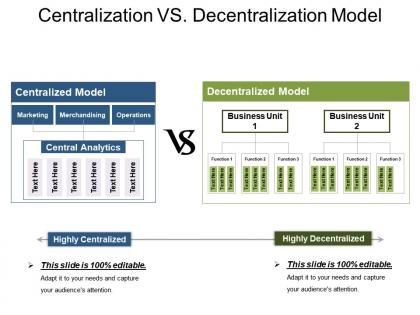
Clear your concept of Centralization Vs. Decentralization using our template on Centralization Vs. Decentralization Model Presentation Ideas. Centralization of authority is defined as the power of planning and decision making which are exclusively in the hands of top management. On the other hand, decentralization refers to the dissemination of powers by the top management to the middle or low-level management. Describe these two business concepts in detail using this creative infographic PowerPoint template designed by SlideTeam professionals. The template shows the centralised model on the left side and the decentralized model on the right side. The block representation makes the concept very easy to understand.The centralized model focuses on a single business unit whereas there are separate business units in the decentralized model.The arrow goes from highly centralized model on the left to highly decentralized model on the right.This creative presentation layout can be used in industries like sales, consulting, marketing, automotive, law, education, etc. Therefore, use it to explain or discuss the perfect methodology of doing business which suits your organization. Our Centralization Vs. Decentralization Model Presentation Ideas will keep your audience engaged. They will stay hooked onto your views.
People who downloaded this PowerPoint presentation also viewed the following :
Centralization vs. decentralization model presentation ideas with all 5 slides:
Create equal chances for all with our Centralization Vs. Decentralization Model Presentation Ideas. It helps bring discrimination to an end.


FAQs for Centralization vs. decentralization
So basically centralized means the big shots at the top make all the calls - super traditional corporate stuff where you need approval for everything. Decentralized is the opposite - teams get to make their own decisions without waiting around. Honestly, decentralized is messier but way faster since people can just act. You get consistency with centralized control, but decentralized gives you flexibility. Really depends on your industry and how big you are. Oh and how fast things change in your market - that matters too. I'd start by figuring out what actually needs executive sign-off vs what your teams can totally handle alone.
Yeah, centralization definitely makes decisions happen faster. You've got one person or small group calling the shots instead of endless committee meetings - way less back and forth. Think of it like having one captain versus everyone arguing about which direction to sail, you know? But here's the thing - those top-level decision makers don't always know what's actually happening on the ground. Frontline people have the real context. So you get speed, but maybe not the smartest choices. Really depends what you need more: quick decisions or well-informed ones. What's your situation looking like?
Yeah so basically when you give people more control over their own work, they're way happier. Makes sense right? Nobody wants to ask permission for every little thing. Your team will feel more trusted and actually care about what they're doing. Plus problems get solved faster when people can just... solve them instead of waiting around. Oh and retention goes up too since people feel less micromanaged. Just don't throw them in the deep end without any guidance - that backfires pretty quick.
Honestly, go centralized when you can't mess around with mistakes - banking, pharma, that kind of stuff where one screw-up costs millions. Smaller companies need it too because I've watched startups implode when everyone's just winging it in different directions. Quick decisions from leadership? Centralized wins every time. Plus if you're handling sensitive data or trying to standardize processes across the board, tight control beats flexibility. Oh, and compliance-heavy industries basically force your hand here anyway. Short version: pick centralized when consistency matters more than moving fast.
So basically, when you push decision-making down to your front-line people, they can actually fix stuff on the spot instead of having to call corporate for everything. Way faster for customers. Plus your team can adapt to what locals actually want rather than following some cookie-cutter script from headquarters - which honestly makes such a difference in how people perceive your service. The trick is giving them clear boundaries but real power to make calls within those limits. I've seen companies mess this up by being too vague about what staff can and can't do, but when it works? Total game-changer.
Honestly, tech is what makes decentralization actually possible. Cloud platforms and collaboration tools keep distributed teams connected without micromanaging them to death. Real-time communication apps are obvious must-haves. Digital dashboards show you what's happening across different units, and project management software lets teams organize themselves pretty well. The real game-changer though? Getting data into everyone's hands, not just leadership. Your front-line people can make quick decisions when they actually have the info they need. I'd start by figuring out what tools each team needs to work independently, then slowly give them more decision-making power.
So basically, culture plays a huge role in how people view centralized vs decentralized systems. Asian countries often go centralized because they're used to clear hierarchies - it just feels right to them. But places like the US or Scandinavian countries? They want local control and autonomy since that matches their whole individualistic vibe. Trust matters too. If people actually trust their government, centralization can work well. Countries with strong regional identities usually prefer being decentralized though - makes sense when you think about it. Before expanding anywhere, definitely research the cultural stuff first instead of assuming what works at home will work there.
Ugh, decentralization can be such a headache. Your biggest issues will be departments making totally different decisions and people duplicating work without realizing it. Communication becomes a nightmare - seriously, good luck getting everyone on the same page. Costs usually go up since each team operates solo, and you lose that tight control over quality standards. Plus maintaining company culture gets way harder when everyone's got so much freedom. Oh, and resource sharing? Forget about it. Set some hard boundaries early and do regular check-ins, or you'll be pulling your hair out trying to keep things aligned.
So with centralization, everything goes through one control point - gives you consistency but man, it can bog things down. Your budget controls get tighter and processes become more standardized. Good news? No duplicate spending and you can score better bulk deals. Bad news is your teams can't pivot quickly since they need approval for everything. Honestly, the bureaucracy can get pretty annoying. If you're stuck with this setup, at least push for some pre-approved spending limits so people aren't waiting around for permission on basic stuff.
Honestly, decentralization is a game-changer because it lets your teams actually make decisions without waiting around for management approval. People get way more creative when they have real autonomy. Your frontline folks see stuff executives completely miss - they're talking to customers every day, right? Problems get solved faster too since teams aren't constantly escalating minor issues. I learned this the hard way at my last job where everything took forever. The trick is being clear about boundaries upfront, then trusting people to run with it.
So hybrid models are pretty clever - corporate handles the big strategy stuff and standard processes, but local teams get to make their own calls on day-to-day operations. McDonald's does this well actually. Corporate controls the menu and brand, franchise owners handle staffing and local promos. You get consistency where it counts but stay flexible at ground level. Honestly, it's one of those things that sounds complicated but works really well in practice. When you're setting one up, just figure out what decisions absolutely need central control vs. what you can let teams handle themselves.
Track your decision-making speed and how fast you respond to problems - that's the obvious stuff. Financial metrics matter too, like operational costs and how well you're using resources. But honestly? Employee satisfaction is huge. Nobody performs well when they're either micromanaged or totally confused about who's in charge. Communication overhead tells you a lot - if people spend half their day in meetings just figuring out next steps, something's off. Innovation rates and process consistency across teams are worth watching too. The annoying thing is some metrics will make centralization look great while others favor the opposite. Pick 3-4 that actually matter for your situation and track them consistently.
So here's the deal - complex regulations usually mean you'll want to centralize things. Financial rules, privacy laws, safety standards? That stuff is way too risky to mess up, so having one team handle it makes sense. But if regulations are totally different in each region, decentralization works better. Local teams actually know their markets - sometimes better than corporate ever will, honestly. I'd start by figuring out what regulations you're dealing with first. Then you can decide where your compliance people should sit. It's one of those things where the stakes matter a lot.
Dude, your leadership style basically makes or breaks whether centralization or decentralization works. Micromanagers? You'll love centralized control but end up creating bottlenecks and pissing off your team. More hands-off? Decentralized works great - lets your people do their thing while you handle the big stuff. Here's the thing though: be brutally honest about how you actually manage day-to-day, not how you think you do. I've seen too many leaders pick the wrong structure because they weren't real with themselves. Whatever feels natural to your style will work way better than forcing something that creates constant friction.
Dude, check out J&J - they've got like 250+ subsidiaries but let each one basically do their own thing for local markets. Works crazy well for health stuff. 3M does something similar, treating divisions like separate companies, which honestly makes sense when you're doing everything from Post-its to medical devices. McDonald's is weirdly smart about this too - franchisees can totally adapt menus (rice burgers in Taiwan are actually genius). The trick seems to be: let teams run wild operationally but keep the big picture stuff centralized. Definitely worth looking into if you're restructuring.
-
Unique design & color.
-
Best Representation of topics, really appreciable.