


Channel strategy marketing and distribution powerpoint presentation slides





Try Before you Buy Download Free Sample Product
 Impress Your
 Audience
 100%
100% Editable
 Save Hours
 of Time


Are you looking to make a channel strategy PowerPoint presentation? Channel strategy marketing indeed is the solution. Our expert team has come up with this 61 slides content-ready Channel Strategy Marketing And Distribution Powerpoint Presentation Slides. This PPT sample deck highlights the major points of channel business strategy and has slides like channel marketing strategy, channel marketing planning, launch plan, our channel products, currently active channels, who is the buyer, buyer’s journey, target customers, process to manage partners, lead generation process, lead generation activities, marketing analysis and many more. You can download this PPT example to deliver PowerPoint presentation underlining significance of channel marketing strategy in making easy availability of products or services to consumers. In this PPT model we have included PowerPoint designs like roles of channel marketing manager, roles of channel support specialist, channel sales numbers, sales by region, financial highlights and many more to cast spotlight on each aspect of this channel marketing system. In short, with this PPT sample show file you can encourage your work force for sales channel development to augment sales and develop strong networks. Just download this Channel Strategy Marketing And Distribution Powerpoint Presentation Slides and wow your audience. Have a look at this Channel Strategy Marketing and Distribution PowerPoint Presentation Deck. In today’s competitive world, it is quite important that you reach the target customer with complete research and planning. Channel strategy is a preparation to engage the customers after analyzing their habits such as online activity, buying habits, etc. Our 61 slides PPT Deck includes channel marketing planning, launch plan, channel products, currently active channels, customer journey, channel partner, target customer etc. There are four major types of channel marketing such as producer to customer, producer to retailer to consumer, producer to wholesaler to petailer to customer and producer to agent to wholesaler to retailer to customer. Using this presentation deck, you can highlight these aspects to your team or business partners. Our PowerPoint Deck covers all vital topics related to Channel Marketing. Download it to make a statement. Drive customer demand with our Channel Strategy Marketing And Distribution Powerpoint Presentation Slides. Create a desire for your goods.
People who downloaded this PowerPoint presentation also viewed the following :
Content of this Powerpoint Presentation
Slide 1: This slide introduces Channel Strategy Marketing & Distribution. State Your Company Name and begin.
Slide 2: This is an Agenda slide with text boxes. Present your agendas here.
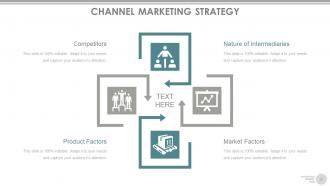
Slide 3: This slide presents Channel Marketing Strategy such as- Nature of Intermediaries, Market Factors, Product Factors, Competitors.
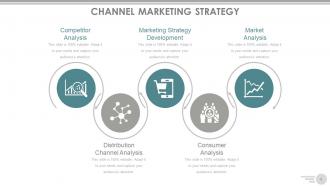
Slide 4: This slide presents Channel Marketing Strategy such as- Distribution Channel Analysis, Consumer Analysis, Competitor Analysis, Marketing Strategy Development.
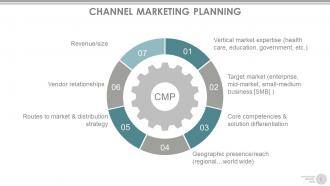
Slide 5: This slide presents Channel Marketing Planning such as- Geographic presence/reach (regional…world wide) Vertical market expertise (health care, education, government, etc.) Target market (enterprise, mid-market, small-medium business [SMB] ) Core competencies & solution differentiation Revenue/size Vendor relationships Routes to market & distribution strategy
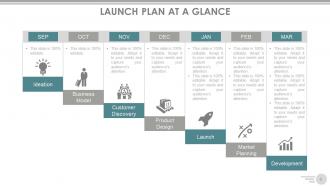
Slide 6: This slide shows Launch Plan At A Glance with the folowing points- Ideation, Product Design, Market Planning, Development, Customer Discovery, Business Model, Launch.
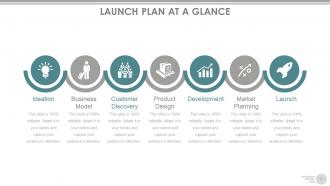
Slide 7: This slide shows Launch Plan At A Glance with the folowing points- Ideation, Product Design, Market Planning, Development, Customer Discovery, Business Model, Launch.
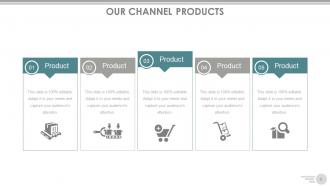
Slide 8: This slide shows Our Channel Products to be displayed.
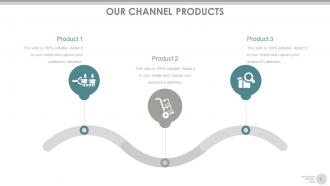
Slide 9: This slide shows Our Channel Products to be displayed.
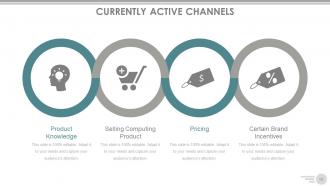
Slide 10: This slide displays Currently Active Channels witht the following points- Product Knowledge, Selling Computing Product, Pricing, Certain Brand Incentives.
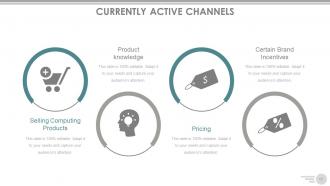
Slide 11: This slide displays Currently Active Channels witht the following points- Product Knowledge, Selling Computing Product, Pricing, Certain Brand Incentives.
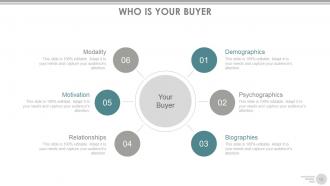
Slide 12: This slide shows Who Is Your Buyer on the basis of- Psychographics, Demographics, Biographies, Modality, Motivation, Relationships.
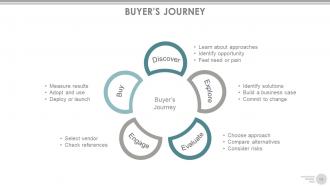
Slide 13: This slide shows Buyer’s Journey categorised as- Discover, Explore, Evaluate, Engage, Buy.
Slide 14: This slide shows Buyer’s Journey categorised as- Discover: Learn about approaches, Identify opportunity, Feel need or pain. Explore: Identify solutions, Build a business case, Commit to change. Evaluate: Choose approach, Compare alternatives, Consider risks. Engage: Select vendor, Check references. Buy: Measure results, Adopt and use, Deploy or launch.
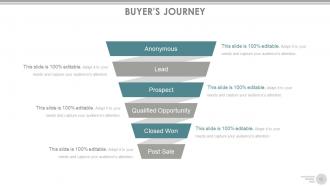
Slide 15: This slide shows BUYER’S JOURNEY divided into- Anonymous, Lead, Prospect, Qualified Opportunity, Closed Won, Post Sale.
Slide 16: This slide shows Our Channel Partners.
Slide 17: This slide displays TARGET CUSTOMER.
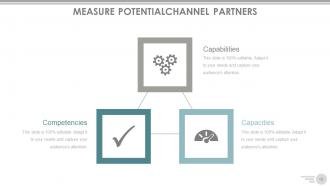
Slide 18: This slide showcases Measure Potential Channel Partners showing- Competencies, Capacities, Capabilities.
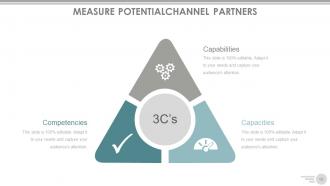
Slide 19: This slide showcases Measure Potential Channel Partners showing- Competencies, Capacities, Capabilities.
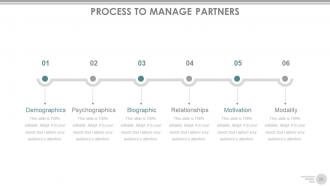
Slide 20: This slide showcases Process To Manage Partners on the basis of- Demographics, Psychographics, Biographic, Relationships, Motivation, Modality.
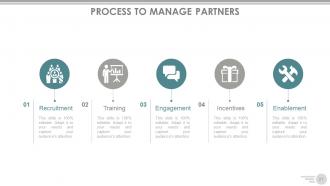
Slide 21: This slide showcases Process To Manage Partners on the basis of- Engagement, Enablement, Incentives, Recruitment, Training.
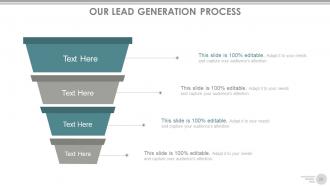
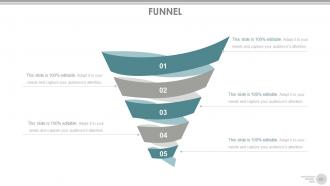
Slide 22: This slide displays Our Lead Generation Process in funnel form.
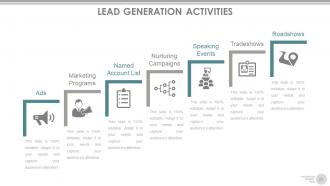
Slide 23: This is Lead Generation Activities consisting of- Roadshows, Tradeshows, Speaking Events, Nurturing Campaigns, Named Account List, Marketing Programs, Ads.
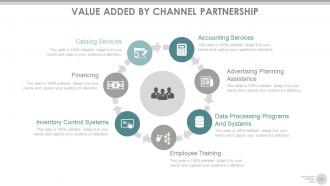
Slide 24: This slide shows Value Added By Channel Partnership showing- Accounting Services, Advertising Planning Assistance, Data Processing Programs and Systems, Employee Training, Inventory Control Systems, Financing, Catalog Services.
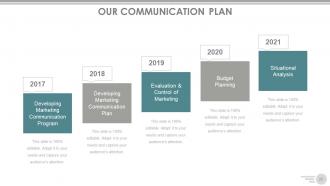
Slide 25: This is Our Communication Plan showing- Developing Marketing Communication Program, Developing Marketing Communication Plan, Evaluation & Control of Marketing, Budget Planning, Situational Analysis.
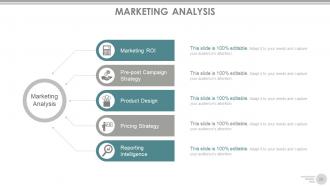
Slide 26: This is Marketing Analysis slide showing- Reporting Intelligence, Marketing ROI, Pricing Strategy, Product Design, Pre-post Campaign Strategy, Marketing Analysis.
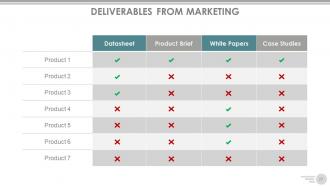
Slide 27: This is Deliverables From Marketing slide in tabular form.
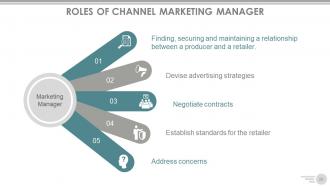
Slide 28: This slide shows Roles Of Channel Marketing Manager displaying- Marketing Manager, Finding, securing and maintaining a relationship between a producer and a retailer, Devise advertising strategies, Negotiate contracts, Establish standards for the retailer, Address concerns.
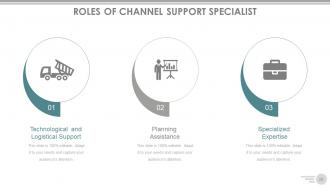
Slide 29: This is Roles Of Channel Support Specialist showing- Planning Assistance, Specialized Expertise, Technological And Logistical Support.
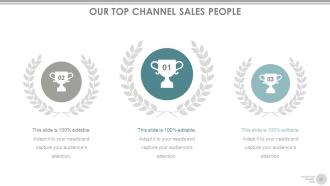
Slide 30: This slide presents Our Top Channel Sales People. Showcase them here.
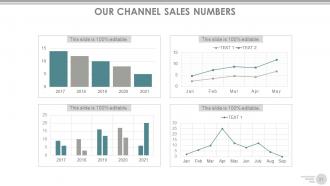
Slide 31: This slide shows Our Channel Sales Numbers in different graph forms.
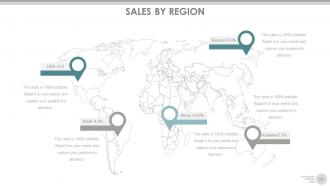
Slide 32: This slide showcases Sales By Region on world map image.
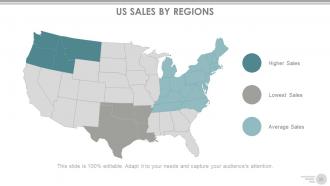
Slide 33: This slide presents US Sales By Regions in terms of- Average Sales, Higher Sales, Lowest Sales. All States can be colored and edited separately.
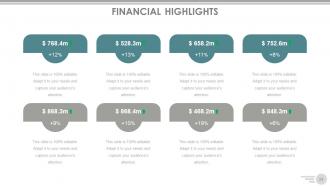
Slide 34: This slide shows Financial Highlights. State finance related aspects etc. here.
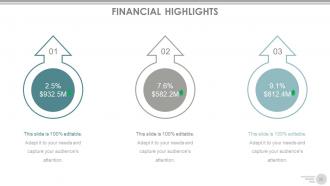
Slide 35: This slide too shows Financial Highlights. State finance related aspects etc. here.
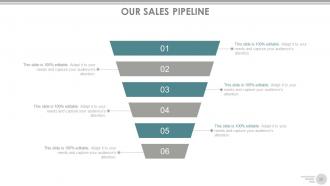
Slide 36: This slide shows Our Sales Pipeline. State sales aspects etc. here.
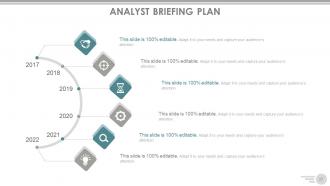
Slide 37: This slide presents an Analyst Briefing Plan.
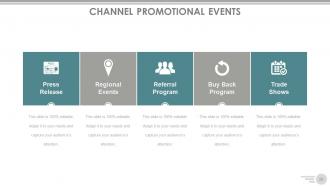
Slide 38: This slide showcases Types Of Channel Promotions Used.
Slide 39: This slide showcases Types Of Channel Promotions Used.
Slide 40: This slide presents Our Trade Show Calendar.
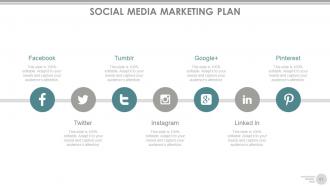
Slide 41: This slide showcases Social Media Marketing Plan.
Slide 42: This slide shows a Website Update Plan.
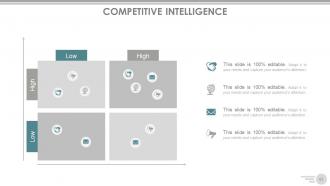
Slide 43: This slide presents a Competitive Intelligence Matrix.
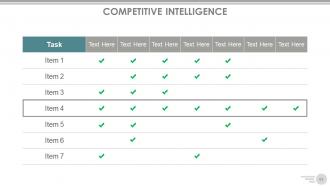
Slide 44: This slide presents a Competitive Intelligence in tabular form.
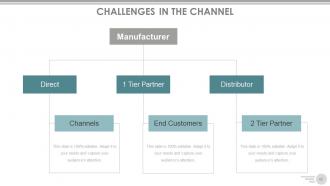
Slide 45: This slide shows Challenges in The Channel from Manufacturer to End Customer.
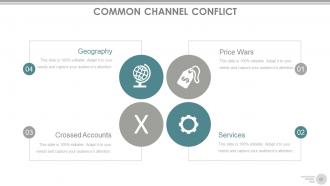
Slide 46: This slide shows Common Channel Conflict with the following subheadings- Geography, Services, Crossed Accounts, Price Wars.
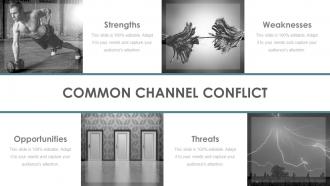
Slide 47: This slide shows Common Channel Conflict with the following subheadings- Strengths, Weaknesses, Threats, Opportunities.
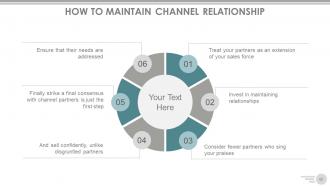
Slide 48: This slide showcases How to Maintain Channel Relationship with the following points- Treat Your Partners As An Extension Of Your Sales Force, Invest In Maintaining Relationships, Consider Fewer Partners Who Sing Your Praises, And Sell Confidently, Unlike Disgruntled Partners, Finally Strike A Final Consensus With Channel Partners Is Just The First Step, Ensure That Their Needs Are Addressed.
Slide 49: This slide presents Case Study.
Slide 50: This slide presents Customer Testimonials to be stated.
Slide 51: This slide is titled Additional Slides to move forward. You may change the slide content as per need.
Slide 52: This slide presents Our Mission. State your vision, goals too here.
Slide 53: This slide showcases Our Team with Name and Designation to fill.
Slide 54: This is an About us slide. State team/company specifications here.
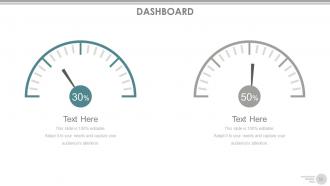
Slide 55: This is a Dashboard slide for showing information, specifications etc.
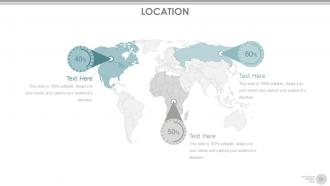
Slide 56: This is a Location slide of world map top show global marketing, growth, presence etc.
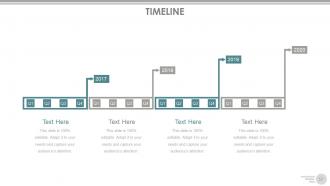
Slide 57: This slide presents a Timeline. Jot down your highlights, or present milestones etc. here.
Slide 58: This is a Lego box image slide to show information, specifications etc.
Slide 59: This is a People's Silhouettes slide. Use it the way you want to show solutions etc.
Slide 60: This is a Funnel image slide to show funneling aspects, specifications etc.
Slide 61: This is a Thank You slide with Address# street number, city, state, Contact Numbers, Email Address.
Channel strategy marketing and distribution powerpoint presentation slides with all 61 slides:
Enlighten them in your characteristic fashion with our Channel Strategy Marketing And Distribution Powerpoint Presentation Slides. Get your excellence to bear on them.








FAQs for Channel strategy marketing and distribution
Honestly, start with where your customers actually hang out - not where you assume they do. That's the biggest mistake I see. Map your channel goals back to business objectives, then be real about what resources you actually have. Don't spread yourself too thin across every platform. Track everything though - can't improve what you're not measuring. Oh and definitely check out what competitors are doing first. Saves you from learning the hard way. I'd audit your current channels before jumping into new ones. Look for the obvious gaps, but also quick wins you might've missed.
Honestly, just figure out where your customers actually hang out first. Like, are they impulse buying on Instagram or doing deep research before purchasing? Match that vibe to your product - luxury stuff obviously needs more hand-holding than basic everyday items. Check what your competitors are doing but don't just copy everything blindly. Some channels will absolutely destroy your margins too, so factor that in. My take? Pick maybe 2 channels max that make sense for how your people shop. Test it out, see what works, then branch out from there. Way easier than trying to be everywhere at once.
Honestly, you can't figure out your channel strategy without nailing down your segments first. Different customers live in totally different spaces online. Your B2B enterprise folks aren't scrolling TikTok, but your Gen Z audience definitely isn't checking LinkedIn either - well, maybe they are now but that's a whole other thing. Once you know your segments, you'll see which channels actually make sense for each group. Then you can stop wasting money on platforms that don't convert. I'd start by looking at where your current customers are already engaging with you.
Dude, get some automation going for the boring stuff first. CRM integrations track partner performance without you babysitting spreadsheets all day. Analytics dashboards are honestly where it's at - you'll actually see what's tanking before it becomes a disaster. Portal solutions help you dump training materials and resources in one spot partners can access 24/7. APIs connecting your systems = way less manual data entry (and fewer screwups). Oh, and make sure whatever tools you pick actually play nice with what you're already using. Last thing you need is another system that doesn't talk to anything else.
Track your revenue per channel and customer acquisition costs first - those tell you if you're actually making money. Conversion rates matter too, obviously. I'd also watch channel partner satisfaction (unhappy partners = problems down the road) and how fast you're getting products to market through each channel. Market share by channel is probably the most telling metric honestly - shows where you're crushing it vs just spinning wheels. Oh, and don't ignore the boring operational stuff like inventory turns and support tickets per channel. Set up a monthly dashboard with maybe 6 metrics tops. More than that and you'll get lost in spreadsheets instead of seeing what's really happening.
Look, you really can't just copy-paste the same channel strategy everywhere. Markets are totally different - what crushes it in the US could be a disaster in Southeast Asia. Each region has its own buying habits, preferred sales channels, even regulatory stuff you have to deal with. Honestly, I learned this the hard way when we tried to go direct in a market where everyone expected partners. You've got to stay flexible and actually reassess regularly as things change. I'd start by really understanding the dynamics in your top 3-5 markets first - don't try to boil the ocean.
Honestly, the worst thing you can do is jump into like 6 different channels at once. You'll burn out and suck at all of them. Pick maybe 2-3 max and actually get good at those first. Also - and I see this ALL the time - don't choose platforms just because you personally love Instagram or whatever. Go where your customers actually are, even if TikTok makes you feel ancient. Give each channel at least a few months before you panic. Results take time. Oh, and tailor your content for each platform's vibe - LinkedIn posts shouldn't sound like your Twitter jokes. Measure what works so you're not just throwing spaghetti at the wall.
Partnerships are honestly a game-changer for filling those annoying gaps in your channel strategy. Map out where you're currently weak, then find businesses that already crush it in those areas. Look for companies that serve your same customers but aren't competing with you directly - fitness apps teaming up with Fitbit, stuff like that. They get access to your customers, you get access to theirs. Plus their distribution networks and expertise. It's basically finding partners whose strengths cover what you suck at. Start small though - don't go after the biggest names right away.
You've gotta figure out where your customers actually hang out and shop there. Social media scrollers who buy on impulse? Hit Instagram and TikTok hard with easy checkout. Research nerds who compare everything need your website loaded with reviews and details - or just throw your stuff on Amazon honestly. Some folks (yeah, they still exist) actually want to call you or visit in person. Map out how your specific customers behave and show up wherever they are. Don't try forcing them to shop how YOU want them to.
Honestly, forget where YOU want to sell and figure out where your customers actually hang out. Some people browse online but still want to feel the product first - others are totally digital. Map out their whole journey. Your channels should work together, not fight each other (seriously, nothing kills trust faster than different prices online vs in-store). Physical stores are great for the "I need it now" crowd and letting people try stuff. Online handles convenience and reaching way more people. Start small - test different approaches with a few customer groups first, then expand what's working.
Look, multi-channel is honestly a game changer because you're meeting customers where they actually are instead of hoping they find you. If Instagram suddenly changes their algorithm (which happens constantly), you've still got email and your website pulling weight. The data angle is huge too - you can track how someone discovers you on TikTok but buys through your site later. Each platform has its own vibe, so your LinkedIn posts will sound totally different from your Instagram stories. My advice? Don't spread yourself thin initially. Pick 2-3 channels where your people actually spend time and nail those first.
So e-commerce basically flipped everything upside down - now traditional retailers have to go omnichannel or they're toast. Customers want to browse online, buy wherever, return anywhere. It's a nightmare to coordinate at first, not gonna lie. But here's the thing - you end up with killer data about how people actually shop across every touchpoint. Way better than guessing what happens in your physical store. Map out where customers currently go from discovery to purchase, then figure out where you're losing them. Those gaps are usually where the money is. Start there and work backwards.
Start with proper onboarding - build certification programs covering your product, sales process, and competitive stuff. Mix it up with live sessions, self-paced learning, and hands-on workshops. Here's the thing though - track actual knowledge retention, not just who finished the modules. Those numbers tell completely different stories. Partners change staff constantly, so you'll need regular refreshers. Build them a resource hub that's actually usable. Battle cards, demo scripts, objection responses - the whole toolkit. And honestly? Assign dedicated success managers for ongoing coaching. That post-training support makes or breaks everything.
Honestly? Start with weekly meetings where both teams actually look at the same numbers - lead quality, what's converting, which channels are bringing in real revenue. Marketing gets obsessed with MQLs but sales only cares about deals that actually close, so track the whole funnel together. Split up the channel work: marketing handles awareness and lead gen, sales owns partner relationships and closing deals. Oh, and make sure both teams talk directly to your channel partners. Trust me on this one - when everyone hears the same feedback, suddenly you're not fighting about whose leads suck anymore.
Your customers basically tell you if your strategy's actually working or not. Check your social media comments, surveys, support tickets - they'll show you where people really want to engage vs where you think they do. I can't tell you how many times I've watched teams completely miss this and wonder why their approach flopped. The gap between what companies assume and actual customer behavior is wild. You should dig through recent feedback looking for channel preferences and complaints. That's your starting point right there.
-
Appreciate the research and its presentable format.
-
Really like the color and design of the presentation.