


Clientele Portfolio Management Powerpoint Presentation Slides




Try Before you Buy Download Free Sample Product
 Impress Your
 Audience
 100%
100% Editable
 Save Hours
 of Time


Manage your assets in a professional way by using our visually appealing Clientele Portfolio Management PowerPoint Presentation Slides. Showcase the purpose for asset management like reaching financial goals and saving for retirement etc. Discuss the approaches that focus on client objectives such as inflation hedge, principle preservation, portfolio diversification, etc. This asset management PPT slide deck presents the characteristics like annual return, standard deviation, correlation to equities, and correlation to fixed income. The slides help you to analyze different types of assets available in the market. It covers top-performing funds with different categories and their estimate returns. Showcase key insights of allocation of funds according to conservative, balanced, and growth ETF portfolios. The portfolio management PPT visuals cover various types of equities and debt funds and compare them on the basis of risk score, volatility, and weight. It also shows a period of strong return per unit of risks across all asset classes. Download this amazing asset management PPT slideshow to reach your financial goals.
People who downloaded this PowerPoint presentation also viewed the following :
Content of this Powerpoint Presentation
Slide 1: This slide introduces Clientele Portfolio Management.
Slide 2: This slide displays Content of the presentation.
Slide 3: This slide displays Content of the presentation.
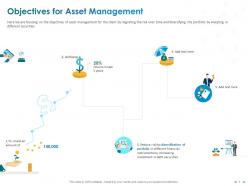
Slide 4: This slide dpeicts Objectives for Asset Management.
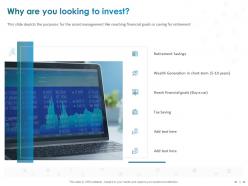
Slide 5: This slide depicts the purposes for the asset management like reaching financial goals or saving for retirement
Slide 6: This slide shows Content of the presentation.
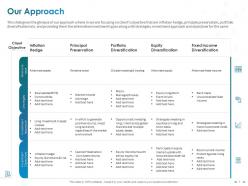
Slide 7: This slide gives the glimpse of our approach where in we are focusing on client's objective that are inflation hedge, principle preservation, portfolio diversification etc. and providing them the alternative investment types along with strategies, investment approach and objectives for the same
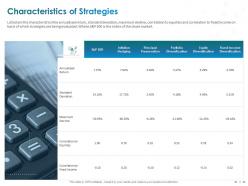
Slide 8: This slide showcases characteristics like annualized return, standard deviation, maximum decline, correlation to equities and correlation to fixed income on basis of which strategies are being evaluated. Where S&P 500 is the Index of the share market.
Slide 9: This slide displays Content of the presentation.
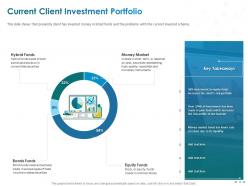
Slide 10: This slide shows that presently client has invested money in listed funds and the problems with the current invested scheme.
Slide 11: This slide displays Content.
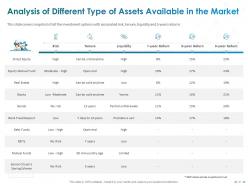
Slide 12: This slide covers snapshot of all the investment options with associated risk, tenure, liquidity and 5 years returns
Slide 13: In this template we are covering the top performing funds with different categories and their estimate returns over 1 to 5 years
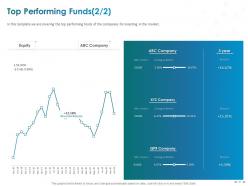
Slide 14: In this template we are covering the top performing funds of the companies for investing in the market.
Slide 15: This slide shows Content of the presentation.
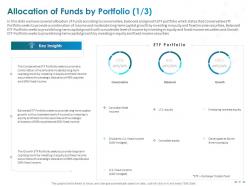
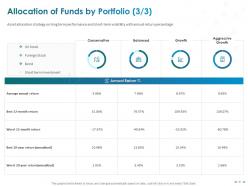
Slide 16: In this slide we have covered allocation of Funds according to conservative, balanced and growth ETF portfolio which states that Conservative ETF Portfolio seeks to provide a combination of income and moderate long-term capital growth by investing in equity and fixed income securities, Balanced ETF Portfolio seeks to provide long-term capital growth with a moderate level of income by investing in equity and fixed income securities and Growth ETF Portfolio seeks to provide long-term capital growth by investing in equity and fixed income securities
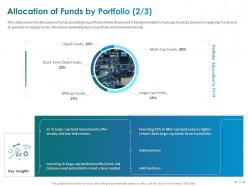
Slide 17: This slide covers the allocation of funds according to portfolio where 30 percent is being invested in multi cap funds 25 percent in large cap funds and 15 percent in midcap funds. This allows diversification of portfolio and minimize the risk.
Slide 18: This template shows Allocation of Funds by Portfolio.
Slide 19: This slide displays Content of the presentation.
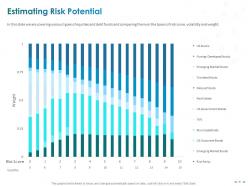
Slide 20: In this slide we are covering various types of equities and debt funds and comparing them on the bases of risk score, volatility and weight.
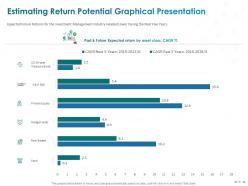
Slide 21: This slide is about Estimating Return Potential Graphical Presentation.
Slide 22: This slide shows a period of extremely strong Returns per unit of risk across almost all asset classes.
Slide 23: This Clientele Portfolio Management Icons Slide.
Slide 24: This slide is titled as Additional Slides for moving forward.
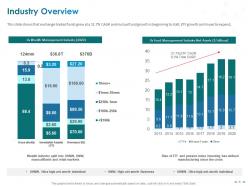
Slide 25: This slide shows that exchange traded funds grew at a 21.7% CAGR and mutual fund growth is beginning to stall, ETF growth continues to expand.
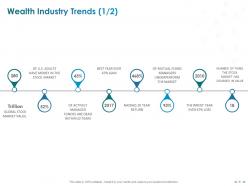
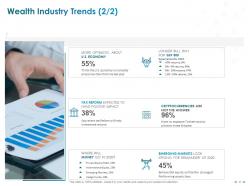
Slide 26: This slide shows Wealth Industry Trends
Slide 27: This slide showcases Wealth Industry Trends.
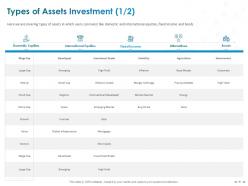
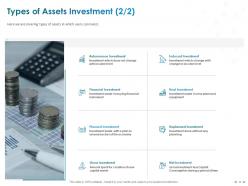
Slide 28: This slide covers types of assets in which users can invest like domestic and international equities, fixed income and bonds
Slide 29: This slide shows Types of Assets Investment.
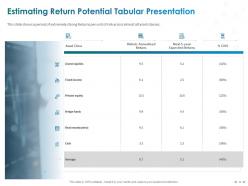
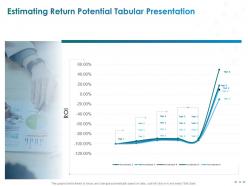
Slide 30: This slide provides information regarding Estimating Return Potential Tabular Presentation
Slide 31: This slide depicts Mission, Vision and Goals of the Company
Slide 32: This is Our Team slide with names and Designations.
Slide 33: This is About us slide to showcase Company specifications.
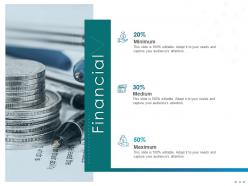
Slide 34: This slide depicts Finance related stuff.
Slide 35: This is Venn slide.
Slide 36: This is Thank You slide with Contact details.
Clientele Portfolio Management Powerpoint Presentation Slides with all 36 slides:
Use our Clientele Portfolio Management Powerpoint Presentation Slides to effectively help you save your valuable time. They are readymade to fit into any presentation structure.





FAQs for Clientele Portfolio Management
You gotta start by sorting your clients into buckets - high value, medium, low - based on what they bring and what they need. Then customize how you talk to each group. Most people totally blow off the tracking piece, but that's honestly where you see real results. Monitor every interaction, figure out their preferences, know where they are in the relationship cycle. Oh, and set up regular check-ins to spot problems before clients start getting weird or distant. I'd begin with looking at who you've got now and creating those segments. You'll instantly see where you're dropping the ball.
Okay so first thing - figure out which clients are actually worth your sanity. Plot them on a simple grid: high revenue vs how much they drain your resources. Calculate their lifetime value, then (and this is the eye-opening part) track how much time they actually eat up. Payment delays, constant revisions, endless questions - that stuff adds up fast. Some clients look profitable until you realize they're texting you at 9pm about font choices. Honestly? The high-maintenance ones usually aren't worth it. Make your little matrix, be brutally honest, then focus on the good ones.
Track your usual stuff first - ROI, portfolio growth, risk-adjusted returns. That's the easy part though. Client portfolios are weird because the relationship side matters just as much. Retention rates tell you if people actually stick around. Satisfaction scores and lifetime value per client are huge too. Acquisition costs can totally wreck your returns if you're not careful - same with onboarding time. Honestly, I'd just throw everything into one dashboard so you can see the full picture instead of obsessing over numbers while your clients bail.
So client segmentation is huge - you stop treating everyone the same and actually customize your approach. Group people by stuff like age, risk tolerance, or how much they're worth. Young entrepreneurs don't want to hear about boring dividend plays, right? Meanwhile your 65-year-old clients probably aren't looking for crypto moonshots. I usually tell people to start with maybe 3-4 segments max. Don't overthink it at first. Once you've got them sorted, your investment pitches become way sharper. It's honestly night and day compared to the generic approach most advisors use.
Honestly, tech tools are total lifesavers for portfolio stuff. Real-time analytics show you what's actually happening instead of guessing. The automated rebalancing catches things you'd totally miss otherwise - I swear it's like having an extra brain. Client dashboards update themselves, so no more manual number crunching every week. CRM integration tracks all their preferences and messages in one place instead of random spreadsheets everywhere (which I used to hate). Reports generate automatically too. My advice? Don't try switching everything at once. Pick one feature, get comfortable with it, then add more. Way less overwhelming that way.
Look, you gotta group your clients by who'd totally screw you if they bailed - think revenue size, how sketchy their payment history is, stuff like that. Don't let any single client be more than like 20-30% of your income. I learned this the hard way lol. Check their credit quarterly and watch for red flags with late payments. Document literally everything and make sure your contracts have escape routes built in. Monthly check-ins help you catch problems early. Oh, and diversify your revenue streams - sounds boring but it'll save your ass later.
Honestly, diversification is everything. I'd mix up industries, company sizes, and regions - don't get stuck with just tech startups (trust me on this one). Enterprise clients are great but they're demanding, so balance them with easier mid-market accounts. Seasonal businesses can bite you too if that's all you have. Regional stuff matters more than people think - one economic hiccup in your main area and you're screwed. I'd audit what you've got now, spot the risky concentrations, then go hunt prospects in whatever segments you're missing.
Honestly, do a full review every quarter but peek at the basics monthly. I learned this the hard way when I ignored mine for like 8 months and suddenly realized my top client was barely paying on time anymore. Monthly stuff is easy - just check if people are engaging and paying normally. But quarterly? That's when you dig into the real numbers. Who's actually profitable, satisfaction levels, which clients have room to grow. Annual reviews are basically useless because everything changes too fast these days. Oh, and set those calendar reminders right now or you'll definitely forget.
Honestly, the hardest part is juggling everyone's different needs and communication styles. Startups want quick responses and flexibility, while enterprise clients expect formal processes - it's like speaking two languages sometimes. Resource allocation gets messy too when you're spread thin. What worked for me was setting up different service tiers and actually mapping out my clients into maybe 3-4 groups. Each segment gets its own approach. Good CRM software helps track who likes what (seriously, invest in this). Some clients want weekly check-ins, others prefer monthly. Figure out those patterns early and you'll save yourself tons of headaches later.
Set up regular check-ins - quarterly reviews, quick calls after big market swings, yearly strategy meetings. Most clients won't speak up unless they're really unhappy, so you've got to stay ahead of it. Simple feedback forms asking about their risk tolerance, how they want you to communicate, goal changes. Put their answers in your CRM and actually do something with the data. Adjust portfolios, change how often you rebalance, tweak your reports - whatever makes sense. Oh, and always circle back to show them what you changed based on their feedback. That part's huge for trust.
Market trends basically force you to constantly tweak your clients' portfolios - they're what drive most allocation decisions. Bull markets? I usually dial back equity exposure to lock in those gains. Bear markets mean hunting for buying opportunities or going defensive. Economic cycles are honestly the trickiest part because different sectors get hit so weird. You'll definitely need different risk tolerance conversations depending on what's happening out there. The real trick is being proactive instead of reactive - set up your rebalancing triggers ahead of time so you're not panicking when everything goes sideways.
Dude, your clients' risk tolerance totally shifts based on what's happening in their lives and the economy. Job market gets weird? They'll want safer stuff and easier access to cash. Life stage matters too - that 25-year-old is gonna chase high returns while someone with kids is thinking college funds and stability. Peer pressure is real even with investments, weirdly enough. I swear, half the job is just checking in regularly because someone's priorities can flip completely in a few months. What worked when they were single definitely won't make sense after they buy a house or whatever.
Look, transparency and fairness have to come first - don't play favorites just because someone has a bigger account. Get proper consent before sharing any client info, and honestly? Your clients' financial health should matter way more than your commission (I know, easier said than done). Avoid conflicts of interest at all costs. The whole thing can be stressful because there's so much on the line. Here's what I'd do: audit how you're currently handling things and ask yourself if you'd be cool with clients seeing exactly how you categorize them. That usually tells you everything.
Dude, you'll catch patterns in client data that spreadsheets just can't show you. Like, which segments actually make you money and who's about to bail. Honestly, the behavior insights are wild once you dig in. Set up dashboards for metrics that matter to your goals - don't get distracted by vanity numbers. Oh, and track which services give the best returns. That's where the real money is. Start with one client group and look at their engagement from last quarter. Way less overwhelming than trying to analyze everything at once.
Honestly, check-ins are everything - I'd do monthly if you can swing it, quarterly at minimum. Lead with value first though, like sharing market updates or opportunities before you ask for anything. Document what they tell you about goals, kids, business stuff. Sounds basic but most people forget this part. Listen way more than you talk during meetings. Be upfront about performance and fees too - nobody wants nasty surprises later. Oh and get some kind of CRM system, even a simple one. You'll thank yourself when you're juggling tons of clients and can't remember who said what.
-
Designs have enough space to add content.
-
Great quality slides in rapid time.
-
Best way of representation of the topic.
-
Amazing product with appealing content and design.