


Clinical Trial Phases Objective And Timeline




Try Before you Buy Download Free Sample Product
 Impress Your
 Audience
 100%
100% Editable
 Save Hours
 of Time


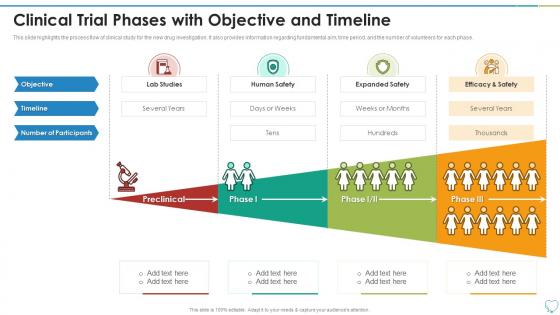
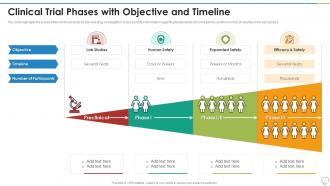
This slide highlights the process flow of clinical study for the new drug investigation. It also provides information regarding fundamental aim, time period, and the number of volunteers for each phase.
People who downloaded this PowerPoint presentation also viewed the following :
Clinical Trial Phases Objective And Timeline with all 6 slides:
Use our Clinical Trial Phases Objective And Timeline to effectively help you save your valuable time. They are readymade to fit into any presentation structure.





FAQs for Clinical Trial Phases
So Phase 1 trials are basically the "let's see if this kills people" stage - testing drugs in humans for the first time. Pretty wild when you think about it. They're figuring out safe dosing, what side effects pop up, and how your body actually processes the stuff. Usually 20-100 people, either healthy volunteers or patients who've run out of other options. The whole point is finding that sweet spot where it works but doesn't wreck you. If you're planning one, definitely start with super low doses and work your way up based on what happens.
So Phase 2 is basically where they figure out if the drug actually works, not just whether it's safe. Phase 1 was all about dosing and making sure it wouldn't kill anyone. Now you're looking at way bigger groups - like 100-300 people instead of maybe 30. This is honestly where most drugs crash and burn, which is kinda depressing but whatever. The whole setup gets more serious with specific goals they're measuring against current treatments. When you're checking out Phase 2 results, look at both whether it worked AND if the safety stuff still looks good with more people.
Phase 3 trials grab hundreds or thousands of people who actually have the condition you're studying. Way more diverse than the earlier phases - different ages, races, how sick they are, plus people with other health issues thrown in. Basically trying to match real life (which makes the data messier but whatever, that's more honest). They randomly split everyone between the new treatment and whatever the current standard is. Oh and when you're looking at the data, definitely check if the people in the study actually look like your patients. That matters more than people think.
So basically, the FDA wants to see all your clinical trial data in a super structured way. You submit safety reports during the trial, then dump all your efficacy data showing you beat placebo or standard treatment. The stats requirements are honestly brutal though. They get their own scientists plus advisory committees to tear apart everything - trial design, manufacturing, all of it. It's really about proving benefits outweigh risks, which sounds obvious but isn't. Oh, and definitely start schmoozing with regulators early. Get those pre-submission meetings locked down way before you think you need them.
So basically, control groups are how you know if your treatment actually did something or if people just got better on their own. Phase I trials don't really use them since you're just checking if the drug kills people (lol sorry, dark humor). But Phase II and III? You absolutely need them. Phase III is where regulators really scrutinize your controls - usually placebo or whatever the current standard treatment is. It's honestly like... imagine trying to prove your workout routine works but you never tracked what happened to people who didn't work out. Also make sure your control group looks similar to your treatment group demographically, otherwise you're screwed.
So they usually start at 1/10th of whatever dose didn't harm the most sensitive animals in preclinical testing. Then it's this gradual climb using methods like 3+3 designs - basically tiny groups of patients getting slightly higher doses each time. Super careful stuff, which honestly makes total sense when you're moving from mice to actual people for the first time. They're hunting for that sweet spot called maximum tolerated dose, where side effects get too nasty. Each group gets watched like hawks before the next dose level. Oh and definitely nail down your escalation protocol before you even think about enrolling anyone!
Dude, informed consent is probably the biggest thing - people need to actually understand what they're getting into and know they can bail whenever. Risk-benefit analysis and safety monitoring are crucial too. Don't cherry-pick participants or exclude groups unfairly, that'll bite you later. Data privacy, minimizing harm, proper oversight committees reviewing everything. IRB reviews should be thorough as hell and document literally everything. I know the ethics side feels like a lot at first. But honestly? It's just about treating participants like actual people instead of lab rats. That mindset shift makes it way less overwhelming.
You absolutely need informed consent before any trial phase - it's not negotiable. Participants have to understand what they're signing up for: the study's purpose, what'll happen to them, risks, benefits, and that they can bail anytime. The paperwork is honestly brutal, but don't treat it like a one-and-done signature thing. Keep the conversation going throughout the study so people can ask questions. Write your consent forms in normal English, not medical jargon that nobody understands. Give people real time to think it over before they decide.
You're basically looking at whether your drug hit the primary endpoint - tumor shrinkage, symptom improvement, whatever you picked. Safety data is huge too since that can torpedo everything even with good efficacy. P<0.05 is the usual bar, but honestly the FDA cares more about whether results actually matter clinically. Need to show the benefit-risk makes sense for Phase 3 (which costs a fortune). Oh and if things look promising, start drafting that Phase 3 protocol now - regulatory meetings take forever to schedule.
Most Phase 3 trials crash because the treatment simply doesn't work better than what's already out there. Bigger, more diverse patient groups expose that reality fast. Safety problems are huge too - side effects that weren't obvious in smaller trials suddenly become deal-breakers. Sometimes the whole study design is just... questionable from day one. Poor enrollment screws things up constantly, and when patients keep dropping out, you're basically toast. Honestly, the companies that succeed have rock-solid Phase 2 data before they even think about moving forward. Don't let the hype cloud the actual science - that's where people get burned.
So adaptive designs basically let you tweak your trial as it's happening instead of being stuck with whatever you planned upfront. You can bump up sample sizes, adjust dosing, or ditch treatment arms that aren't working - no need to start from scratch. Honestly saves so much time and money it's not even funny. Rather than crossing your fingers and hoping you got everything right from day one, you get to pivot based on what the data's actually showing you. I'd start simple though - maybe just sample size adjustments first before you go crazy with the multi-arm stuff.
So you're basically on the hook for everything - designing the protocol, getting approvals, funding the whole thing. Early phases are all about watching for safety issues and figuring out dosing. Later phases? Total nightmare coordinating hundreds of patients across multiple sites. The paperwork is honestly insane. You'll be collecting data, reporting every side effect, submitting updates to regulators constantly. Oh and legally speaking - if something goes wrong, it's on you. Really can't stress this enough: get experienced people and solid systems set up before you touch patient
-
Wide collection of templates available. SlideTeam has made it easier to create presentations in just a few minutes.
-
Innovative and attractive designs.