


Cloud Security Governance Risk And Compliance Model




Try Before you Buy Download Free Sample Product
 Impress Your
 Audience
 100%
100% Editable
 Save Hours
 of Time


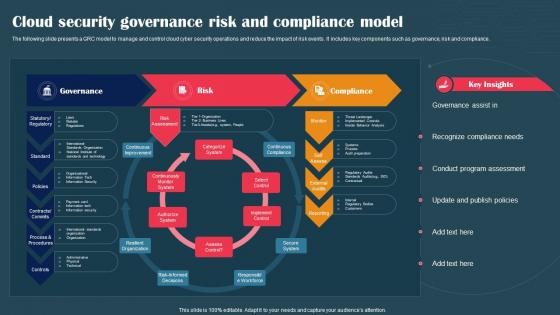
The following slide presents a GRC model to manage and control cloud cyber security operations and reduce the impact of risk events. It includes key components such as governance, risk and compliance.
People who downloaded this PowerPoint presentation also viewed the following :
Cloud Security Governance Risk And Compliance Model with all 6 slides:
Use our Cloud Security Governance Risk And Compliance Model to effectively help you save your valuable time. They are readymade to fit into any presentation structure.





FAQs for Cloud Security Governance Risk
You need three main things for cloud security GRC - governance that defines who does what, risk management for cloud threats, and compliance controls for stuff like SOC 2 or GDPR. Set up monitoring dashboards and incident response plans too. Third-party vendor assessments are huge because integrations can mess you up fast. Documentation matters, but honestly everyone hates writing it. Training keeps your team on the same page. I'd start by mapping what cloud assets you actually have first - you might be surprised what's out there. Then figure out which compliance rules hit your business.
So the big thing with cloud security GRC is you're sharing responsibility with your provider, which honestly can be confusing at first. They handle the infrastructure stuff while you deal with data, user access, apps - that kind of thing. Traditional GRC? You controlled everything yourself. Way simpler but obviously more work. With cloud setups, you'll constantly be checking who does what since boundaries aren't always crystal clear. I'd start by making a list of what your provider actually covers vs what's on your team. Trust me, it saves headaches later when something goes wrong and everyone's pointing fingers.
So you're looking at data breaches, compliance violations, and losing control over your infrastructure - those are the big ones. Shared responsibility is where most teams mess up (I've seen this happen way too often). Then there's vendor lock-in, data residency headaches, and identity management that gets super complex fast. Configuration drift will bite you too, plus shadow IT when people just start spinning up stuff without telling anyone. Oh, and you'll lose visibility into what assets you actually have running. Honestly? Map out what's your responsibility versus theirs first. Build everything else from there.
Honestly, start by mapping your cloud security framework to the big regulations - GDPR, SOX, ISO 27001, whatever applies to your business. Build continuous monitoring right into your processes from day one. Cross-border data flows are tricky, so make sure your risk assessments cover jurisdiction stuff. Automate compliance controls wherever you can - saves so much headache later. Oh, and set up dashboards that actually track how you're doing against each regulation's requirements. I'd pick your most critical regs first then expand. Way better than scrambling when auditors show up!
So basically it's like having a security guard that never sleeps, constantly checking your cloud setup against whatever regulations you need to follow. Way better than those quarterly manual audits that everyone dreads. These tools catch misconfigurations and policy violations as they happen, then ping you immediately when something's wrong. Plus they generate reports automatically for auditors - which honestly saves so much hassle. The whole point is switching from scrambling after you've already screwed up to actually preventing problems. Figure out what compliance stuff you need first, then find tools that can automate those checks.
So you want to check out third-party vendors properly? First thing - look at their governance stuff like security policies and certs (SOC 2, ISO 27001). Then map out what data they'll actually touch and how they handle backups. Compliance is honestly where most people mess up because you're still on the hook for HIPAA, GDPR, whatever applies to you. I'd make a simple scoring system that weights everything based on how much risk you can stomach. Oh, and don't forget to reassess them regularly - companies change fast these days.
Honestly, I'd focus on both the numbers and the softer stuff. Track how fast you're catching and fixing security incidents, plus compliance audit results and policy violations. Stakeholder satisfaction from governance reviews is weirdly helpful too - people will tell you what's actually broken. Risk assessment accuracy matters, and make sure you know which assets have current risk ratings. Here's the thing though - trends over time beat snapshots every day. I'd start with maybe 3-4 metrics that hit your biggest headaches first. You can always add more later once you've got those dialed in.
So basically, Cloud Security GRC gives you a solid game plan when stuff goes sideways. You'll know exactly who handles what during incidents - no more confusion about roles. Compliance stays on track even when you're dealing with threats, which honestly saves so much headache later with auditors. Risk management gets way better too since you can actually prioritize what matters most. The real win is having everything connected instead of juggling separate systems. Oh, and definitely automate your reporting if you can - trust me on that one. Clear escalation paths are clutch.
Don't treat disaster recovery like some side project IT handles. Map your DR stuff directly into whatever risk assessments you're already doing - no point creating more work silos, right? Your recovery times need to match compliance requirements (some regs are super picky about downtime). Document it all in your GRC system so when auditors show up, they see everything connected. Run DR tests regularly and feed those results back into risk monitoring. Honestly, the biggest mistake is bolting DR on afterward. Build it into your ongoing compliance cycle from the start.
Data governance is honestly the foundation of your whole Cloud Security GRC setup. Without it, you're basically flying blind on compliance requirements, can't properly assess data breach risks, and have no real control over how information moves through your cloud systems. It connects all three pieces together - like, everything flows through data governance first. I'd actually start by figuring out how your data moves around and what you've got before worrying about the fancy frameworks. Short sentences work better here. The whole GRC model falls apart if you don't nail this part down first.
So for Cloud Security GRC tools, definitely check out the native ones first - AWS Security Hub, Azure Security Center, Google's Security Command Center. They integrate pretty seamlessly. Third-party wise, Qualys VMDR and Rapid7 are both solid choices. ServiceNow GRC is honestly kind of a beast - super comprehensive but can feel like using a sledgehammer for everything. For compliance automation, Chef InSpec works well, same with Cloud Custodian. Just pick something that actually plays nice with whatever you're already running and won't create more headaches than it solves.
Honestly, just bake security right into your CI/CD pipeline and automate everything you can. Make it invisible to devs - like guardrails instead of roadblocks. Those old-school security meetings? Total time wasters that just make people find workarounds. Set up policy-as-code and automated compliance scanning. Give developers self-service security tools they don't need approval for. Focus on continuous monitoring and quick fixes rather than trying to catch every risk upfront. Oh, and start small - automate your most common security checks first, then build from there. Way less painful that way.
Honestly, role-based training is your best bet here. Get your security folks deep into the technical stuff - cloud controls, threat detection, all that jazz. Meanwhile, regular employees just need the basics like data handling and access management. Third-party vendors are huge - that's usually where everything falls apart, so don't skip training them. Run tabletop exercises and fake phishing attacks regularly. Track who's actually completing training and update your content every quarter since cloud tech changes so fast. Oh, and map everything back to your compliance requirements first - saves you headaches later.
Get everyone in the room from the start - IT, security, compliance, legal, business leaders. Map out who actually makes cloud decisions first. Then set up working groups to hash out requirements and review your frameworks. I've watched so many of these crash and burn because teams build stuff in silos (huge mistake). Monthly steering meetings keep things moving and stop people from checking out mentally. The real trick? Don't just ask for sign-off at the end when it's too late to change anything. Keep folks engaged during development when their input actually matters.
Dude, AI is completely flipping Cloud Security GRC on its head. Your governance framework now has to handle AI training data, algorithmic bias, automated decisions - the whole mess. Risk assessments get crazy complicated with data poisoning, model theft, plus new regulations like the EU AI Act breathing down everyone's neck. Honestly? Most compliance teams I know are scrambling right now. You should audit whatever AI tools are already running in your cloud environment - seriously, there's probably way more than you think. Then start updating those risk frameworks ASAP because this stuff isn't going away.
-
The designs are super attractive. Me and my team love using SlideTeam’s presentations.
-
I loved the hassle-free signup process. A few minutes and, I had this giant collection of beautiful designs.